
BGY Summer 2026: growth and connectivity at the heart of the strategy
With the start of Summer 2026, Milan Bergamo Airport enters a new phase of development, characterized by an increasingly extensive network and growing integration with the main international traffic flows.
In this interview, Giacomo Cattaneo, Director of Commercial Aviation, Marketing & Communications at the airport, analyses the main innovations of the summer season, from the launch of new routes to the increase in capacity in strategic markets, up to infrastructure investments and services designed to improve the passenger experience.
Summer 2026 brings Milan Bergamo to a network of 150 destinations in 42 countries served by 22 airlines. What is the strategic vision that drives this growth and how is BGY positioned today in the Italian and European airport system?
"The growth of Milan Bergamo is based on a clear strategic vision: to consolidate its role as one of the largest airports of reference for Northern Italy, strengthening competitiveness in an increasingly dynamic national and European context. Starting from the positioning, also in 2026 (as in 2025 and previous years) Milan Bergamo Airport (BGY) is firmly confirmed in third place in Italy for the number of passengers. A result that goes beyond the numerical dimension: the airport is now a central hub of Italian air traffic, a significant milestone if we consider the development path taken in recent decades. BGY's growth is never the result of an isolated evolution. It is part of a complex and highly competitive system, characterized by a densely populated territorial basin but also by a strong presence of airport alternatives. In this scenario, the airport's strategic choices are intertwined with those of the airlines, which orient and modulate their networks according to market dynamics, positioning and demand. The context, however, is positive: the entire country system (and in particular the Lombardy area) is recording healthy traffic, with significant growth. As far as BGY is concerned, this translates into the consolidation of the main operating carrier and, at the same time, into constant work to diversify and expand the offer. Expanding the panorama means acting in two directions: extending the number of operating partner companies and enriching the range of destinations available. An expansion that further strengthens the airport's international network and consolidates its strategic role in the European airport system".
New destinations for Summer 2026 include Billund, Rabat, Lemnos, Pristina, Sibiu, Skopje and Tirgu Mures.
"The new Summer 2026 routes reflect a clear evolution of demand in the Milan Bergamo Airport catchment area: all the main components of leisure, VFR (Visiting Friends and Relatives) traffic and, increasingly, business and emerging flows are growing and coexisting in an increasingly articulated way.
It is rare for all these types to overlap with the same intensity on the same route, with the exception of the large European capitals, where the metropolitan dimension allows for the simultaneous generation of strong outbound, inbound and VFR tourist flows.
In the case of the new destinations introduced, however, it is possible to distinguish clusters with prevailing characteristics.
Billund represents a particularly significant return, now operated by Norwegian Air Shuttle. The Danish airport serves a large area without alternative airports of equal importance and is also known for its proximity to Legoland Billund, an element that strengthens leisure attractiveness, especially for the family segment. In this case, the expected demand is mixed: outbound tourism from Italy, inbound tourism from Denmark and a business component linked to the local production fabric.
The case of Rabat, a new capital directly connected to Bergamo, is different. A balanced mix is expected here: on the one hand, a growing leisure and cultural demand for Morocco, on the other, a significant VFR component, considering the consolidated presence of Moroccan communities in Northern Italy. The route therefore intercepts both ethnic traffic and new tourist flows and, in part, institutional and business flows".
"Lemnos, a Greek island making its debut in scheduled connections with Italy, has a predominantly leisure connotation. It is an emerging seaside destination, oriented almost exclusively to summer tourist traffic, with a strongly seasonal demand.
The routes to South-Eastern Europe (Pristina, Skopje, Sibiu and Tirgu Mures) have a predominantly VFR matrix. Romania, Kosovo and North Macedonia represent basins with a significant demographic presence in Lombardy and Northern Italy. As a result, these routes intercept a structural and constant demand linked to family reunifications, which is accompanied by a growing leisure component and, in some cases, flows related to micro-entrepreneurship and professional mobility. Summer 2026 therefore highlights a diversified demand, heterogeneous in its motivations but balanced in its complementarity. This configuration confirms Milan Bergamo Airport's ability to accurately interpret the needs of its catchment area, harmonizing tourist traffic, VFR mobility and new emerging flows within a constantly evolving competitive context".
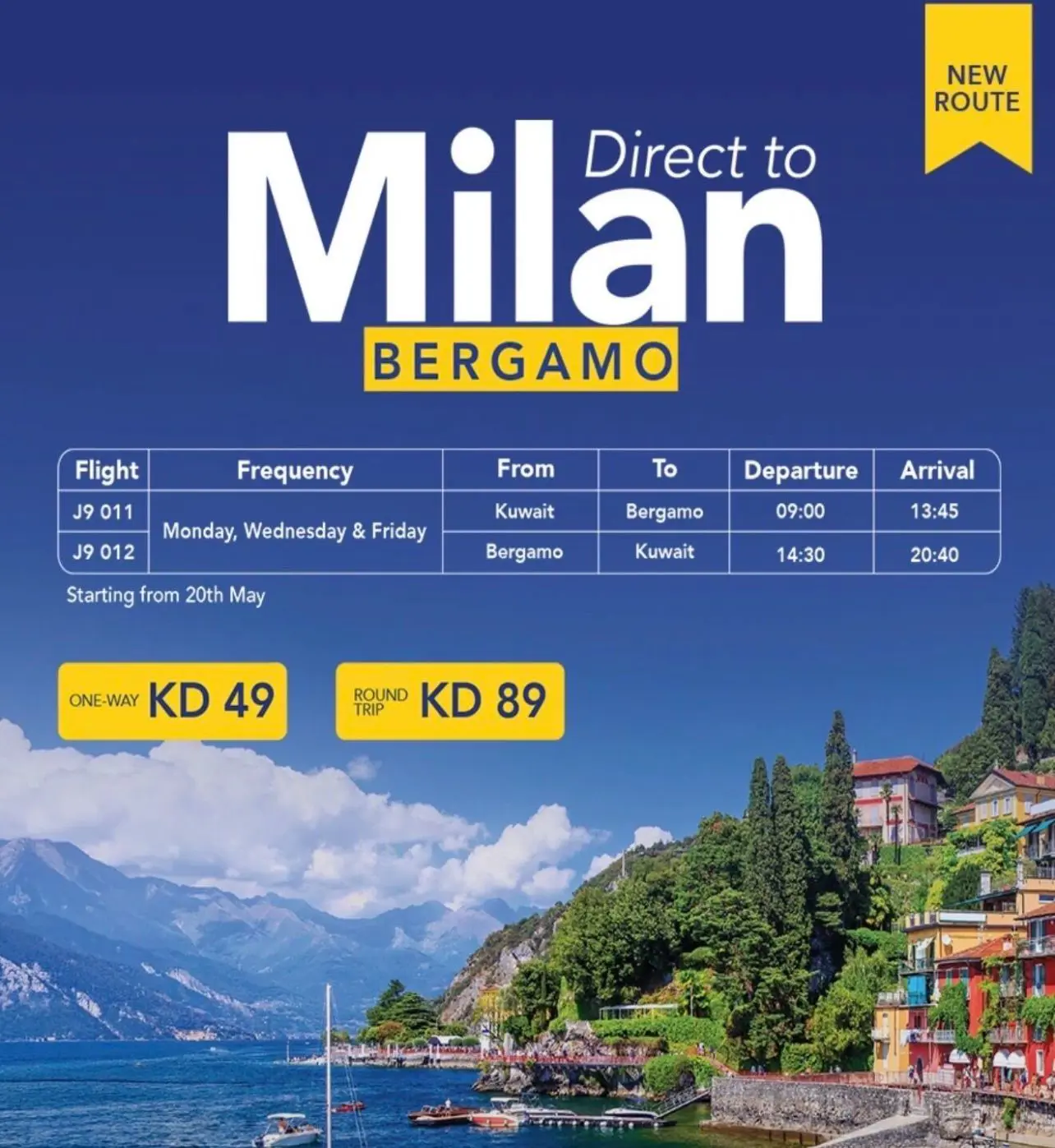
The new direct connection between Milan Bergamo and Kuwait City represents one of the most significant innovations of Summer 2026. What value does this route have for the airport and what kind of opportunities does it open up for passengers, both in terms of point-to-point traffic and connections to other areas of the world?
"The direct connection with Kuwait City significantly strengthens the international projection of Milan Bergamo Airport, expanding its range of action towards the Middle East and introducing new opportunities for both direct and onward traffic. The route is operated by Jazeera Airways, Kuwait's second largest airline, a dynamic carrier with a commercial strategy particularly oriented towards market development. In the initial phase, the potential appears mainly in-bound: Italy represents an attractive destination for the Kuwaiti public, especially in the summer months, when the milder climate of Northern Italy (between lakes, mountains and cities of art) is an interesting alternative to the high temperatures of the Gulf area. Kuwait is not yet a mass tourism destination comparable to other Middle Eastern hubs, but it is starting a path of growth in the tourism sector and has significant development margins. For the Italian market it can become an emerging destination, capable of intercepting Travellers interested in new experiences in the area. In terms of connections, in addition to point-to-point traffic, the flight allows access to a network of continuations to Oman and to various cities in the Indian and Pakistani subcontinents, markets that combine leisure demand and the VFR component, supported by the presence of communities rooted in Northern Italy. Added to this is the possibility for passengers to build autonomous itineraries to other destinations in Asia and the Eastern area".
Thanks to connections with strategic hubs such as Dubai, Sharjah, Istanbul and Kuwait City from Milan Bergamo, it is possible to reach numerous long-haul destinations with a single stopover. What does this connectivity model represent for passengers and how relevant is it for the future development of BGY's network?
Your data on the capacity offered show significant growth in markets such as Poland, Romania, Greece and Morocco. How do you read these numbers and what do they tell us about the evolution of the travel habits of passengers who choose Milan Bergamo?
"The increase in capacity to Poland, Romania, Greece and Morocco must be read in a differentiated key, because each market responds to its own dynamics. For Poland, the figure is also influenced by the fact that Milan Bergamo Airport is now the Italian airport with the highest number of connections to that country. This makes the flows physiologically high. Growth is supported both by the Polish economic expansion and by the increase in incoming tourism to Italy. Cities such as Warsaw, Krakow, Gdansk and Wrocław are consolidating their role, while flows related to industrial relations between the two countries also remain active. Romania confirms a historically very solid traffic base, with Bucharest at the center of connections. Here the VFR component remains decisive, supported by a presence rooted in the Lombardy region, which is flanked by professional mobility and a growing leisure share. Greece is a predominantly holiday market, with Italian outbound demand steadily increasing and there is still ample room for development in various destinations, particularly on the islands. Morocco combines similar characteristics to Poland and Romania: consolidated ethnic traffic and growing tourist interest. The connections to Casablanca, Marrakech and the most recent opening on Rabat highlight a mixed demand, between VFR and leisure, with prospects for further expansion. Overall, these numbers tell of an increasingly international catchment area, where tourism, family mobility and economic relations are structurally intertwined".
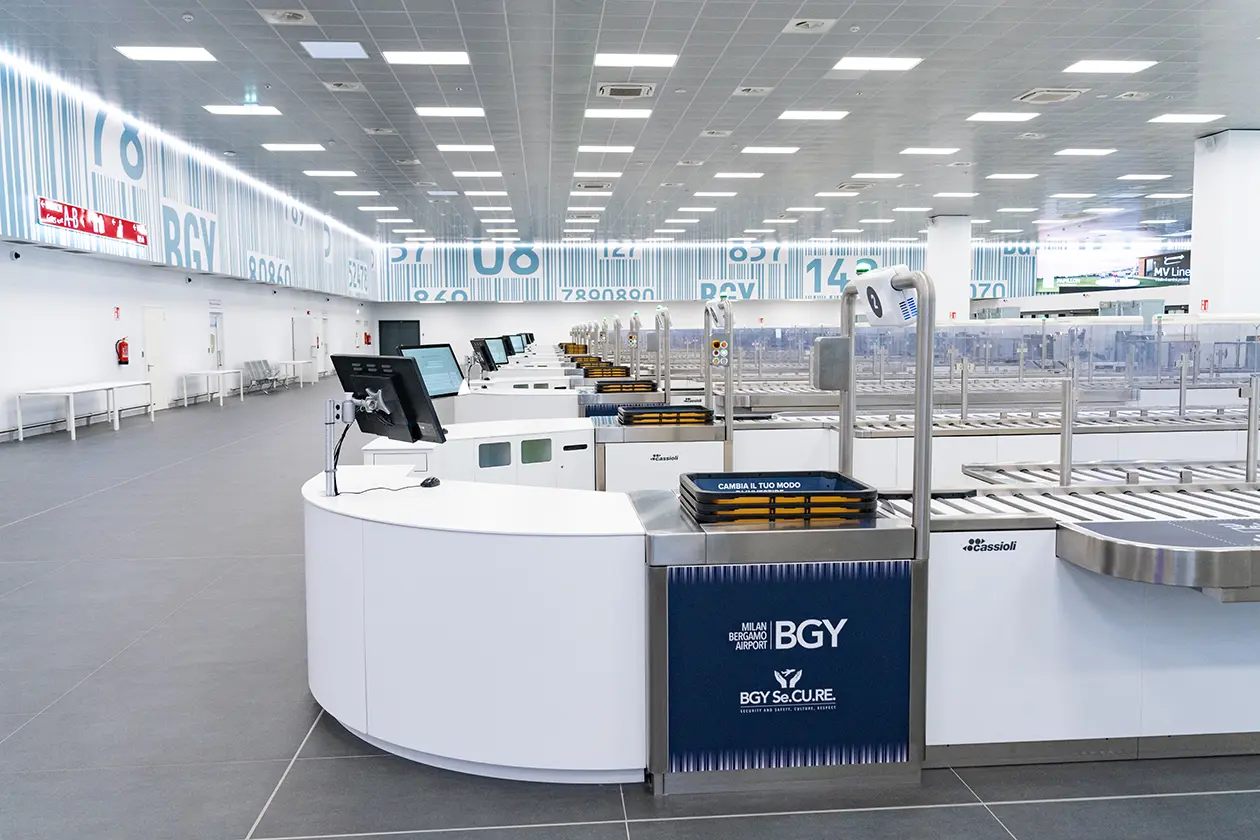
In parallel with the development of the network, BGY has invested significantly in the terminal's infrastructure, with new check-in counters, a new security area, a renovated duty free and new non-Schengen gates. How do these interventions improve flow management and the passenger experience?
"The interventions carried out on the Milan Bergamo Airport terminal affect two complementary levels: qualitative perception of the environment and concrete operational efficiency in the management of flows. From an experience perspective, entering a new, bright, and visually more welcoming infrastructure has an immediate impact on the passenger. The expansion of the check-in counters, the new security area, the renovated duty free and the new non-Schengen gates help to convey a sense of modernity and order, elements that improve the overall quality of the stay at the airport. The most significant innovation concerns security. The new technology installed allows for faster and smoother checks: passengers can leave liquids and electronic devices inside their hand luggage and, thanks to the new systems, the limit of 100 ml per container has also been exceeded. Today, each individual container can reach up to 2 liters, while the operating rules of the airlines remain valid. This significantly simplifies the process, reducing interruptions and slowdowns. From the point of view of flow management, the simplification of procedures allows control staff to operate with greater continuity, avoiding frequent downtime related to errors or distractions on liquids. Of course, some prescriptions remain (such as the removal of jackets or belts) but overall the number of operations required of the passenger has been reduced compared to the past. Direct access to a larger duty free and renovated spaces completes a more linear and pleasant path. The result is a tangible improvement both in terms of flow fluidity and perceived comfort, with further infrastructural developments planned in the coming months".
Milan Bergamo now offers a wide range of services, from lounges to fast track, from parking to food & retail offerings, up to dedicated premium solutions such as BGY TOP and BGY GO. To what extent do these services contribute to differentiating the airport and influencing the choice of passengers in a highly competitive area such as Lombardy?
"In an area like Lombardy, characterized by a concentration of airports, the quality of services is a decisive competitive factor. For Milan Bergamo Airport, the expansion of the offer is not an accessory element, but a strategic positioning lever. The catchment area expresses a significant share of passengers willing to invest in comfort, speed and personalisation of the airport experience. Services that allow you to avoid queues, have dedicated assistance or be accompanied throughout the journey to the airport directly affect the perception of quality and the overall image of the airport. In this sense, solutions such as BGY TOP and BGY GO offer a more private and fluid experience, which meets the needs of premium Travellers, families or small groups looking for efficiency and discretion. These services contribute in a concrete way to the differentiation of the airport: it is not just a matter of infrastructure, but of experience. Even those who fly with low-cost airlines can choose a higher level of service at the airport, demonstrating how the segmentation of demand no longer coincides rigidly with the type of carrier used. The data show a progressive growth of these premium solutions, with a growing share of loyal customers who regularly request them. There is also positive word of mouth, in particular through agencies specializing in tailor-made travel, which are starting to consider BGY even for high-value customers. In a highly competitive context, the ability to anticipate expectations and offer a complete and modular experience therefore becomes a key element in the choice of departure airport".
From 1 January of this year, his role has expanded to include the Communication of Milan Bergamo Airport. How important is it today to coordinate commercial strategy, marketing and communication to clearly tell passengers about the evolution of the airport's network and services?
"I would like to point out that communication in the marketing and commercial field does not only concern destinations or the aviation segment. It also includes information and promotion of everything that happens inside the airport: news in retail, new openings, airport services and the evolution of e-commerce. Communicating these developments effectively is key to driving user use and is a goal shared by the entire company. Integrating the marketing component even more closely with the commercial development of airlines is equally strategic. This work was already being done excellently and will continue to be so with further commitment, with the aim of obtaining increasingly effective and, if possible, faster results. The intent is to further strengthen coordination between the different areas, maintaining a dynamic and results-oriented approach, enhancing every opportunity for growth for the airport".
If you had to summarize in a few words why you should choose Milan Bergamo to leave in summer 2026, what key message would you like to convey to passengers?
"Milan Bergamo Airport: new, beautiful, dynamic and smart. Choose us!".