The entire city inscribed on the World Heritage List
Rabat, the capital of the Kingdom of Morocco, is a city that stands out for the extraordinary richness of its historical, cultural and urban heritage. It is no coincidence that, in 2012, it received the recognition of UNESCO World Heritage Site with the denomination "Rabat, Modern Capital and Historic City: a Shared Heritage", testifying to the unique balance between the great monuments of the past and the contemporary urban vision.
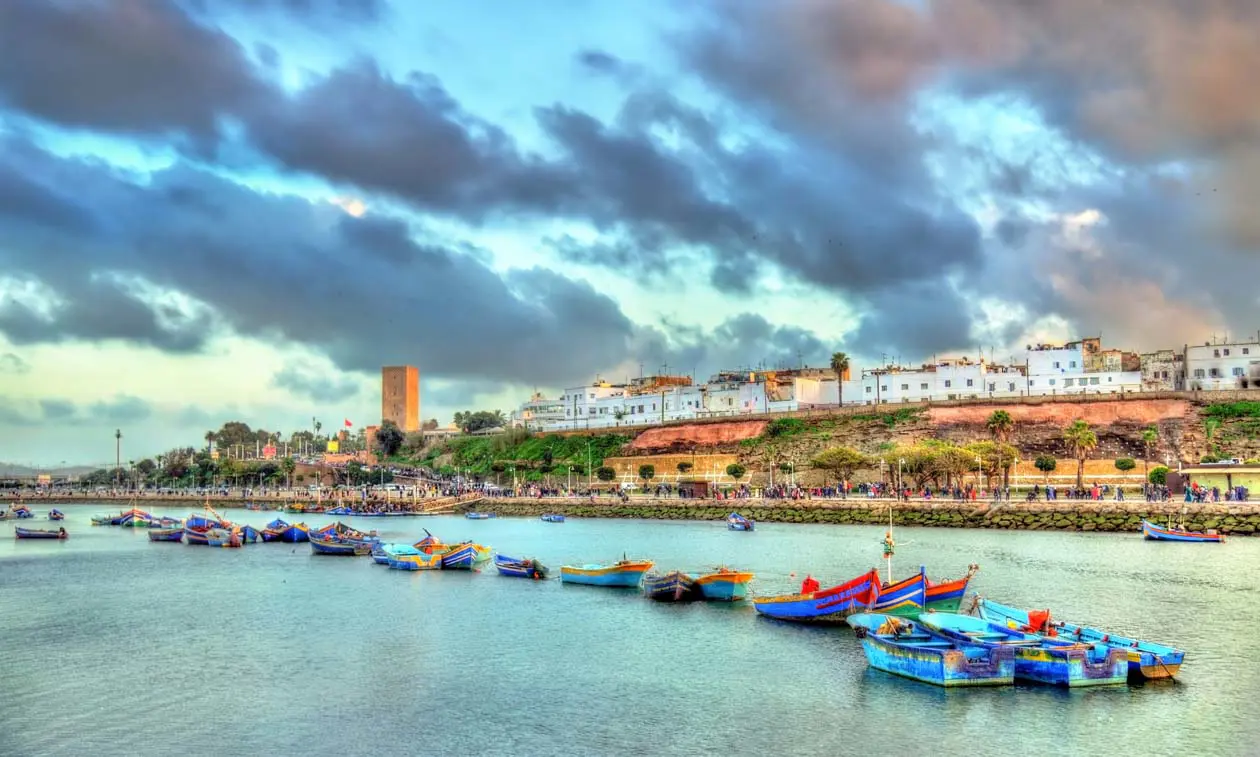
The high historical value of its monuments is expressed by emblematic sites such as the Kasbah of the Oudaïas, the Necropolis of Chellah, the Hassan Tower and the Mausoleum of Mohammed V, which dialogue harmoniously with the new city, characterized by manicured gardens, wide avenues and a modern architectural imprint. To further strengthen the cultural profile of the capital, UNESCO has designated Rabat as the World Book Capital for 2026, recognizing the city's central role in promoting publishing, reading and literacy.
The history of Rabat dates back to the eighth century BC when, in the current site of Chellah, the first traces of human presence were found. Initially, it was founded as a trading outpost by Phoenician navigators, later the city came under Carthaginian influence, and then grew and developed over almost three millennia. Over the years, Rabat has been able to preserve its rich history in every monument and nook and cranny of the city but, at the same time, it has also revealed itself as a modern and cultural capital.
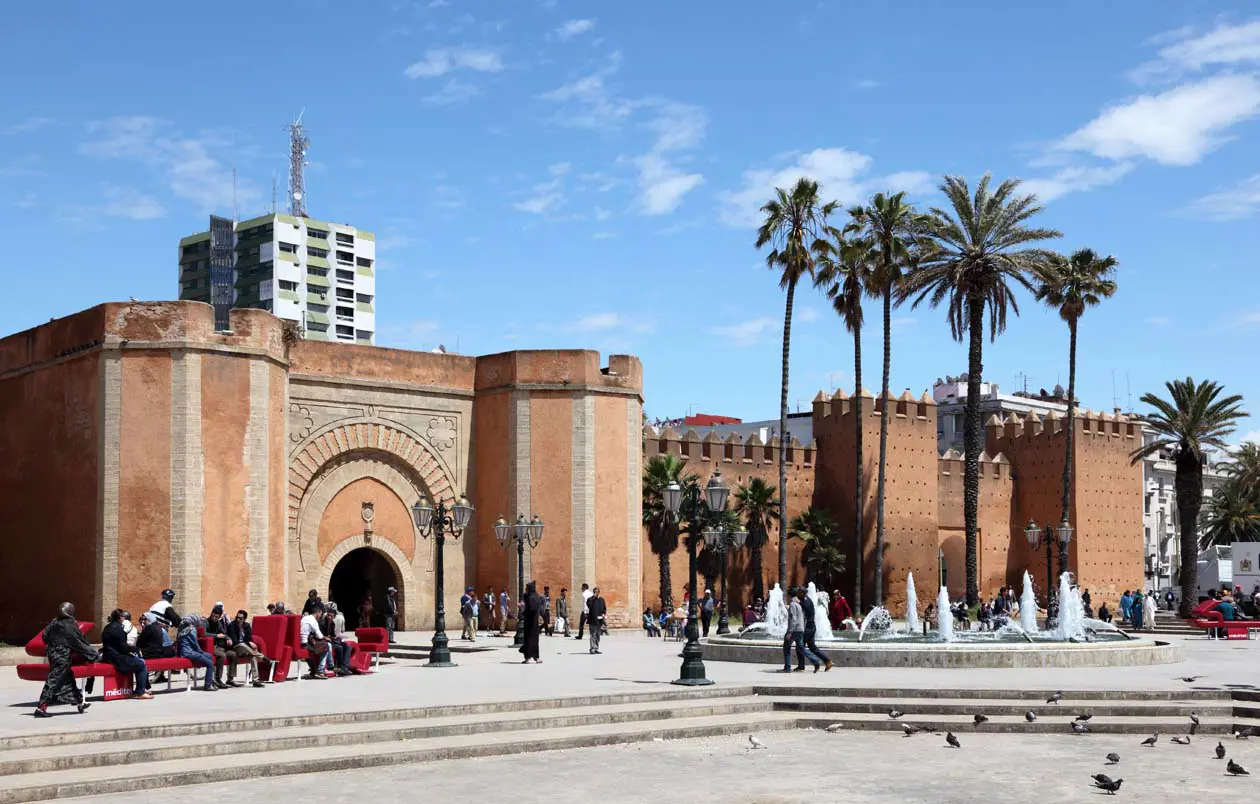
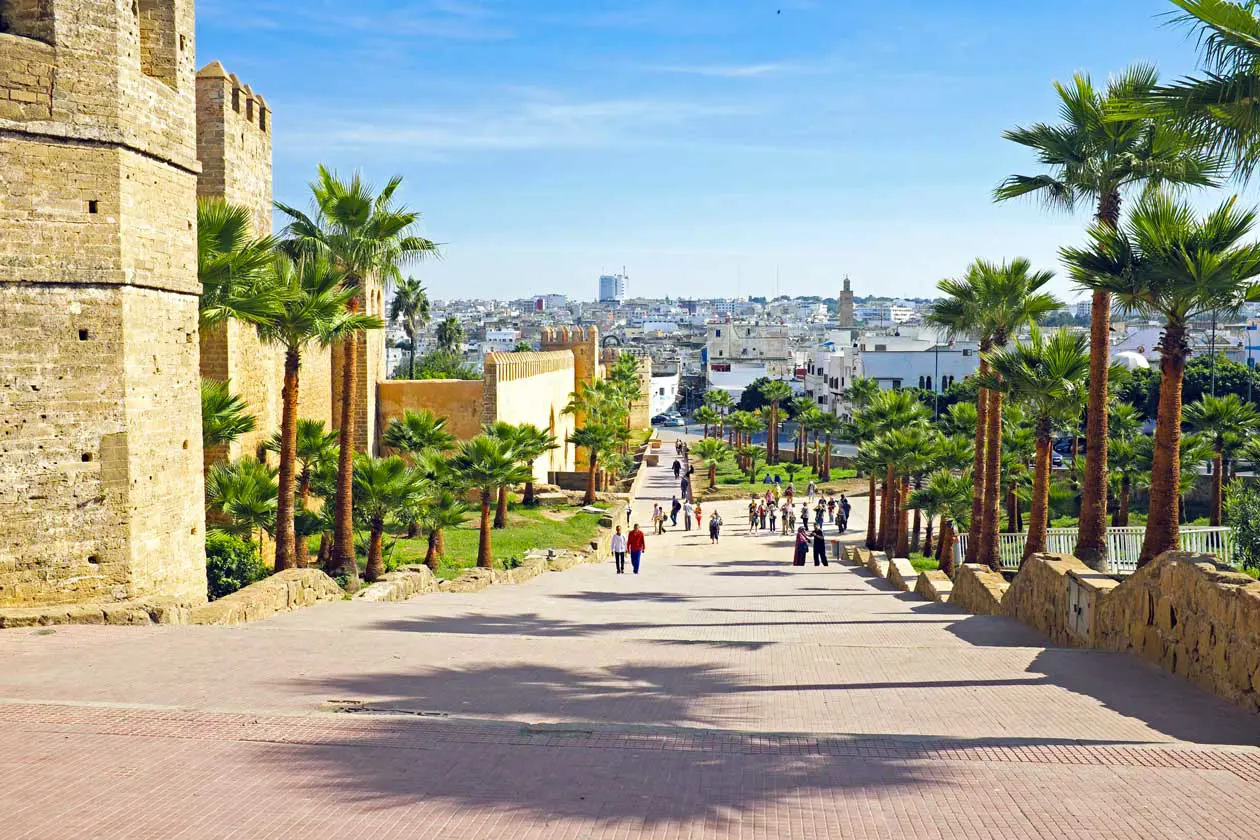
Its streets and squares are embellished with contemporary masterpieces and historical artifacts such as Bab El Had, one of the monumental gates of Rabat from the late twelfth century that was part of the city's defensive walls, today a lively urban meeting place. In the medina of Rabat, the Andalusian Walls are a historical monument of the city. Built in the 17th century to protect exiled Muslims expelled from Spain by Philip III, they are about 1.4 kilometers long and separate the current medina from the former site of the Kasbah of the Oudaïas. In the Andalusian Walls you will find several iconic gates and, in addition to the Bab El Had gate, you can admire the Bab Chellah and the Bab Bouiba.
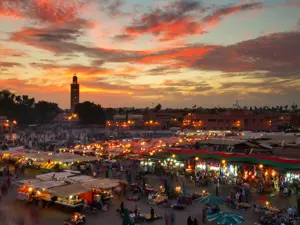
The heart of the capital is the medina of Rabat which amazes with its authentic atmosphere in balance between tradition and modernity. Declared a World Heritage Site by UNESCO, it is characterized by dense alleys, ancient houses and traditional souks.
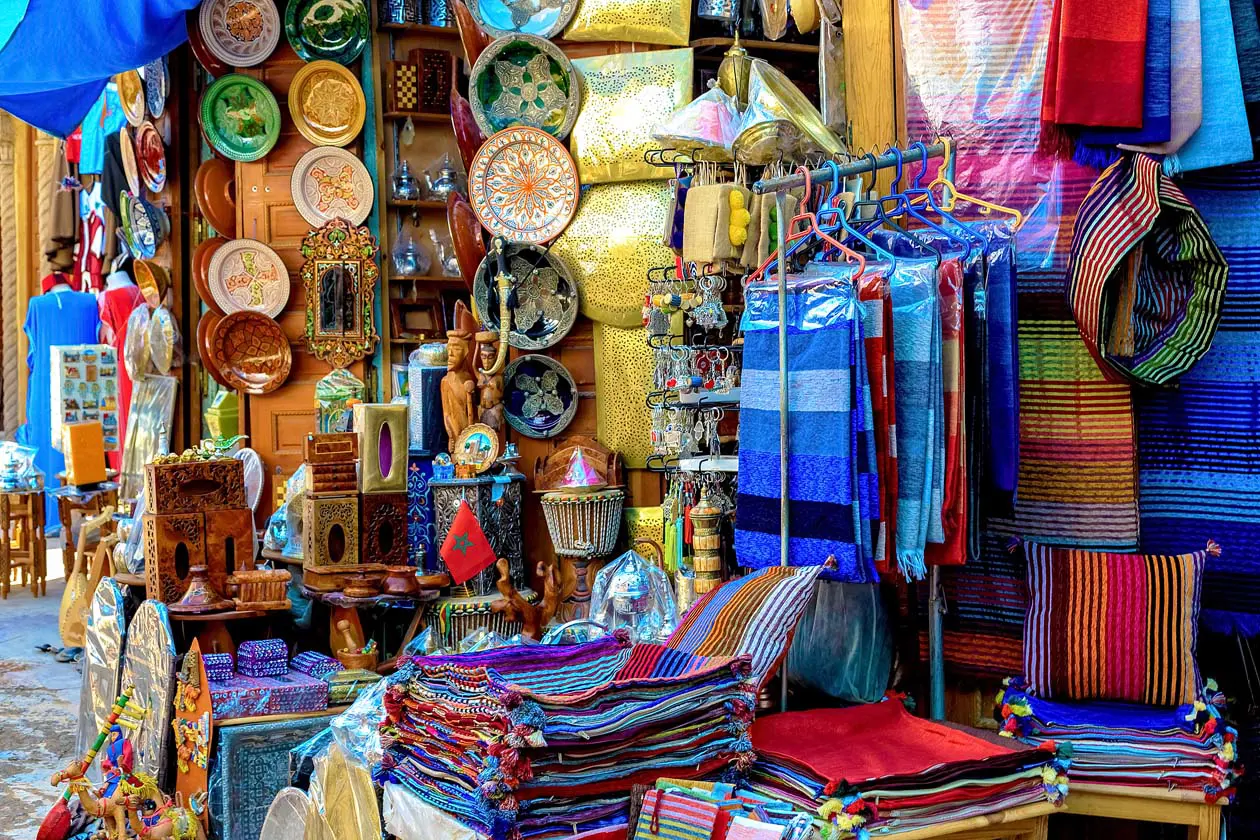
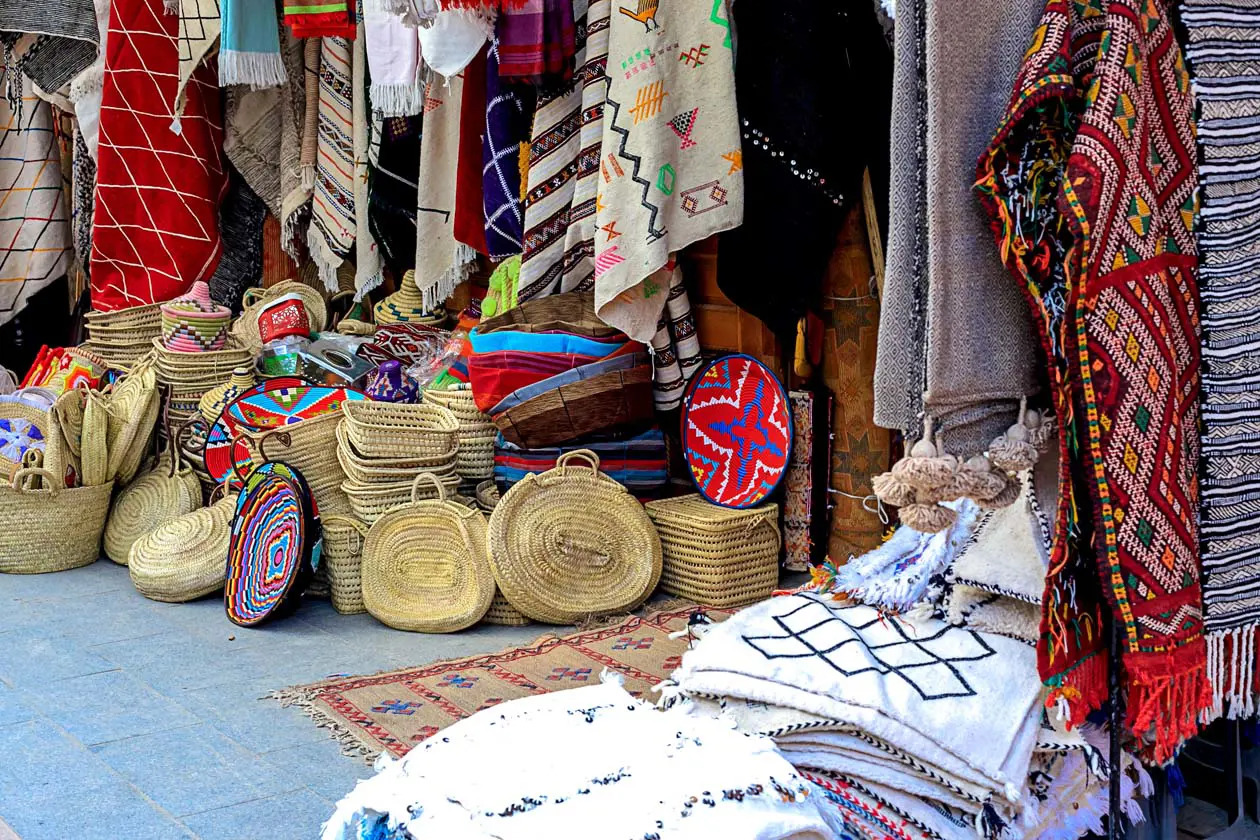
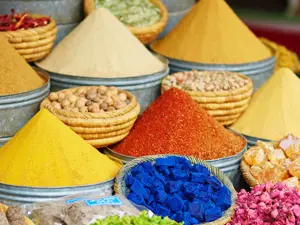
Among its iconic streets, Rue des Consuls stands out, where you can stroll under decorated arcades and find unique souvenirs of traditional Moroccan handicrafts, recognized as Intangible Heritage by UNESCO, which includes Berber carpets, ceramics, metal lamps, leather goods, silver jewelry, slippers and silk fabrics that reveal the culture and lifestyle of Morocco. For authentic shopping, don't miss the Caftan, argan oil, henna, saffron, rose water or orange blossom water.
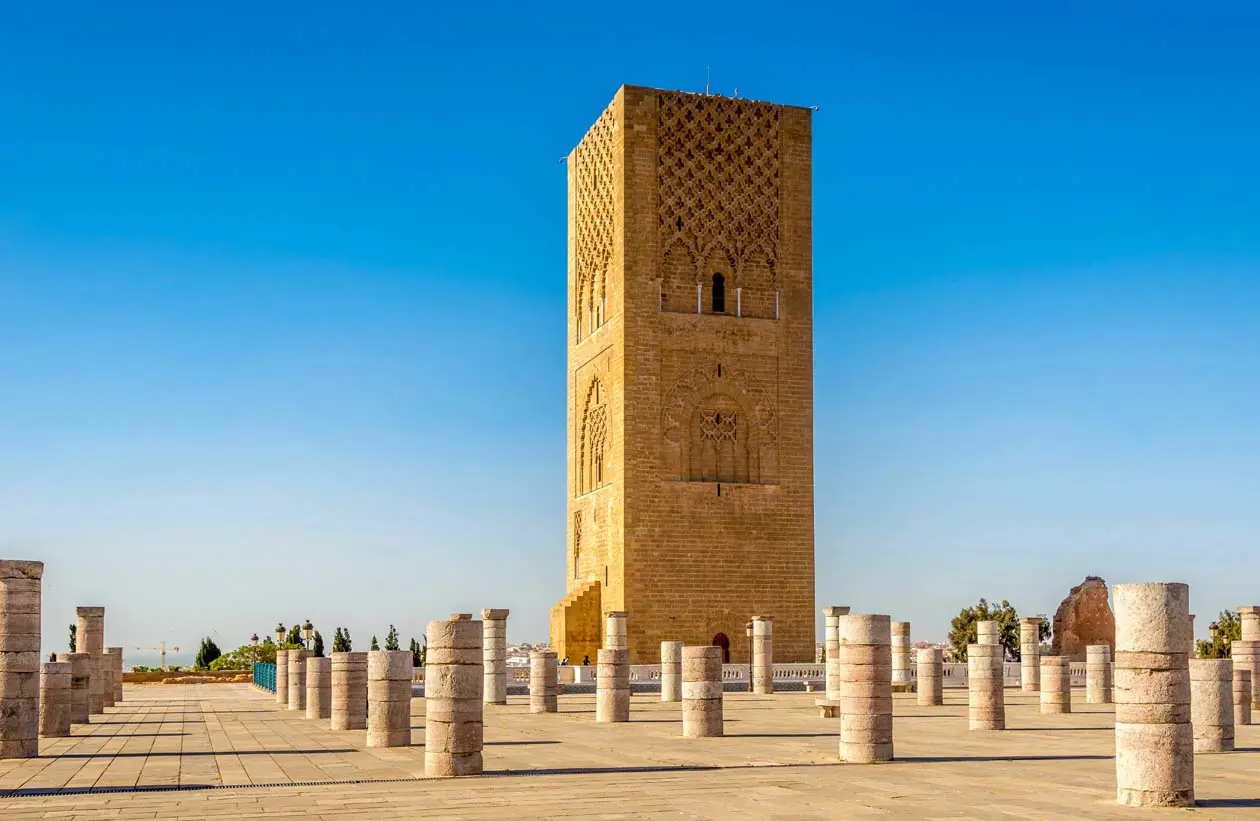
The symbol of Rabat - and one of the most famous sites of the kingdom - is the Hassan Tower, the only vestige of what must have been (at the behest of the Almohad sultan Yacoub Al Mansour in the twelfth century), the largest mosque in the Muslim world. Only the Hassan Tower, a UNESCO World Heritage Site, remains of the project, a 44-meter-high minaret, whose architecture is similar to that of the Koutoubia in Marrakech and the Giralda in Seville.
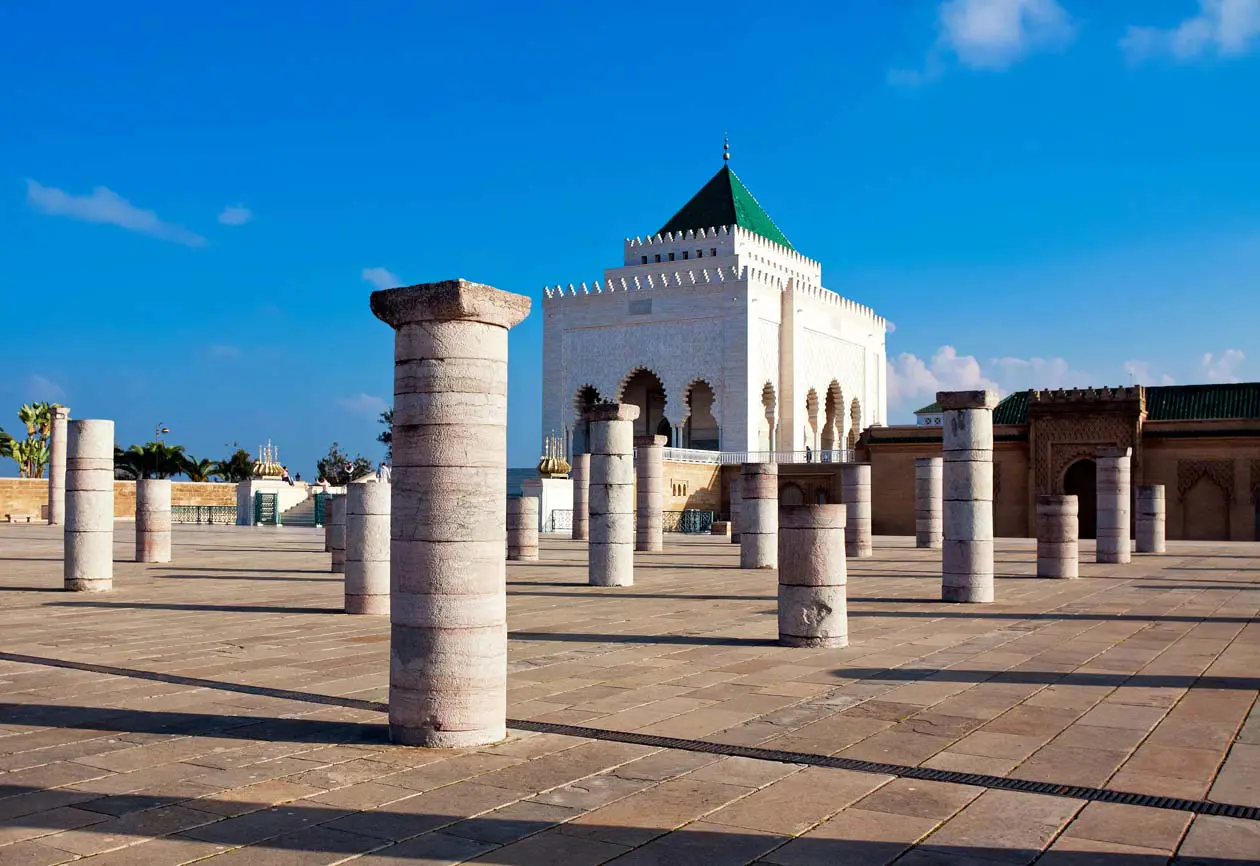
Near the Hassan Tower, you will find one of Rabat's most iconic landmarks and a UNESCO World Heritage Site, the Mausoleum of Mohammed V, a sacred site that houses the tombs of His Majesty King Mohammed V and his sons, King Hassan II and Prince Moulay Abdallah. Built between 1962 and 1971, the mausoleum expresses traditional Moroccan architecture and Islamic art with white marble, green pyramidal roof, zellige mosaics and sculptures.
The city of Rabat also holds significant masterpieces of art in its museums such as the Mohammed VI Museum of Modern and Contemporary Art, Morocco's first public museum dedicated to modern and contemporary art with a collection of paintings, sculptures, photographs and installations made by Moroccan artists of the twentieth and twenty-first centuries. Among other museums, the National Museum of Photography and the Museum of History and Civilizations are worth a visit.
While, the imposing ancient Bab Rouah gate within its ancient walls, has been converted into a contemporary art gallery and is an ideal cultural stop for lovers of art, history and architecture, reachable from Victory Avenue, close to the Parliament and the main avenues of the capital.
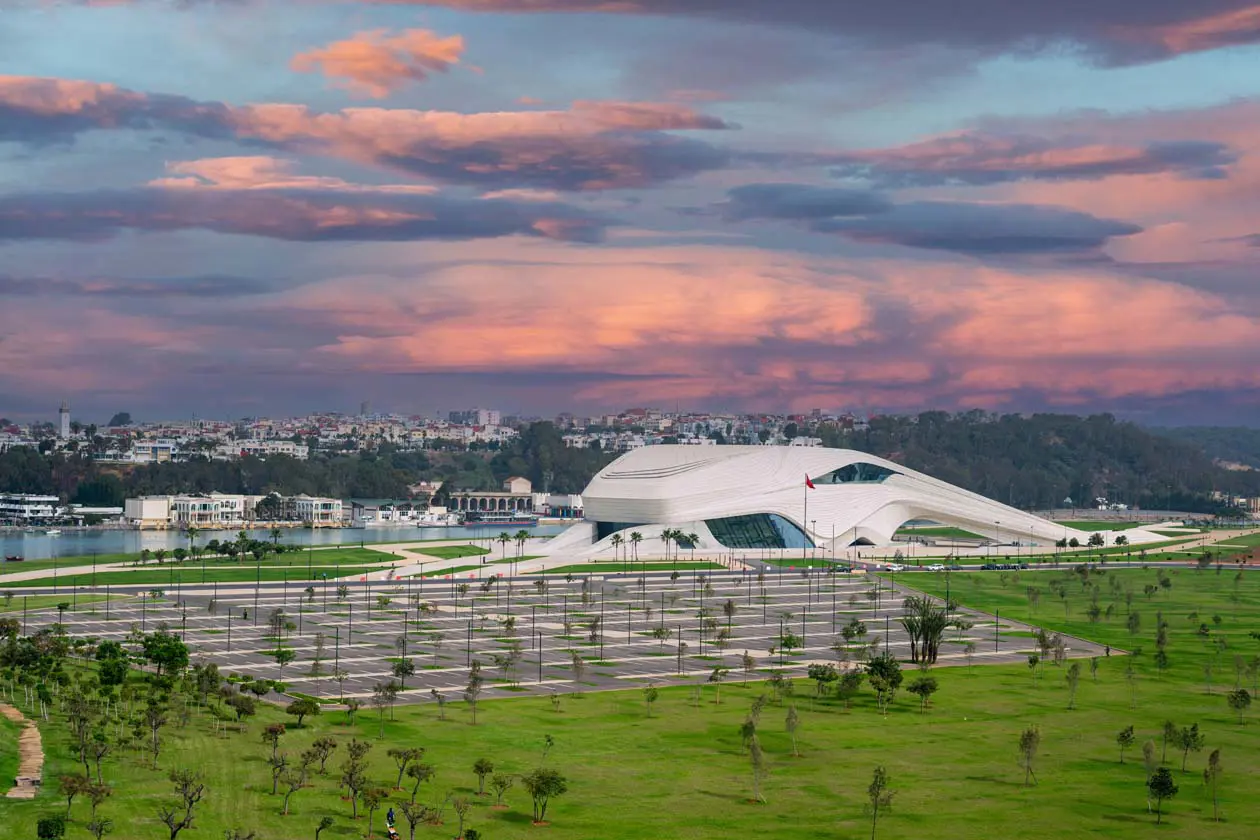
Among the most recent and modern architecture, the Grand Theater of Rabat designed by Zaha Hadid on the banks of the Bou Regreg river stands out. Born as a center for the performing arts and a venue for the promotion of arts and culture, it is characterized by a curvilinear design that recalls the course of the river, the aesthetics of Arabic calligraphy and Islamic architecture in an architectural mix that makes both the indoor theater and the outdoor amphitheater unique.
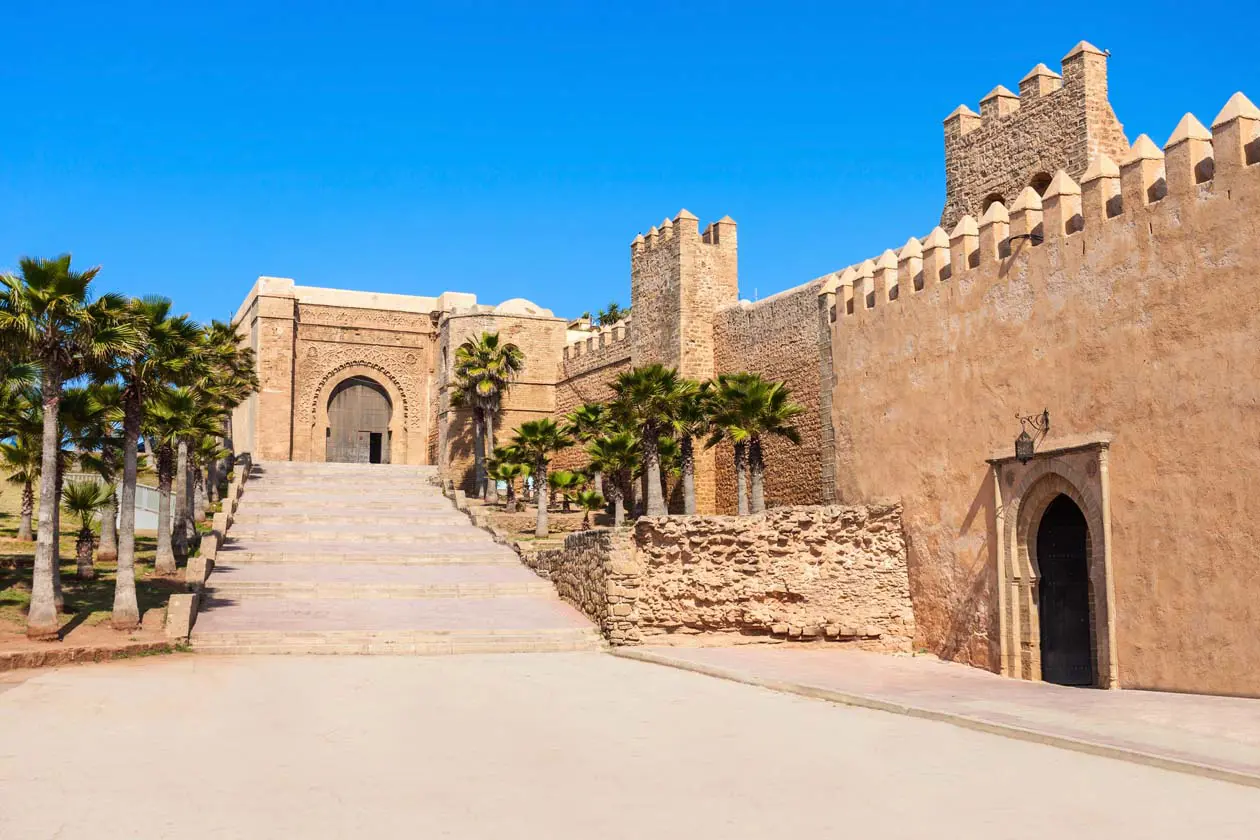
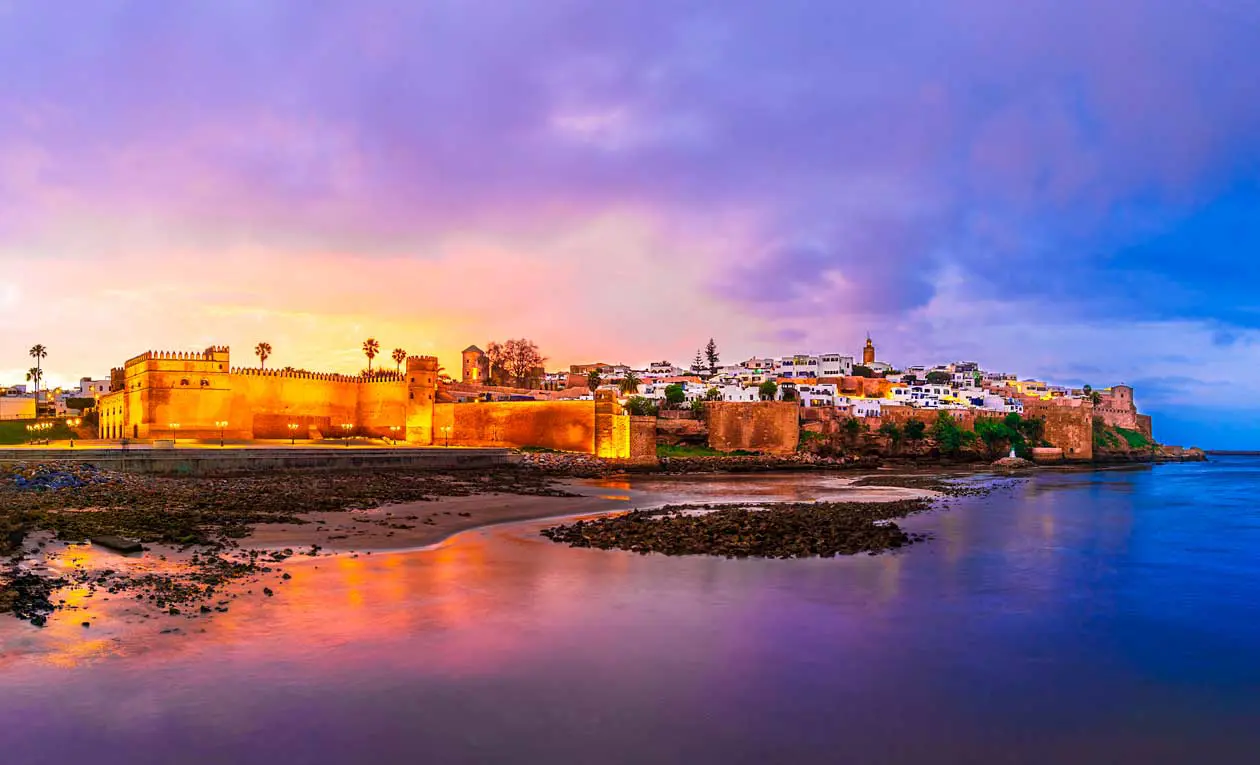
Just a 15-minute walk from the center of Rabat, on the bank of the Bou Regreg River, you will discover the beautiful architecture of the citadel Kasbah of the Oudaïas (also known as the Kasbah of the Oudayas), an imposing fortress from the twelfth century, declared a World Heritage Site by UNESCO, which houses a museum, riads and old mosques. After the visit, you can stop at the historic Café Maure to enjoy mint tea and almond pastries, enjoying the view of the mouth of the Bou Regreg River, the Atlantic Ocean and the city of Salé.
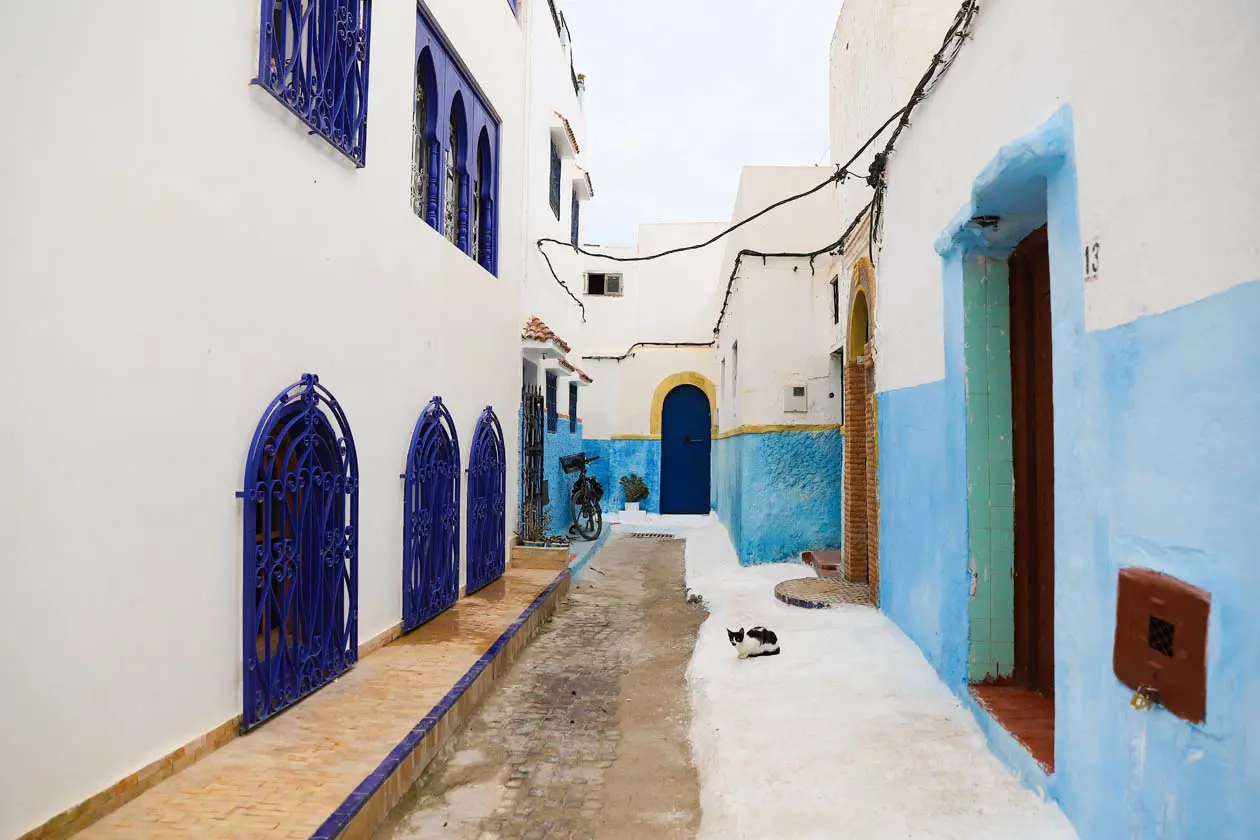
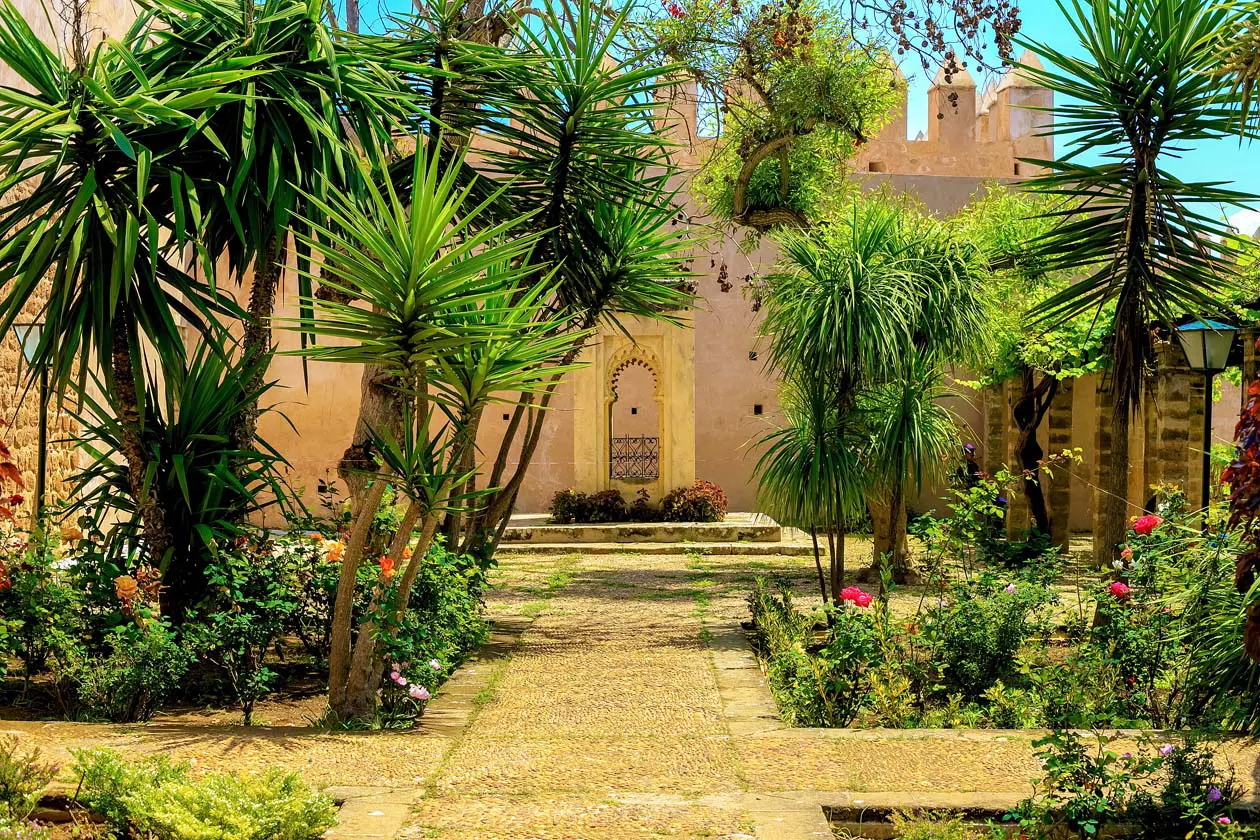
In the heart of the Kasbah of the Oudaïas there is also a historic garden, the Andalusian Garden of the Oudaïas with panoramic views of the Atlantic Ocean, ideal for relaxing and regenerating. Built around 1920, it is inspired by the Hispano-Moorish gardens and offers shaded paths, fountains, small lakes, bougainvillea and orange trees.
Also perfect for a walk in nature is the Zoological Garden, in the Green Belt of Rabat (in Yacoub El Mansour, about four kilometers away), which offers an immersion in the heart of African wildlife, with lions, elephants, giraffes, crocodiles and other species in their natural habitat, for an adventure to discover biodiversity right on the outskirts of the city. While, 19 kilometers from Rabat, in Salé you can visit the Exotic Gardens of Bouknadel for a unique botanical experience among gardens, plant and animal species from five continents: an excellent destination for a trip out of town, even with the family for its educational value.
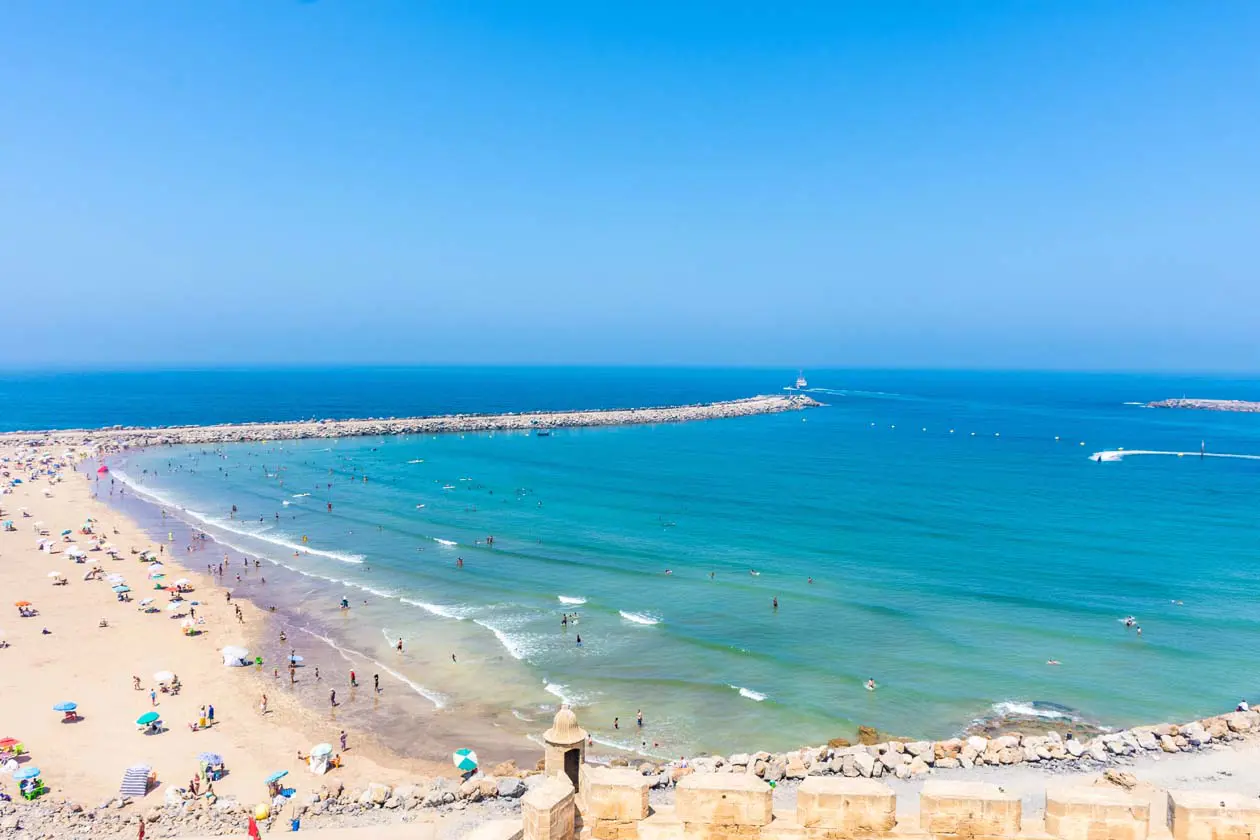
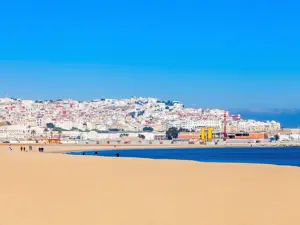
Sea lovers can relax on the wide shoreline with golden beaches of fine sand that stretch all the way to Casablanca. In Rabat, Oudayas beach is truly special as it is dominated by the fortress perched on the rock that rises in front of the Atlantic Ocean. On Rabat's 2.5-kilometre-long coastline, you can also practice various sports including kayaking and windsurfing but also surfing, jet-skiing and horse riding. While, to play golf, you can reach the Royal Golf Dar Es Salam, fifteen minutes from the center, surrounded by a green cork oak forest.
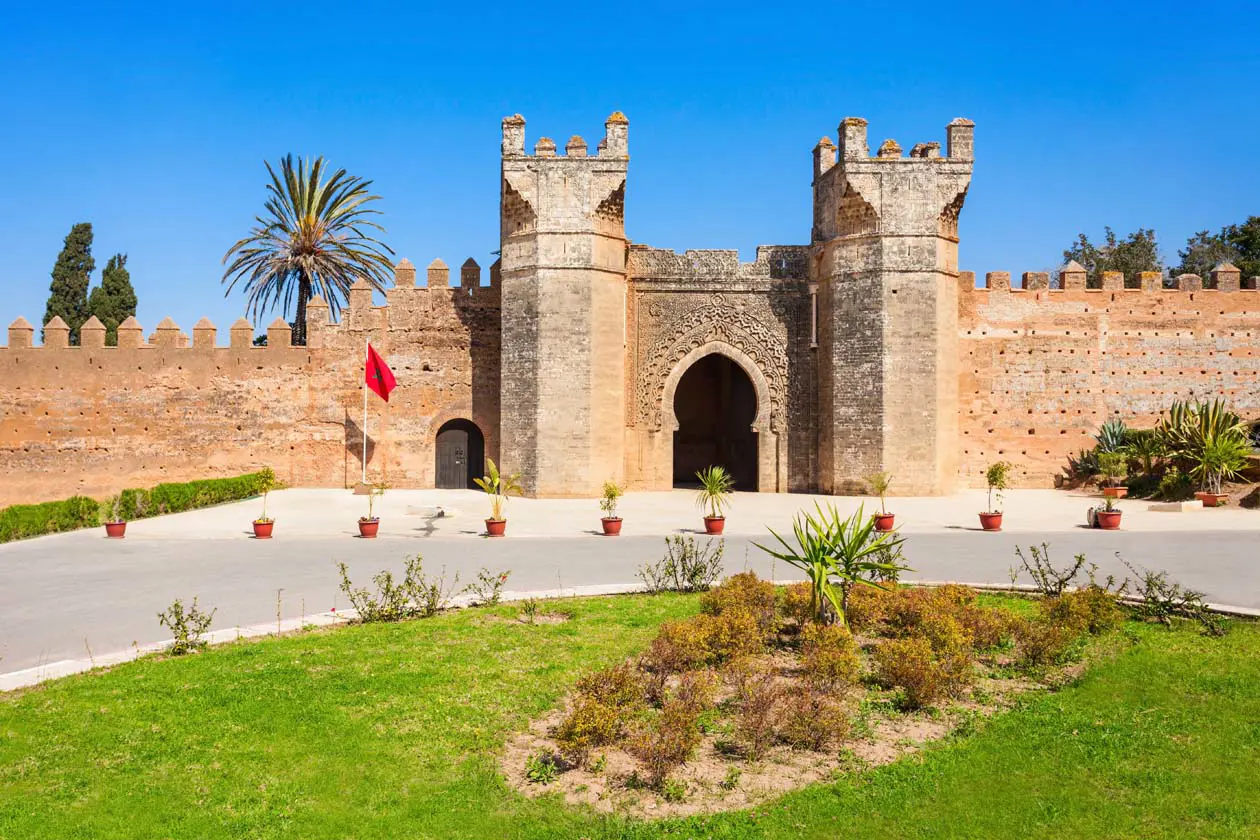
Outside the Almohad walls, about three kilometers from the center of Rabat, is Chellah, declared a World Heritage Site by UNESCO and built in the fourteenth century by the Marinids on the ruins of the ancient Roman city of Sala Colonia. Chellah, the oldest settlement at the mouth of the Bou Regreg River, is perched on a hill overlooking the river and reveals itself as a magical necropolis.
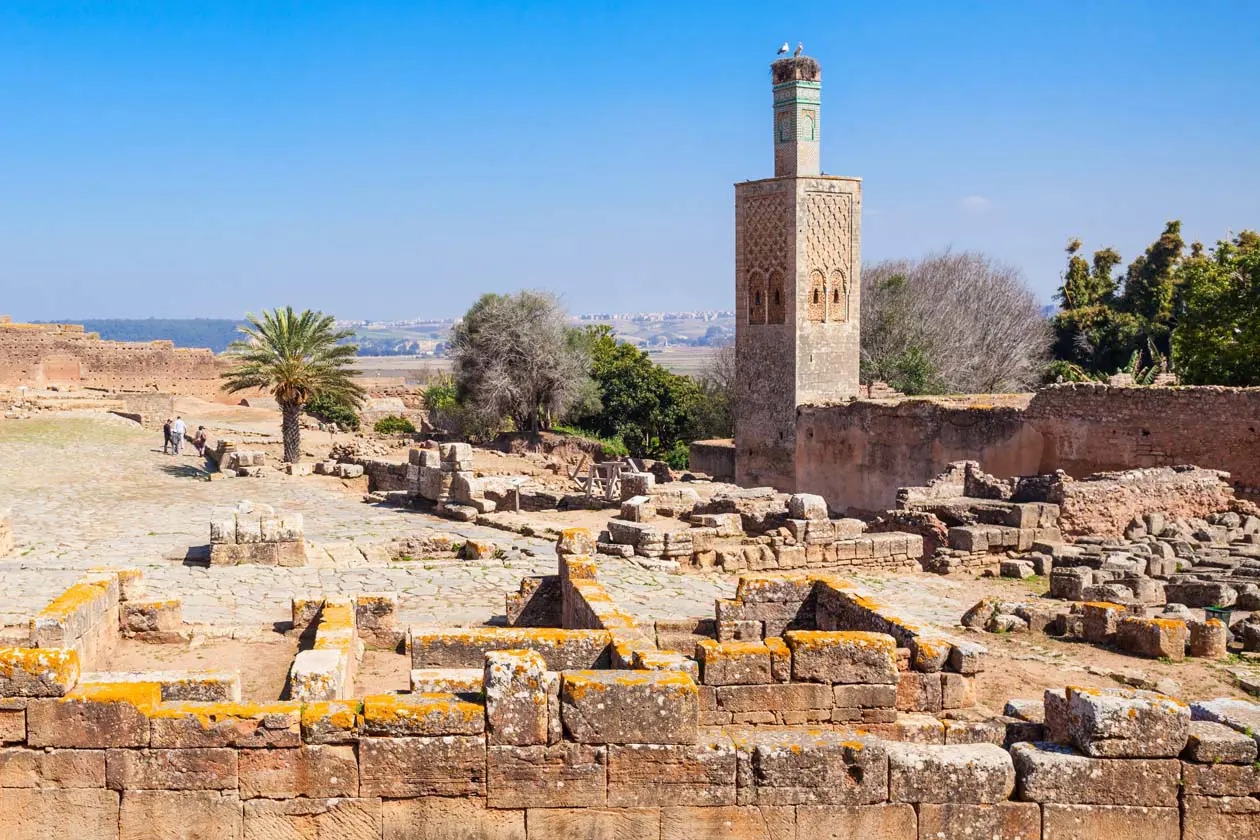
It can be accessed by crossing the large octagonal gate of the Marinids, and then discover the remains of the Roman and Marinid empires by walking along a paved path, among trees and flowers until you reach the ruins of Zaouia, the minaret of the ancient mosque decorated with polychrome tiles or the pond with fish, turtles and eels. The Merinid Necropolis also hosts several events, including the Jazz Festival held annually in September with concerts by European and Moroccan musicians. A musical event that, together with the annual Mawazine Rhythms of the World festival, transforms the city into a stage of melodies.
To complete the discovery of the area, you can add to the itinerary an excursion to the "twin city" of Salé which develops on the right bank of the Bou Regreg river, right in front of Rabat. Served by the same arrival airport, Rabat-Sané airport, is easily accessible from the Rabat-Sané tram line. A thousand-year-old city with medieval architecture that is worth a visit for its rich historical heritage including centuries-old ramparts, souks and a lively medina.
The cuisine of Rabat
Rabat and the Rabat-Salé-Kénitra region offer dishes that express an ancient Andalusian, Berber and Arabic culinary tradition. The gastronomy reflects the flavors of Moroccan cuisine characterized by particular typical dishes prepared with local ingredients.
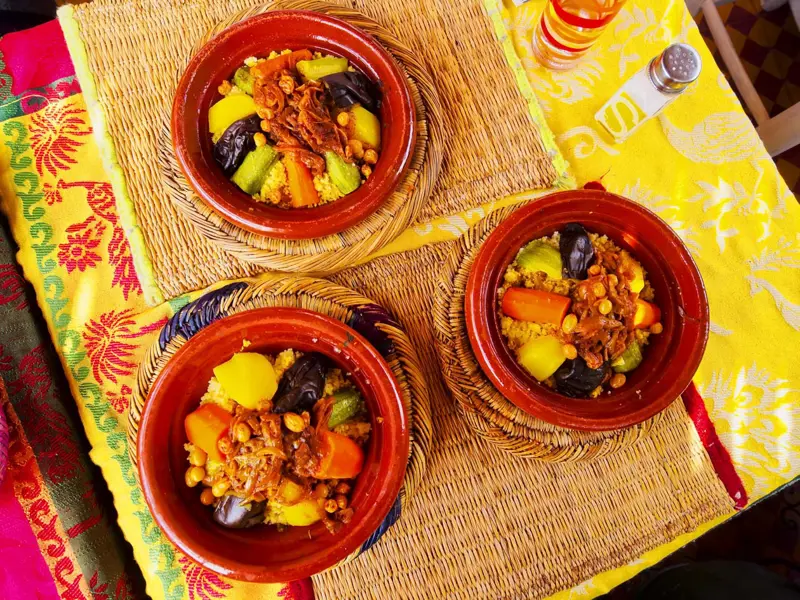
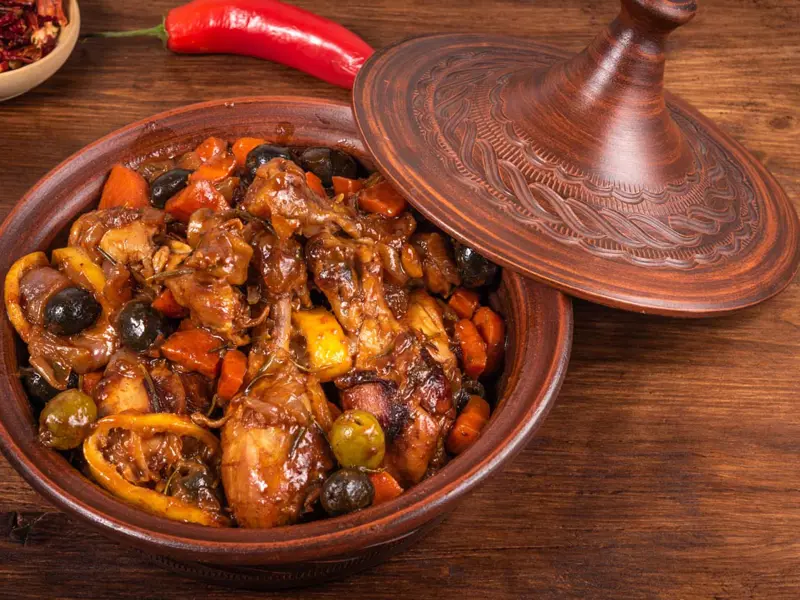
The most traditional recipes offer the tasting of tagine (with plums and almonds, candied lemon and olives, or artichokes and peas), couscous with vegetables and meat, pastillas (savory pies with pigeon meat or sweet with almonds, cinnamon on sheets of phyllo pastry sprinkled with powdered sugar) and fish specialties, prepared with fresh ingredients and spices (cumin, saffron, paprika, ginger).
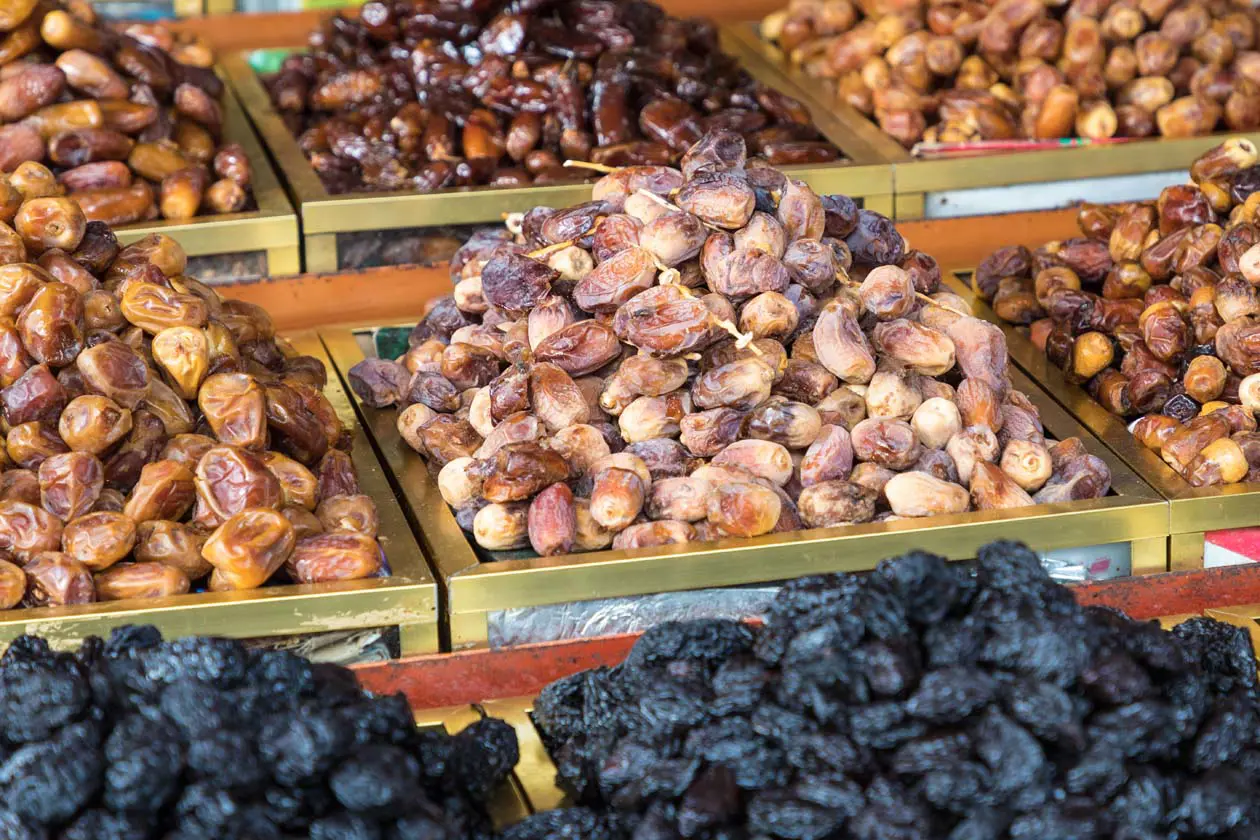
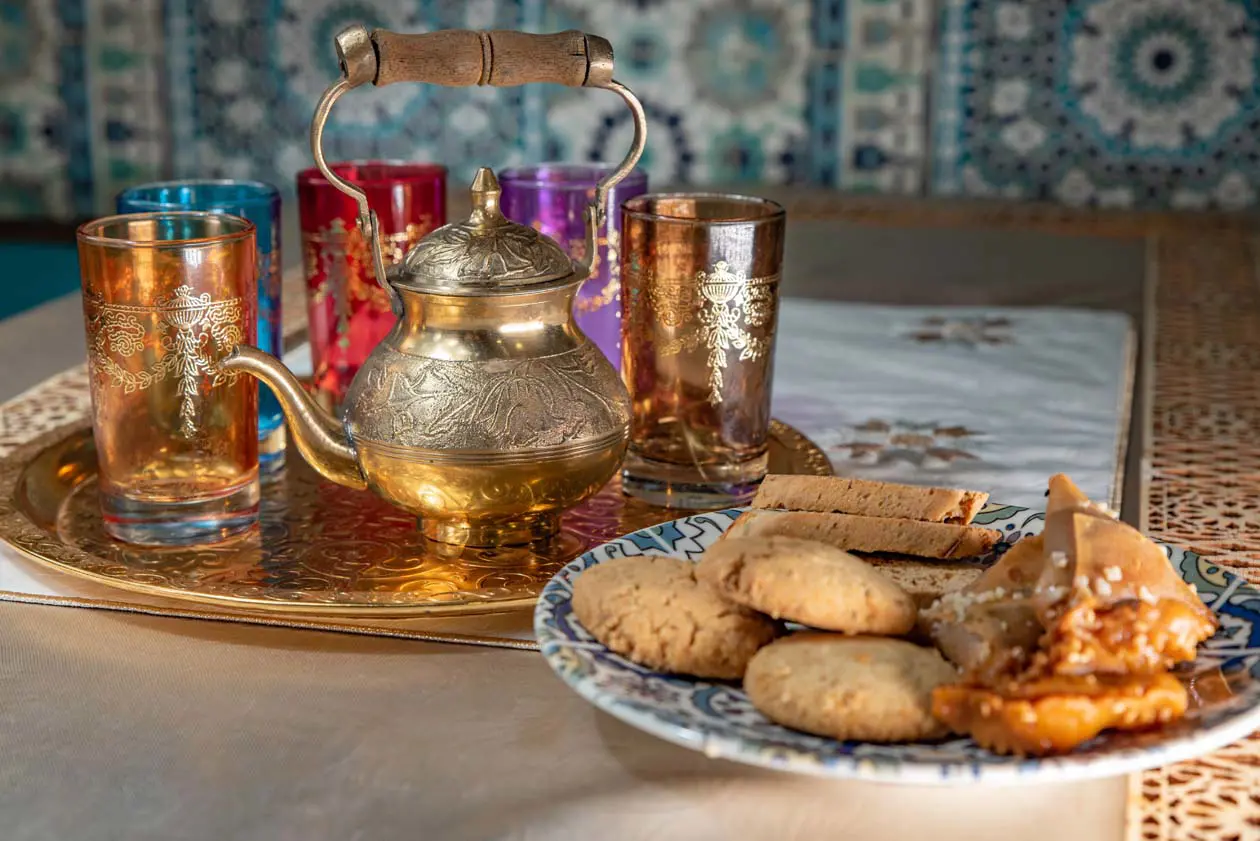
In addition to the many typical restaurants, the Central Market or the souk of the medina are the ideal place to discover Moroccan cuisine: here you can find olives, citrus fruits, dates, prickly pears, bread, thyme honey, homemade jams, traditional sweets such as kaab el ghazal (gazelle horns), honey briouates, almond ghriba, anise fekkas and honey 'chebakia' to be accompanied by sipping the traditional sweet mint tea, served in characteristic small decorated glasses.
Lyrics by Lisa Maria River
Avion Tourism Magazine
Photo: Copyright © Sisterscom.com / Depositphotos
All rights reserved. Reproduction is prohibited.
Rabat offers various possibilities for accommodation in facilities equipped with the best services.
To find the ideal hotel and advantageous offers, you can search by stars but also by places of interest.


WHERE TO GO IN RABAT
Monuments and attractions in Rabat
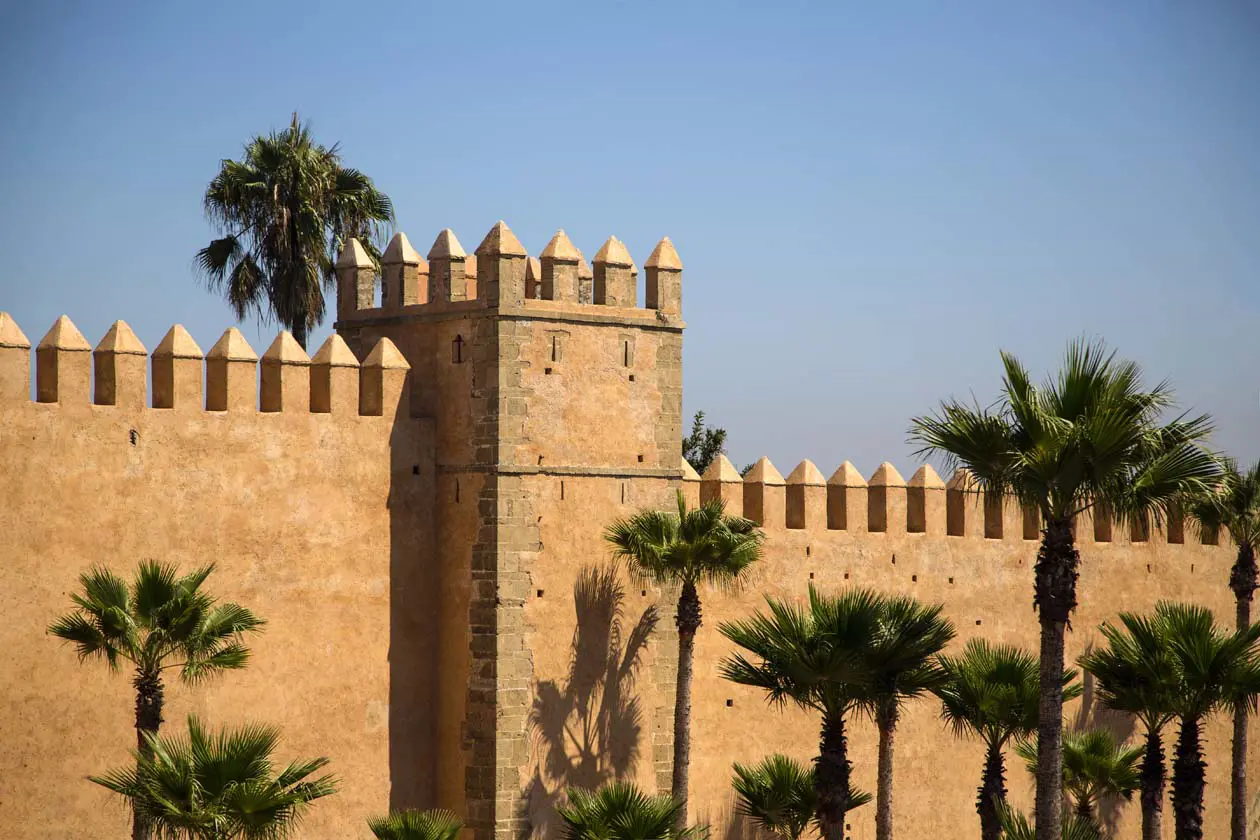
In the heart of Rabat's medina, the Andalusian Walls were built in the seventeenth century for defensive purposes by the Moriscos, the Muslim communities expelled from Spain who found refuge in Morocco. With a development of about 1.4 kilometers, the walls mark the border between the current medina and the ancient site of the Kasbah of the Oudaïas. Some of Rabat's most emblematic gates open along the way, including Bab El Had, Bab Chellah, and Bab Bouiba. The Andalusian Walls have a functional style with gates, watchtowers, bastions, loopholes and paths.
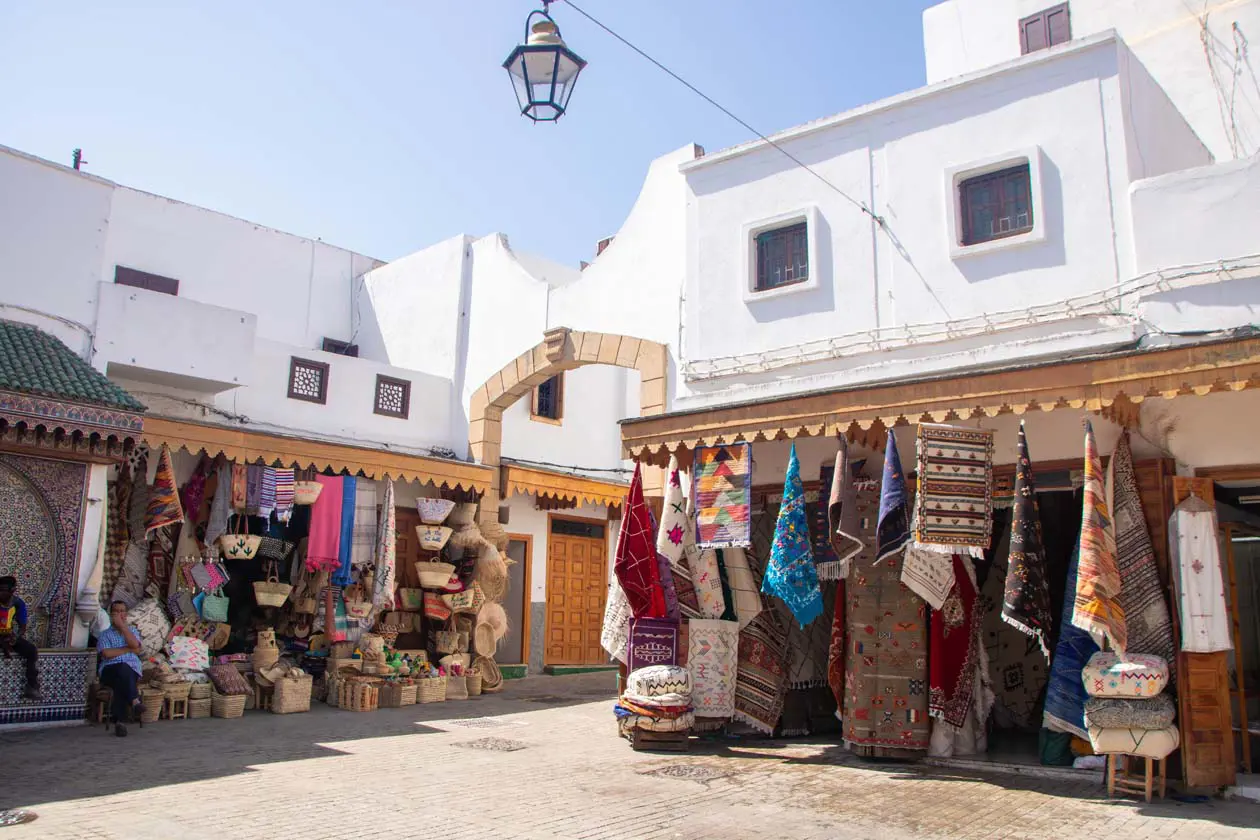
The ancient medina of Rabat, between the Kasbah of the Oudaïas and the line of the Andalusian Walls, preserves ancient mosques and traditional houses. The medieval layout is visible in the structure of the streets and in the religious buildings. The medina is one of the liveliest places in the city with the old souk, alleys and artisan shops. Dominating the area is the minaret of the Great Mosque and, not far away, Bab el Had Square around a fountain and dominated by the monumental gate of the same name. The Medina of Rabat is a UNESCO World Heritage Site.
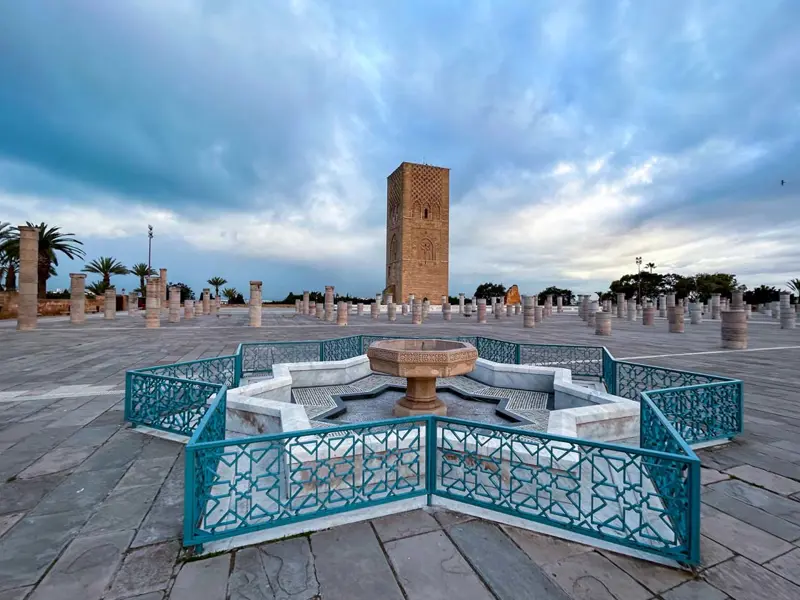
The Hassan Tower, a historical monument of Rabat and Morocco, is what remains of the project of a mosque commissioned in the twelfth century by the Almohad sultan Yacoub Al Mansour, never completed at his death in 1199. It is a 44-meter-high minaret with an austere and harmonious architecture, typical of the Almohad style. Built in sandstone, it has a square plan and an exterior decorated with capitals and columns. It is located on Boulevard Mohamed Lyazidi in Rabat. Hassan Tower is a UNESCO World Heritage Site.
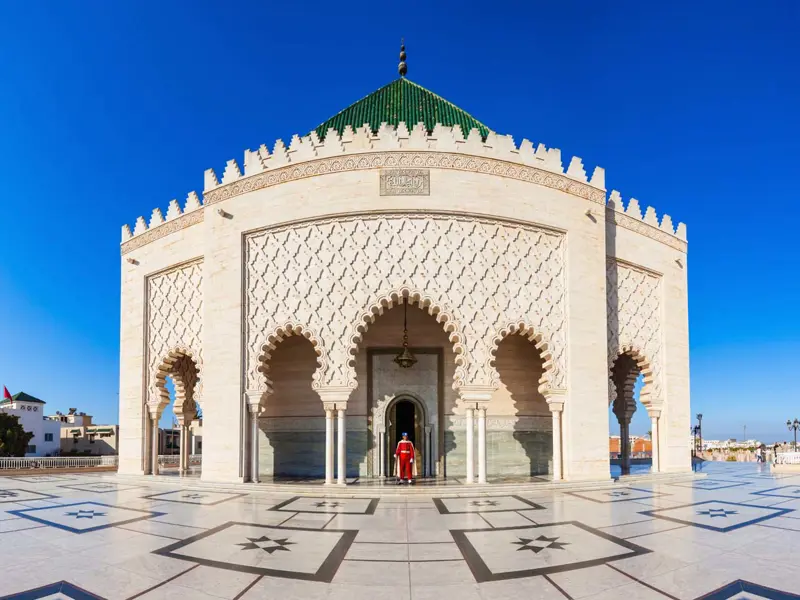
The complex, designed by Vietnamese architect Cong Vo Toan, is located in front of the Hassan Tower and houses the remains of His Majesty King Mohammed V along with those of his two sons. Built between 1962 and 1971, it has a square architecture clad in white marble with Moorish porticoes and arches, a green pyramidal roof, zellige mosaics and sculpted decorations. The interiors are embellished with marble, carved woods and golden details. The Mausoleum of Mohammed V is a UNESCO World Heritage Site.
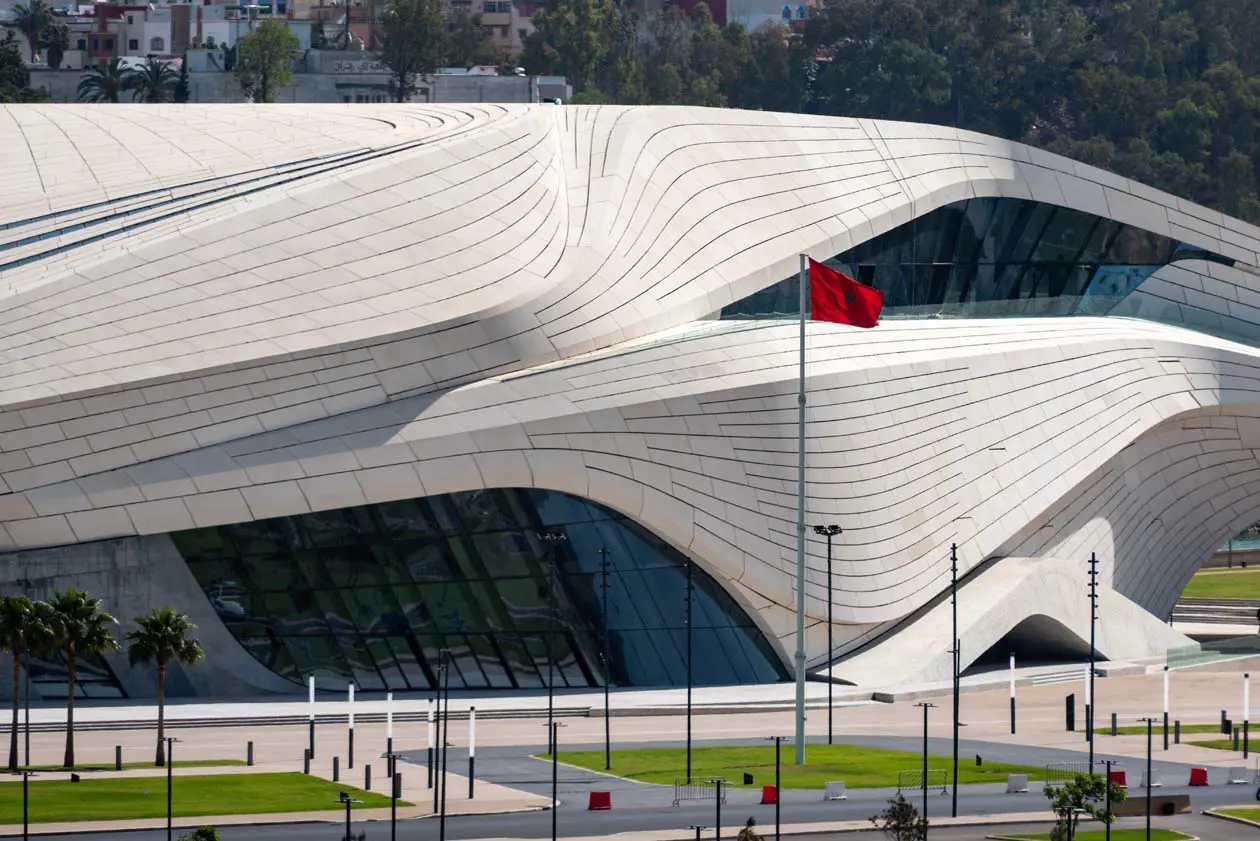
The Grand Theatre of Rabat is one of the main centres dedicated to the performing arts in contemporary Morocco and represents a new architectural symbol of the capital. The project bears the signature of Zaha Hadid and the Zaha Hadid Architects studio. Construction work began in 2014, was completed in 2021 and led to the official inauguration in 2024. The structure stands out for its curved shapes, inspired both by the sinuous course of the nearby river and by Arabic calligraphy. The architectural layout also integrates references to Islamic architecture. Inside, the complex houses a 1,800-seat indoor theater and an open-air amphitheater with a capacity of 7,000 spectators.
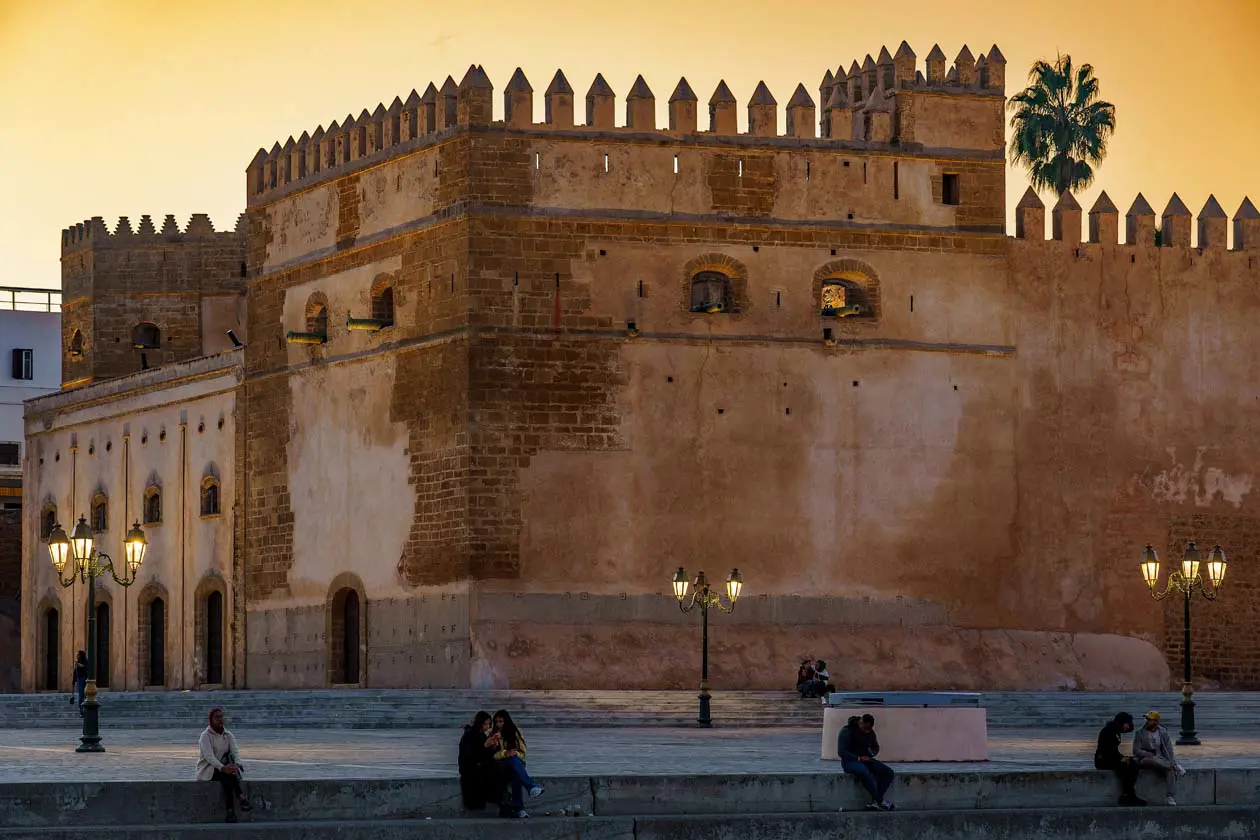
About a fifteen-minute walk from the centre of Rabat, on the bank of the Bou Regreg River, stands the Kasbah of the Oudaïas, an imposing fortified citadel dating back to the twelfth century. Access is through an Almohad door, which leads to a complex rich in history and timeless atmosphere. Inside the walls there is the Andalusian Garden of the Oudaïas, a small museum, refined riads, old mosques and the famous Café Maure, a place to indulge in a mint tea. From the terrace of the café, the view opens onto a panorama that embraces the course of the Bou Regreg, the Atlantic Ocean and the city of Salé. The Kasbah of the Oudaïas is a UNESCO World Heritage Site.
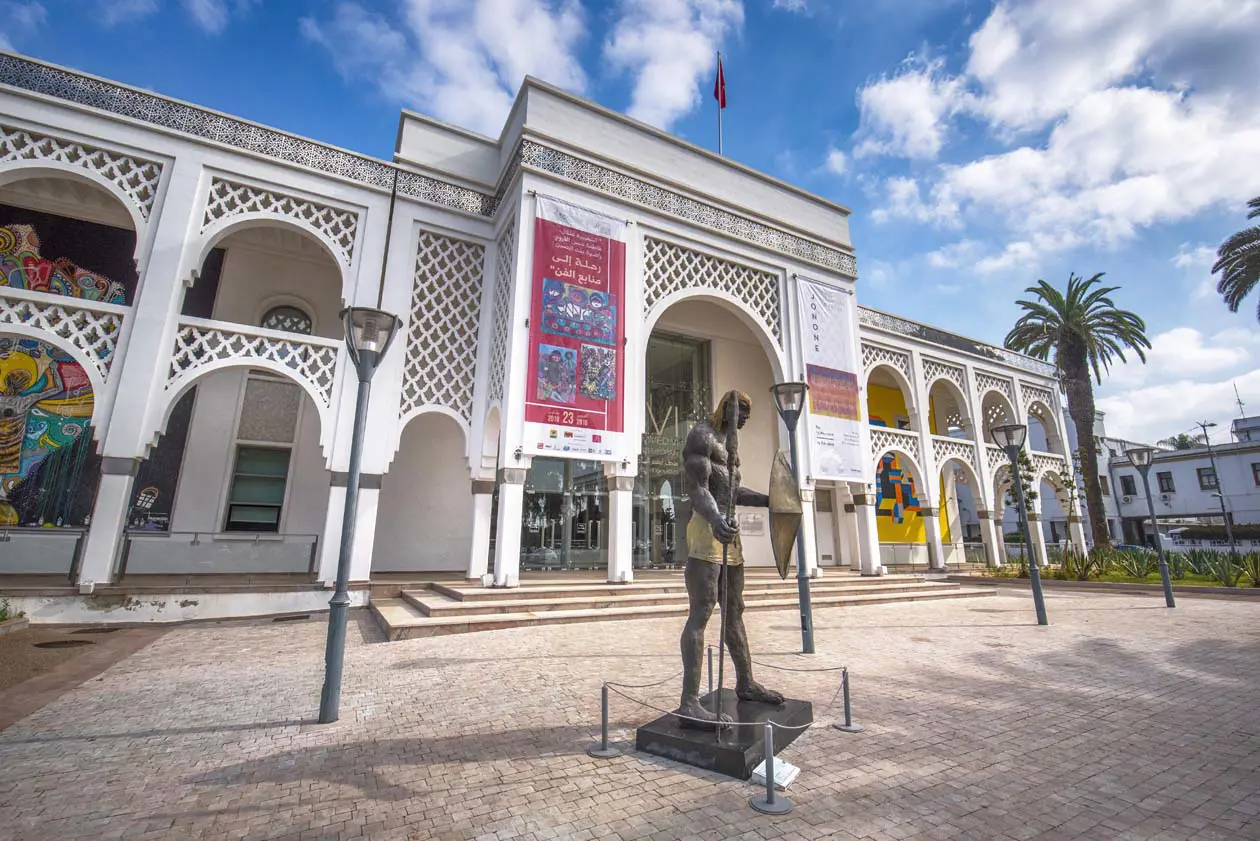
The Mohammed VI Museum of Modern and Contemporary Art (MMVI), which opened in 2014, is Morocco's first public museum dedicated to modern and contemporary art. Its permanent collection includes over 400 works created by Moroccan artists of the twentieth and twenty-first centuries, with a path that ranges between painting, sculpture, photography and installations. Designed by architect Karim Chakor, the building is located at 2 Avenue Moulay Hassan and offers an architectural language in which Moroccan tradition and modernity dialogue. Alongside the permanent collection, the museum hosts temporary exhibitions.
The National Museum of Photography in Rabat is housed within the remains of the Burj Kebir fortress known as Fort Rottembourg, a military complex built between 1888 and 1894 during the reign of Sultan Hassan I. Opened in 2020, the museum welcomes and exhibits works dedicated to Moroccan photography, including the Portrait of a Generation project by photographer M'hammed Kilito. The images are also presented outdoors, in the space in front of the fortress, transforming the surrounding area into an open-air exhibition path that enhances both the photographs and the vestiges of the Burj Kebir.
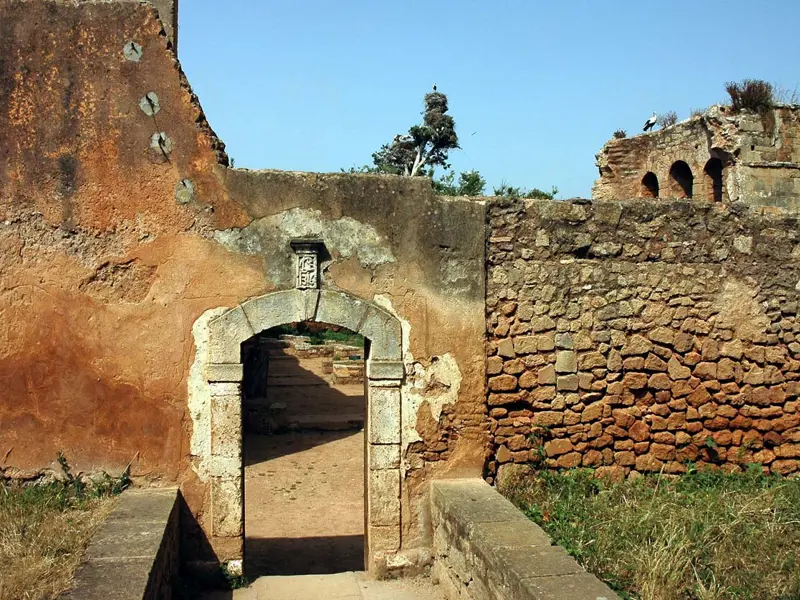
Chellah is located at 9 Av. Annakhil, about 2 kilometers from the center of Rabat. Built in the fourteenth century by the Marinids on the remains of the ancient Roman city of Sala Cologne, it is outside the Almohad walls. The area represents the oldest human settlement at the mouth of the Bou Regreg River. Lying on a hill, the necropolis of Chellah can be reached by passing through the large octagonal Merinid gate. A paved path accompanies the visit among centuries-old trees and flowers to the minaret of the ancient mosque, embellished with polychrome tiles. Not far away, a pond dotted with coins is home to fish, turtles and eels. In the archaeological site, nature, ruins and historical memory offer an evocative experience.
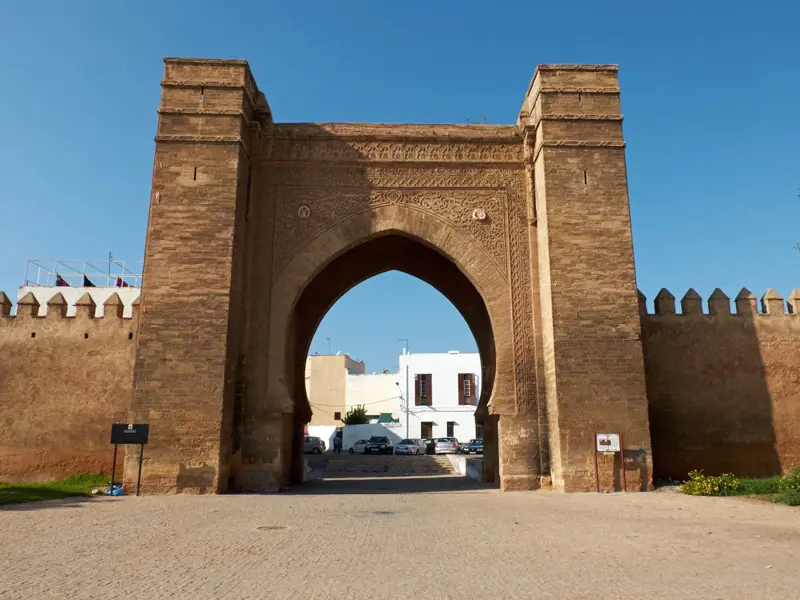
Overlooking the Atlantic Ocean, on the right bank of the Bou Regreg estuary and separated from Rabat only by the course of the river, Salé retains a distinct historical identity. Founded in the eleventh century, the city experienced expansion during the Almohad period in the twelfth century and under the Merinid dynasty in the fourteenth century. Salé fascinates with its medieval heritage, medina, fortifications and historic buildings. The traditional souks offer an immersion in local life, including handicrafts and typical products. To complete the experience, just outside the city center are the Bouknadel Exotic Gardens, a green space that collects different botanical species. The two cities are connected by the Rabat-Salé tram line.
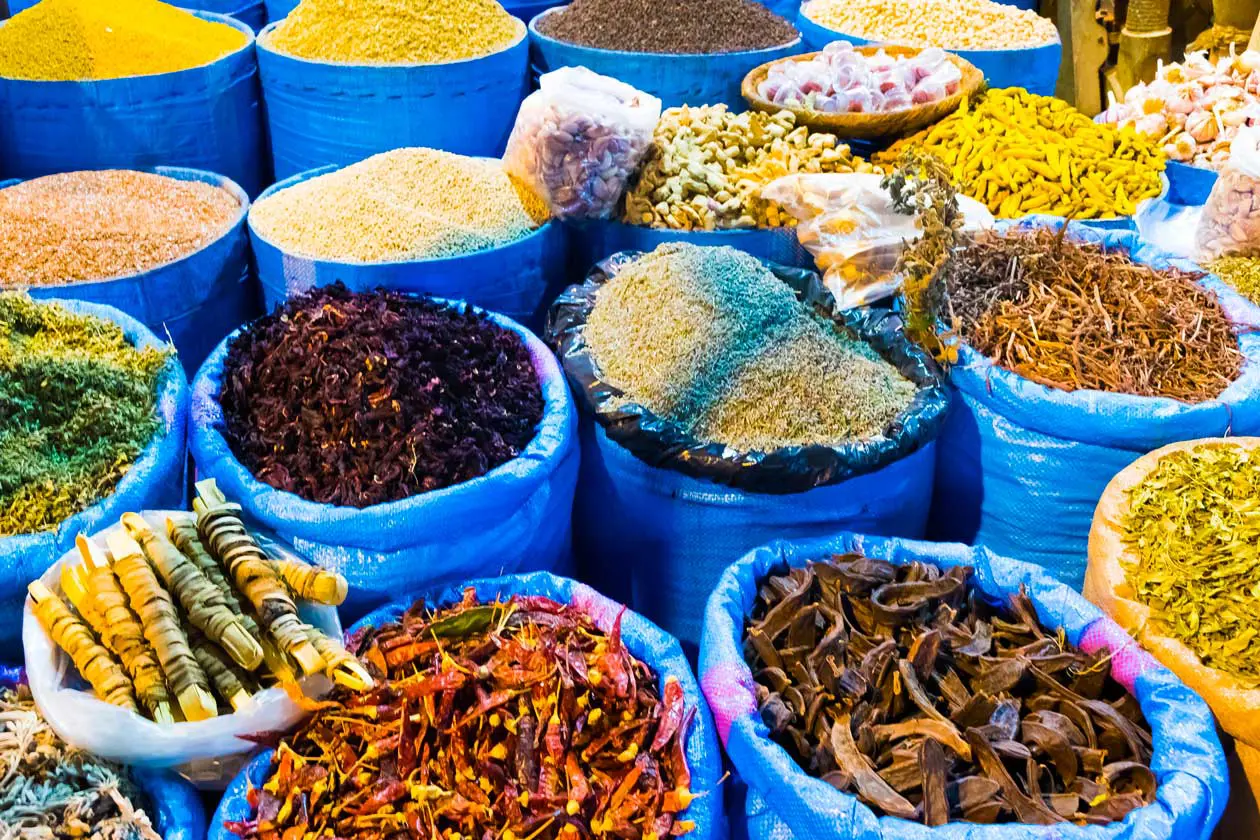
Discover the culinary traditions of Morocco with a cooking class. Guided tour of the market and shopping for fresh produce in a local neighborhood, choice of menu to cook. Transfer to a historic Moroccan family home with a chef to learn Moroccan cooking techniques and create gourmet dishes. Tasting of the menu created, from appetizers to desserts. Duration: 4 hours. Free cancellation up to 24 hours in advance and full refund. Book the cooking class in a homestay in Rabat.