The city between Nepal’s lakes and peaks
Amid blue lakes, temples, caves and sweeping views of the Annapurna range, Pokhara is one of Nepal’s most captivating destinations and a privileged gateway to some of the great Himalayan trekking routes. In this small South Asian country, set between China and India, plains, hills and some of the highest mountains on Earth coexist within an extraordinary geographic variety, making Nepal especially appealing to travellers drawn to nature, trekking and high-altitude landscapes.
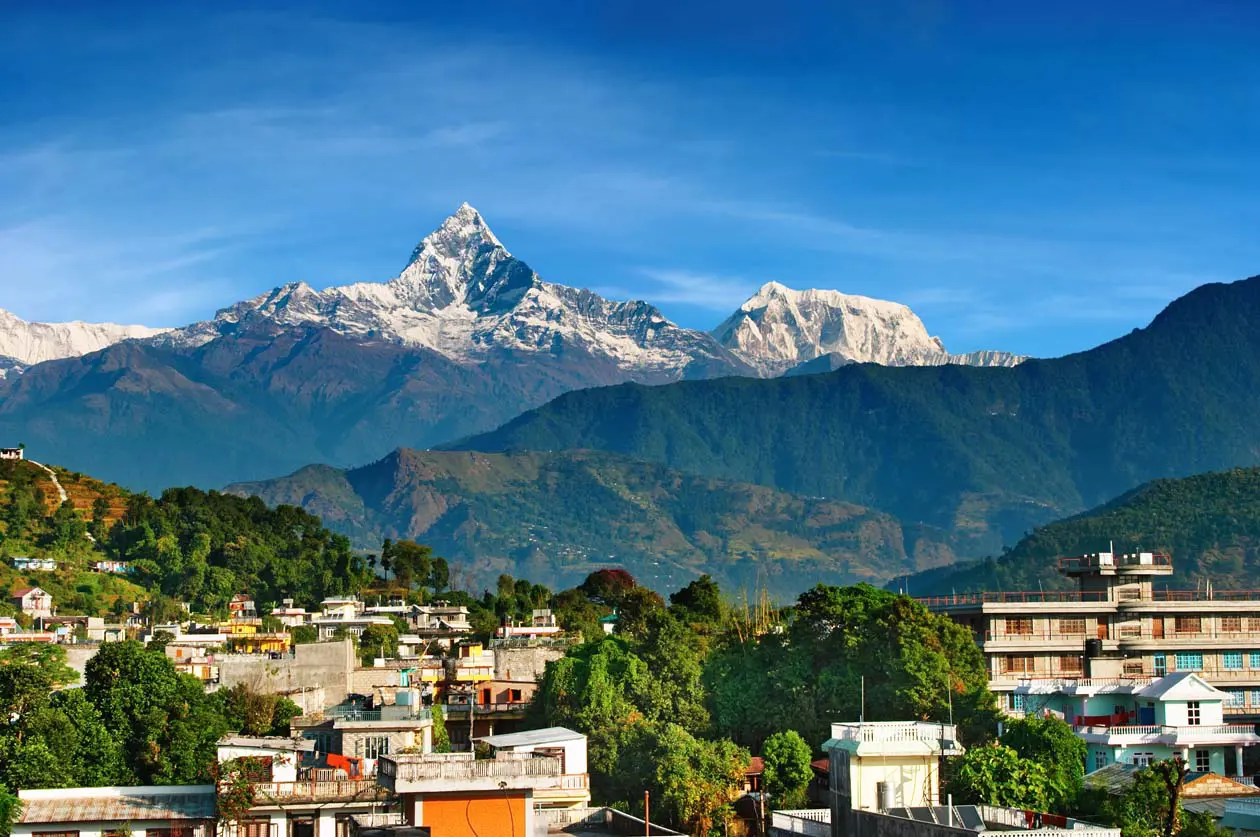
In central Nepal, about 200 kilometres from the capital, Kathmandu, lies Pokhara, the capital of Gandaki Province and Kaski District. The city sits at an elevation of around 800 metres and is one of the main gateways to the Annapurna region. It is a remarkable destination where lakes, lush vegetation and snow-capped peaks lie surprisingly close to one another: from Pokhara, visitors can admire mountains rising above 6,000 metres, while the distinctive profile of the sacred Machhapuchhre, known as “Fishtail” for its pointed shape, dominates the skyline and is reflected in the waters of Phewa Lake.
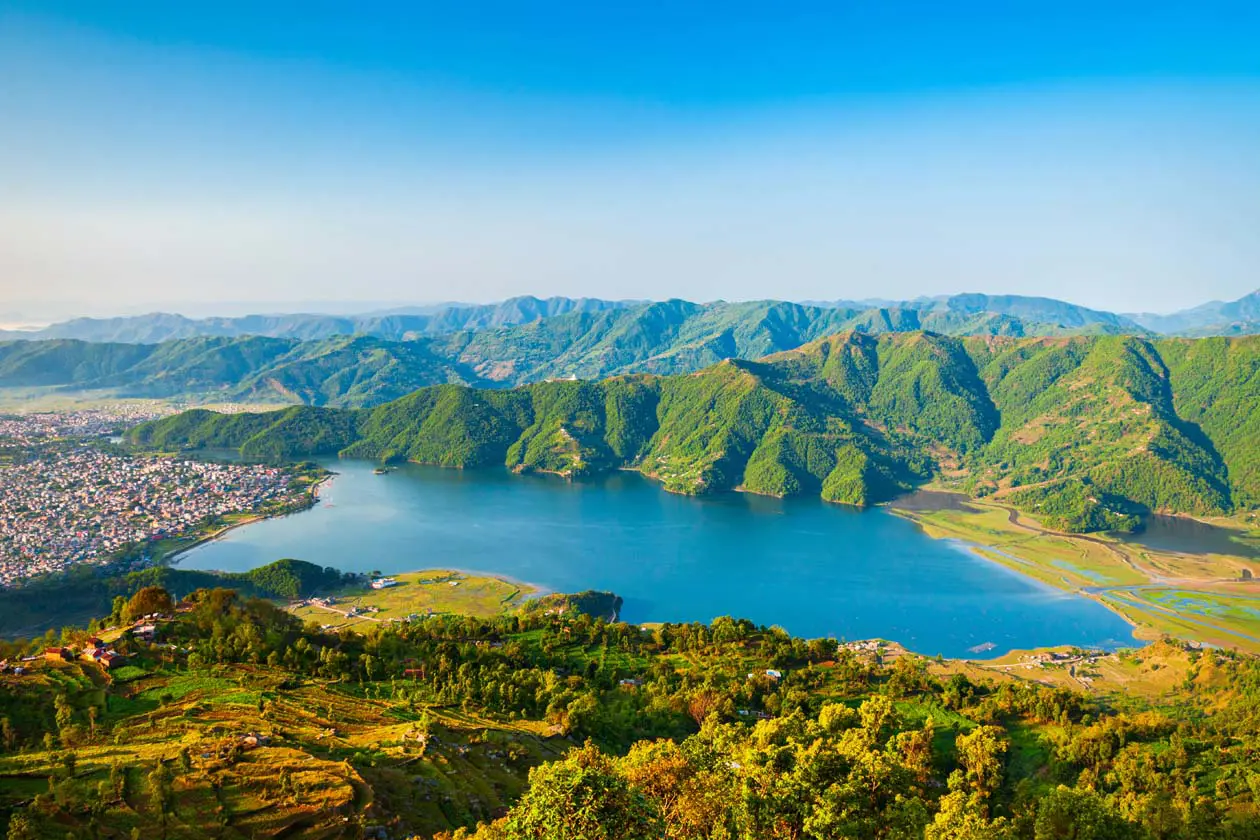
Once an important stop along the historic trade routes between India and Tibet, travelled by mule caravans, Pokhara began developing as a tourist destination in the 1960s. Today, its surroundings still retain a strong multicultural identity, with Gurung, Magar and Thakali communities deeply connected to the land and to the routes leading towards Mount Annapurna and the Mustang region.
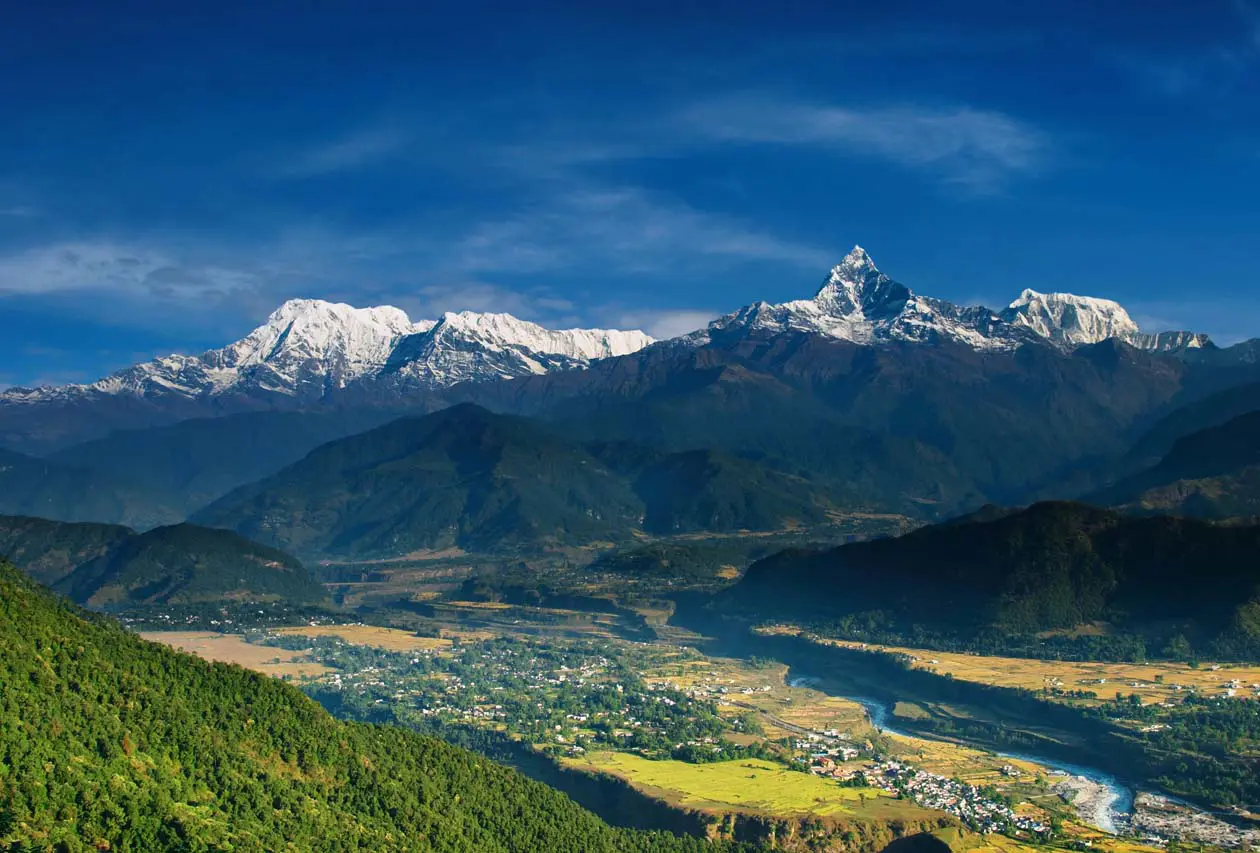
Pokhara can be visited for much of the year, thanks to a climate that is generally warmer than Kathmandu’s. Summers are hot and humid, while winters are mild and pleasant. The monsoon season brings heavy rainfall and particularly lush vegetation, including banana plants, vegetables and citrus trees, while the drier months are generally preferred by travellers hoping for clearer views of the Annapurna range and the other Himalayan peaks. The valley’s green landscape, together with its lakes and surrounding hills, gives Pokhara an atmosphere quite different from Nepal’s larger cities and makes it suitable for both a relaxing stay and a more active holiday.
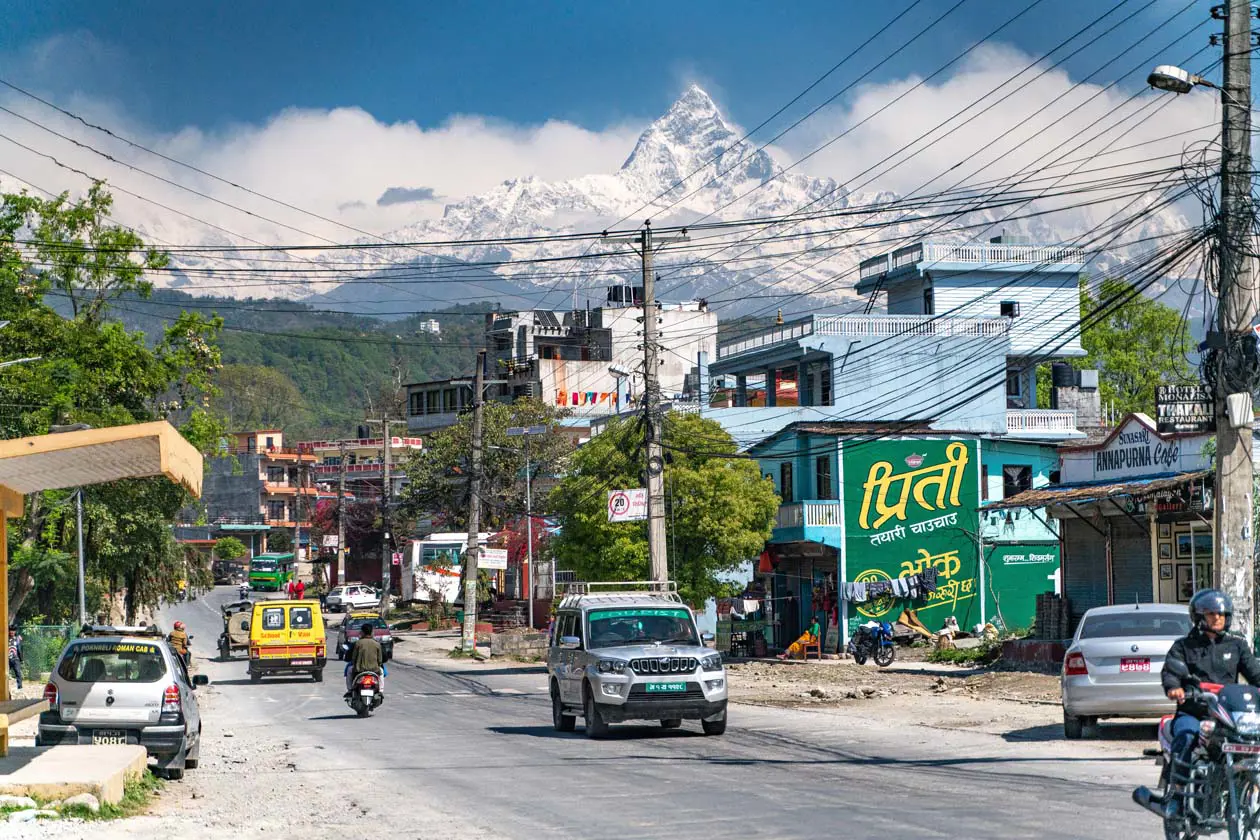
Phewa Lake, the heart of Pokhara
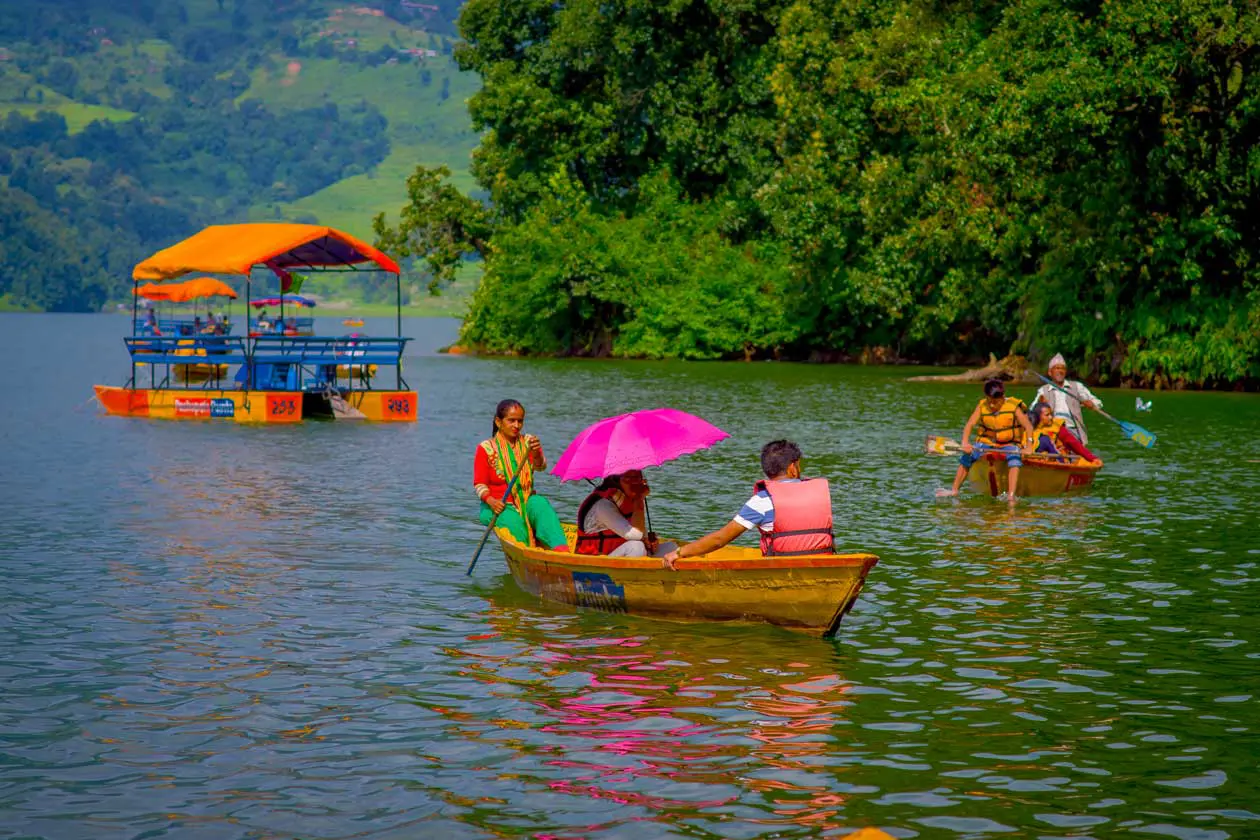
A natural starting point for discovering the city is Phewa Lake, the largest lake in the Pokhara Valley and one of the destination’s most iconic sights. Phewa Lake is part of a cluster of nine freshwater lakes, which also includes Begnas, Dipang, Kamalpokhar, Khaste, Gunde, Maidi, Neurani and Rupa.
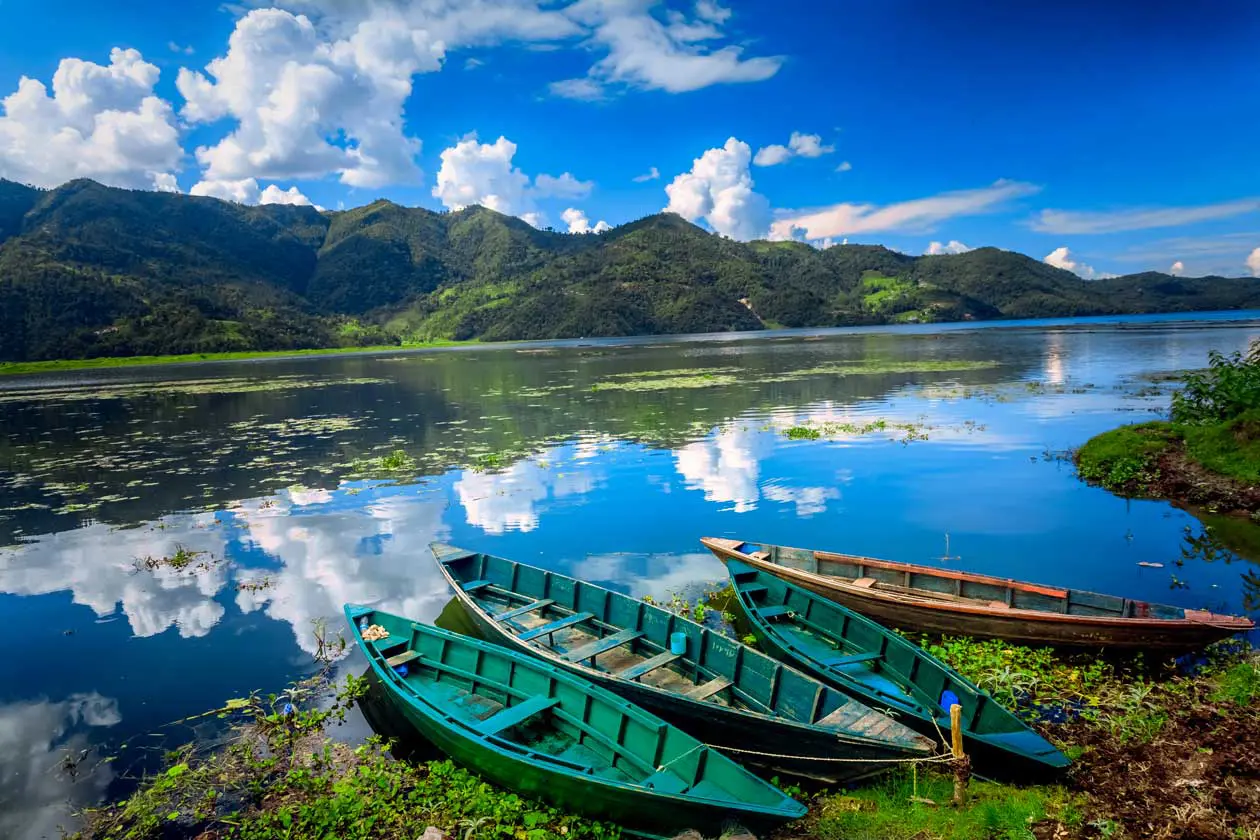
Phewa Lake offers views of the Annapurna range (8,091 metres) and Machhapuchhre (6,993 metres) and can be explored by boat or kayak. Its calm waters and mountain setting make it one of Pokhara’s most popular places during the day and at sunset. It is also an ideal spot to slow down, relax and enjoy the natural surroundings, with the still surface of the lake reflecting the high peaks and the green valleys that frame the city.
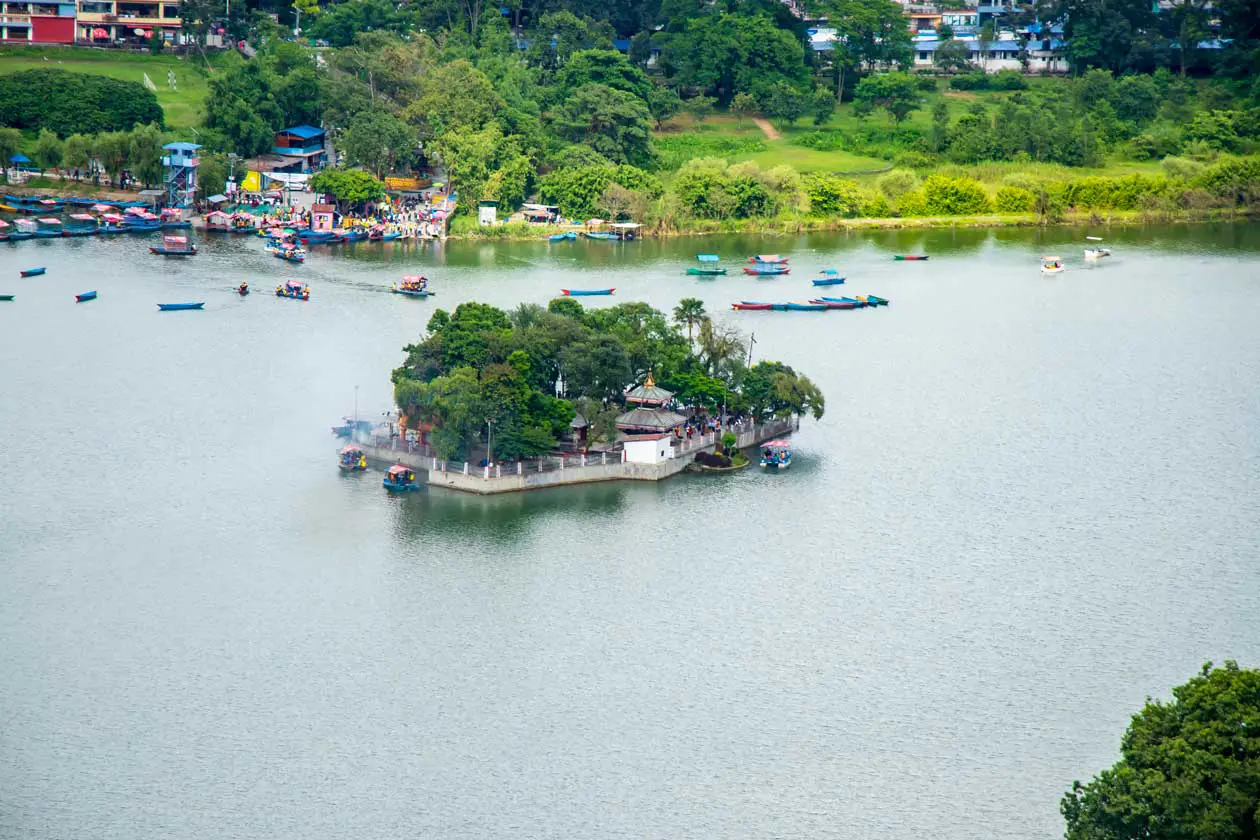
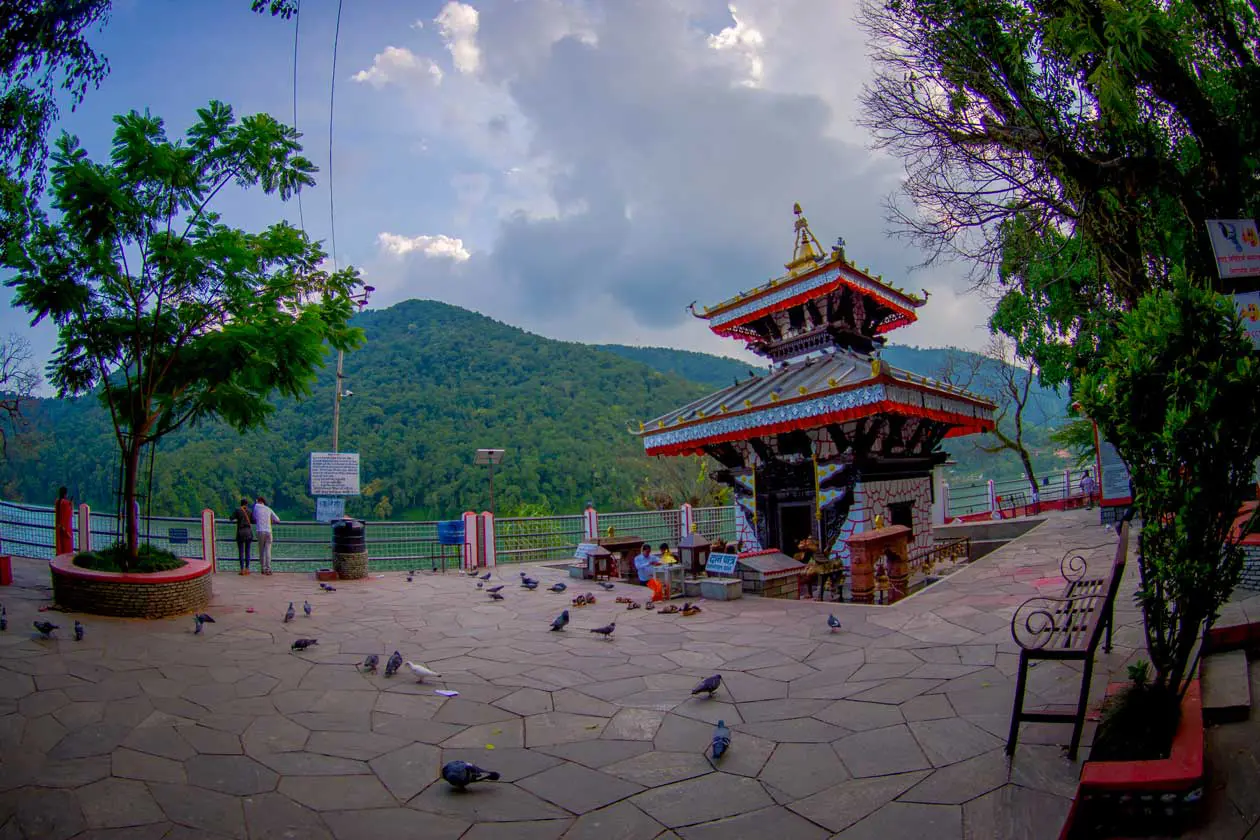
At the centre of the lake stands the Tal Barahi Temple, a Hindu shrine dedicated to the goddess Barahi, built on a charming small island and reachable in just a few minutes by boat from Lakeside. It is one of Pokhara’s main religious sites, while the short crossing offers beautiful views of the lake, the surrounding hills and, on clear days, the reflections of the mountains on the water.
The eastern shore of Phewa Lake is home to Lakeside, Pokhara’s main tourist district, with hotels, restaurants, bars, shops and a wide range of visitor services. It is also a convenient base for organising activities, excursions and trekking trips.
Old Bazaar and Bindhyabasini Mandir Temple
Leaving Lakeside and travelling about four kilometres, it is well worth visiting Pokhara’s Old Bazaar, one of the areas that best preserves the city’s historic character. Here, visitors can shop for traditional handicrafts, including carved wooden objects, silver jewellery, pottery and textiles, as well as spices, incense and Tibetan singing bowls.
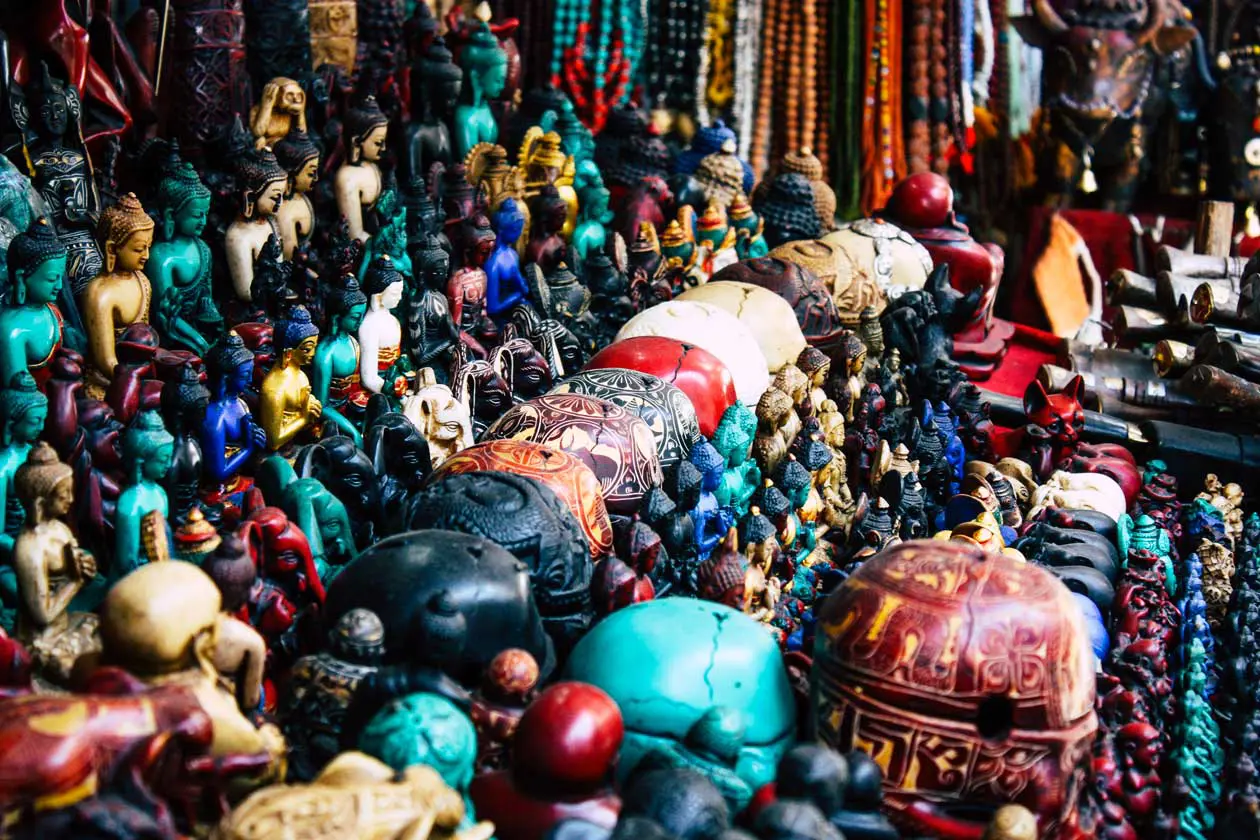
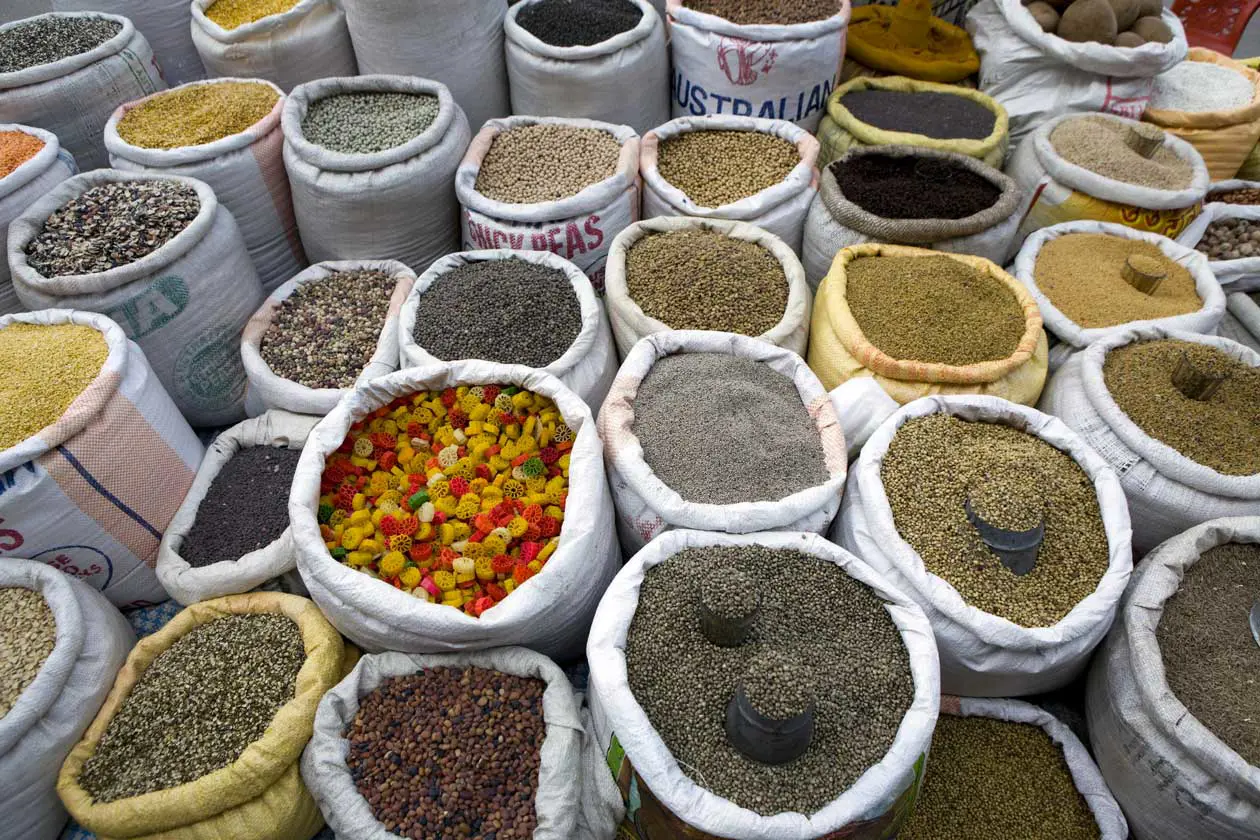
The area still retains traces of Kathmandu’s Newar architectural tradition and remains an important hub of local life, with traditional buildings, small temples and shops lining its streets. It is also a place where visitors can experience a more authentic side of Pokhara, reflected not only in its surroundings but also in the simple, warm hospitality of the people who live there.
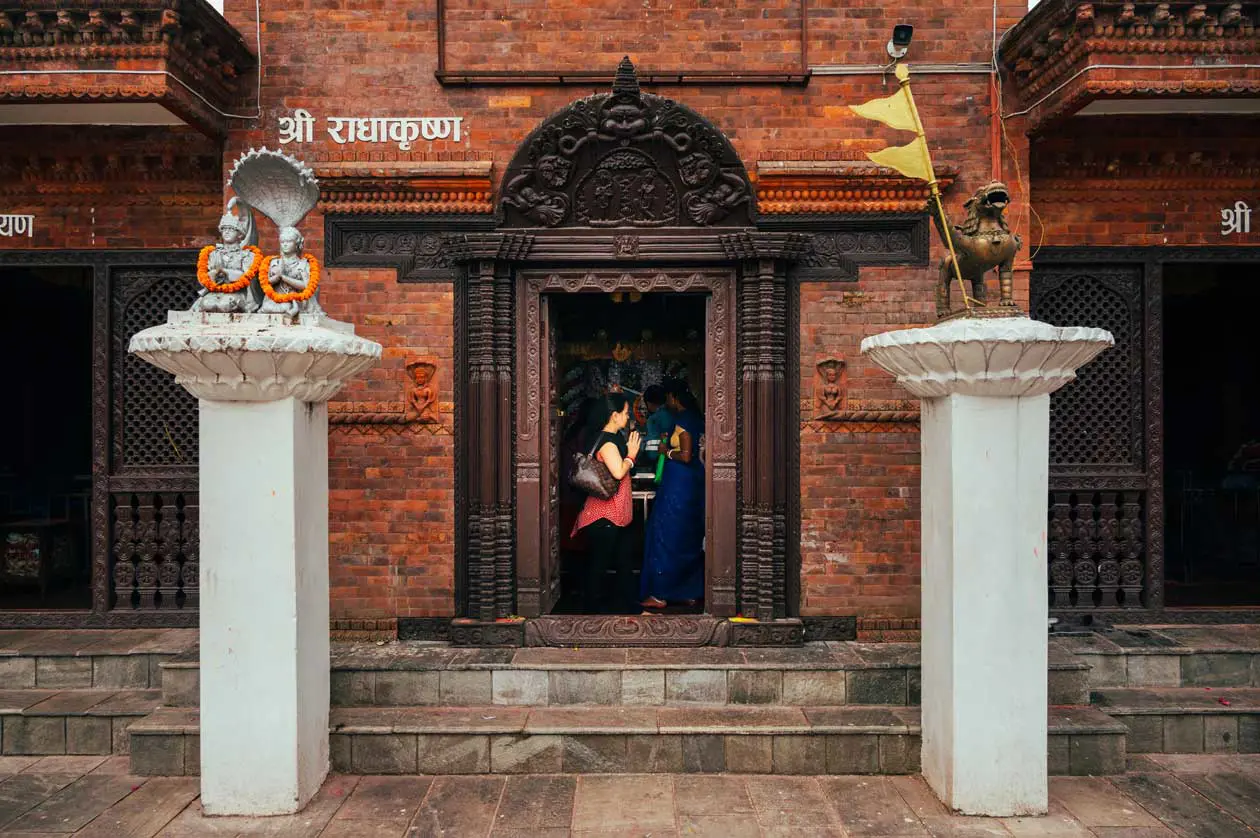
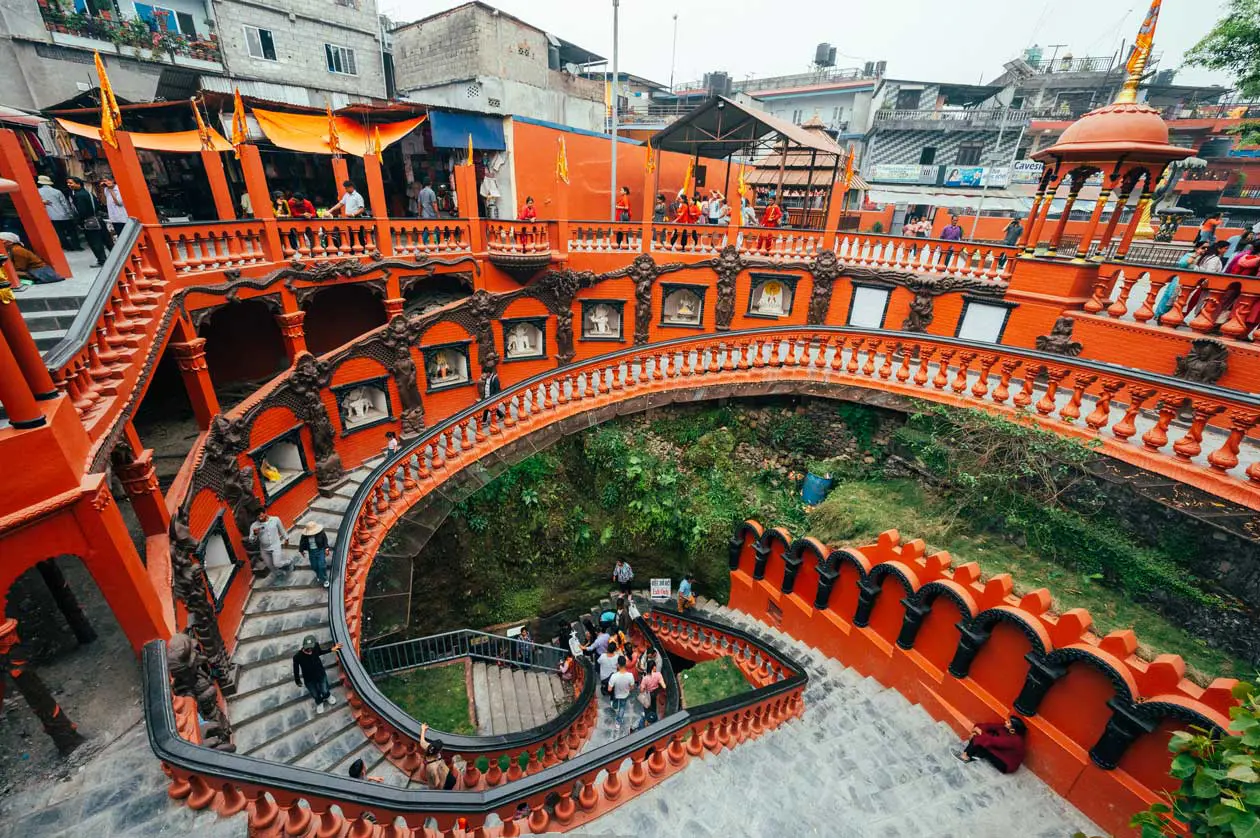
Not far from the bazaar stands the Bindhyabasini Mandir Temple, one of the oldest and most visited Hindu shrines in the Pokhara Valley. Characterised by a white dome and a spacious courtyard, the temple sits on a small hill and also offers a different perspective over the city. This part of Pokhara reveals a side that contrasts with the more tourist-oriented atmosphere of Lakeside, with a stronger connection to local history, everyday life and spirituality.
World Peace Pagoda
Another important panoramic landmark is the World Peace Pagoda, a large white Buddhist stupa built on a hill south of Phewa Lake. It features four images of the Buddha, each facing one of the four cardinal directions. From the hilltop, visitors can enjoy sweeping views of the city, the lake and the Himalayan range.
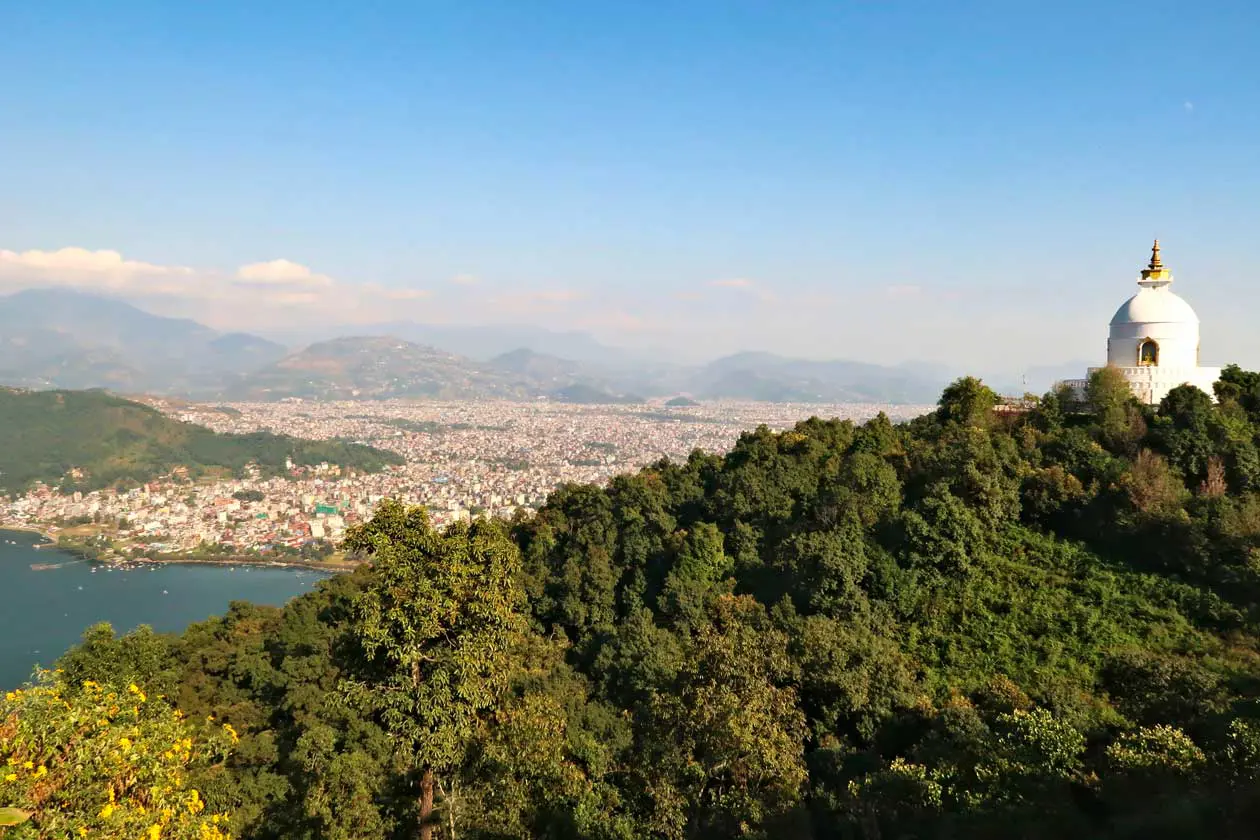
One of the most enjoyable ways to reach it is to cross Phewa Lake by boat and then continue on foot along the trail that climbs the hill; alternatively, it can also be approached by road. A visit to the pagoda can easily be combined with a day spent around the lake and offers one of the best vantage points for understanding Pokhara’s distinctive geography.
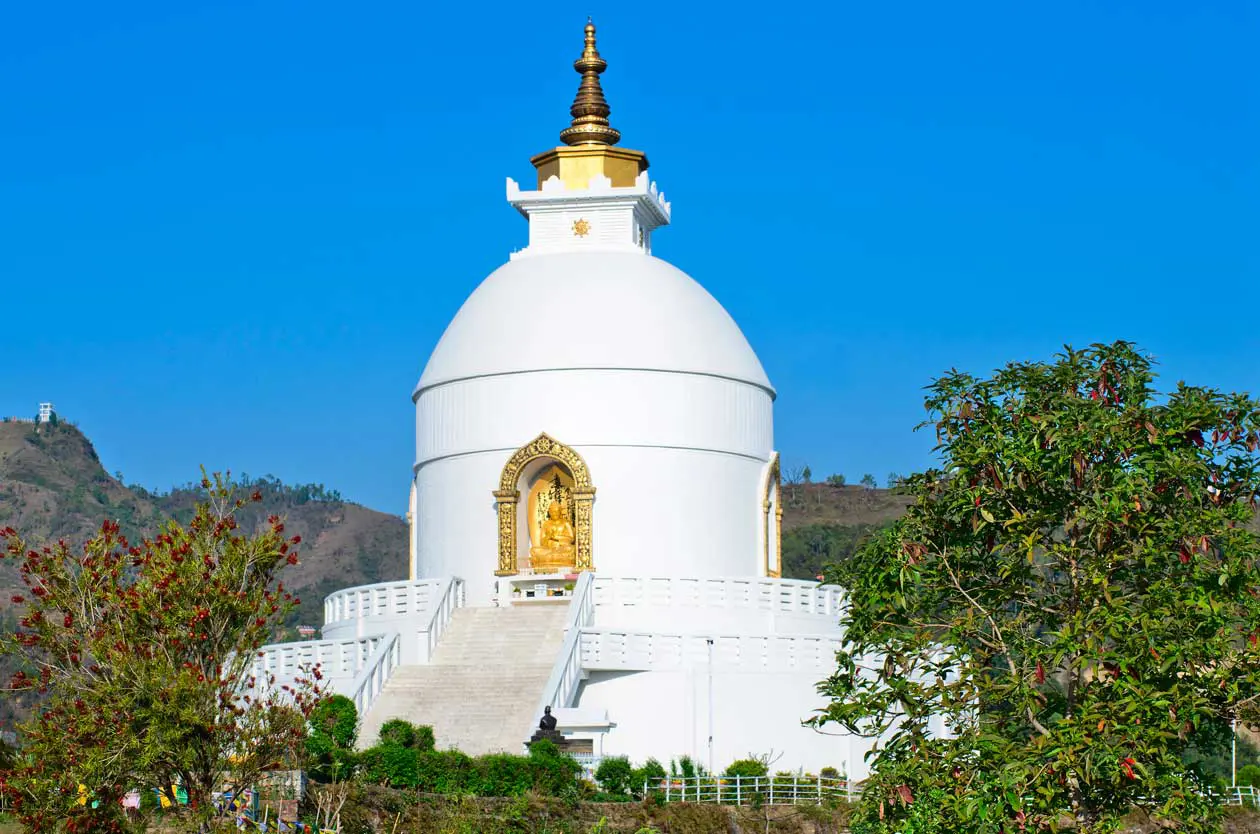
To complete the visit, travellers can explore the nearby villages, known for their traditional oval-shaped houses built from red clay, or continue to the Shiva Statue at Pumdikot, set on the summit of Pumdikot Hill, around nine kilometres from Pokhara. Standing 33 metres high, the statue rises in a setting imbued with the spiritual atmosphere of a traditional Hindu pilgrimage site.
Waterfalls, the Seti River and Pokhara’s Caves
In the southern part of the city, along Siddhartha Highway, lies Devi’s Fall, locally known as Patale Chhango (“Hell’s Fall”). Here, excess water from Phewa Lake plunges into a natural cavity and continues underground, creating one of the valley’s most unusual natural phenomena.
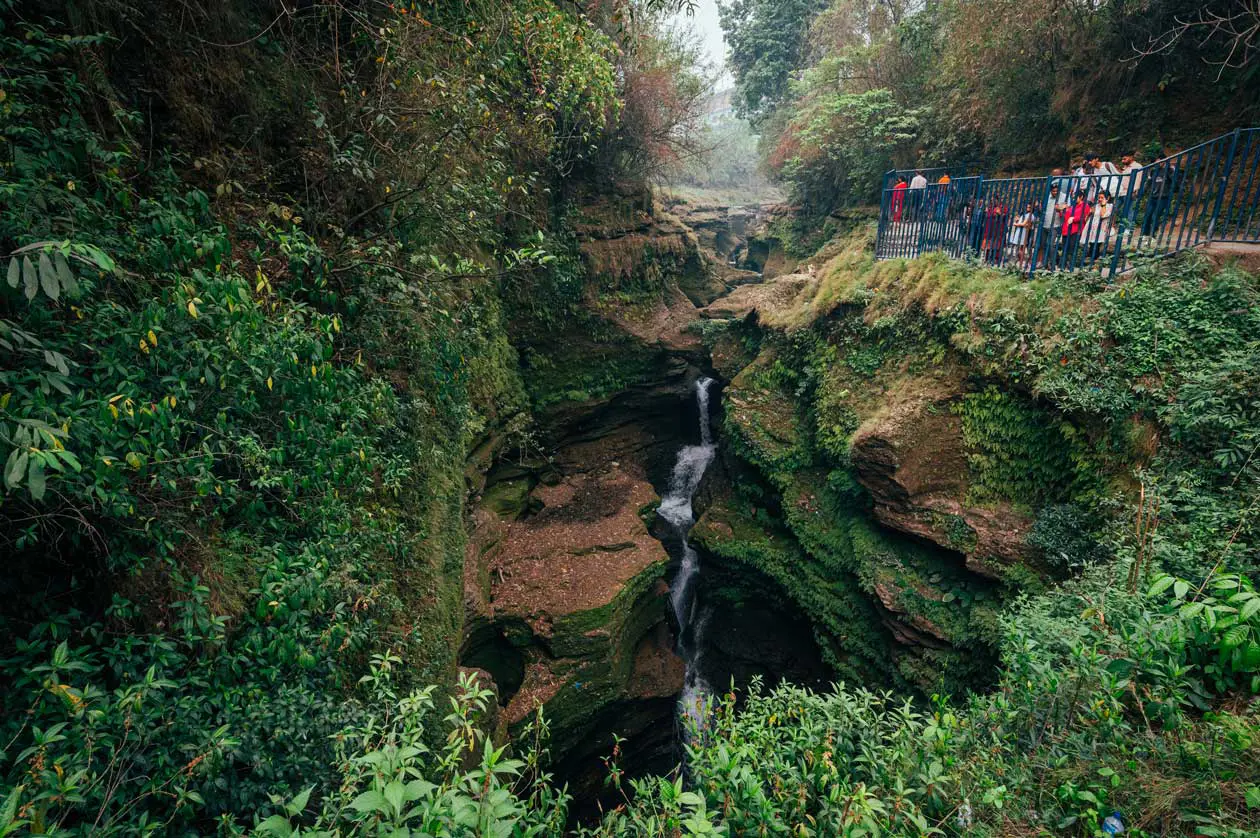
Nearby is Gupteshwor Mahadev Cave, part of the cave system that runs beneath Pokhara and a sacred site dedicated to the Hindu god Shiva. The combination of water, rock formations and underground chambers makes this area especially interesting for visitors looking to discover a very different side of the city from the open landscapes around the lake.
Indeed, Pokhara is also known for its many caves, which are just some of the city’s numerous natural attractions. The exploration can continue at Mahendra Cave, located around eight kilometres north of the city and one of the area’s best-known natural caverns. Inside, visitors can see numerous stalactites and stalagmites, as well as a statue of the Hindu god Shiva.
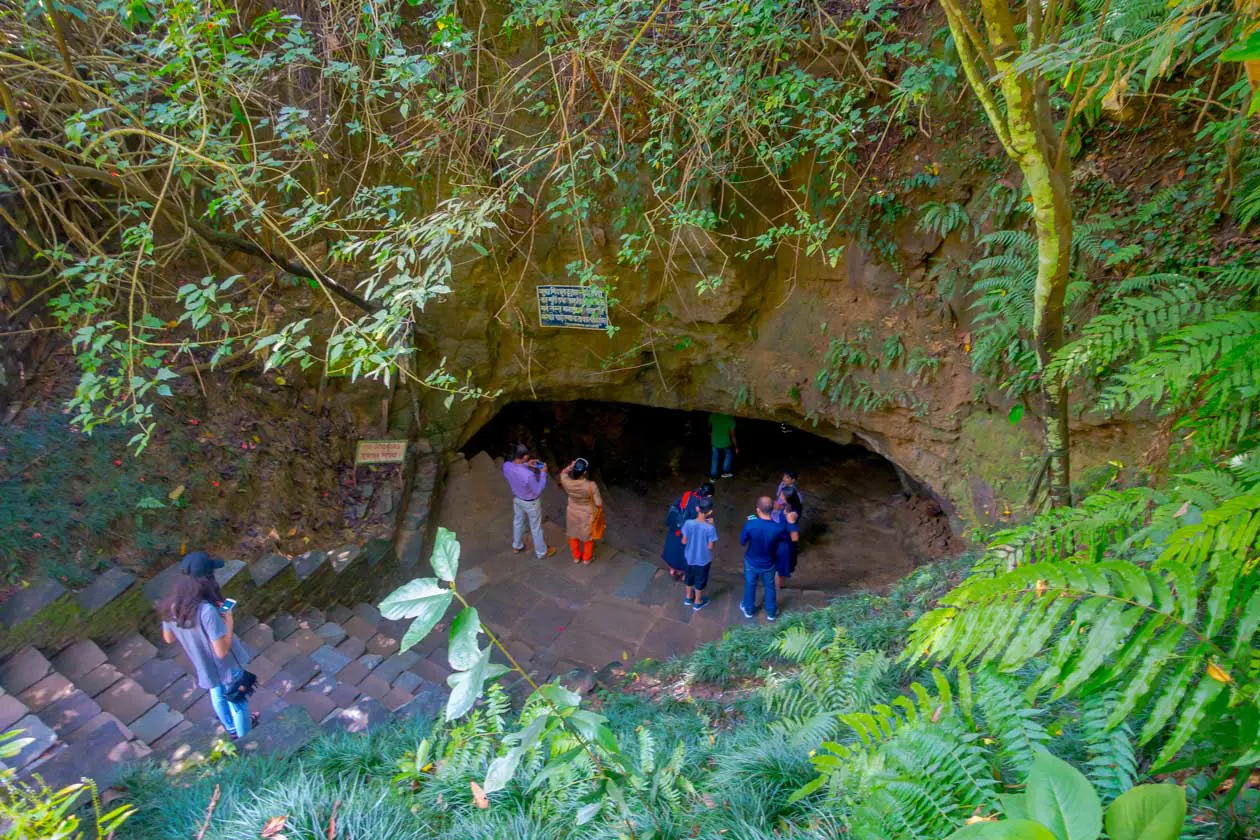
Nearby is Bat Cave, home to colonies of bats and known for a more adventurous route through its underground passages. The caves can easily be combined into a day exploring the northern part of the city and offer an interesting contrast to Pokhara’s lakes and panoramic viewpoints.
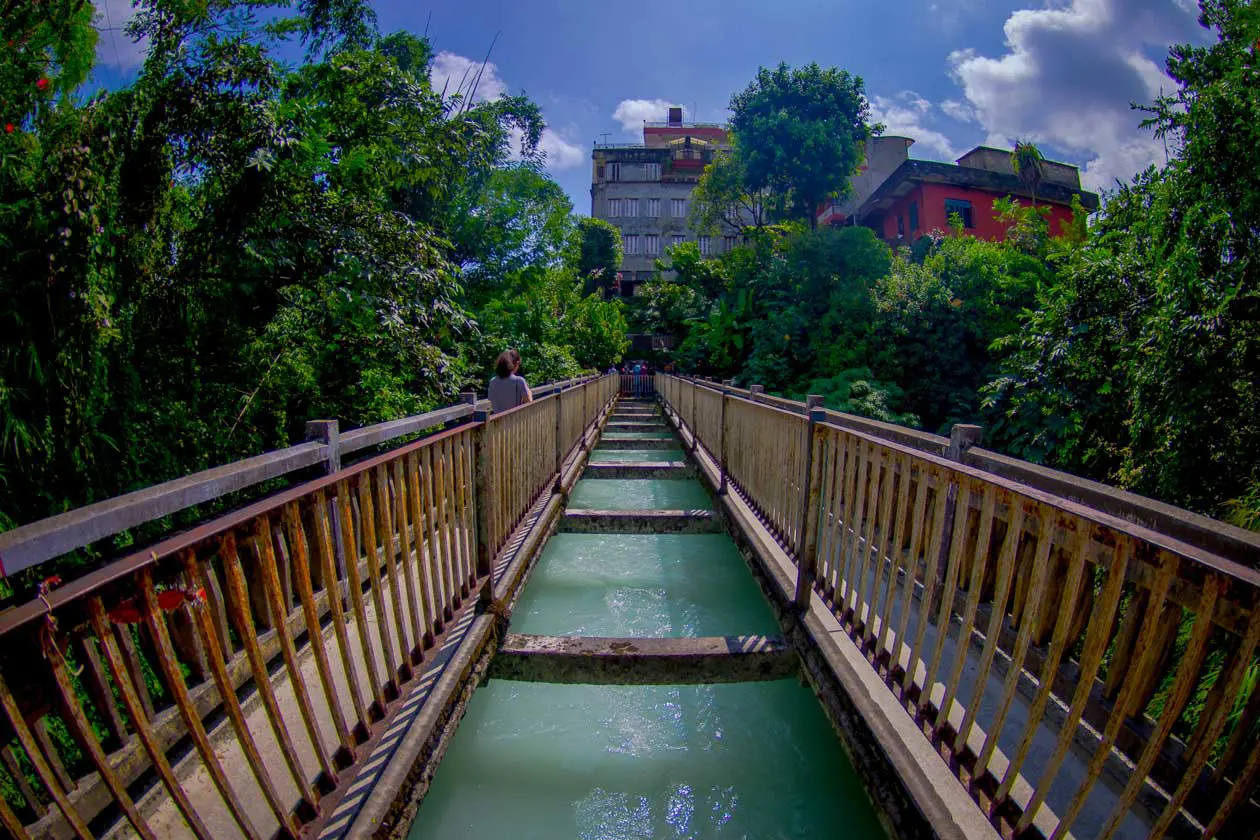
Pokhara is also crossed by the Seti River, which is fed by the Annapurna and Machhapuchhre mountains. Over time, the river has carved deep gorges into the rock and, in some sections, flows almost hidden below the level of the city. One of the most interesting places to see it is the K.I. Singh Bridge, where the Seti runs through a particularly deep gorge below. It is a brief stop, but a useful one for understanding the distinctive geology of the Pokhara Valley.
Pokhara’s Museums
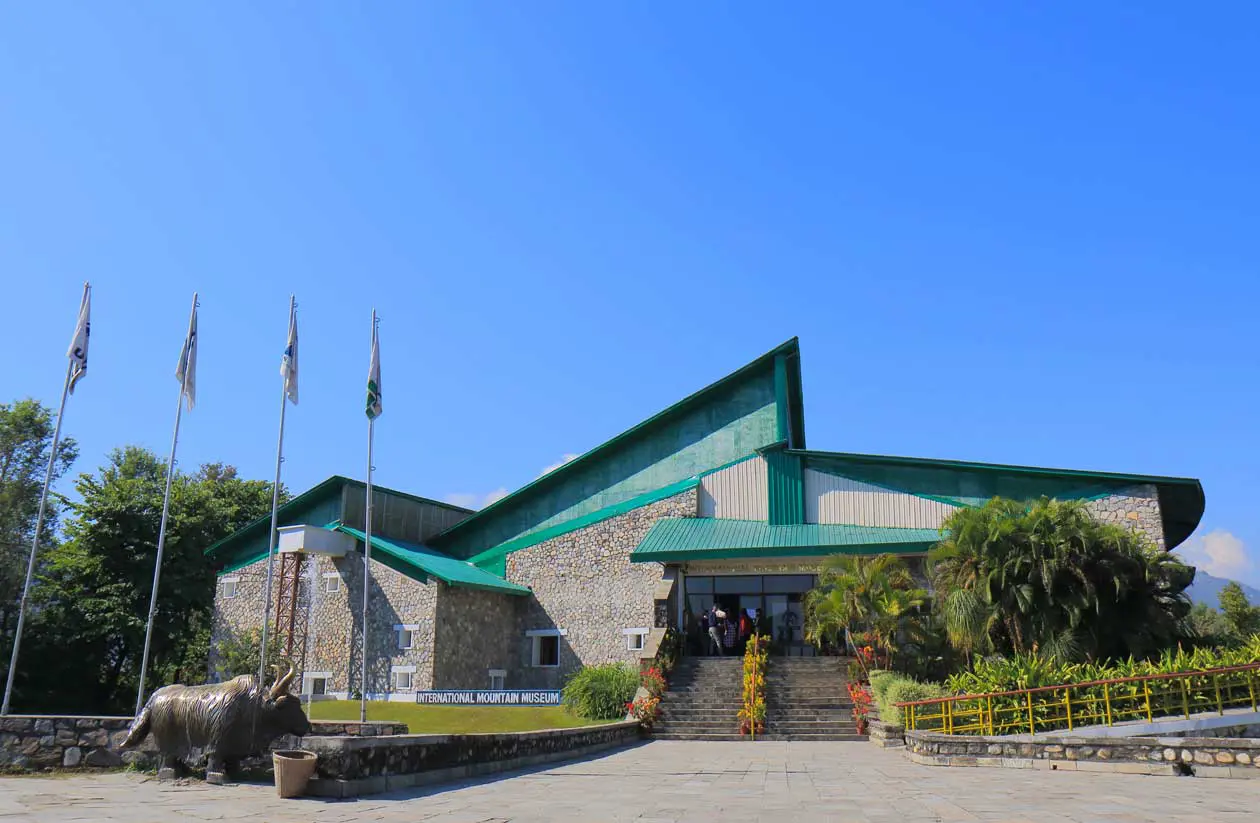
Visitors who want to delve deeper into the culture and natural heritage of the region can also explore the city’s museums. The International Mountain Museum (IMM) focuses on mountaineering, the Himalayas, local mountain cultures and the history of major expeditions. The Annapurna Regional Museum, also known as the Natural History Museum, offers an insight into the geology and biodiversity of the region, with rare collections of Nepalese butterflies, birds and local insects, while the Gurkha Memorial Museum preserves exhibits and historical material connected with the renowned Gurkha soldiers.
Finally, the Pokhara Museum is dedicated to the ethnic communities of western Nepal, including the Gurung, Thakali, Magar and Tharu, and also preserves remains from a Mustang settlement dating back around 8,000 years. These museums are particularly worthwhile before or after a trek, as they help visitors better understand the connections between the region’s history, culture, mountains, geology and the communities that live there.
Lakes around Pokhara: Begnas and Rupa
After exploring central Pokhara, visitors can begin discovering the surrounding valley. Begnas Lake lies around 15 kilometres from Phewa and is the second-largest lake in the Pokhara Valley. Surrounded by green hills and lush vegetation, it offers a quieter alternative to Lakeside. Visitors can take a ride in the traditional colourful wooden boats known as Doonga, enjoy a scenic walk with views of the Annapurna range, or stop at one of the local restaurants to sample fresh lake fish.
On the opposite side of the Rupakot hills lies Rupa Lake, the third-largest lake in the Pokhara Valley. Smaller and set within a largely unspoilt landscape, it is ideal for birdwatching, with hundreds of species of water and migratory birds, as well as for fishing or simply relaxing in nature. From some of the higher viewpoints in the area, it is possible to see Begnas and Rupa Lakes together, with the Annapurna range rising in the background. Phewa, Begnas and Rupa are the three main lakes within the wider cluster of nine lakes in the Pokhara Valley, making them well worth including in a visit.
Trekking from Pokhara: the Annapurna Circuit
Pokhara is one of the main gateways to trekking in the Annapurna region, home to the famous Himalayan hiking route known as the Annapurna Circuit. The itinerary begins at Nayapul, in Kaski District, at an elevation of around 1,070 metres and roughly an hour’s drive from Pokhara, before looping around the Annapurna massif. Along the way, the trail crosses subtropical valleys, rhododendron forests around Ghorepani, the Kali Gandaki Gorge at Dana, Tilicho Lake, and the highland landscapes of Mustang and the Manang Valley, before reaching its most demanding point at Thorong La Pass, 5,416 metres above sea level, with sweeping 360-degree views across the Himalayan peaks.
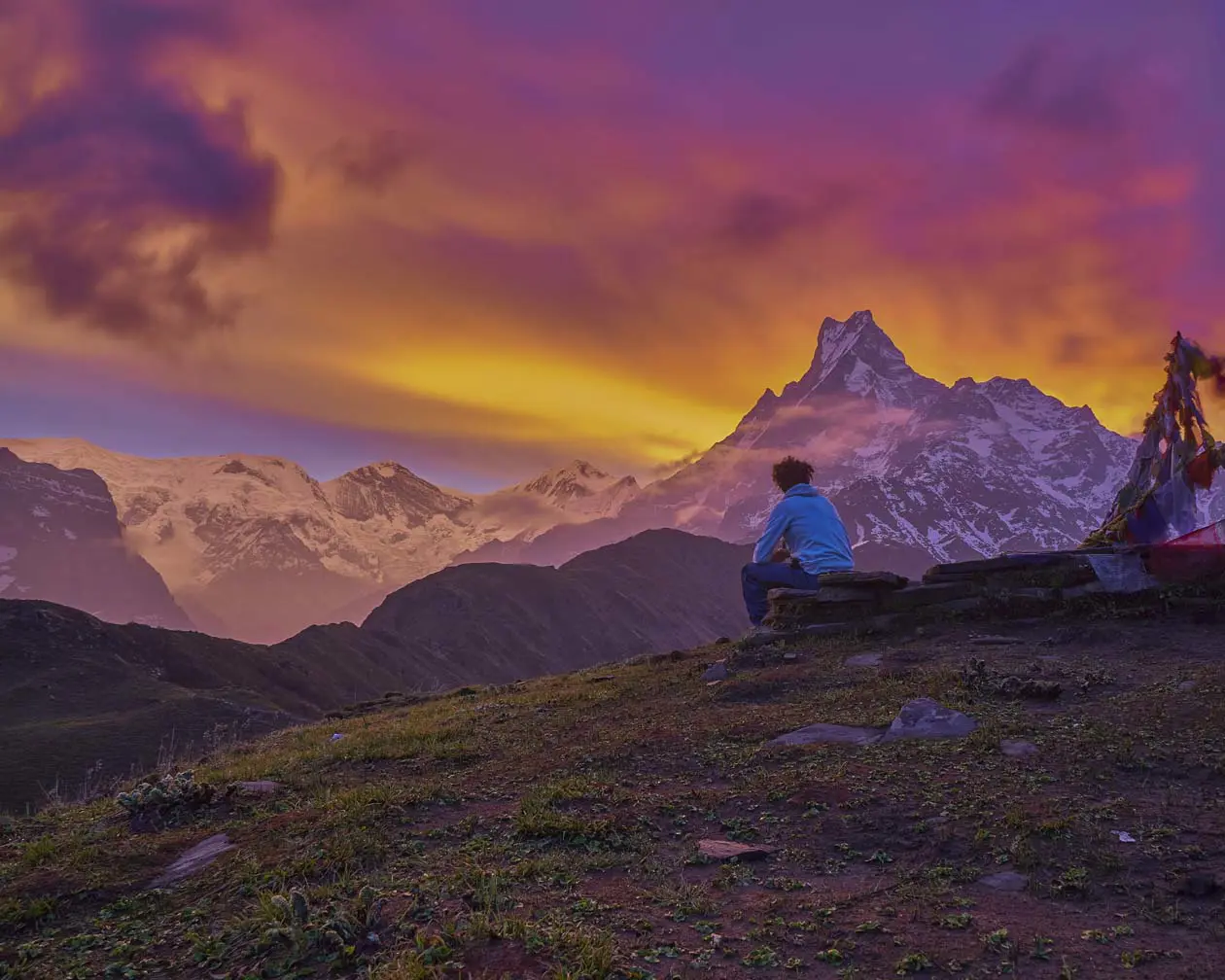
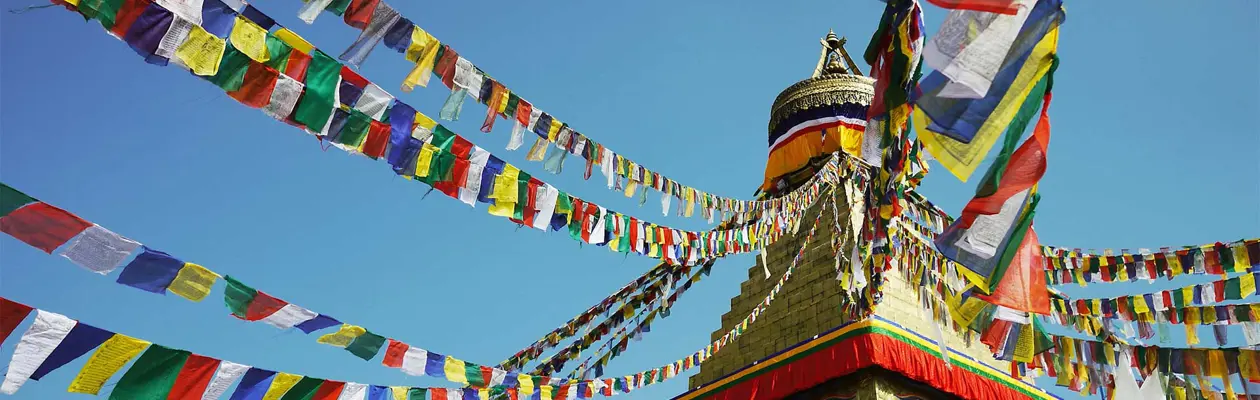
Here, nature, prayer flags and silence create an almost sacred atmosphere, especially during the golden hour, just after sunrise or at sunset. The surrounding ecosystem also offers opportunities to spot distinctive Himalayan wildlife, including blue sheep, musk deer, Himalayan marmots and monkeys.
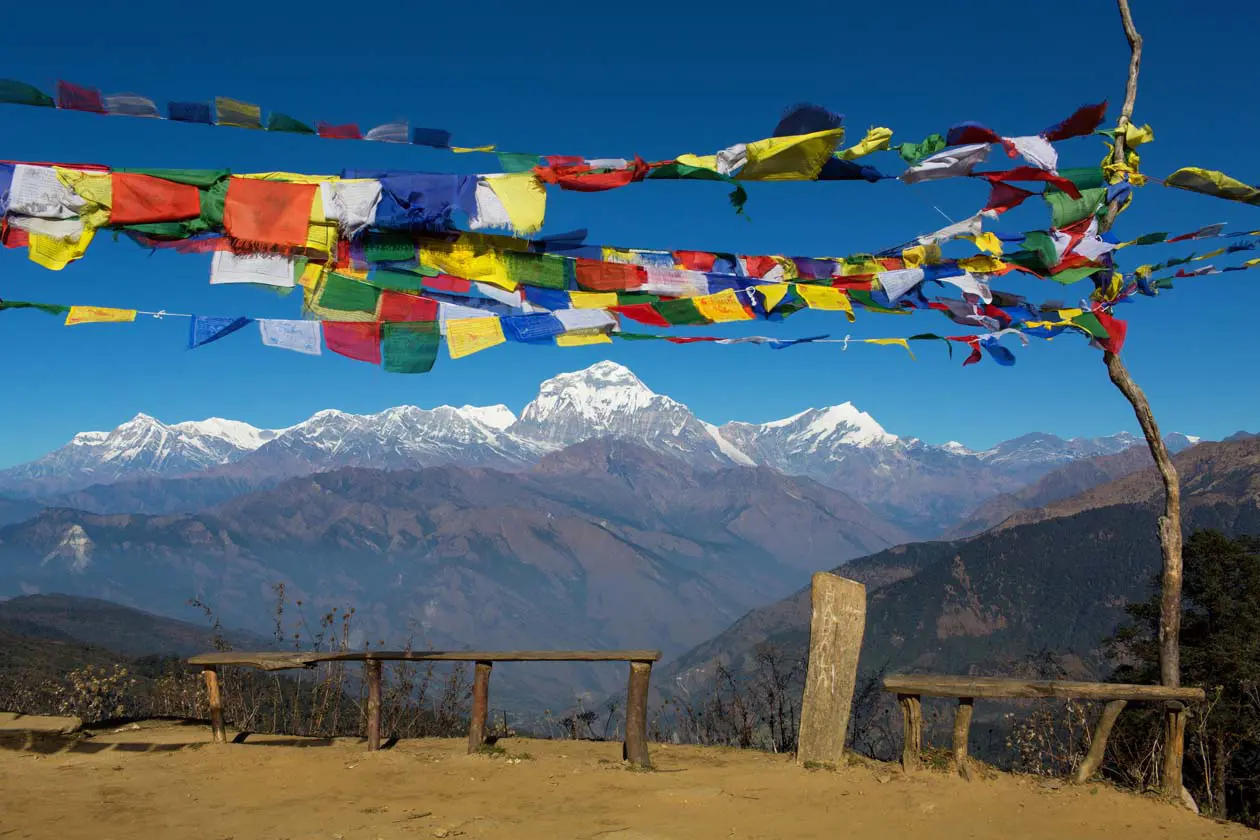
The full Annapurna Circuit trek is fairly demanding and can take several days, depending on the route chosen. Accommodation may include camping in tents or staying in tea houses, mountain refuges or family-run lodges along the way. The route can also be completed only in part or divided into stages, with some sections covered on foot and others by jeep. Suitable trekking equipment is always recommended and can also be purchased in Pokhara, particularly in the shops around Lakeside, while travelling with experienced local guides is advisable for those unfamiliar with the area.
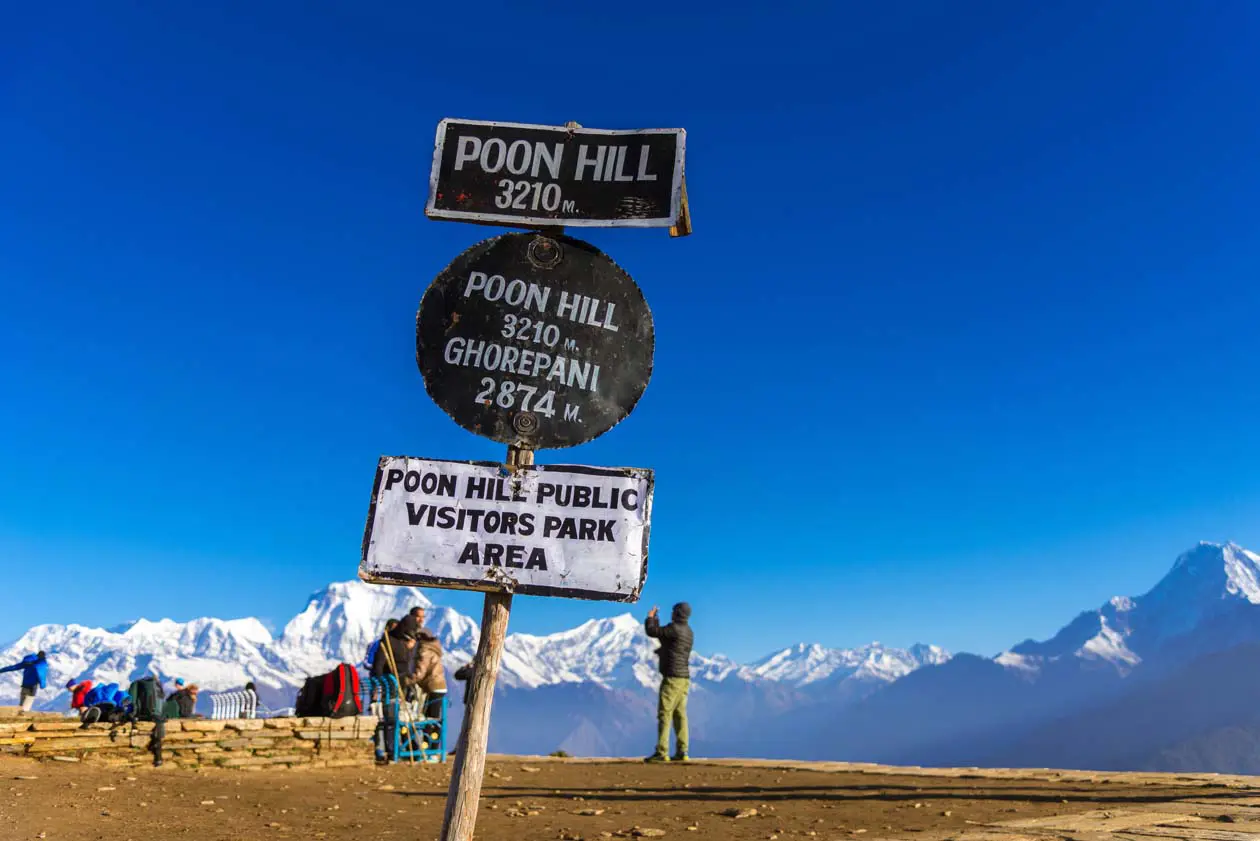
However, Pokhara also offers plenty of ways to experience the mountains without committing to a multi-day trek. The surrounding hills and villages can be explored on day trips or short hikes, combining Himalayan views, rural culture and everyday village life.
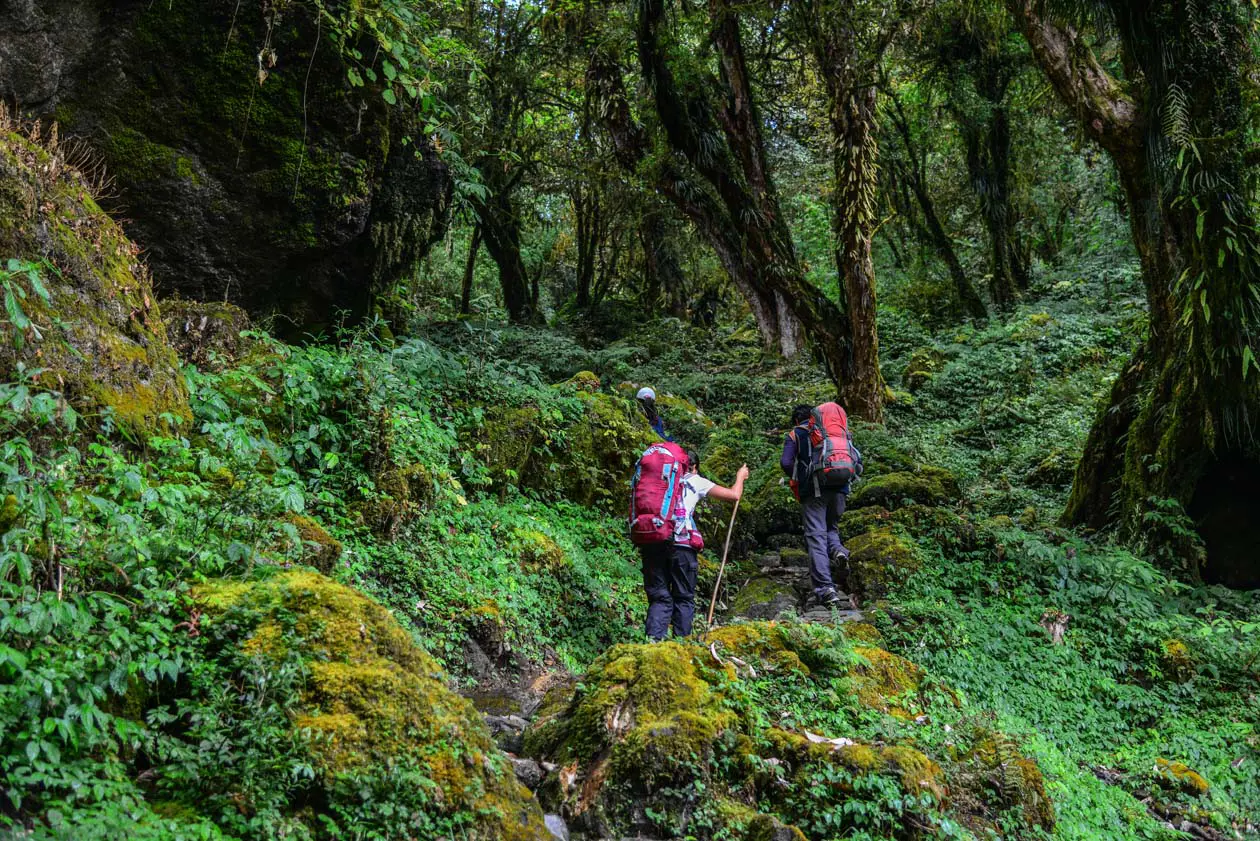
Among the most popular areas are Amala Kot, Australian Camp, Batulechaur, Bhadaure-Tamagi, Bhalam, Hemja, Kahun Danda, Kalikistan, Kaskikot, Mattikhan Hill, Naudana-Lumle-Chandrakot, Naudanda, Phocksing, Sarangkot, Sundari Danda and Thulakhot, along with other hilltop locations around the valley. For travellers interested in longer routes, Pokhara remains the traditional base for organising treks throughout the Annapurna region.
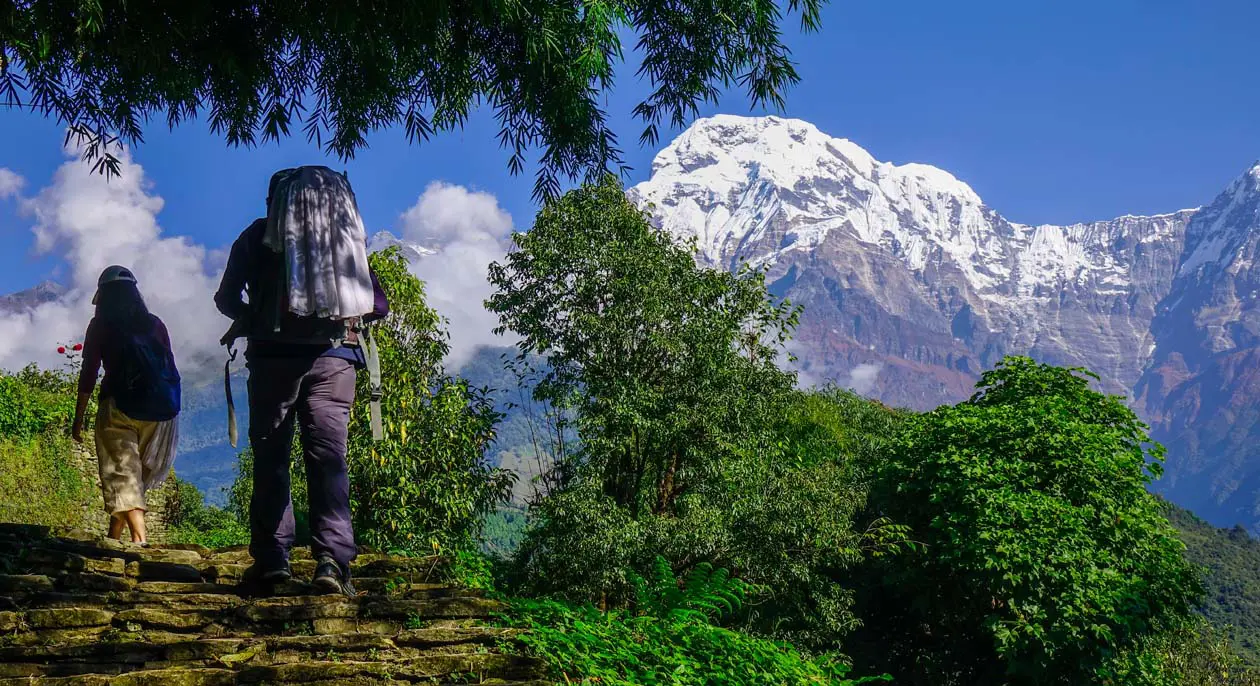
Families with children, older travellers and people with reduced mobility can follow the accessible trekking trail at Kaskikot, around 38 km from Pokhara. Along its 1.3 km route, the trail offers scenic views of the Annapurna range (8,091 m), Machhapuchhre (6,993 m), Dhaulagiri (8,167 m) and Manaslu (8,163 m), as well as dedicated facilities and services designed to make the experience easier to enjoy.
Paragliding, ultralight flights, mountain biking, kayaking and other activities
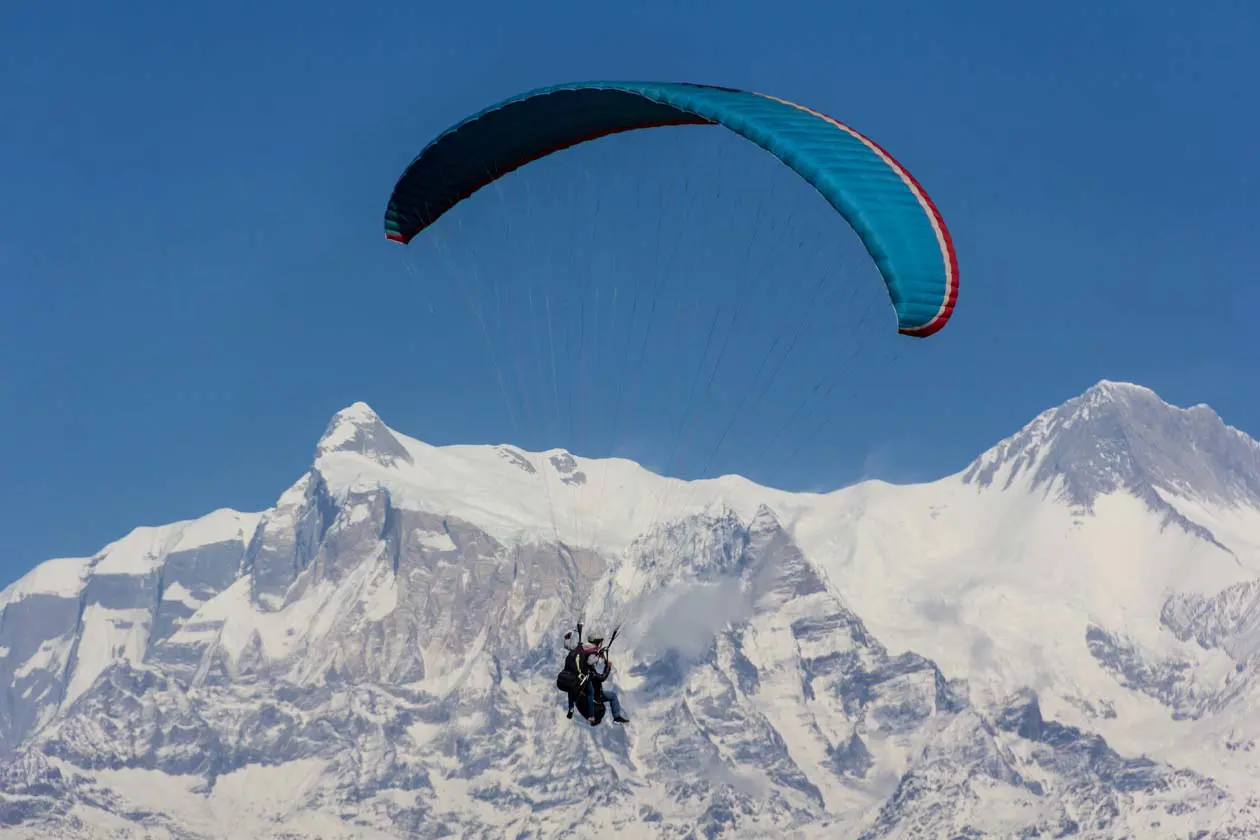
The landscape of the valley has also turned Pokhara into one of Nepal’s leading destinations for adventure sports. Paragliding offers the chance to fly above lakes, rivers, forests and hills with the Himalayas forming a spectacular backdrop. It can be enjoyed for much of the year, although the most favourable period generally runs from September to April. In March, Pokhara also hosts the Nepal Open Paragliding Championship, a major event combining competition with a lively festival atmosphere.
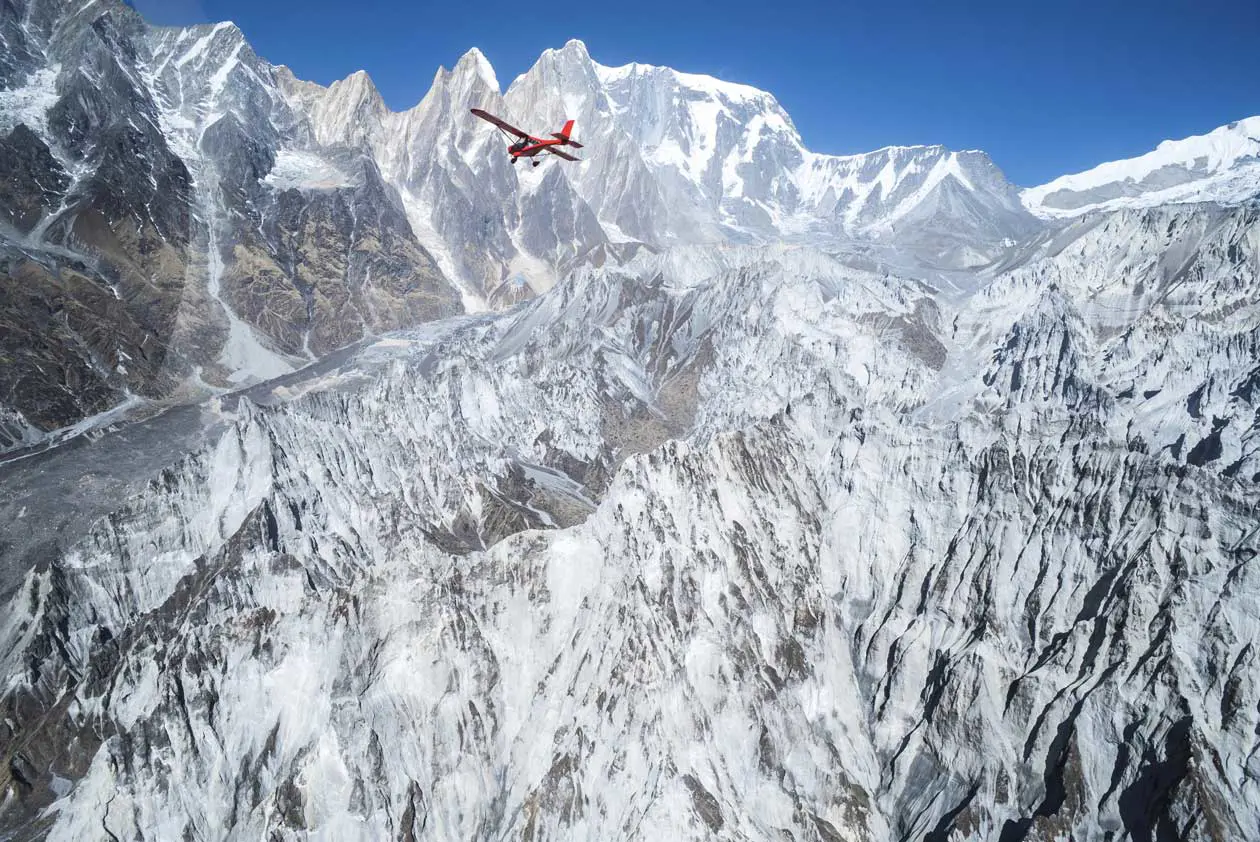
Another distinctive experience is taking an ultralight flight from Pokhara Airport (PHH), offering aerial views over Phewa Lake, the Pokhara Valley and the Annapurna range. These flights are generally operated in small two-seat aircraft carrying one pilot and one passenger, providing spectacular views of the snow-capped Himalayan peaks, including Mount Machhapuchhre and the Annapurna range.
Travellers who prefer to stay on the ground can explore Pokhara and its surroundings by mountain bike, riding through hills, forests, riverbanks and rural communities. The area also offers plenty of opportunities on the water, including boating and kayaking on Phewa and Begnas Lakes, as well as river activities on the Seti. Other experiences include bungee jumping, ziplining, golf, birdwatching, hiking and skydiving. This wide range of activities makes it easy to shape a stay around different interests and energy levels, alternating more active adventures with relaxing days by the lakes and cultural visits.
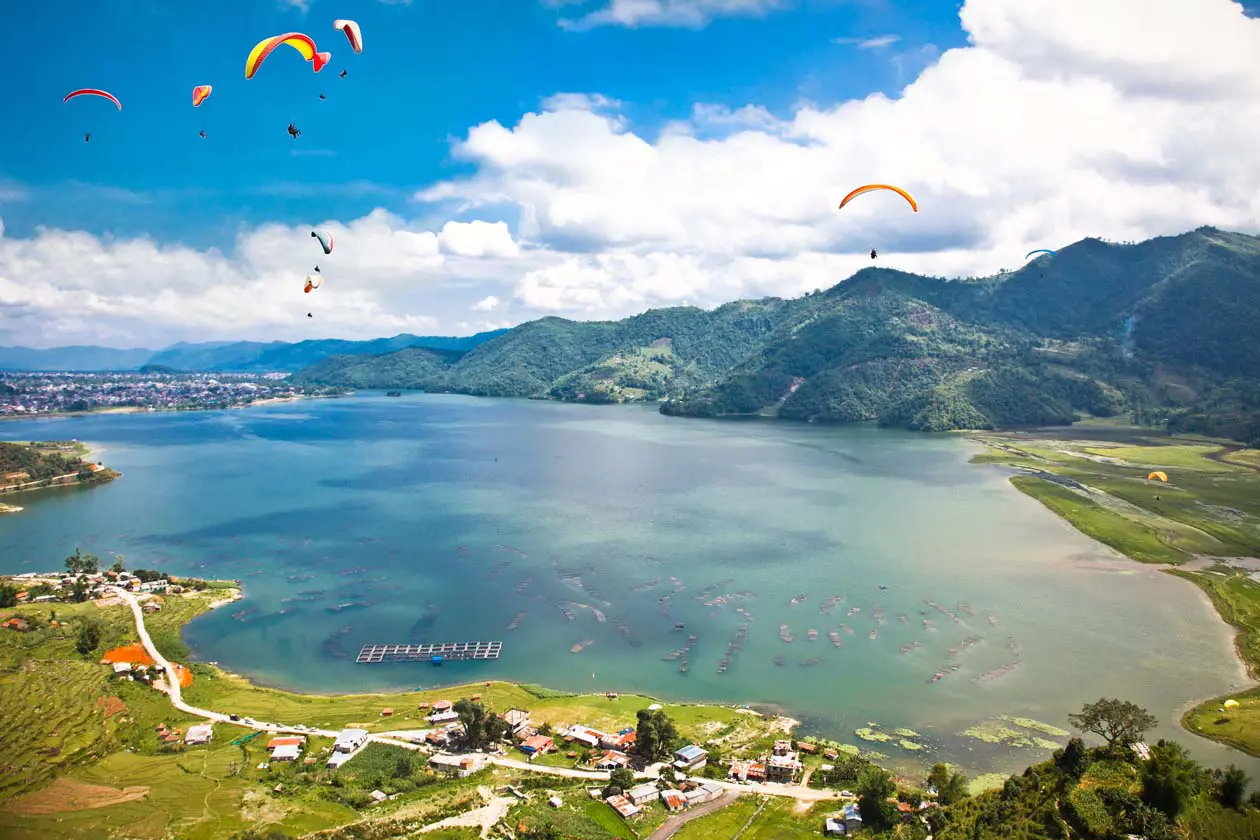
Pokhara manages to be a city, a trekking base and a holiday destination all at once: visitors can begin at Phewa Lake and the museums, continue through caves and hills, and then venture out towards the surrounding lakes or the high mountains. It is precisely this progression, from the city to the Himalayas, that makes Pokhara one of Nepal’s most complete destinations.
Pokhara’s Cuisine
Pokhara’s cuisine reflects the broader Nepalese culinary tradition, with influences from both Indian and Tibetan cooking and a focus on simple, nourishing dishes. Rice is a staple food, carefully cultivated and celebrated each year in June with a dedicated festival.
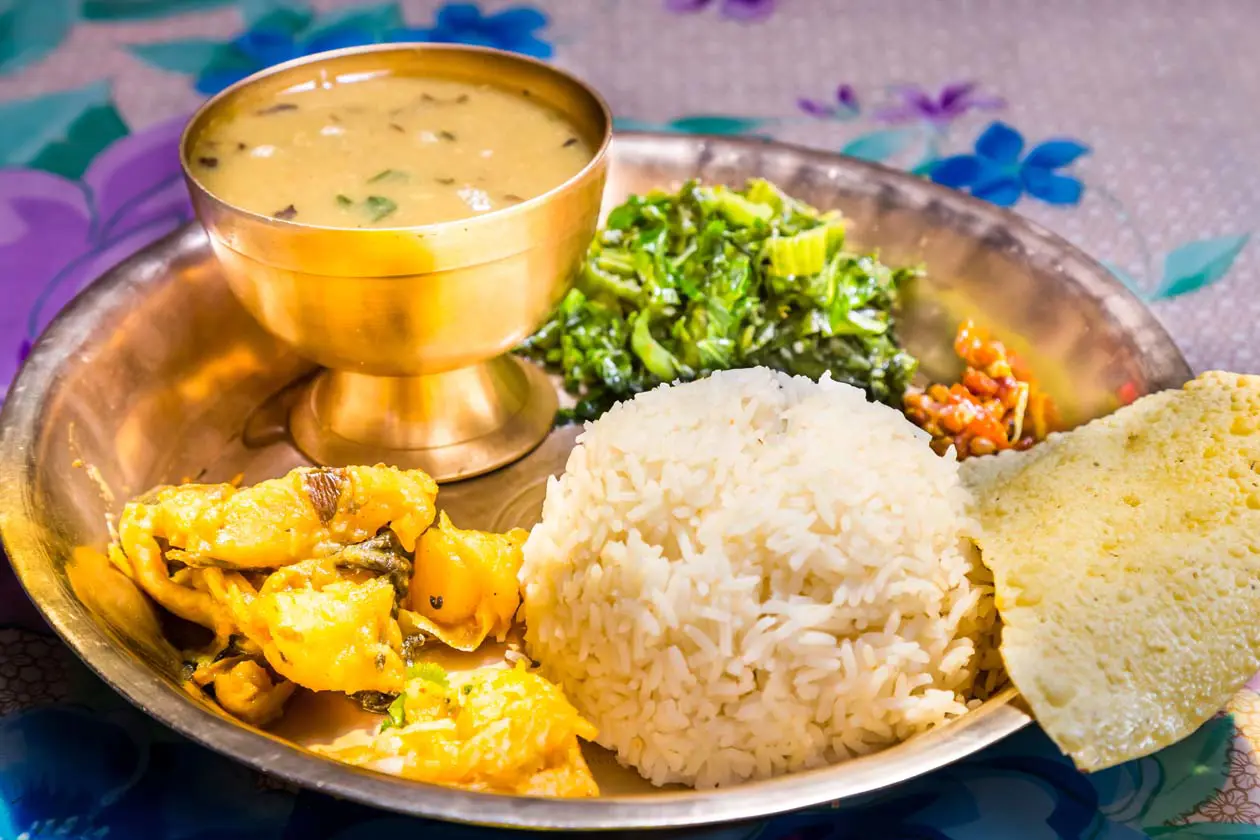
The most representative meal combines Daal, a lentil soup, with Bhat, boiled rice, accompanied by curried vegetables (Tarkari) and pickles (Achar). It is one of the most widely eaten meals in Nepal and a staple of everyday Nepalese cuisine.


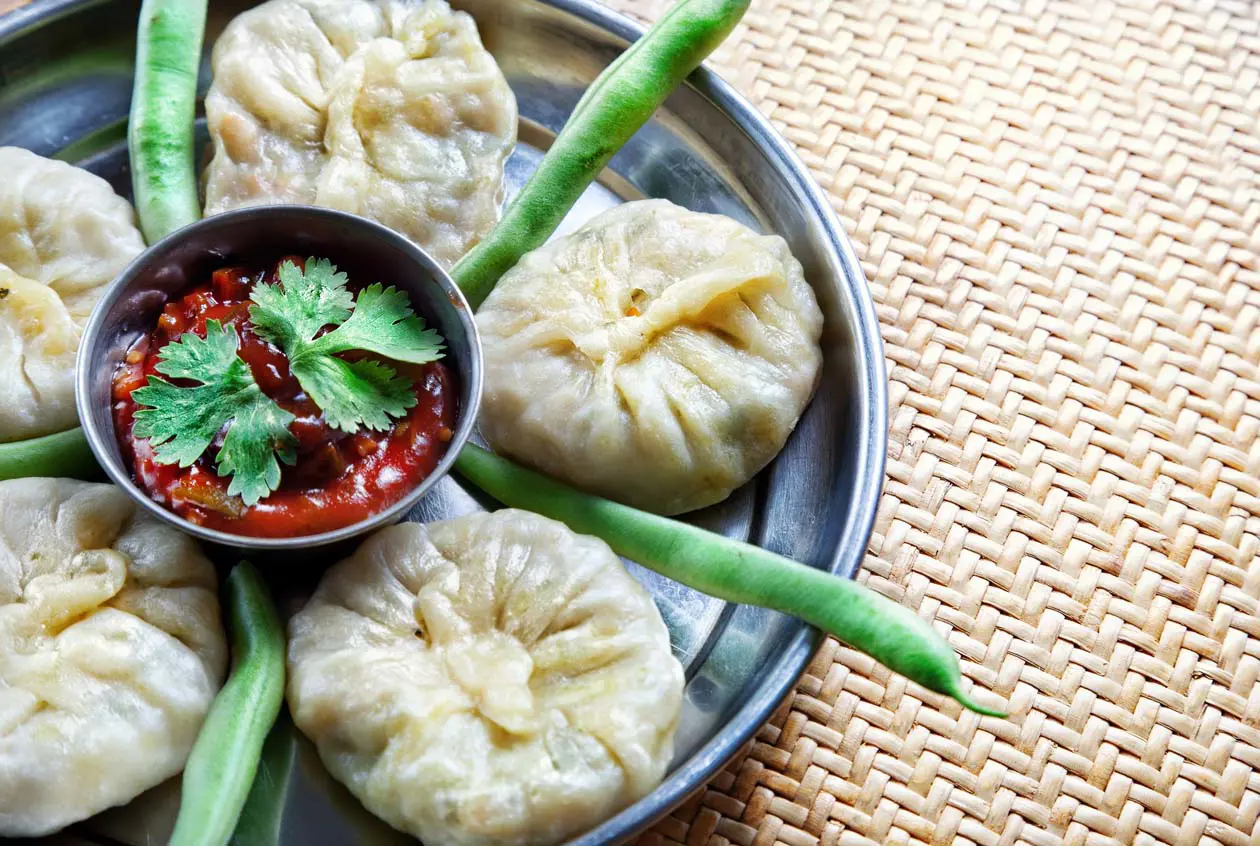
Also very popular are Momo, steamed or fried Tibetan-style dumplings with a variety of fillings, widely available in restaurants across the city and enjoyed in both savoury and sweet versions. Meat curry, meanwhile, is traditionally associated with special occasions. Other staples of Nepalese cuisine include Roti, a distinctive flatbread, Tsampa, made from roasted barley flour, and Dhedo, a hearty boiled flour preparation. Pokhara’s desserts are generally simple and made with just a few ingredients, often based on milk, honey and rice. They can be enjoyed with spiced tea or with local alcoholic drinks distilled from rice, barley or wheat.
Texts by Lisa Maria River
Avion Tourism Magazine
Photo for editorial use only: Copyright © Sisterscom.com / Depositphotos
All rights reserved. Copyright © Sisterscom.com
Tourism Board
ntb.gov.np
Advertising

Partnership with Travelpayouts
Where to stay in Pokhara
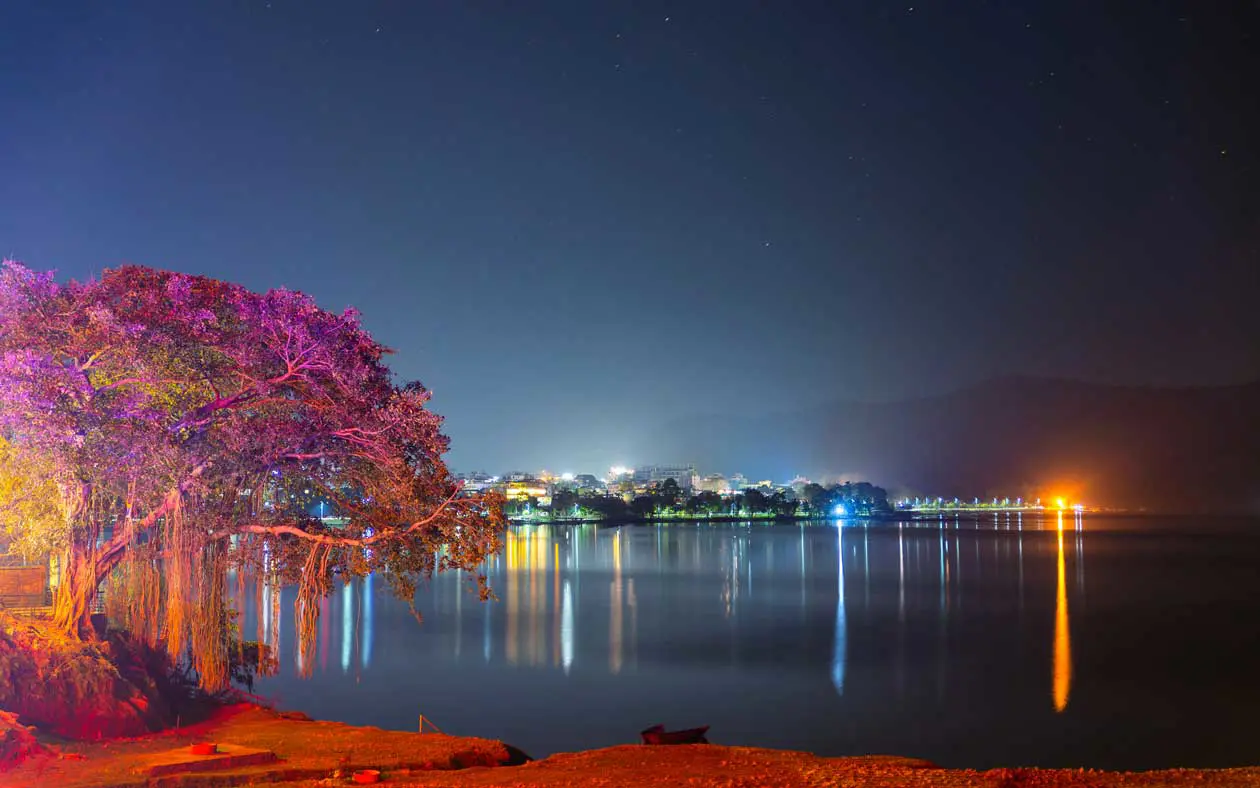
Pokhara offers a varied range of accommodation, from traditional hotels and resorts to more informal lodges.
To find the most suitable option and the best available offers, travellers can search by hotel category, guesthouse or lodge.
Hotels by star rating and type of services offered:


EXPERIENCES AND EXCURSIONS IN POKHARA
Pokhara is an ideal base for hiking, sightseeing and outdoor activities, as the city is easy to go from lakes to hills, from rural villages to viewpoints on Annapurna. Those short on time can choose half-day or full-day excursions to Sarangkot, Kaskikot, Naudanda, Kahun Danda, Australian Camp, Dhampus, Rupakot or Thulakhot, which are popular for their mountain views, sunsets and sunrises, as well as for the chance to get in touch with village life in the valley. There are numerous short routes around Pokhara, suitable for those who don't want to tackle the longer treks in the Annapurna region.
Among the most classic experiences are boat or kayak tours on Phewa Lake, often combined with a visit to the Tal Barahi Temple, or excursions to the quieter Begnas Lake and Rupa Lake. For those who prefer a cultural and naturalistic itinerary, you can combine the center of Pokhara, the Old Bazaar, the Bindhyabasini Temple, Devi's Fall, the Gupteshwar Cave and the World Peace Pagoda in the same day. Among the main experiences of the destination are also cultural visits, museum tours, boating, birdwatching and mountain viewing.
Pokhara is also one of the main starting points for treks in the Annapurna region. From here, itineraries are organized to Poon Hill, Annapurna Base Camp, Mardi Himal, Annapurna Circuit, Jomsom and Muktinath, as well as shorter routes that can be customized according to the available days and physical preparation.
For those looking for more dynamic experiences, the offer includes paragliding, ultralight flights, mountain flights, hot air ballooning, mountain biking, rafting, kayaking, ziplining and bungee jumping. Rafting excursions on the Seti and other rivers reachable from Pokhara are also available, as well as cycling routes through the countryside, villages, forests and hills.
Partnership with GetYourGuide
Caves, Mountain Museum, Bindhyabasini Temple and David's Falls
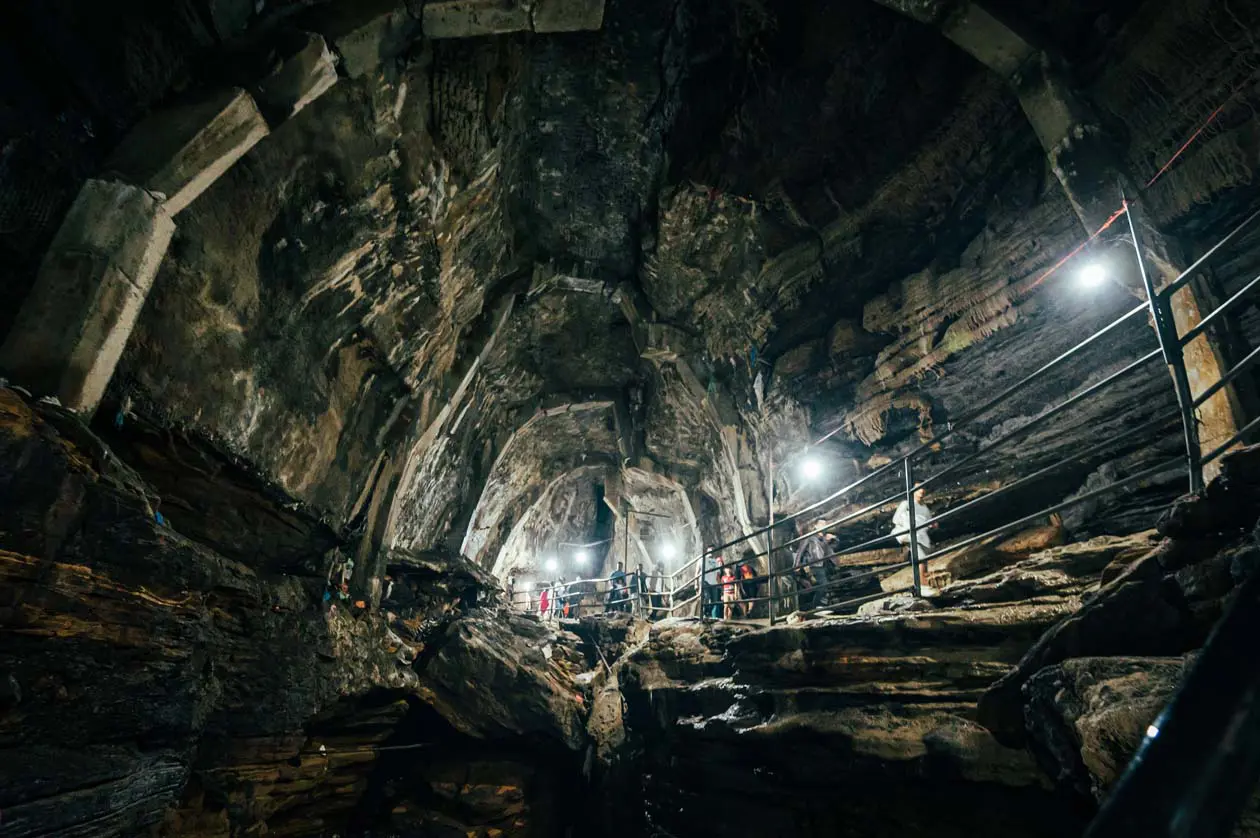
The private tour starts with hotel pick-up in Pokhara and leads first to the Mahendra Cave, among stalactites and stalagmites, and then continue to the Bat Cave. The itinerary continues along the Seti River and to the International Mountain Museum, dedicated to the Himalayas and its history. The visit continues to the Bindhyabasini Temple then to David's Falls. The last stop is the Gupteswor Cave, an underground site linked to the religious tradition of the city. Duration: 6 hours. Info and reservations with free cancellation up to 24 hours in advance and full refund: Caves, Mountain Museum, Bindabasini Temple and David's Falls.
Himalayan sunrise hike from Sarangkot
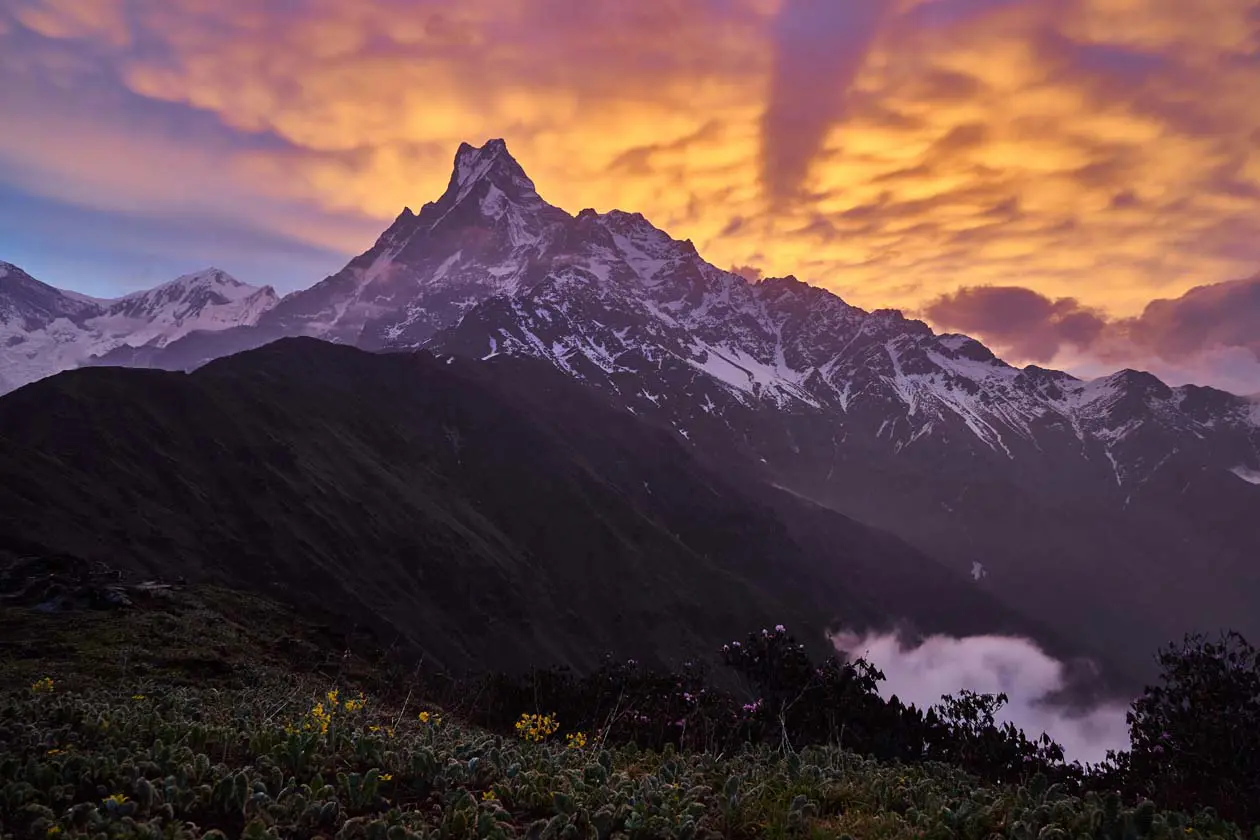
The tour starts with hotel pickup in the Pokhara Lakeside area and continues by car to Sarangkot, which can be reached in about 30 minutes. From the base of the hill, it is a short walk, about 15 minutes, to the viewpoint chosen to witness the sunrise. The view takes in some of the main Himalayan peaks, including Dhaulagiri, Machhapuchhre, Annapurna, and Manaslu, as well as the Pokhara Valley. The tour concludes with drop-off at your hotel in Lakeside. Duration: 3 hours. Info and reservations with free cancellation up to 24 hours in advance and full refund: Sunrise hike in the Sarangkot Himalayas.
Australian Camp and Dhampus Village
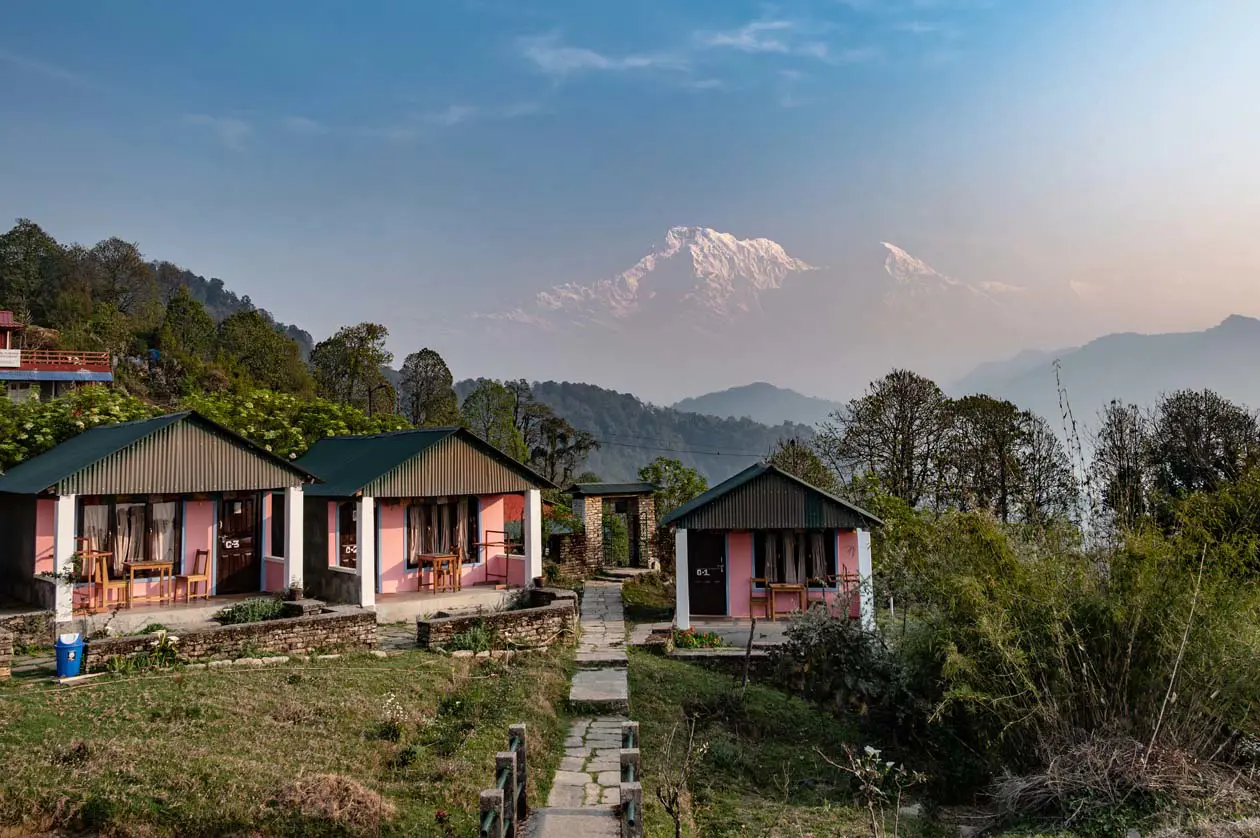
Departure from Pokhara with transfer to Kande, the starting point of the trek. From here the route climbs through forests and terraced fields to the Australian Camp, from which views of the Annapurna and Machhapuchhre ranges open up. After lunch, the walk continues through Gurung villages towards Dhampus to observe local life and get closer to the traditions of the community. In the afternoon we return to Kande along the same scenic route, and then return by car to Pokhara. Duration: 1 day. Info and reservations with free cancellation up to 24 hours in advance and full refund: Australian Camp and Dhampus village.
Trekking to Ghorepani, Poonhill and Ghandruk
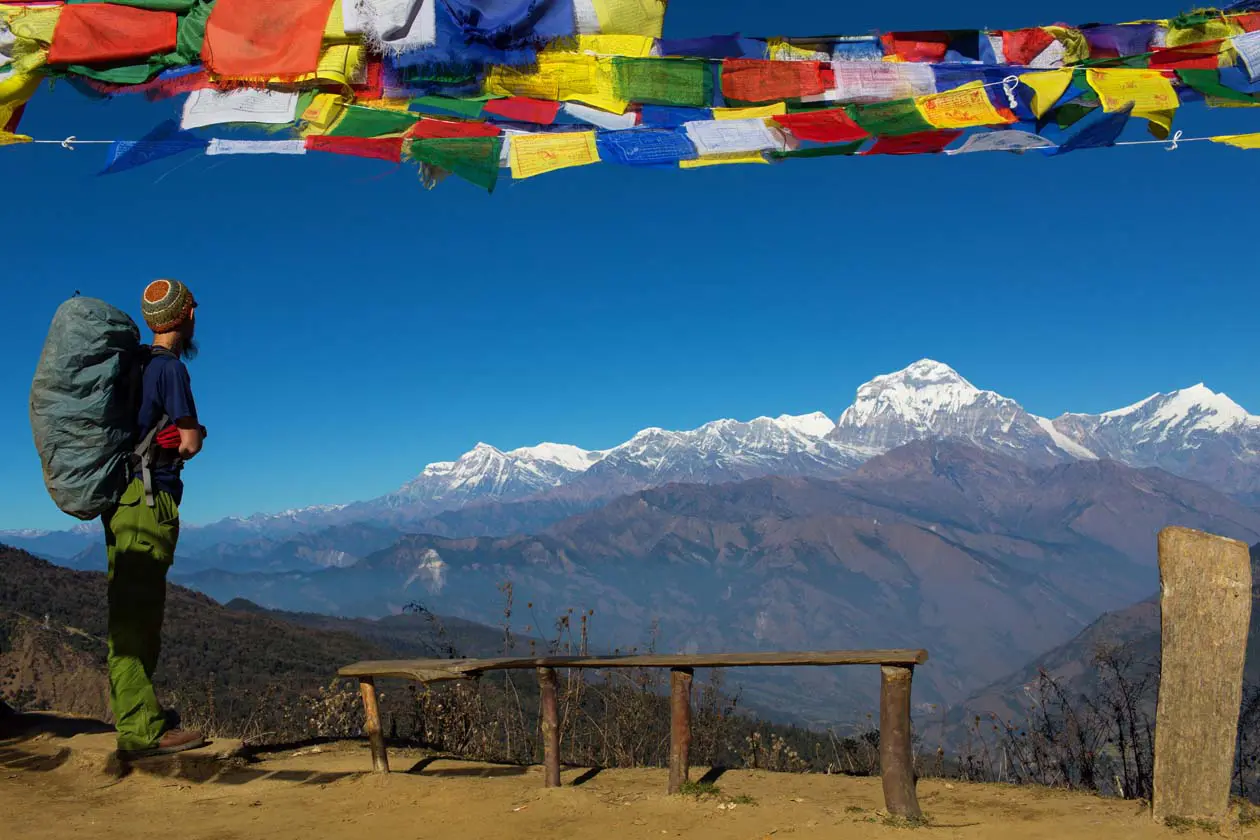
4-day Poon Hill trek. From Pokhara you reach Nayapool and continue on foot towards Ulleri, with about 5-6 hours of walking through mountain landscapes and villages of the Magar community. The next day the route leads to Ghorepani, through forests and small villages. Third day climb to Poon Hill to witness the sunrise over the Annapurna and Dhaulagiri ranges, then the trek continues to Ghandruk, passing through Tadapani. After the night in Gurung village, on the last day you return by car to Pokhara. Duration: 4 days. Info and reservations with free cancellation up to 24 hours in advance and full refund: Trekking to Ghorepani, Poonhill and Ghandruk. Alternatively: Trekking to Annapurna Base Camp in 5 days or Private trekking of 3 days to Ghorepani and Poon Hill.
All tours and excursions