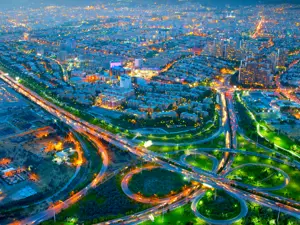
The green city of Oman, between incense and the Arabian Sea
In the south of Oman, overlooking the Arabian Sea, Salalah shows a very different face of the Arabian Peninsula from the one dominated only by desert and rocks. It is the capital of the Dhofar Governorate, the southernmost region of the Sultanate and the historic Land of Incense, where beaches, springs, lagoons, mountains and deserts alternate with archaeological sites, mosques and traditional souqs.
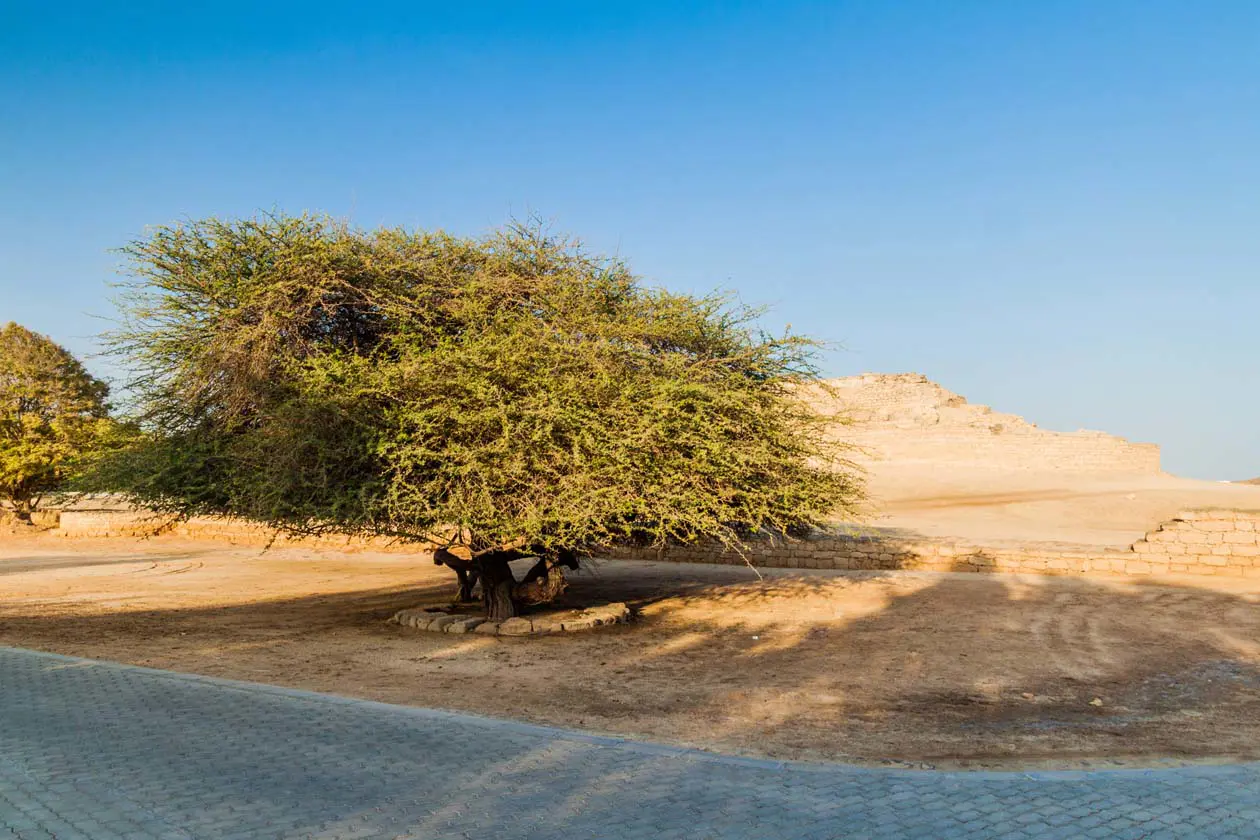
During the 'Khareef' monsoon season, from June to September, fog and light rains transform the landscape around the city of Salalah, covering the plains and reliefs with lush green, giving a rare scenery in the Arabian Peninsula. A lush green paradise is highlighted all around with spontaneous vegetation covering the hills, while seasonal waterfalls and riverbeds, usually dry, are filled with water.
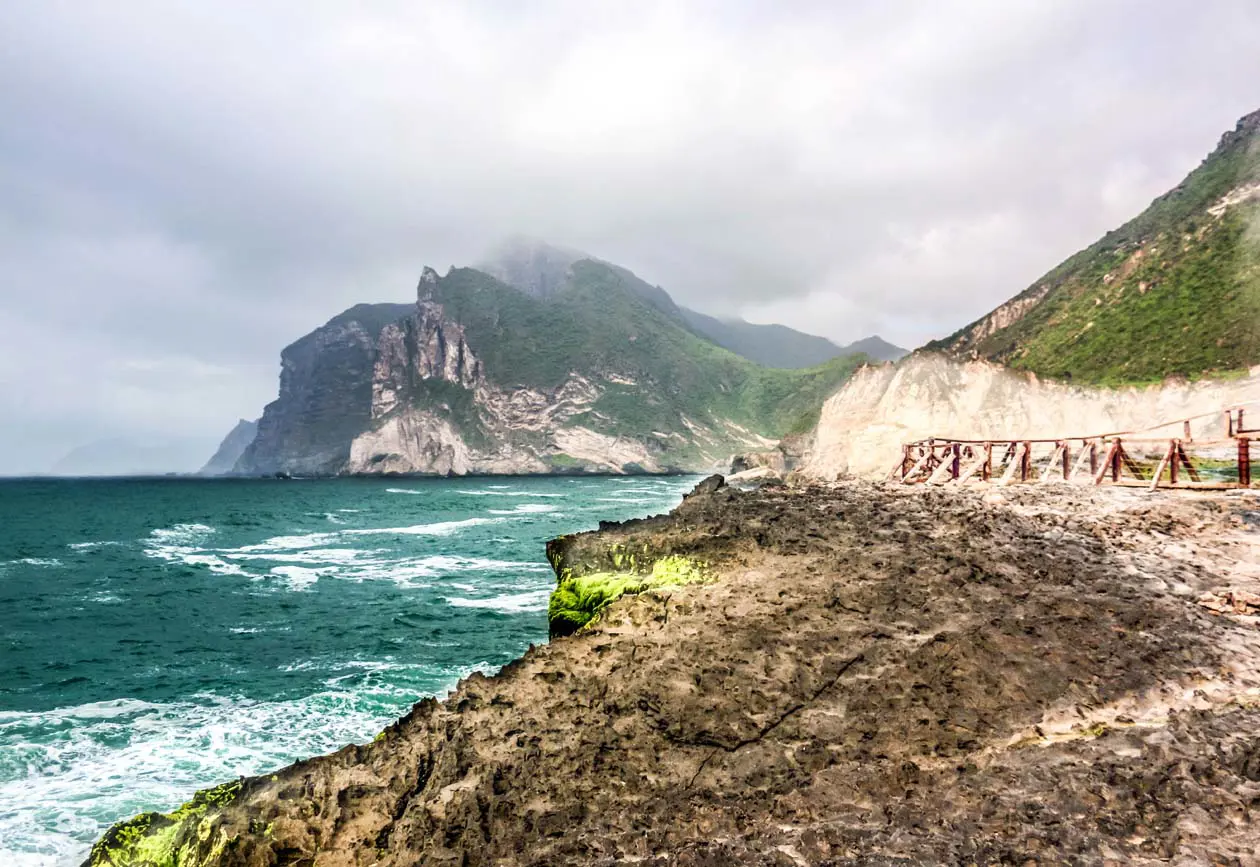
The Sultanate of Oman is a country characterized by a strong variety of landscapes: mountains, desert, coasts and wadis coexist with modern cities, forts and souqs. Within this mosaic, Dhofar, about 1,000 kilometers from Muscat, occupies a particular position, both for its climate and for a thousand-year history linked to the collection and trade of incense. Salalah is the main urban and tourist center, a destination that can be visited throughout the year, thanks to the presence of historical and cultural attractions, tourist infrastructures, beaches and natural areas within easy reach of the city.
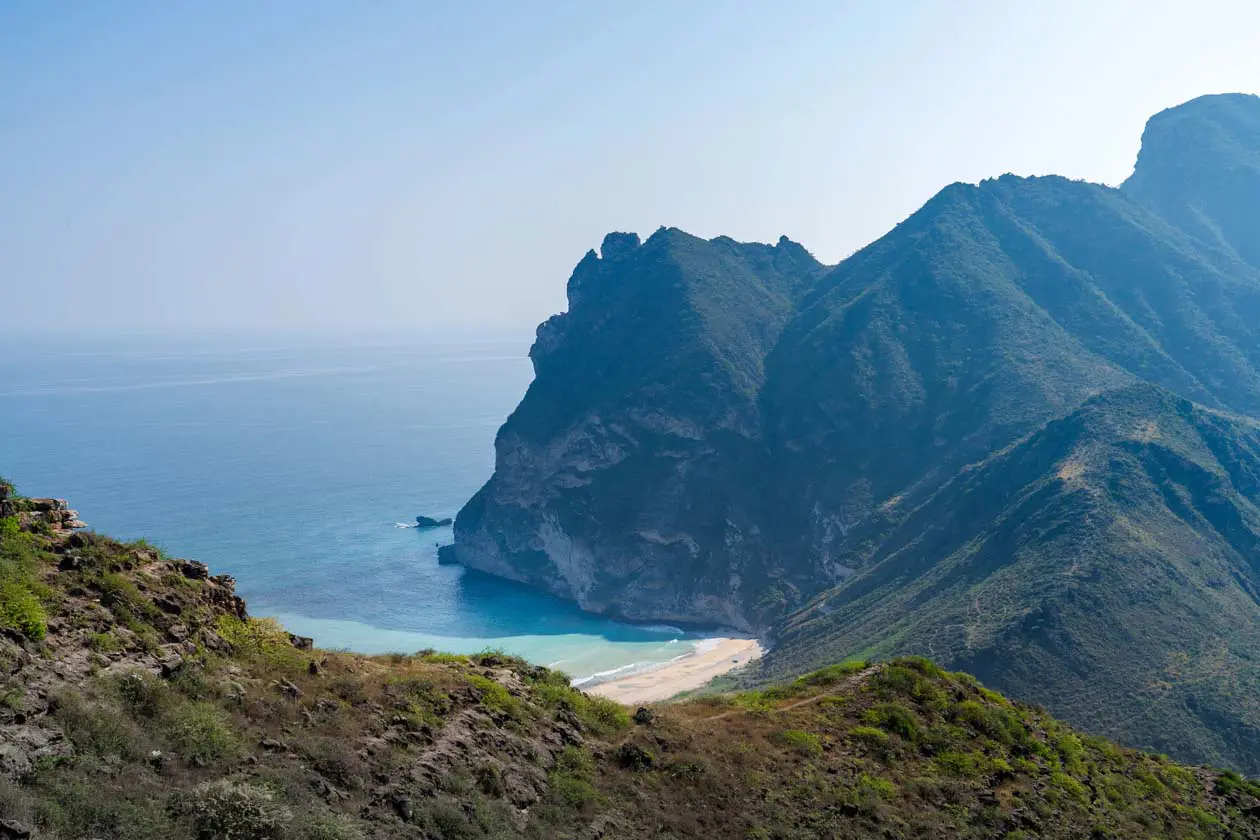
Between incense, sea, archaeological evidence and landscapes that become surprisingly green during the Khareef, Salalah brings together some of the most characteristic aspects of Dhofar in a single destination, offering a different way of getting to know Oman: more tropical in the atmosphere, deeply linked to the Arabian Sea and still marked by the thousand-year history of the Land of Incense.
Itinerary to discover Salalah
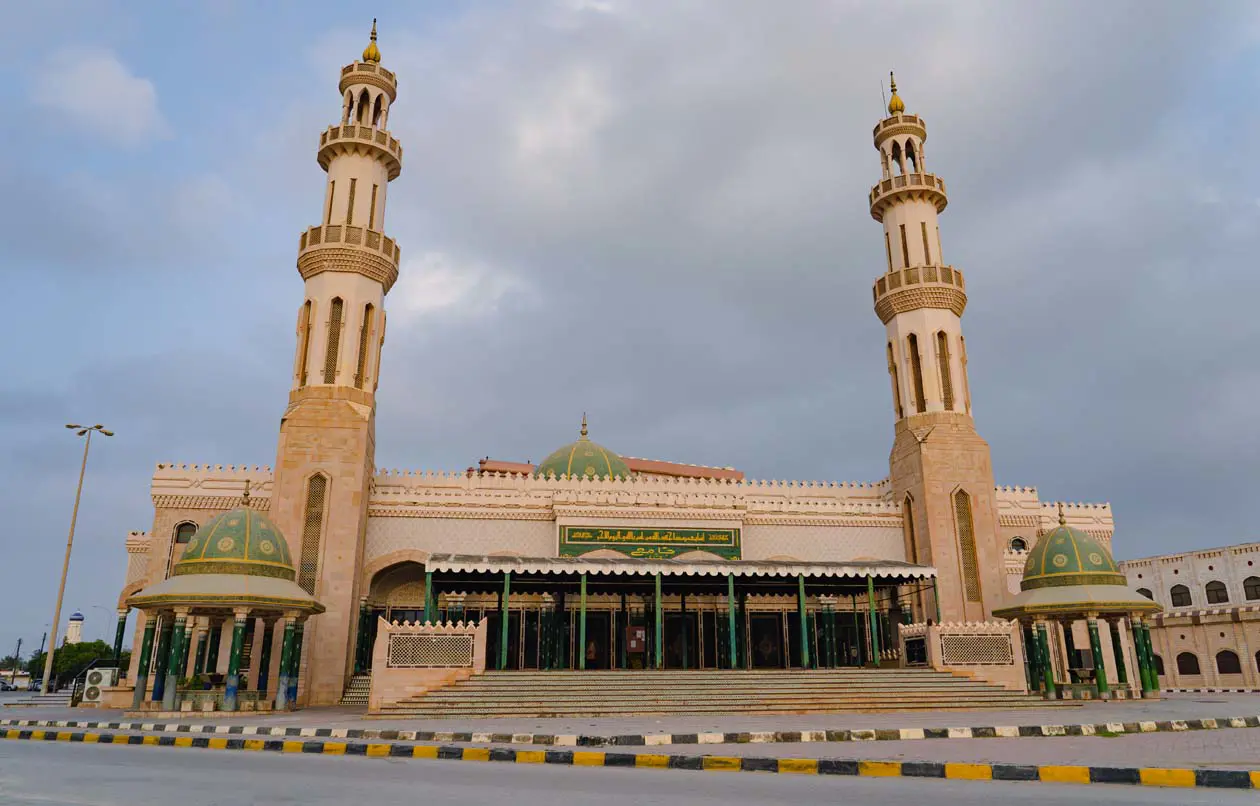
A route to discover Salalah can start from the Sultan Qaboos Mosque, in the heart of the city's commercial area. It is one of the main religious references of the capital of the province of Dhofar and introduces Omani Islamic culture and architecture with minarets, domes and characteristic decorations.
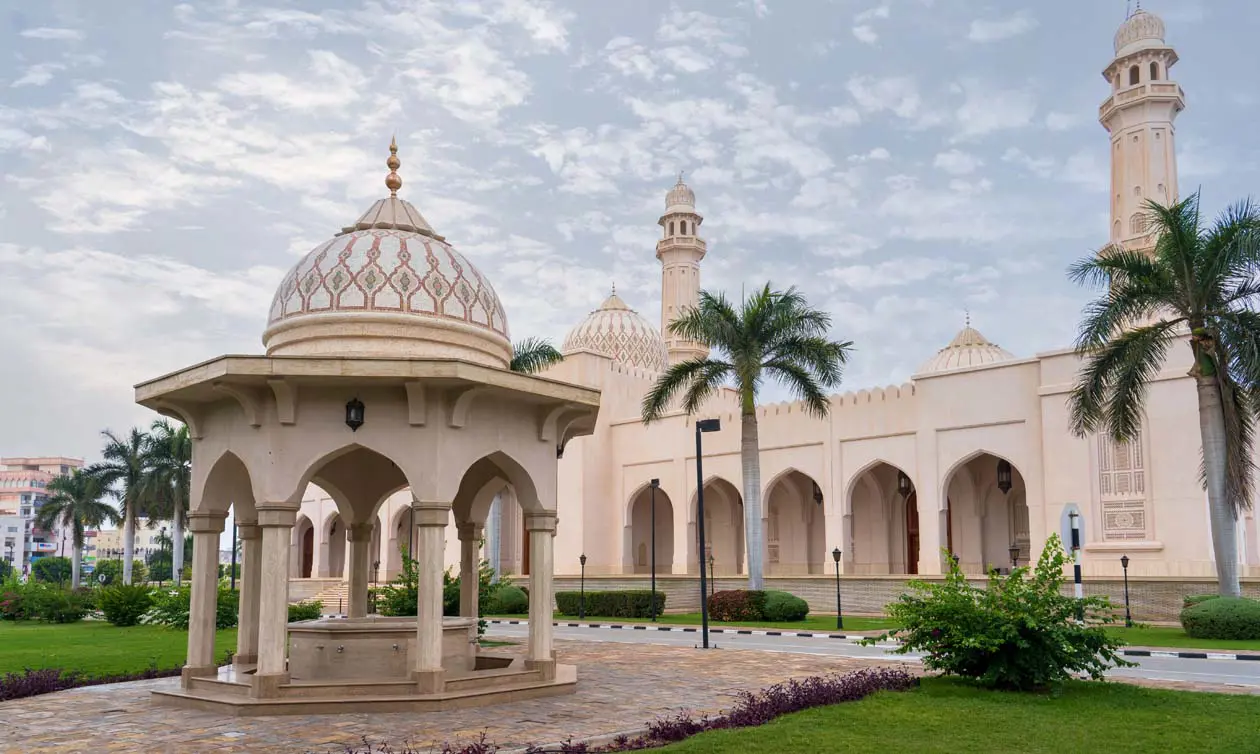
While Masjid Al Shanfari is the city's historic mosque, more intimate and surrounded by banana plantations, with characteristic green domes and tall ornate minarets. The architecture of the mosque recalls both the traditional Islamic structure and a modern aesthetic. It is located in the center of Salalah and is a religious landmark for the entire Muslim community.
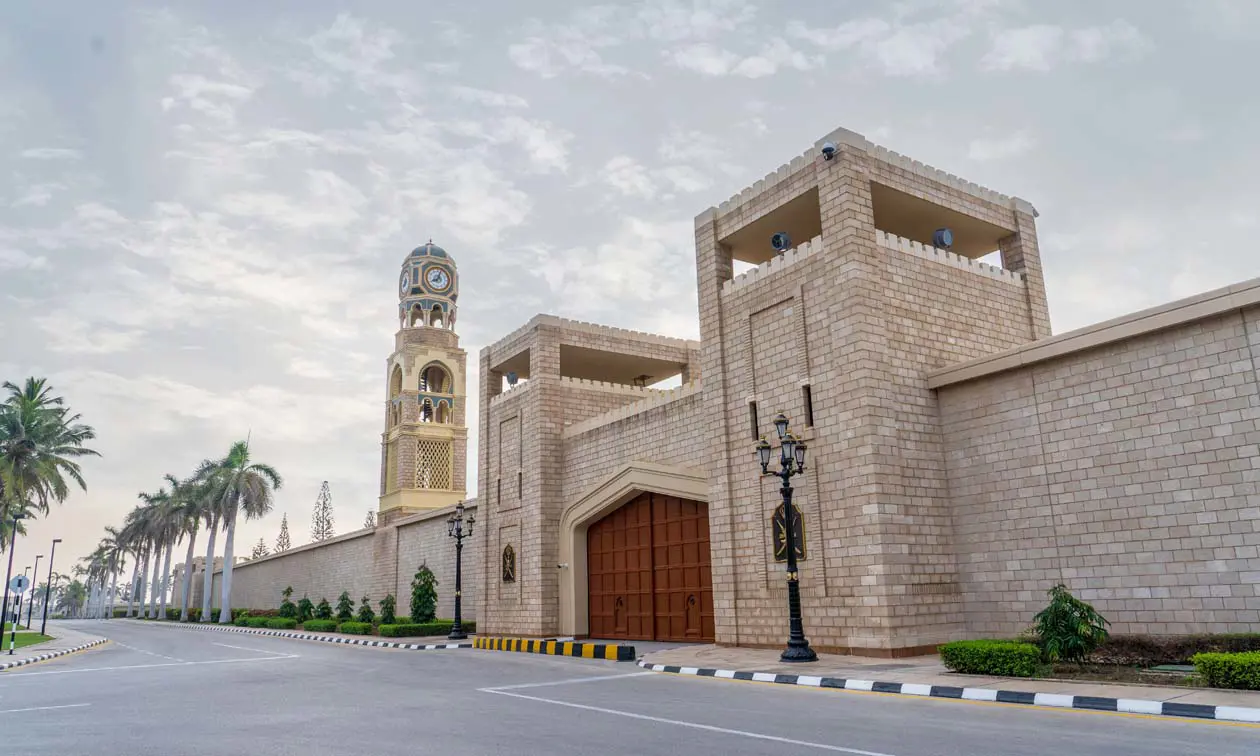
The Al Hosn Palace, the royal residence of the Sultan of Oman, also impresses with its elegant and simple architecture, flanked by a clock tower. The historic palace is embellished with mighty fortified walls and outdoor gardens and is easily accessible in the city center, right near the traditional market.
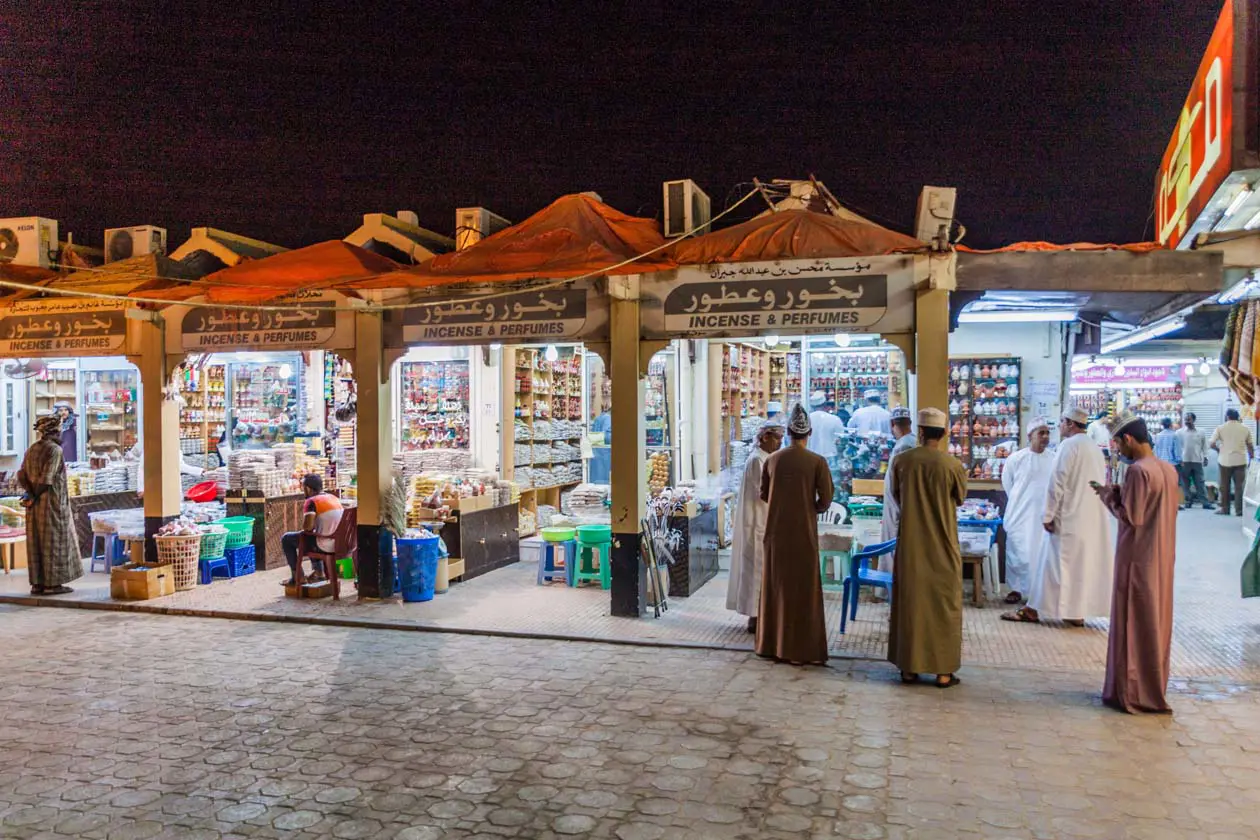
You can then visit the Al-Husn Souq (also called Al Haffa Souq), the ancient traditional market of Salalah where you can buy local handicrafts, fabrics and clothes, gold and silver jewelry, spices, resins, perfumes and the famous Omani incense of Dhofar, a must for those looking for a memory really linked to the destination. This market is the place that best links the shopping experience to the economic and cultural history of the region.
From here you can continue to one of the fundamental places to understand the history of the region: the Al-Baleed Archaeological Park, located near the Arabian Sea, about six kilometers from the center of Salalah. The archaeological area, which dates back to the Bronze Age, around 2500 BC, preserves the remains of the ancient city of Al-Baleed and is part of the Land of Incense, the complex recognized as a World Heritage Site by UNESCO that tells the importance of Dhofar in the ancient incense trade routes.
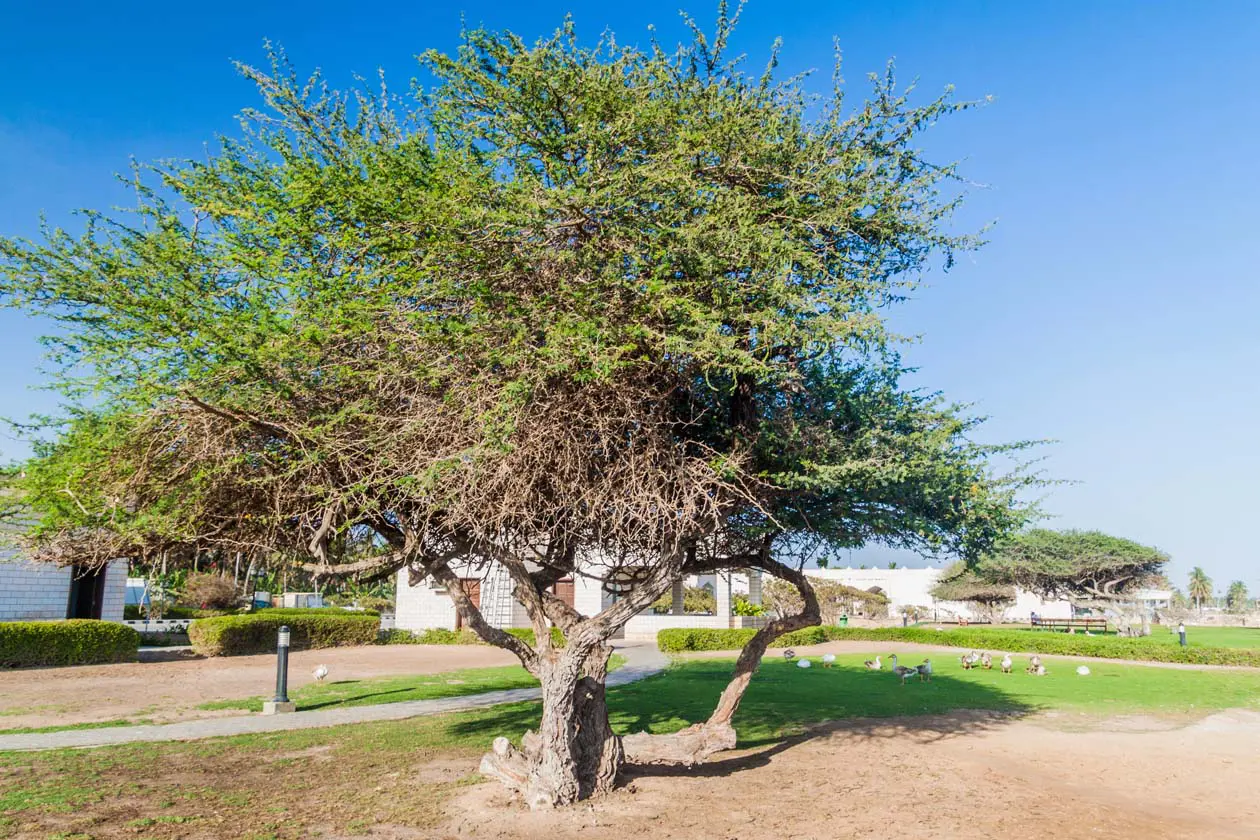
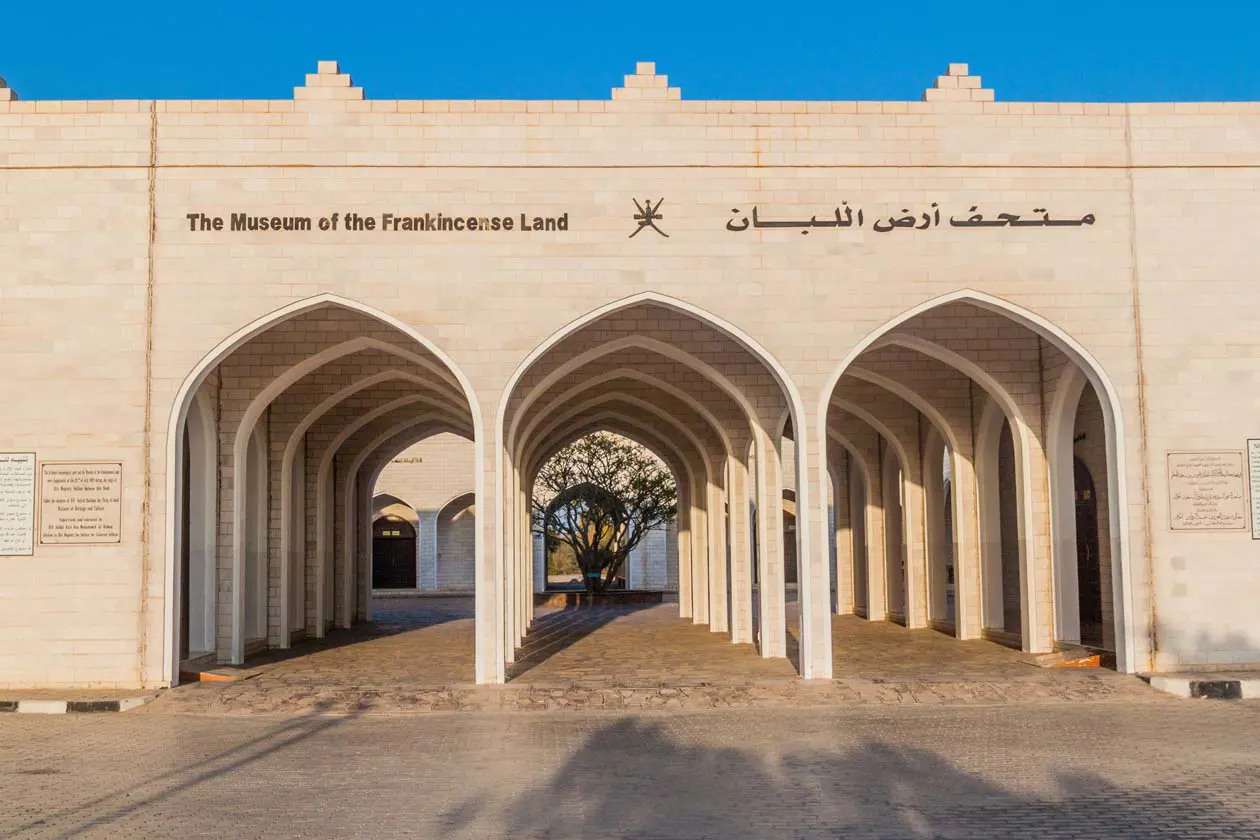
Inside Al-Baleed Park is the Museum of the Land of Incense, dedicated to the archaeological and cultural history of the territory and the maritime heritage of Oman. A visit to the museum helps to understand how incense has connected this part of the Arabian Peninsula to the great commercial circuits of the Indian Ocean and the Mediterranean for centuries.
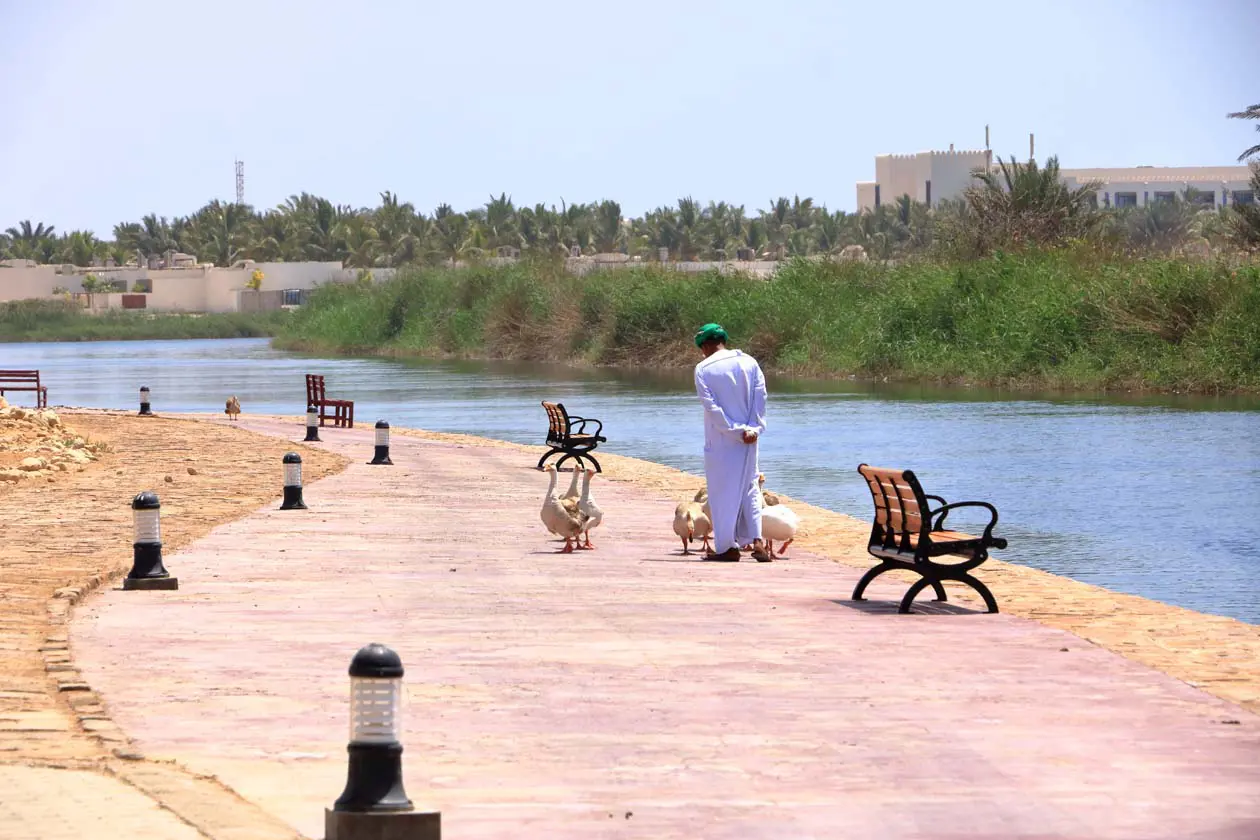
In addition to the city of Al-Baleed with its ancient remains, the archaeological site also includes Khor Al-Baleed Lake, one of the coastal wetlands characteristic of the Salalah landscape. These estuaries, locally called 'khawr', constitute important habitats for numerous species of birds and add a naturalistic component to the archaeological visit.
Salalah and the Incense Route
In Salalah, incense is not just a thing of the past. Its presence continues to be evident in the markets, traditions and products sold in the city. The aromatic resin 'Frankincense' comes from the Boswellia sacra, the incense tree that grows in the Dhofar in the Wadi Dukah Reserve (about 40 kilometers from Salalah) and which for centuries has fueled valuable trade.
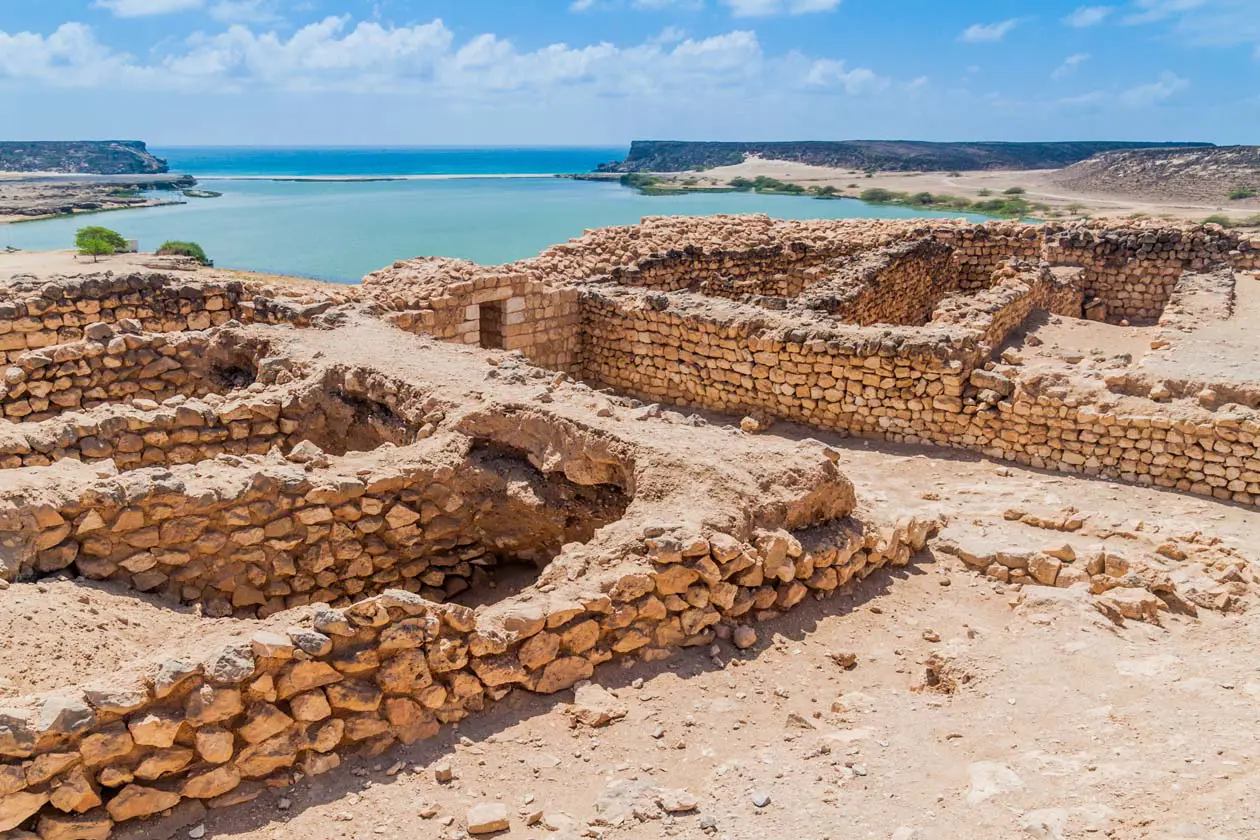
Also about 40 kilometers from Salalah, you can continue visiting the sites of the Land of Incense inscribed in the UNESCO World Heritage with the Sumhuram Archaeological Park, in Khor Rori, one of the oldest hubs for the export of incense through the trade routes between Arabia, the Mediterranean and India.
Salalah beaches and activities along the coast
The sea is an important component of a stay in Salalah and offers both sandy and rocky beaches, rich in coral reefs and marine life. Among the beaches near the cities are those of Al Mughsail Beach, Al Baleed Beach, Dhareez Beach and Al-Haffa Beach characterized by white sand, coconut palms from a typical beach market, the Al-Haffa Beach Market, as well as restaurants and cafes on the Al Hafa Waterfront.
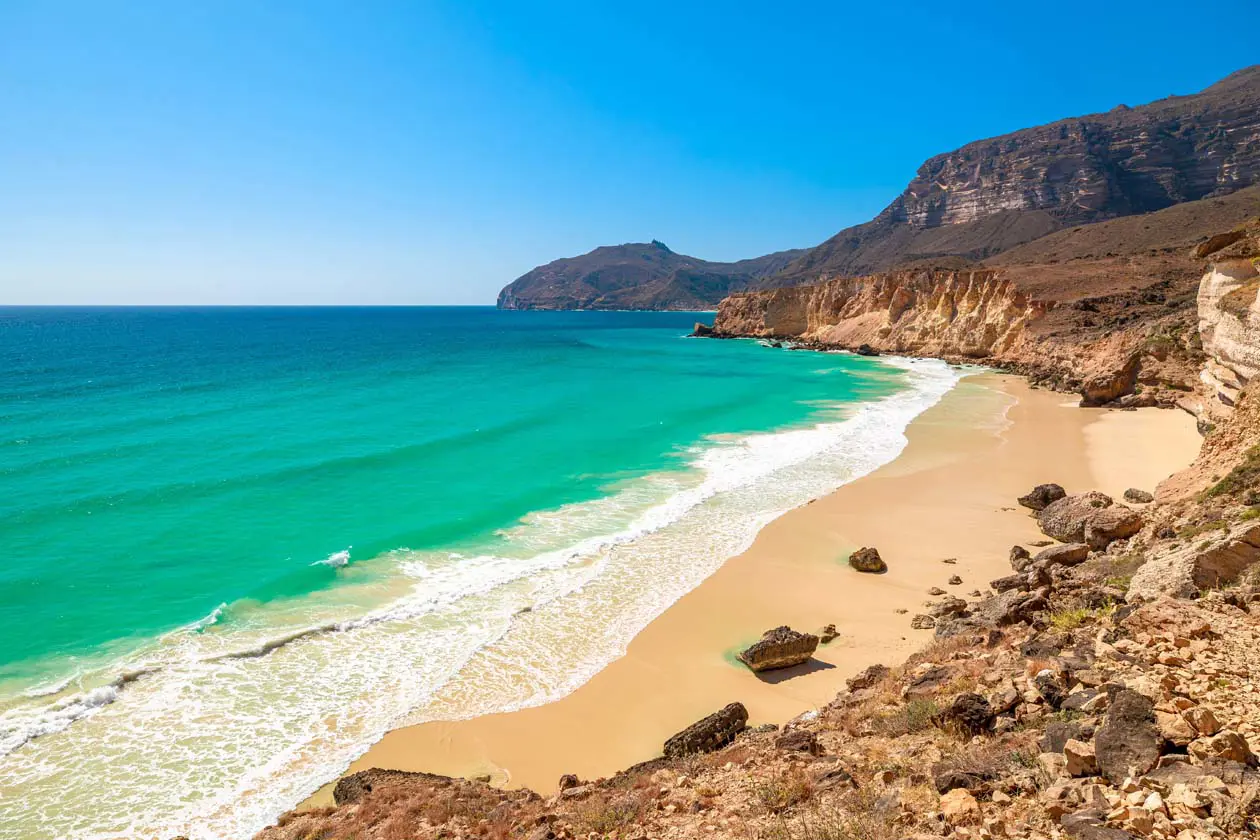
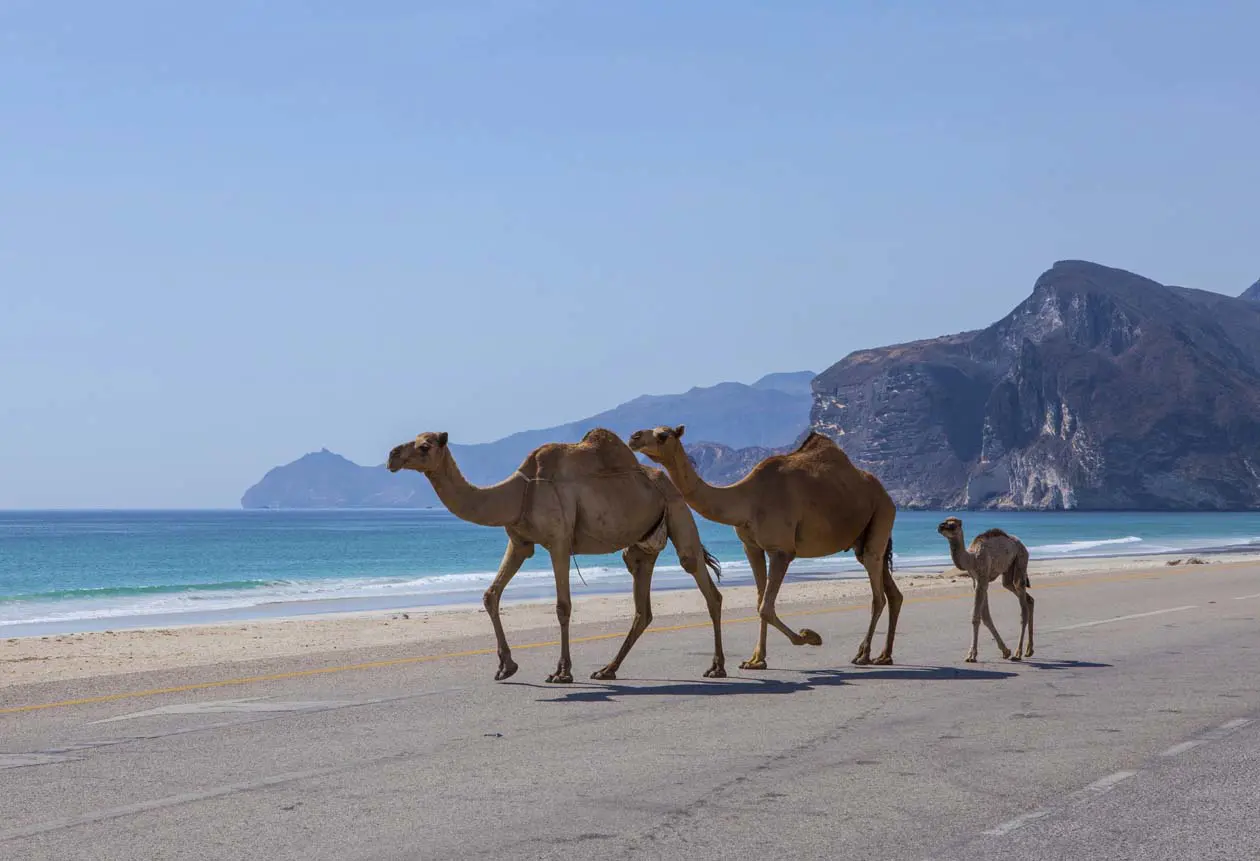
But it is also worth reaching the beaches around the city for their spectacularity. The best known, about 30 kilometers from Salalah, is the beach of Al Fazayah, uncrowded and wild, with fine white sand, crossed by wild camels and clear turquoise waters of the Arabian Sea where you can swim or snorkel. Other more characteristic beaches also include the pristine ones of Shalim and Raysut Beach, easily included in a day dedicated to the city and the coast.
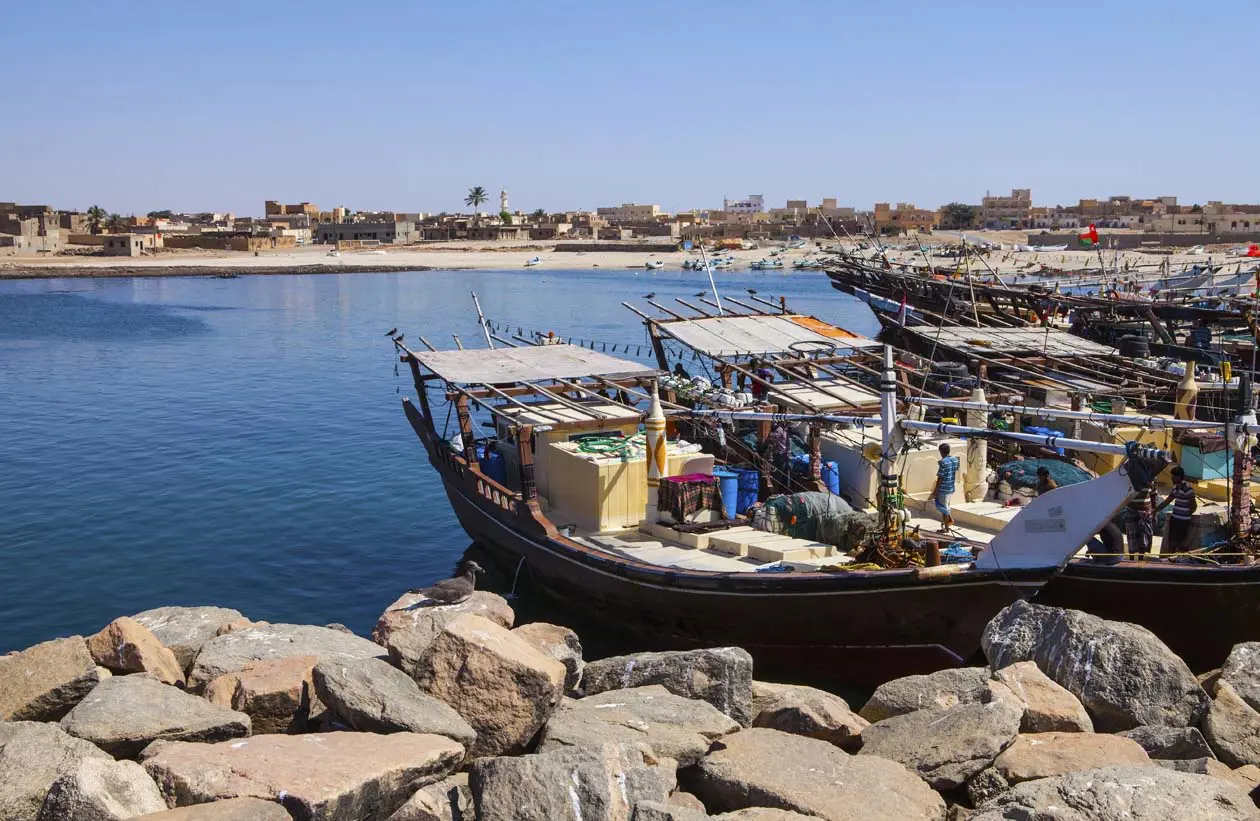
You can also organize sea excursions to the Hallaniyat Islands, go diving or look for dolphins and humpback whales in the waters of the Indian Ocean starting from the port of Mirbat, about 50 kilometers from Salalah, where it is also worth stopping to visit the ancient city with its fort and historic houses.
In Salalah, the location between the sea and the mountains allows you to combine cultural visits with numerous activities in nature: not only diving or snorkeling but also trekking and mountain biking in the surrounding mountains or kayaking in the aquatic areas of Dhofar or in the shallow bays of Lake Wadi Darbat in the Wadi Darbat Reserve or in the coastal lagoons of Khor Sinak or Khor Rori.
For a less active stay, the Marina Hawana Salalah area in the Salalah marina offers marine boat trips, restaurants and cafes, while family options also include the Hawana Aqua Park or Naseem Water Park water parks with attractions suitable for children.
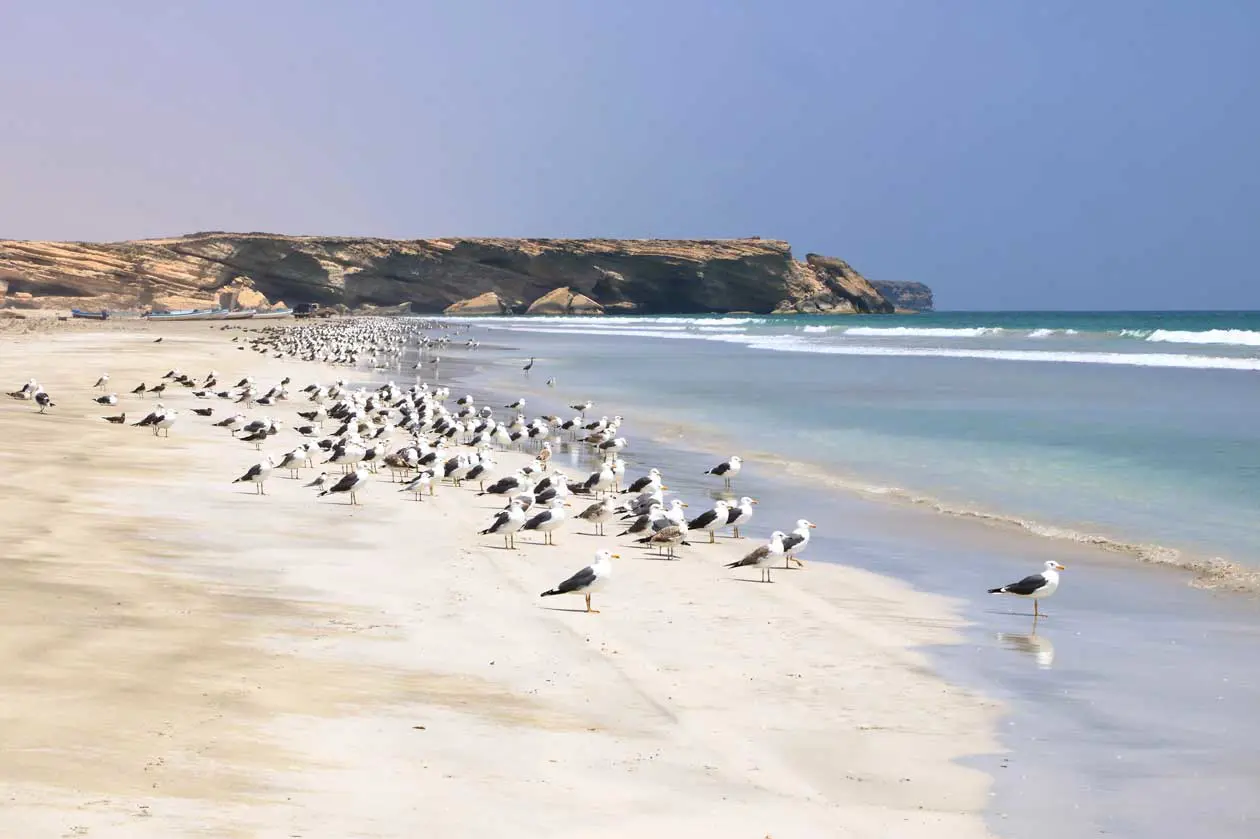
Moving about 40 kilometers from Salalah you reach Al Mughsail Beach, one of the most famous natural places in Dhofar for the marine geysers of Mugsayl. The white sandy beach stretches for about six kilometers and is famous for its turquoise waters, cliffs and above all for the 'blowholes': natural openings in the rock through which, when sea conditions allow it, air and water are pushed upwards forming spectacular jets of 30 meters high.
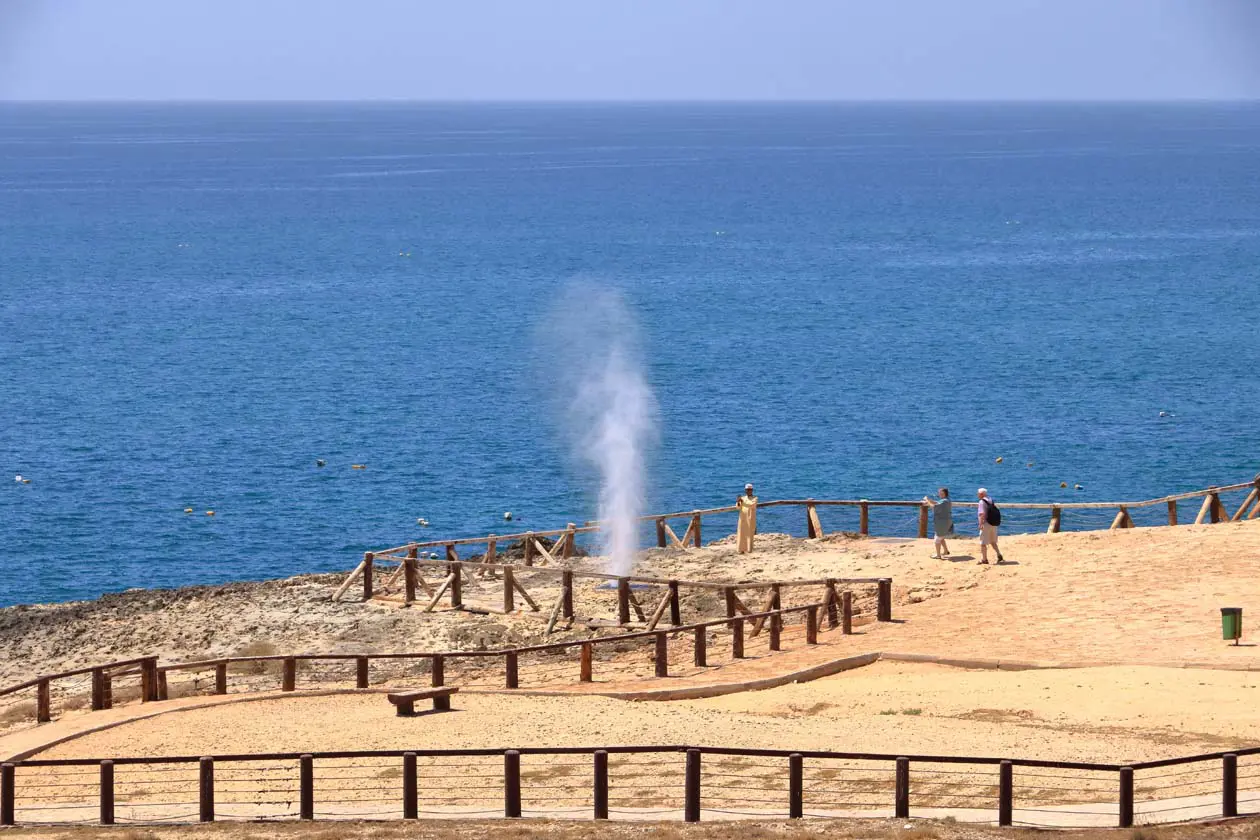
Above the blowholes is the Al Marnif Cave, which offers a sheltered point from which to observe the coast and the Arabian Sea. The Mughsail area also allows you to see some particularly accessible incense trees and is one of the easiest excursions to organize starting from Salalah. From these trees, when they are in bloom, not only incense is obtained but also an incense honey, which is truly unique and rare.
Springs, khawr and bird watching in Salalah
One of the features that distinguishes Salalah from many other destinations in the Arabian Peninsula is the presence of numerous natural springs rich in water especially in autumn, during the rains. A short distance from Salalah, Sahalnoot Spring is one of the perennial springs and the perfect place for a stop in nature, while Razat Spring is known for the abundance of its waters and for the nearby Razat Cave, also interesting for those who love photography and exploration.
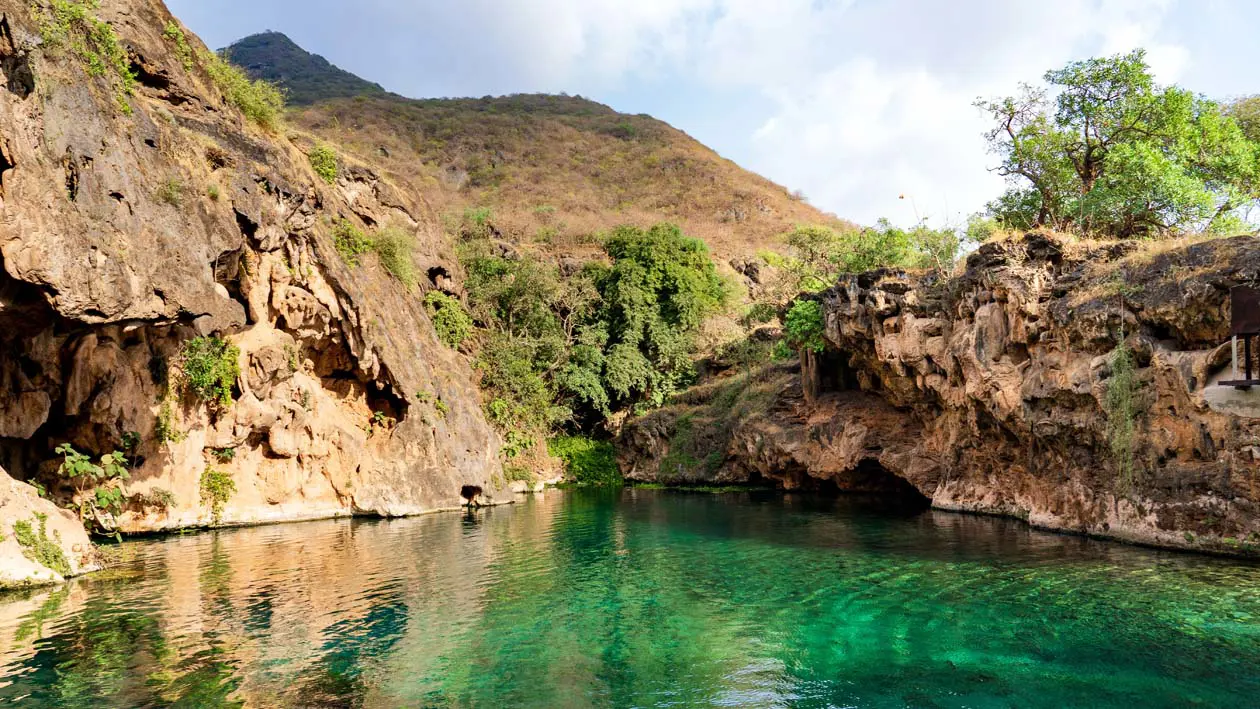
Also on the outskirts of the city are Jirziz Spring, near the Ittin Plain (also called Etin or Ateen Plain) and the Khor Spring surrounded by rich vegetation including sidr trees and coconut palms. Another possible excursion is Wadi Nahiz, where vegetation, springs and limestone formations create a landscape different from the coast and urban fabric of Salalah.
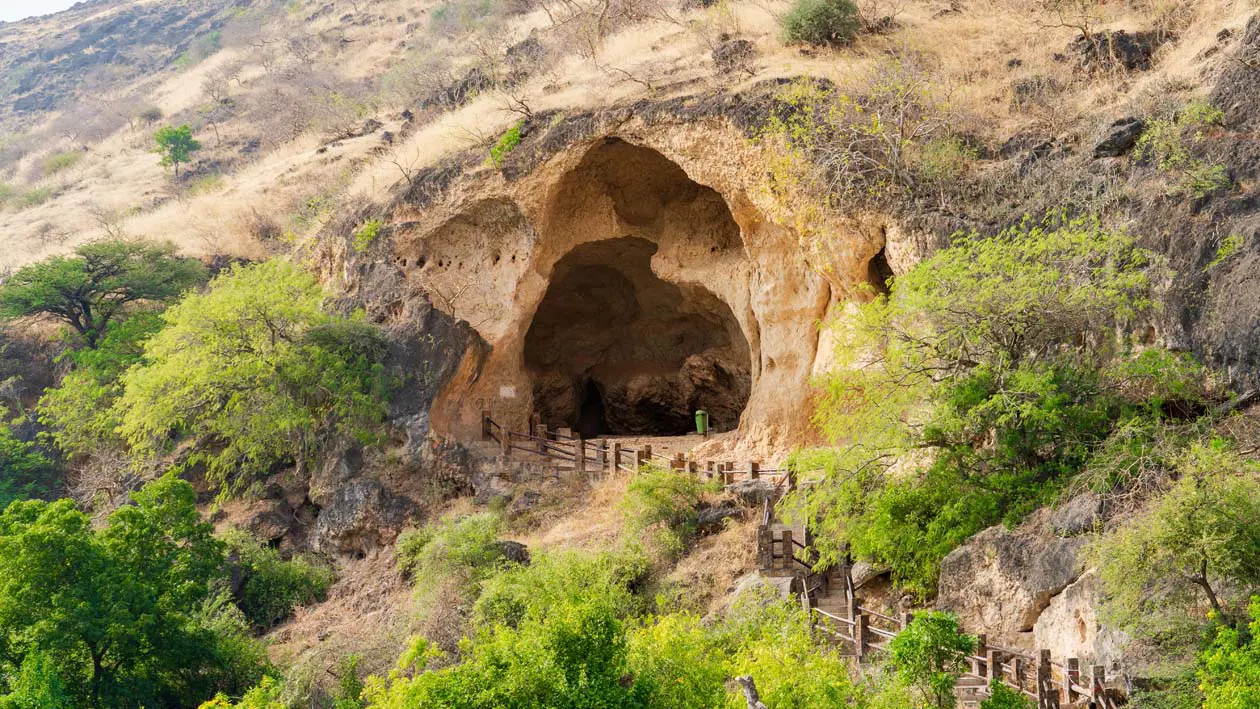
Along the coast of Salalah there are also several 'khawr', estuaries and lagoons that play an important role in the local biodiversity. The Wadi Nahiz valley is ideal for an adventure in nature and is home to water springs surrounded by lush vegetation with limestone rock formations.
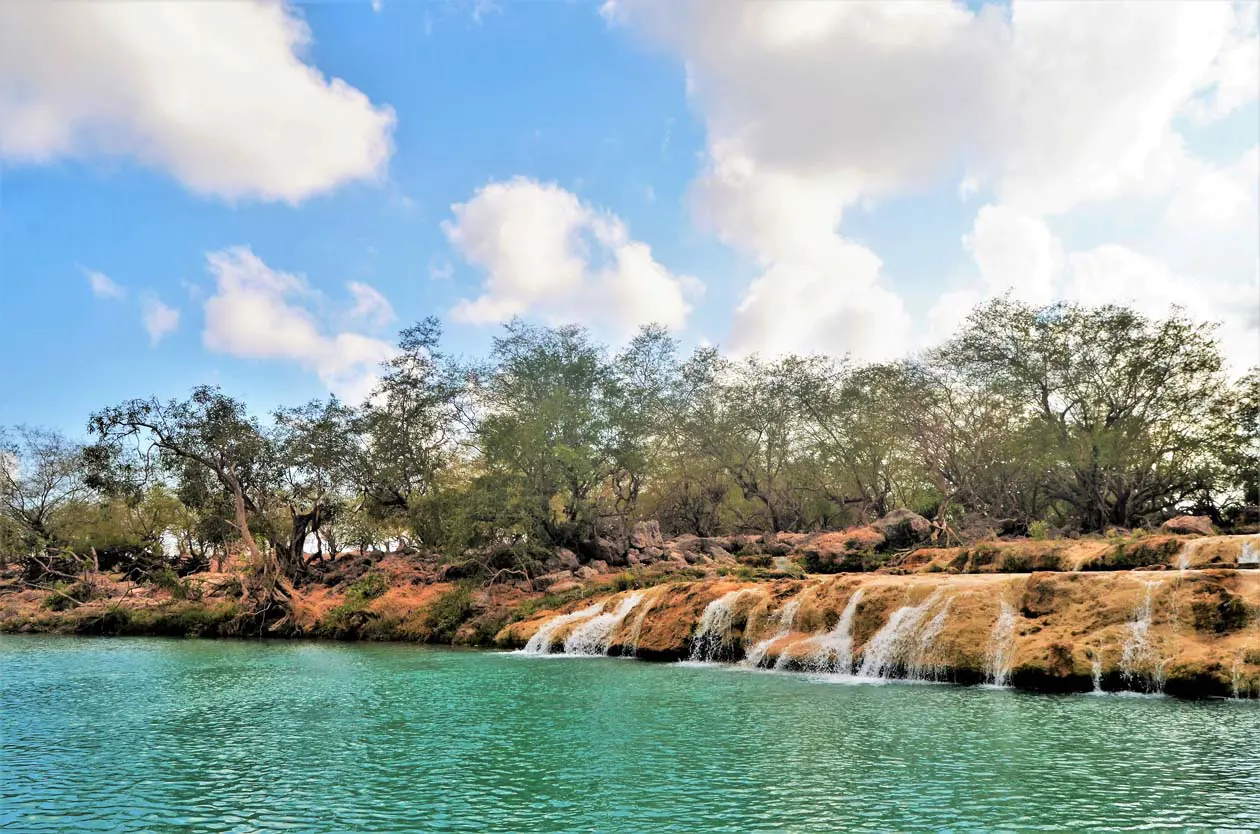
In addition to the Wadi Nahiz nature reserve you can visit Wadi Darbat with small lakes in the mountains overlooking Khor Rori just after Taqah on the coast about 48 kilometers from Salalah but also Khawr Al-Baleed along the coast, Khawr Salalah ideal for waterfront walks, Khawr Dahariz with colonies of flamingos, Khawr Awqad with herons in their natural habitat and Khawr Al Qurm with beautiful mangroves. These natural areas are home to numerous species of birds and are therefore interesting for birdwatchers or those who want to learn about a lesser-known aspect of the Salalah landscape.
Castles, viewpoints and desert around Salalah
The Dhofar Governorate also holds important castles and viewpoints of rare beauty, easily accessible from Salalah. You can visit Taqah Castle, a historic coastal fortification dating back to the nineteenth century, about 35 kilometers from Salalah. The castle is open to the public and houses a museum, allowing you to explore the historical environments that preserve a rich collection of traditional armaments, handicrafts, typical jewelry and daily utensils from the Dhofar period.
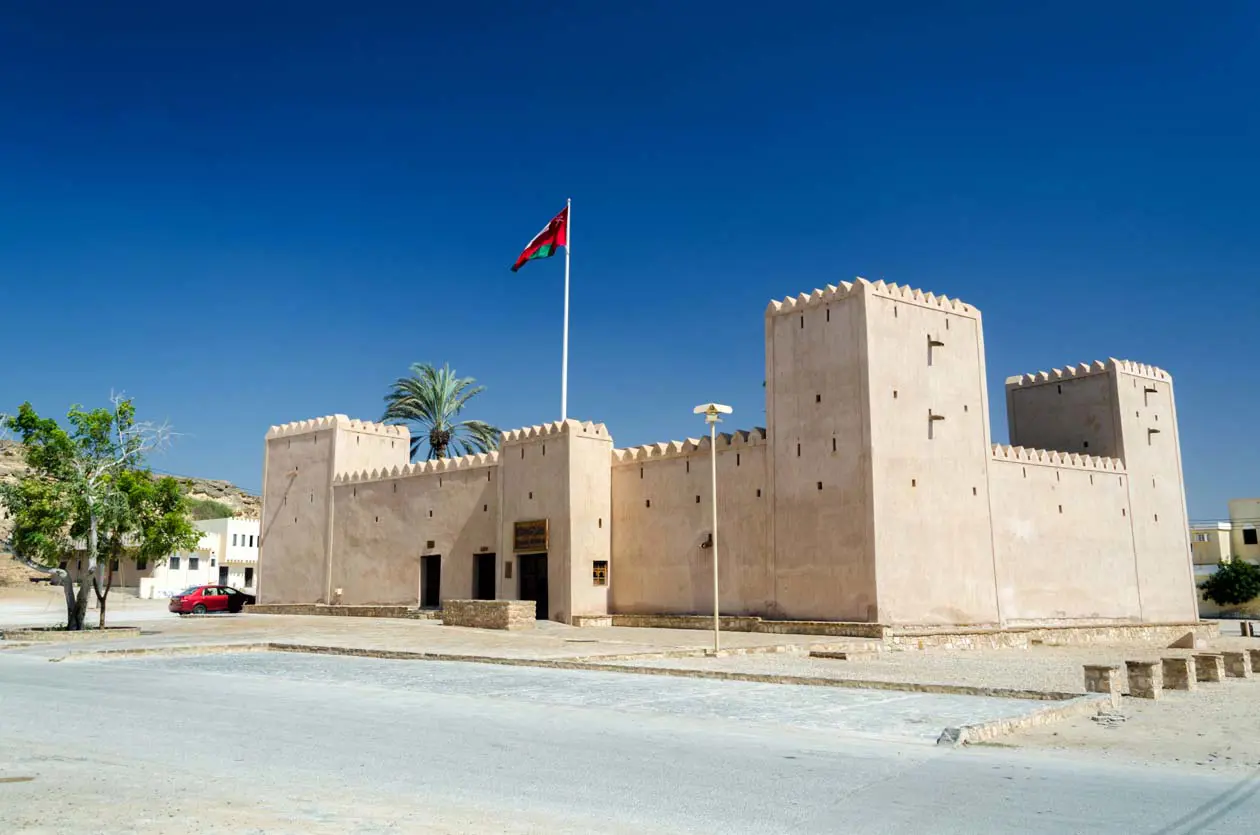
Among the important historical monuments is the Mirbat Castle dating back to the nineteenth century and towering on the east coast of the city of Mirbat, about 70 kilometers from Salalah. It is an ancient rectangular structure with two main entrances and two defensive towers and is a typical example of Omani military architecture overlooking the old port and the traditional market of Mirbat. Further away, about 127 kilometers from Salalah, you can admire the ancient Sadah Castle in Wilayat Sadah, dating back to the reign of Sayyid Taimur bin Faisal and built as a defensive fort and residence with a watchtower.
A unique landscape can be contemplated from the Shaat Viewpoint which is located in the western part of the Dhofar region, about 80-100 km from Salalah, and offers amazing views from a height of about 1,500 meters on the Arabian Sea where you can admire the sea, the Dhanat Highlands, the Ras Sajir promontory overlooking the sea and the sinkhole of Al Idabah, a characteristic karst depression between the mountains that offers a unique scenery in nature.
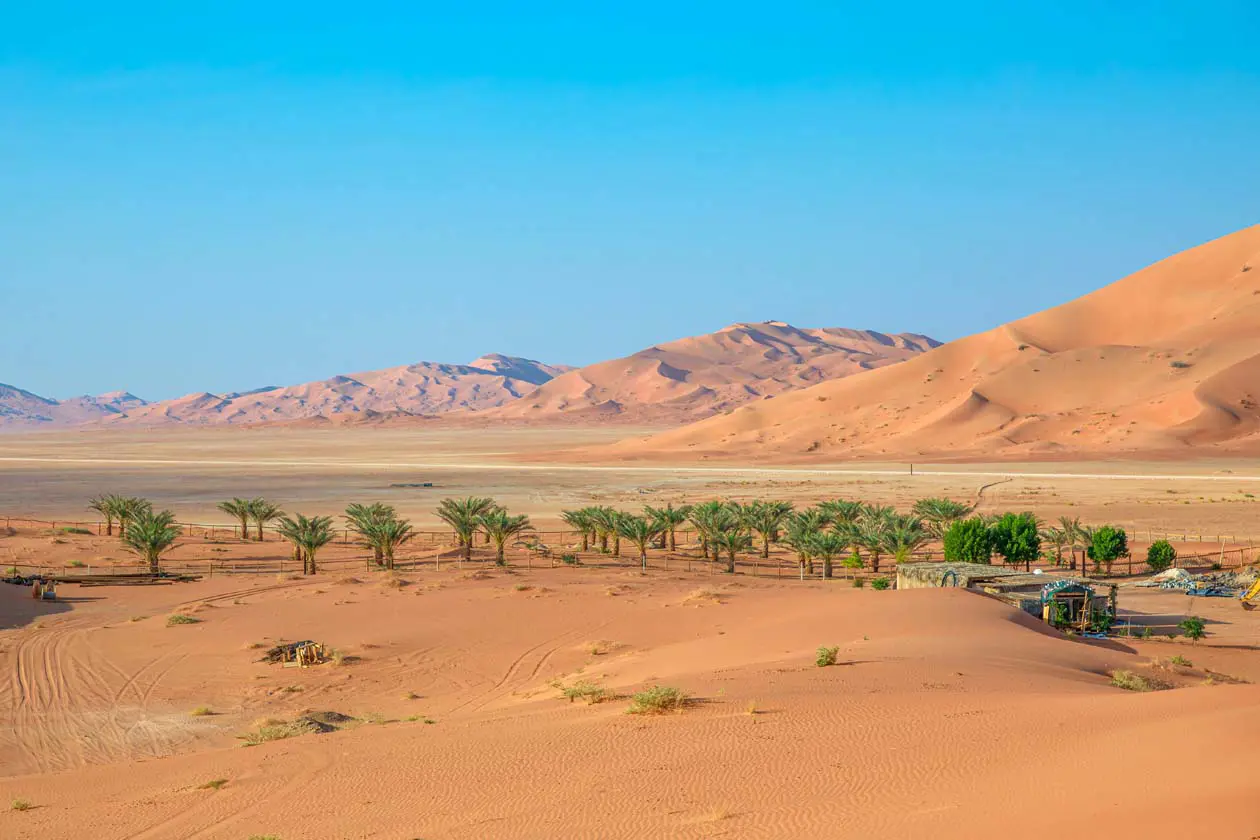
In about two hours by car, from Salalah you can also reach the large sandy desert of Rub' al-Khali, or Empty Quarter Desert, which stretches between Saudi Arabia, the United Arab Emirates, Yemen and Oman with its red-orange sand dunes. In winter, from October to March, you can take walks or 4x4 vehicles in the desert, camel rides and camp to experience the thrill of sleeping in the dunes and under a rich starry sky.
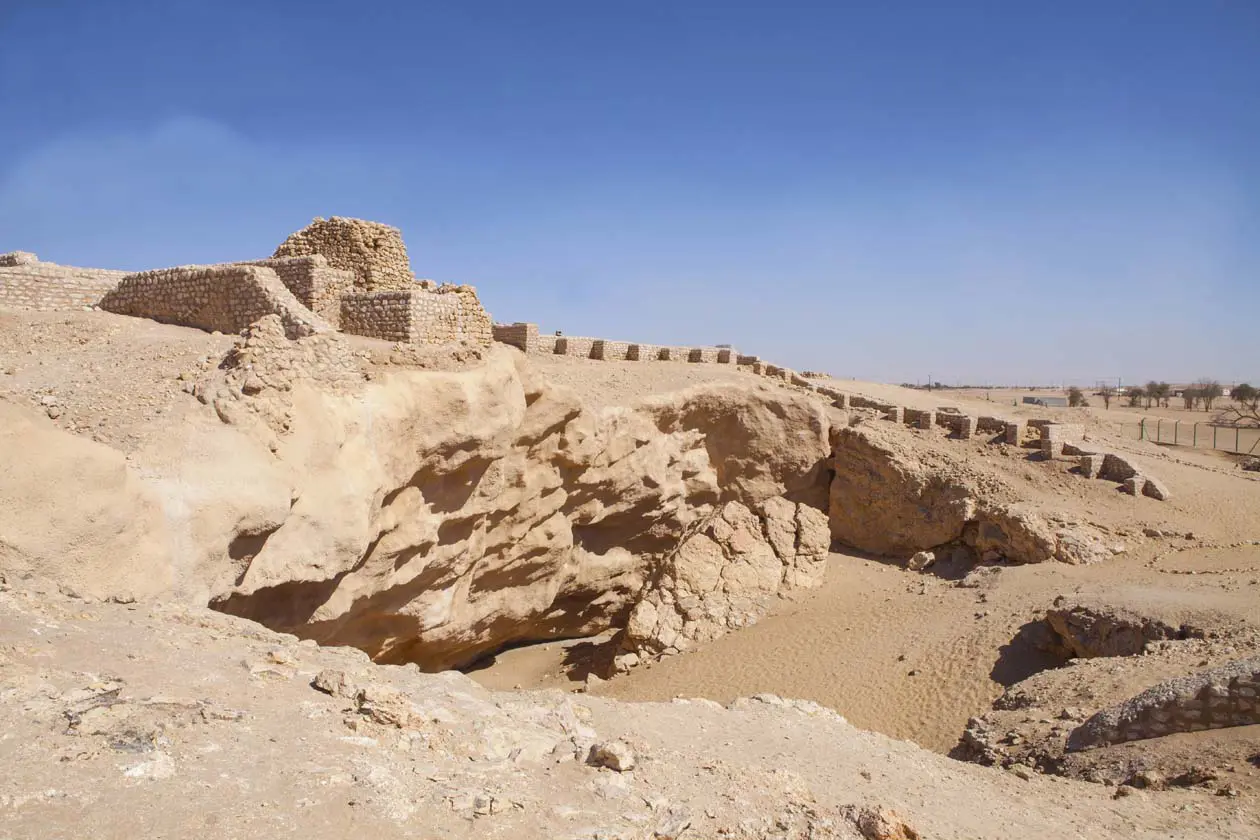
After the safari in the dunes, on the edge of the Rub' al Khali desert, you can add to the itinerary a cultural stop at the archaeological site of Shisr, known for the mythical lost city of Ubar or Wubar, to discover its mysterious history between tradition and legend and admire another site of the Land of Incense, a UNESCO World Heritage Site: a strategic and historical point where, once, caravans passed for the incense trade between East and West. Here, walking among the remains of walls, towers and ruins, you can still breathe the atmosphere of the origins of the fascinating Land of Frankincense.
What to eat in Salalah
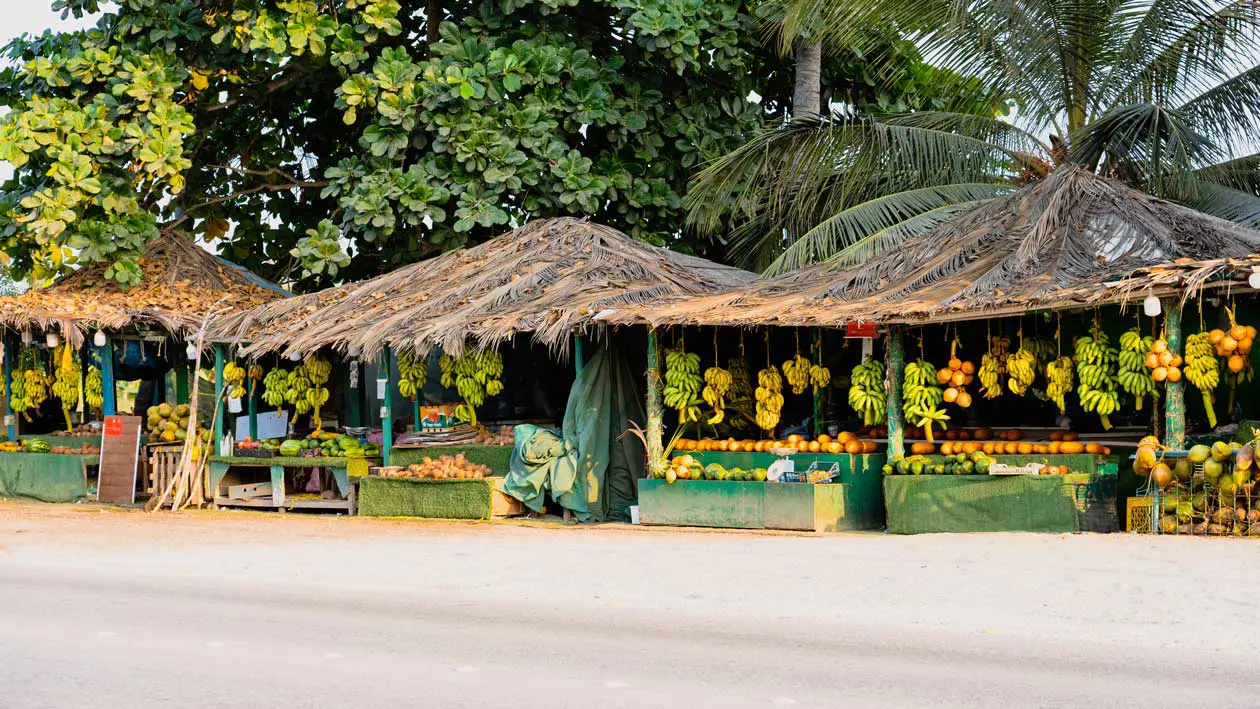
In Salalah you can taste Omani specialties that can be tasted alongside seafood products particularly linked to the Dhofar coast. Omani cuisine ranges between different Arab, African and Indian tastes and flavors and, thanks to the monsoons, agriculture is rich in vegetables, aromatic herbs, spices and tropical fruits such as bananas, coconuts, papaya and other exotic fruits.
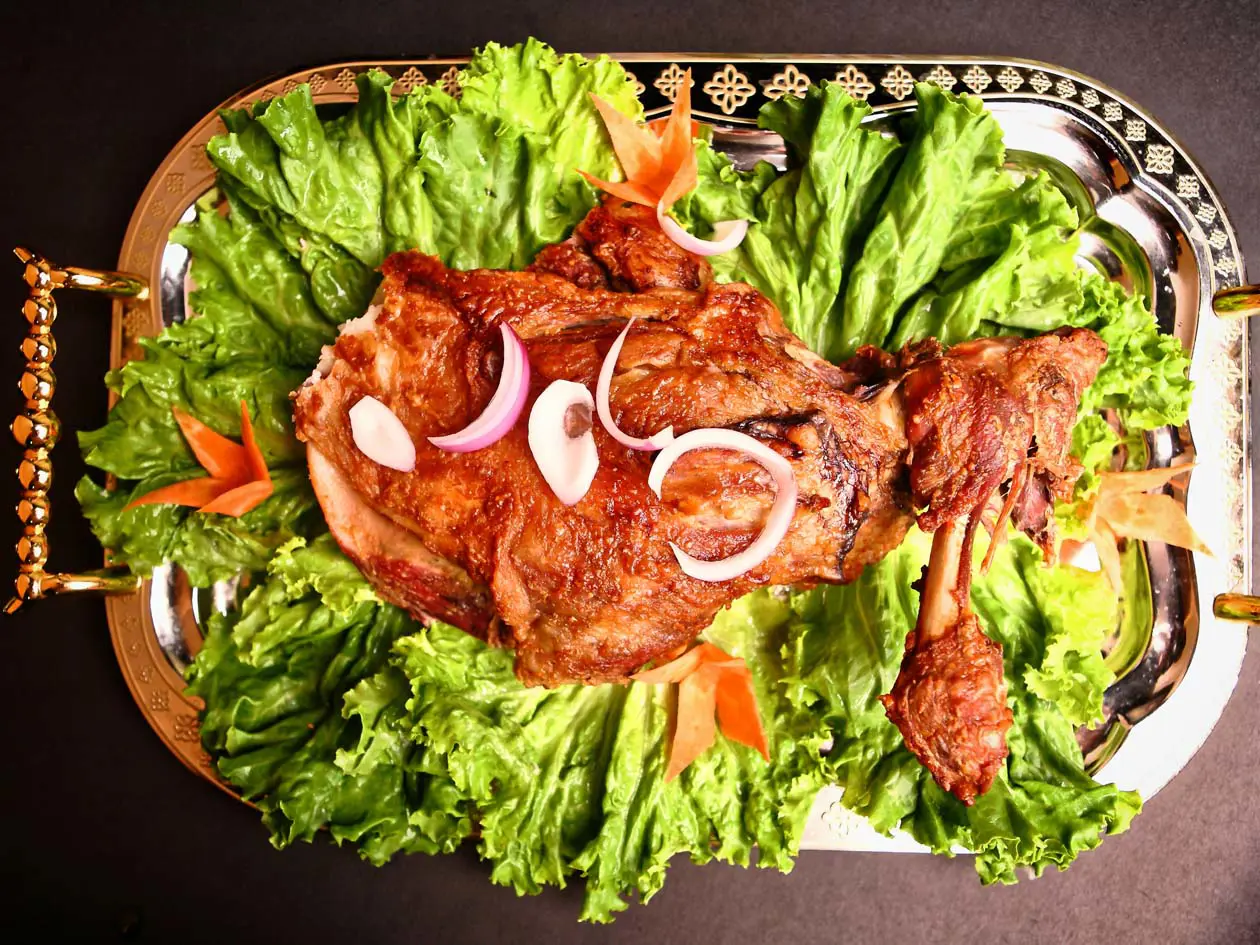
One of the symbolic dishes of Oman is Shuwa made with goat or lamb marinated with spices and wrapped in banana leaves then cooked very slowly in an underground oven, according to the traditional preparation even for many hours. Another popular dish is Majboos, spiced rice accompanied by chicken or lamb or Madhbi of camel meat marinated with spices and yogurt, prepared in the gray style and combined with rice or salad.

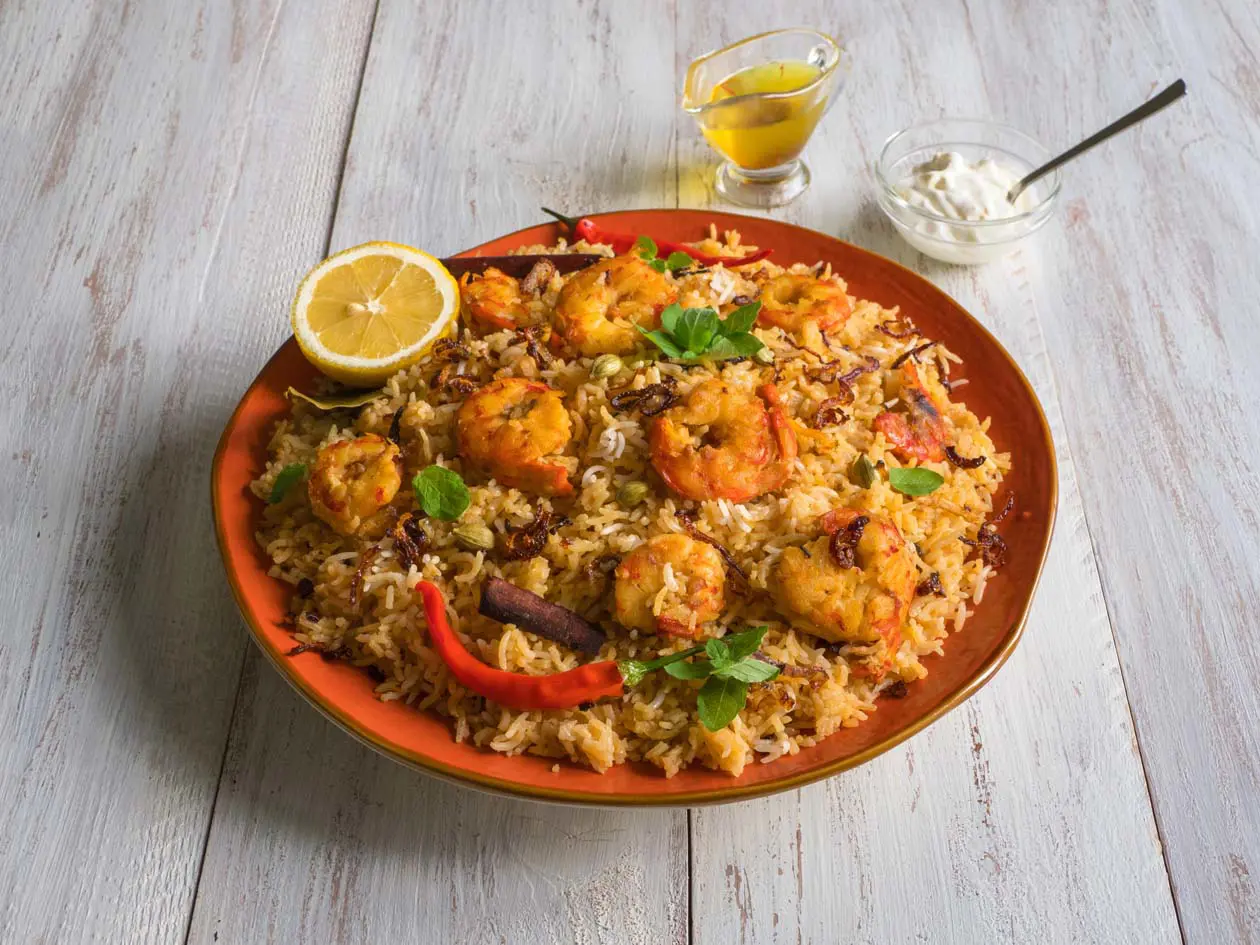
In Salalah, a city overlooking the Arabian Sea, cuisine naturally also finds an important part of its identity in fish. Especially in the restaurants along the beach of Ad Dahariz, you can taste preparations based on seafood, sardines, shrimp biryani, grilled hammour (grouper), kingfish tikka (grilled royal mackerel) and lobster, often served with aromatic rice and tamarind sauce.
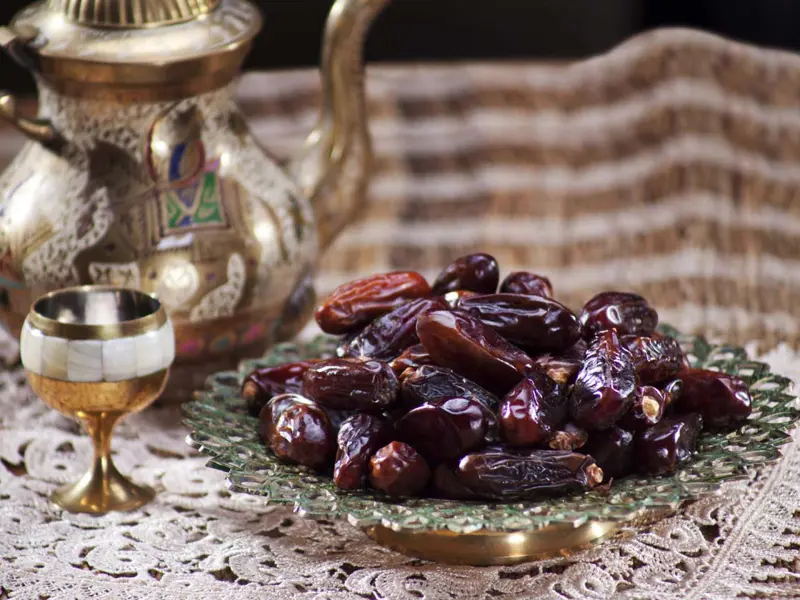
To complete the experience there are the rituals of Omani hospitality. Kahwa, the aromatic Omani coffee traditionally scented with cardamom, is served in small cups and accompanied by dates. In special or festive moments there is also Omani halwa, a soft and aromatic dessert prepared with different ingredients such as sugar, corn starch, saffron, almonds, pistachios and rose water, ideal to combine with a coconut drink and fresh fruit.
Texts by Lisa Maria River
Avion Tourism Magazine
Photo for editorial use only: Copyright © Sisterscom.com / Depositphotos
All rights reserved. Copyright © Sisterscom.com
Tourist Board
experienceoman.om

Partnership with Travelpayouts
Where to stay in Salalah
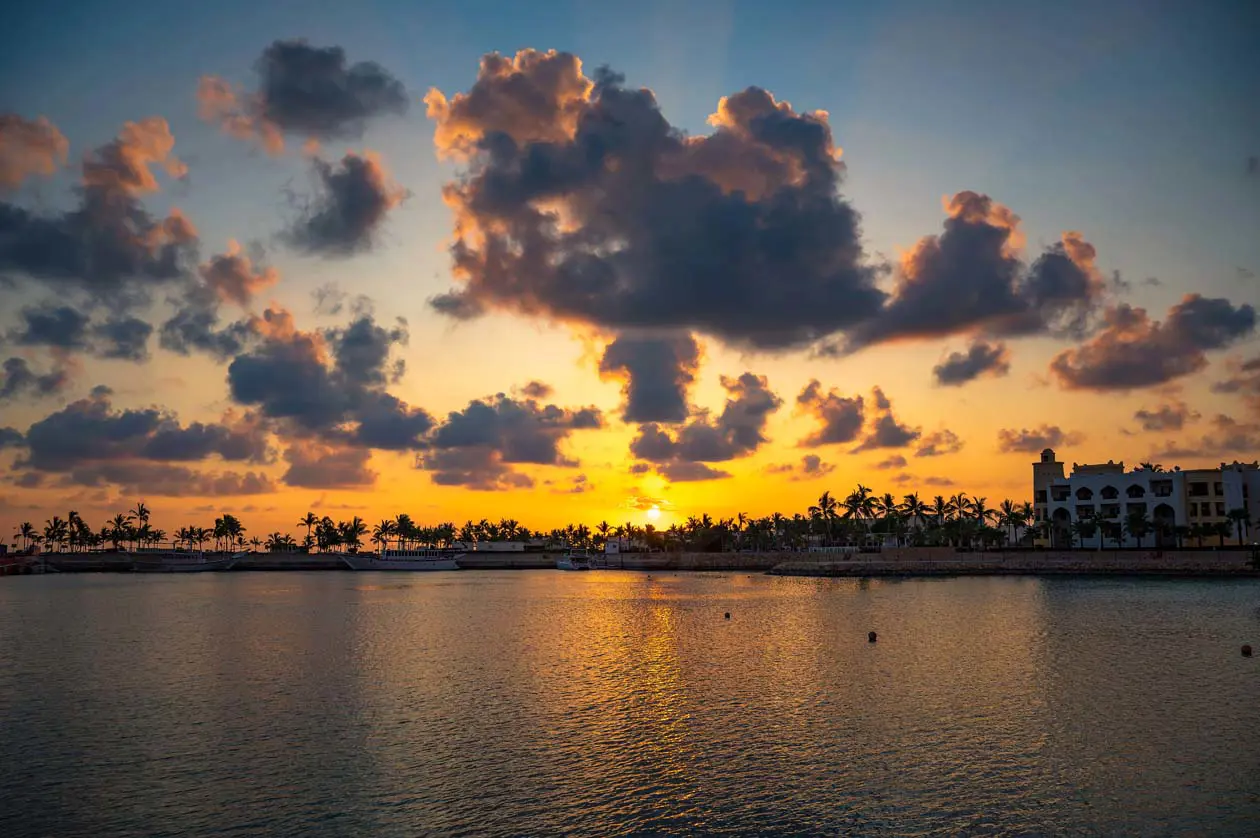
Salalah offers different and special possibilities for accommodation between hotels, apartments and holiday homes. To find the ideal hotel and the best offers, you can search by stars but also by resorts or places of interest.
STARS
Hotel by stars and type of services offered:
HOMES AND RESORTS
Houses, villas and resorts with special services:
PLACES OF INTEREST
Hotels in tourist areas:


EXPERIENCES AND EXCURSIONS IN SALALAH
Salalah is an ideal base for organizing excursions in Dhofar, because in a few kilometers it allows you to go from the city to the beaches of the Arabian Sea, from the springs and wadis to the mountains, up to the archaeological sites of the Land of Incense. The most interesting experiences combine nature, culture and landscape with guided tours of the Al-Baleed Archaeological Park and the Museum of the Land of Incense.
For those who prefer more dynamic activities, from Salalah you can also organize boat trips for dolphin and whale watching, snorkeling and diving trips along the coast, kayaking, trekking and mountain biking. There is also no shortage of tours dedicated to Dhofar incense, with stops in traditional souqs and places linked to its history. The variety of experiences makes Salalah suitable both for those visiting the city for a few days or as a starting point for exploring southern Oman.
Partnership with GetYourGuide
Discovering the city of Salalah
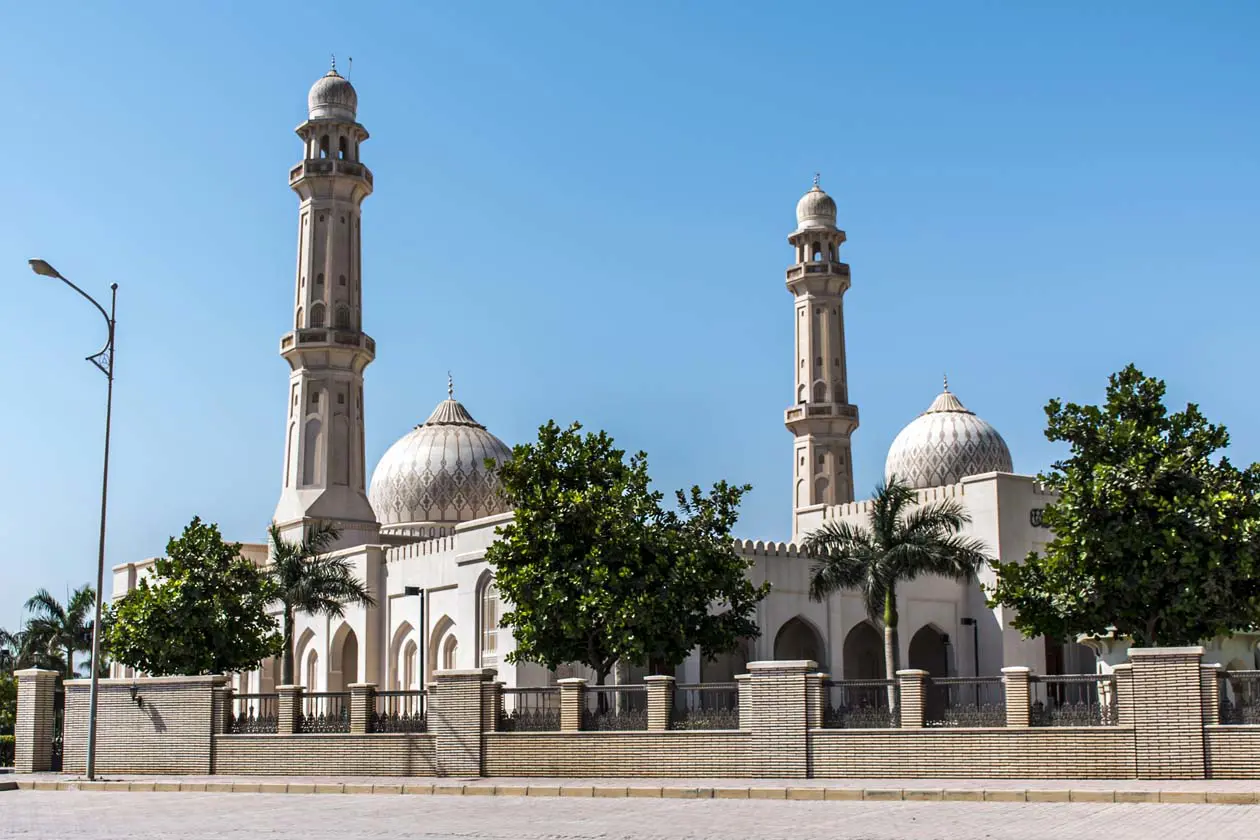
Hotel pick-up and tour of Salalah city with professional guide. Visit of: Sultan Qaboos Mosque, Fish Market, Hafa Souq, Sultan's Palace Gate, Al Baleed Archaeological Park, Frankincense Museum and the Fruits Souq. Duration: 3 hours. Free cancellation up to 24 hours in advance. Info and reservations: Salalah City Tour. Alternatively: Salalah Night Tour.
Wadi Darbat and Jabal Samhan
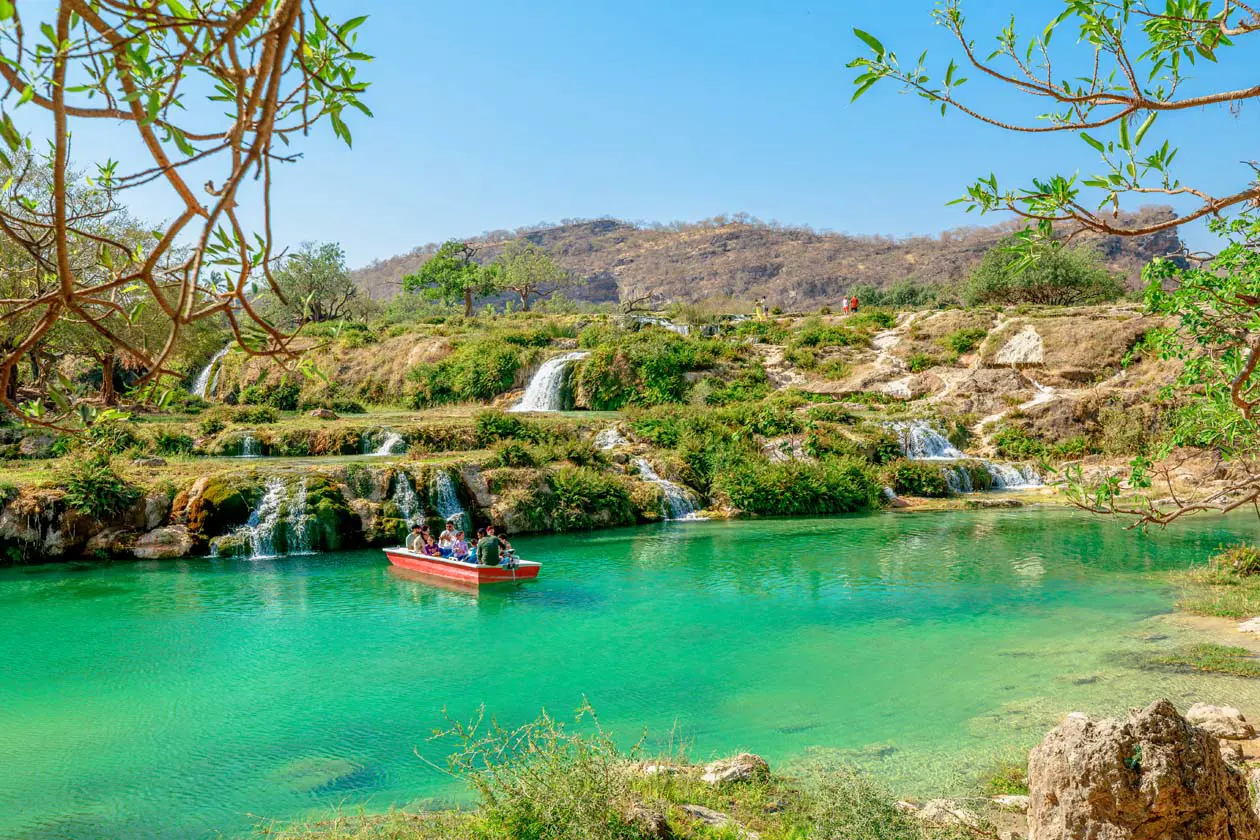
Hotel pick-up and private tour around Salalah in the Dhofar countryside to Taqah Castle. Visit Wadi Darbat, a valley surrounded by incense trees, coconut palms, mountains, water springs, seasonal waterfalls, and Taiq Cave. Continue to Taqah village, with sandy beach, turquoise sea, and Samhan Mountain from which to admire the panorama of Salalah city. Duration: 8 hours. Free cancellation up to 24 hours in advance. Info and reservations: Wadi Darbat and Jabal Samhan Tour.
Desert safari at sunset
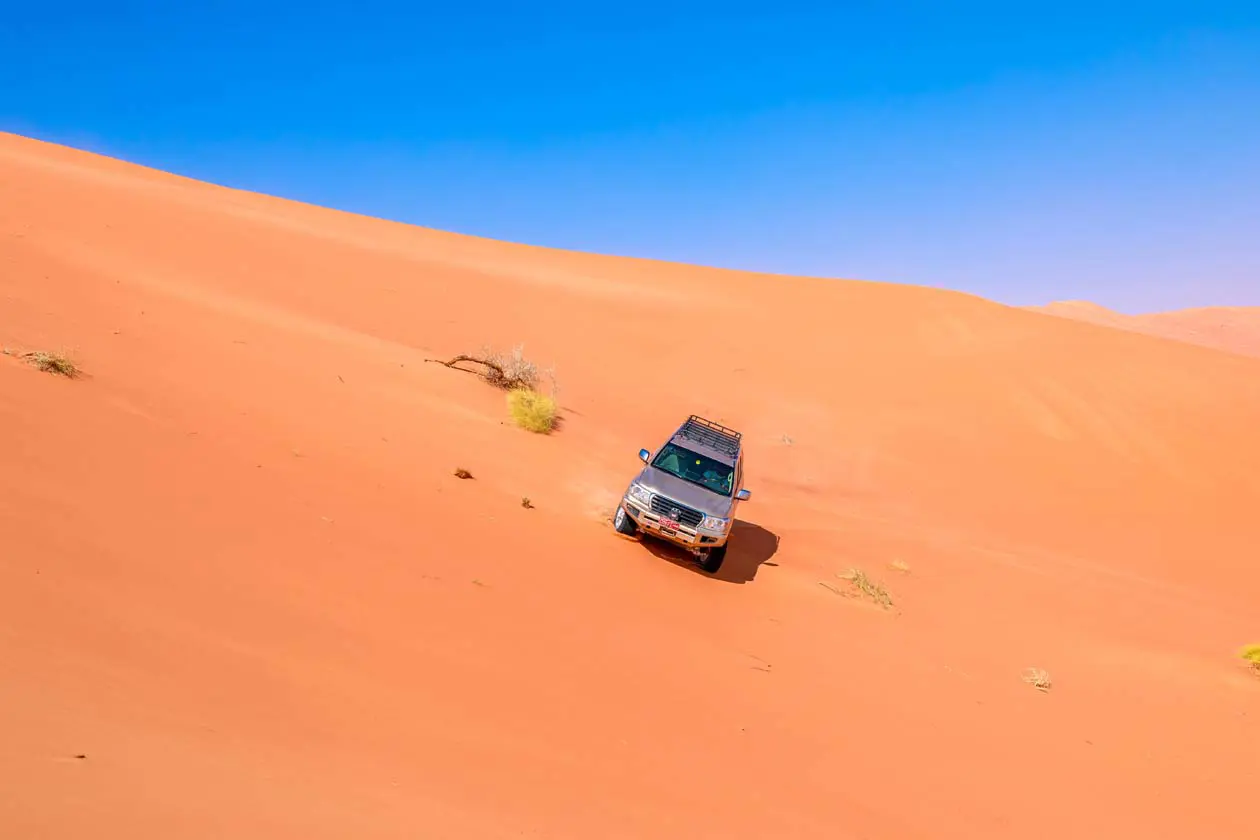
Hotel pick-up with an expert guide and departure from Salalah for a sunset safari in the Rub' al-Khali desert or Empty Quarter by 4x4 vehicle. The tour includes: visit to Wadi Dawkah Incense Park and dune bashing experience. Optional upon request: stop at the archaeological site of Ubar (ticket excluded), bedouin dinner in the desert and camel ride. Duration: 8 hours. Free cancellation up to 24 hours in advance. Info and reservations: Safari in the Rub' al-Khali desert. Alternatively: Camping and overnight in the Rub' al-Khali desert,
All tours & excursions