The city beyond the usual routes: discovering its historic neighbourhoods
Munich is an ideal destination for a city break, a long weekend or a few days’ holiday. It is easy to explore, at a relaxed pace and without stress, from its compact city centre to the surrounding neighbourhoods, while enjoying the warm hospitality that is so typical of Bavaria. Munich is a city that its residents like to call “Italy’s northernmost city”, highlighting its close ties with the Bel Paese: its geographical proximity, the mild climate softened by the Föhn wind, a sociable lifestyle reminiscent of the Mediterranean and, not least, an Italian-inspired architectural aesthetic reflected in the city’s buildings, monuments and squares. The best way to discover Munich is on foot, allowing yourself to be captivated step by step by its beauty, defined by an elegant and carefully maintained urban landscape.
The recommended itinerary in Munich offers an alternative way to discover the city. It begins, of course, in the famous historic centre, before continuing through some of its most authentic and distinctive neighbourhoods – Schlachthofviertel, Glockenbachviertel, Schwabing and Werksviertel – and finally reaching the Kunstareal, Munich’s museum district, where visitors can leave the city streets behind for a while and immerse themselves in some of its most prestigious art collections.
During your stay, you can choose between the Munich Card, which includes public transport and offers discounts or reduced admission to museums and attractions, and the Munich City Pass, which also includes free admission to most museums in Munich. Both options can cover travel by underground, tram and bus; by selecting validity for zones M-6, the journey to and from Munich Airport (MUC) is also included.
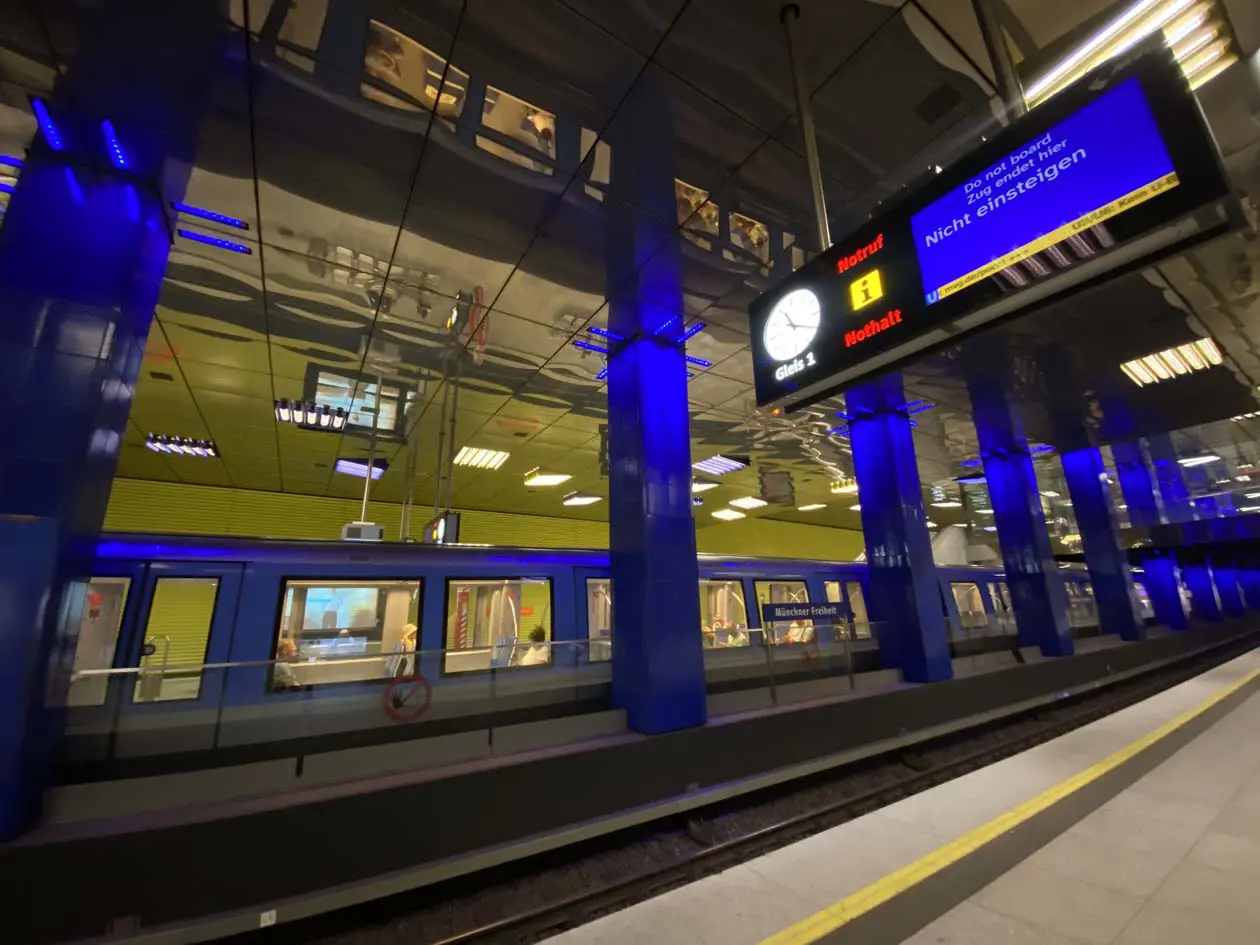
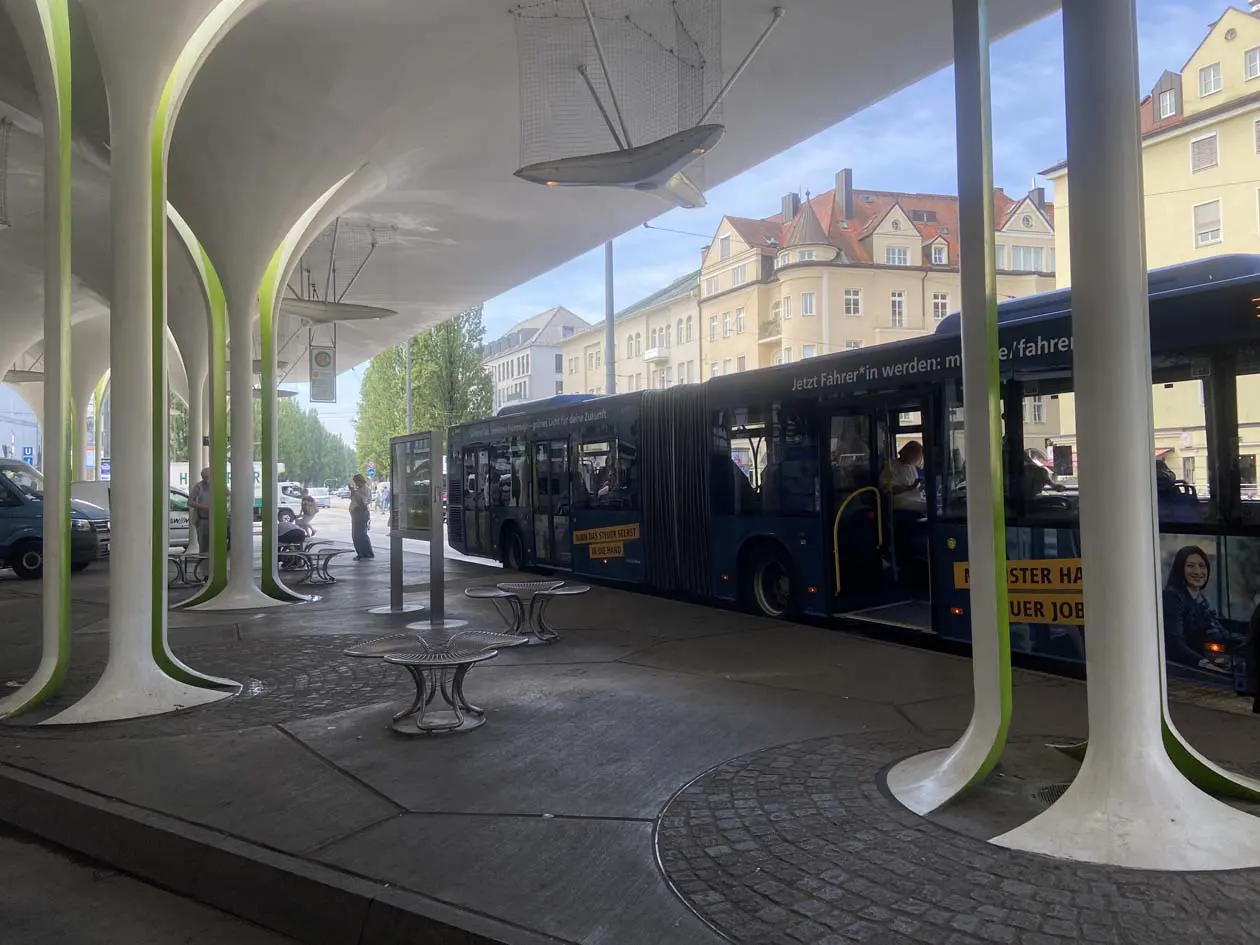
It is also worth keeping an eye out for some underground, bus and tram stations featuring particularly distinctive artistic design. One example is Münchner Freiheit underground station, with its iconic blue columns designed by the lighting designer Ingo Maurer. Another is the bus and tram terminal at Münchner Freiheit, a project by prpm that won the UITP Local Rail Award in 2012 for its innovative design.
Historic centre and Viktualienmarkt
Founded in 1158, Munich today has around 1.6 million inhabitants and is Germany’s third-largest city after Berlin and Hamburg. Despite its size, however, the historic centre is remarkably easy to explore and retains the intimate feel of a much smaller city.
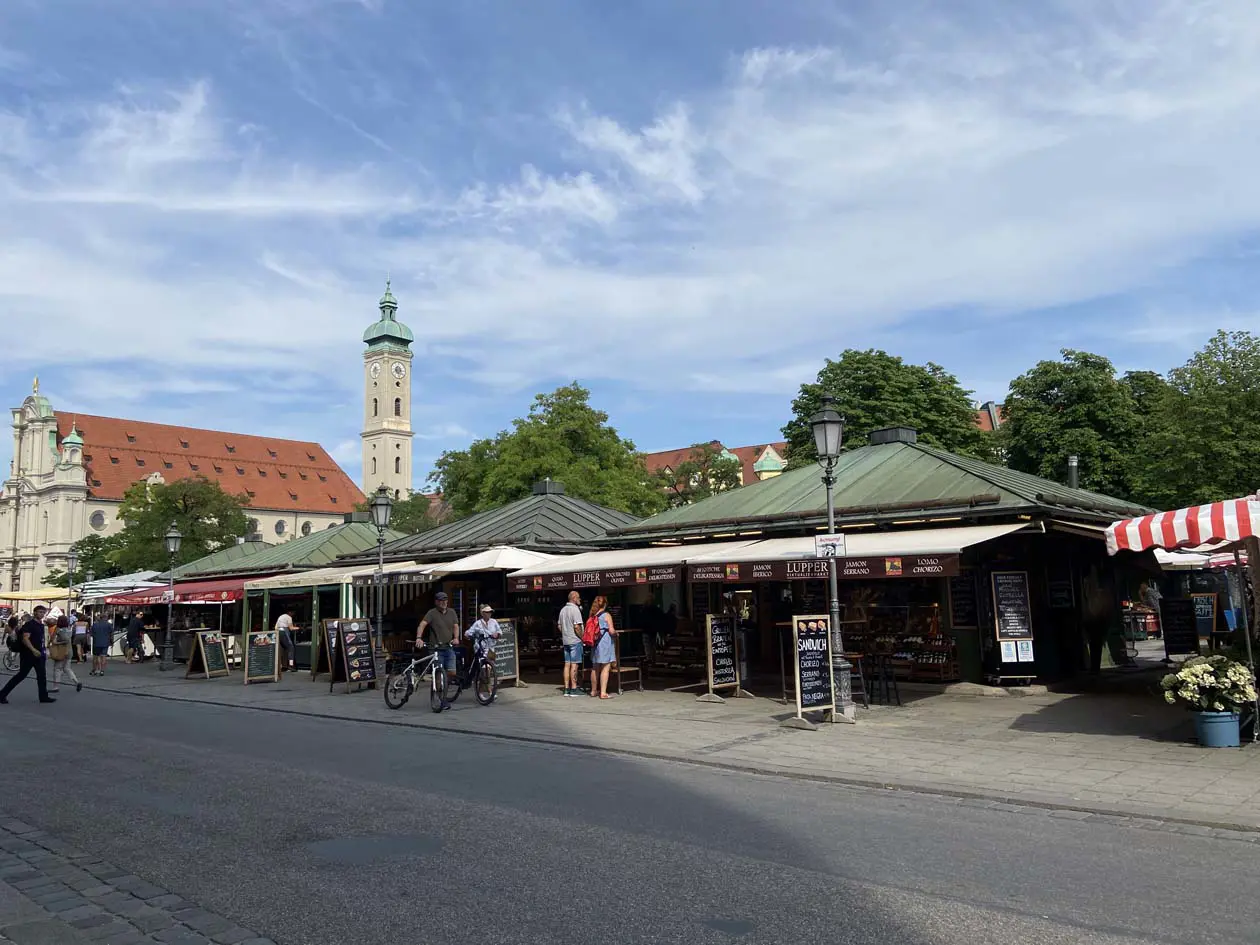
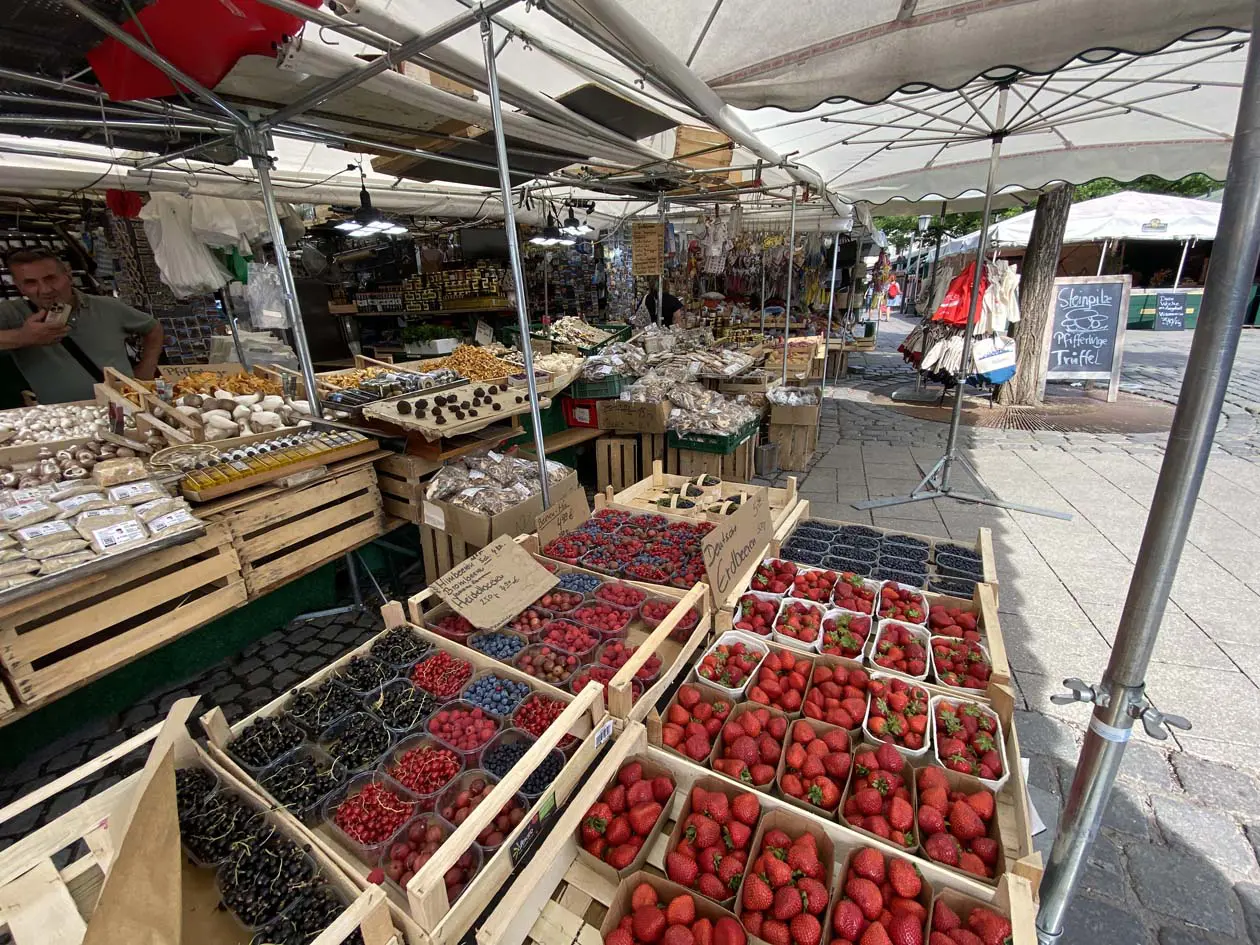
The ideal starting point is Viktualienmarkt, Munich’s permanent food market, which has been operating since 1807 in the heart of the historic centre. Its traditional stalls showcase some of the best local produce, including vegetables, fruit, cheeses, mushrooms, pickles, spices and flowers, all arranged around a beer garden where visitors can stop for a relaxing break.
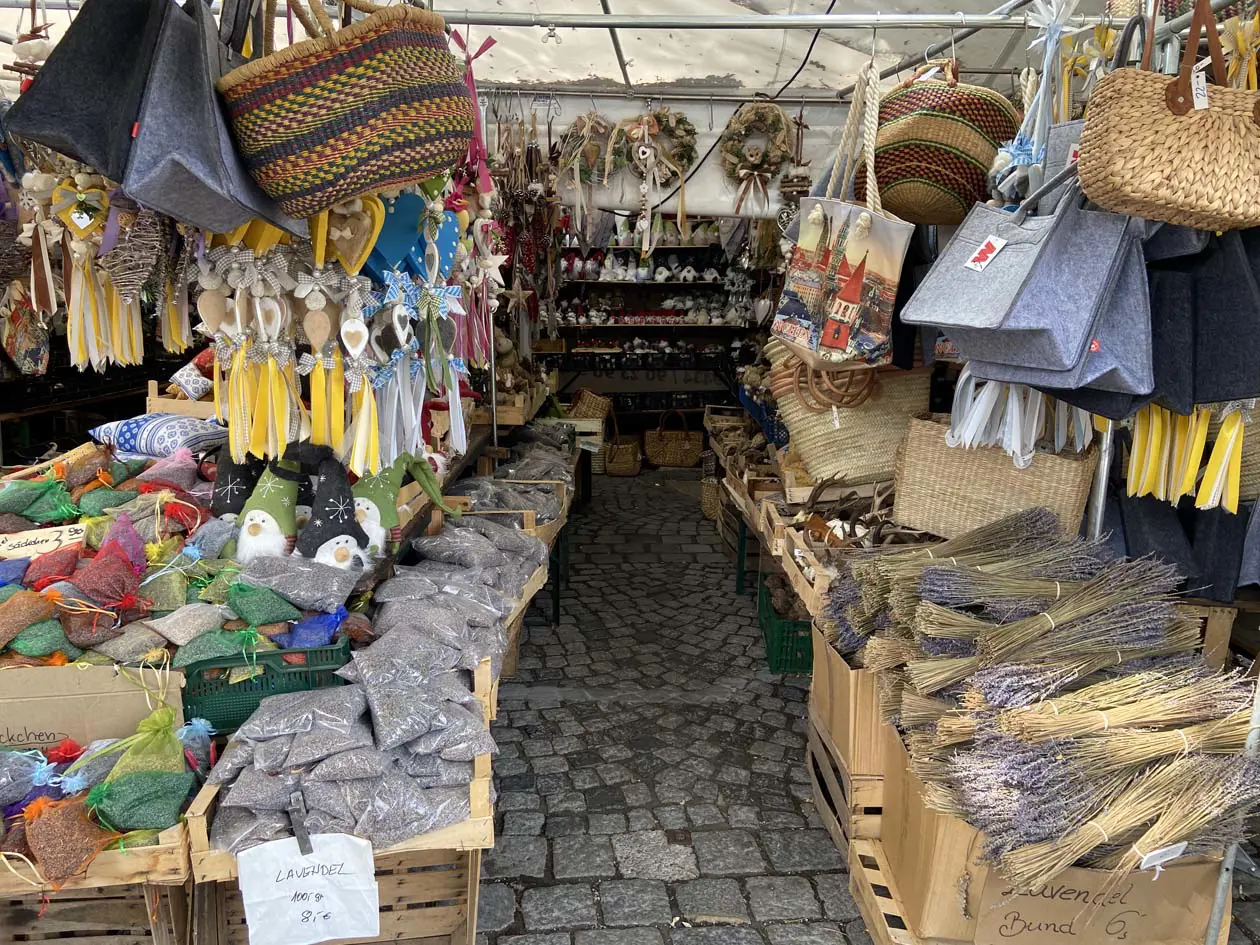
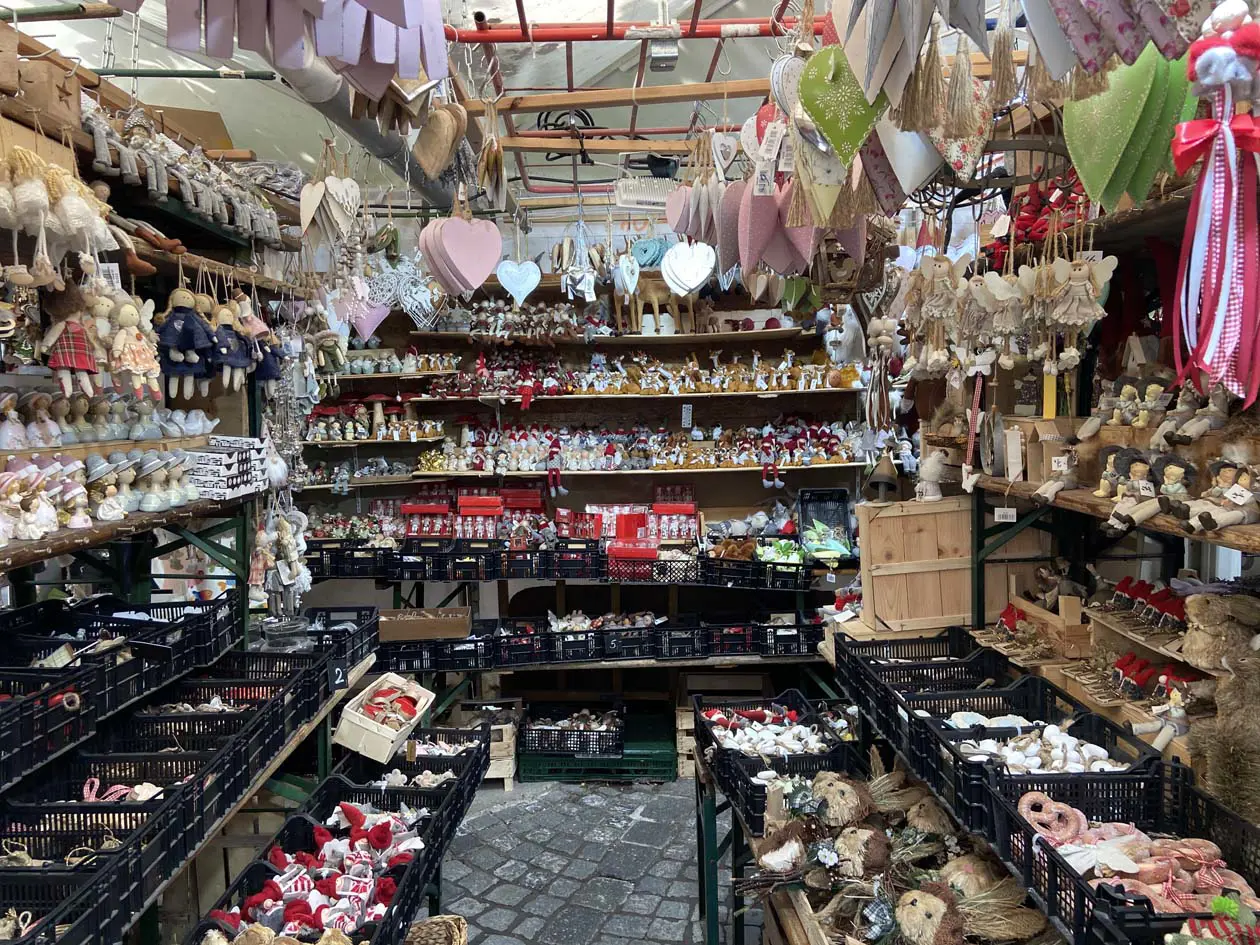
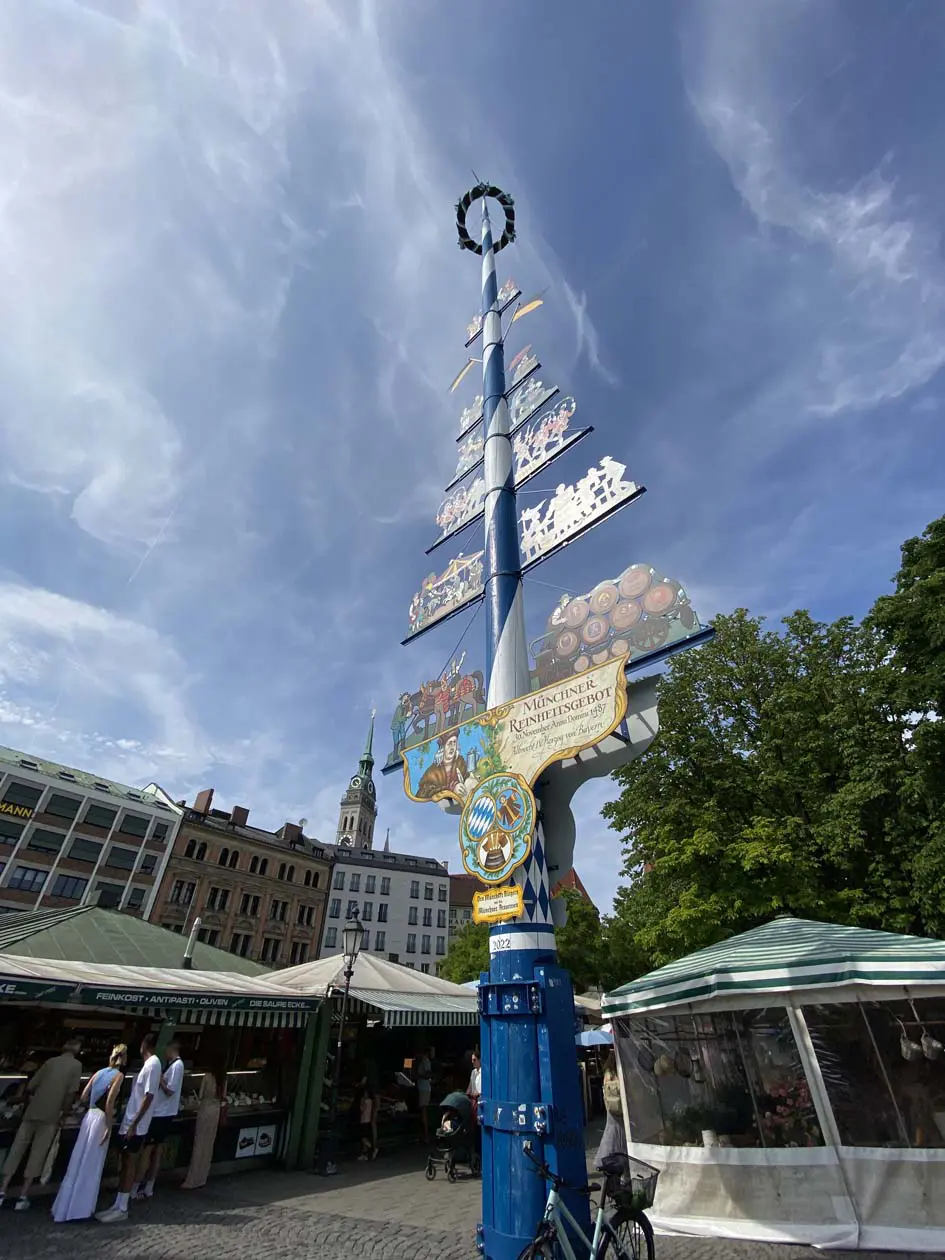
The market is instantly recognisable thanks to the Maibaum, the traditional Maypole standing at its centre, painted in the blue and white colours of Bavaria and decorated with figures representing local trades and traditions. A number of distinctive fountains scattered throughout the market area add to its characteristic atmosphere.
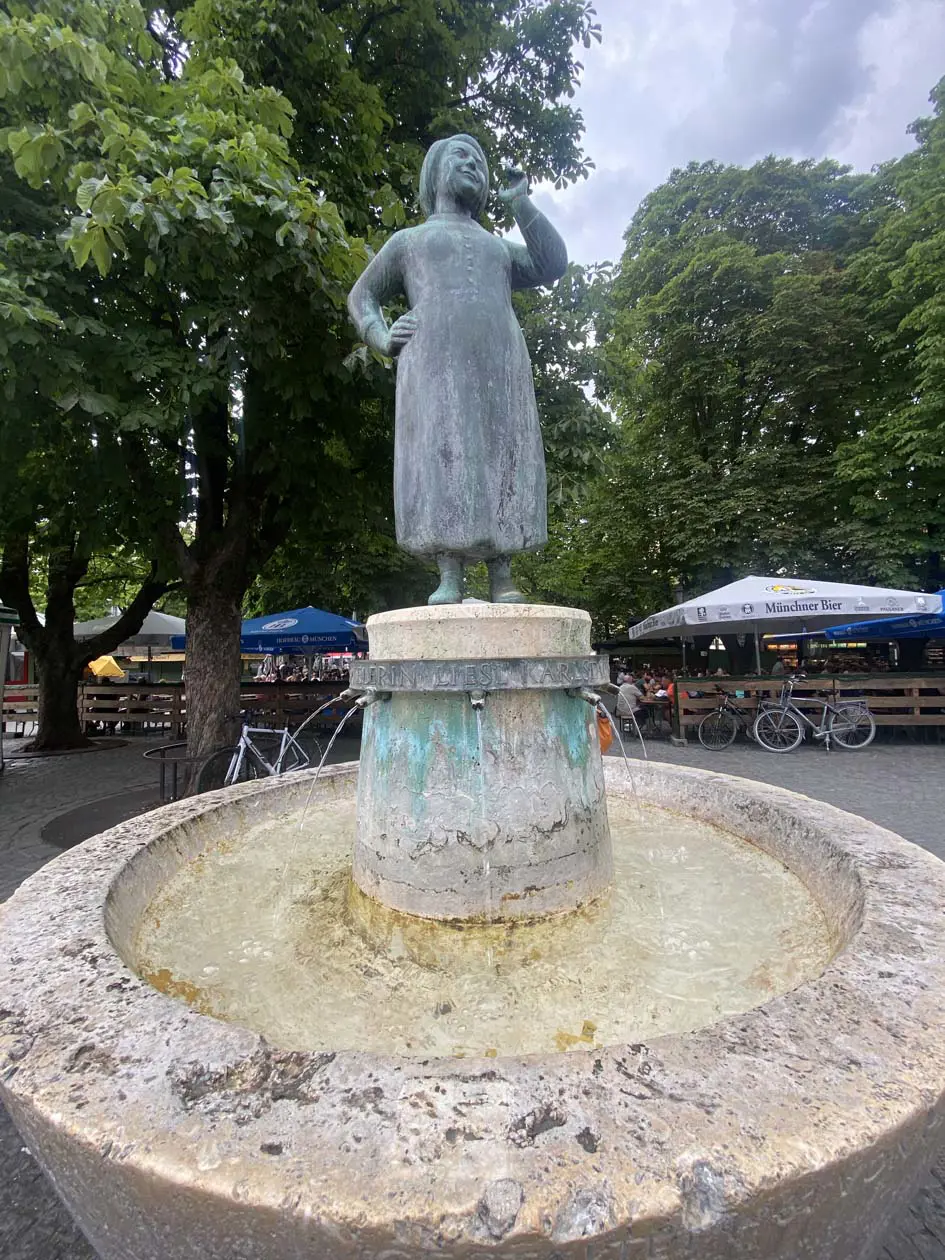
The history of this market is anything but ordinary. In the early 19th century, King Maximilian I Joseph ordered it to be relocated to the courtyard of the city hospital, the Heilig-Geist-Spital, a move linked to the secularisation of church property. As the hospital was gradually demolished, only the Heilig-Geist-Kirche, the Parish Church of the Holy Spirit, remained standing, overlooking the far end of the market.
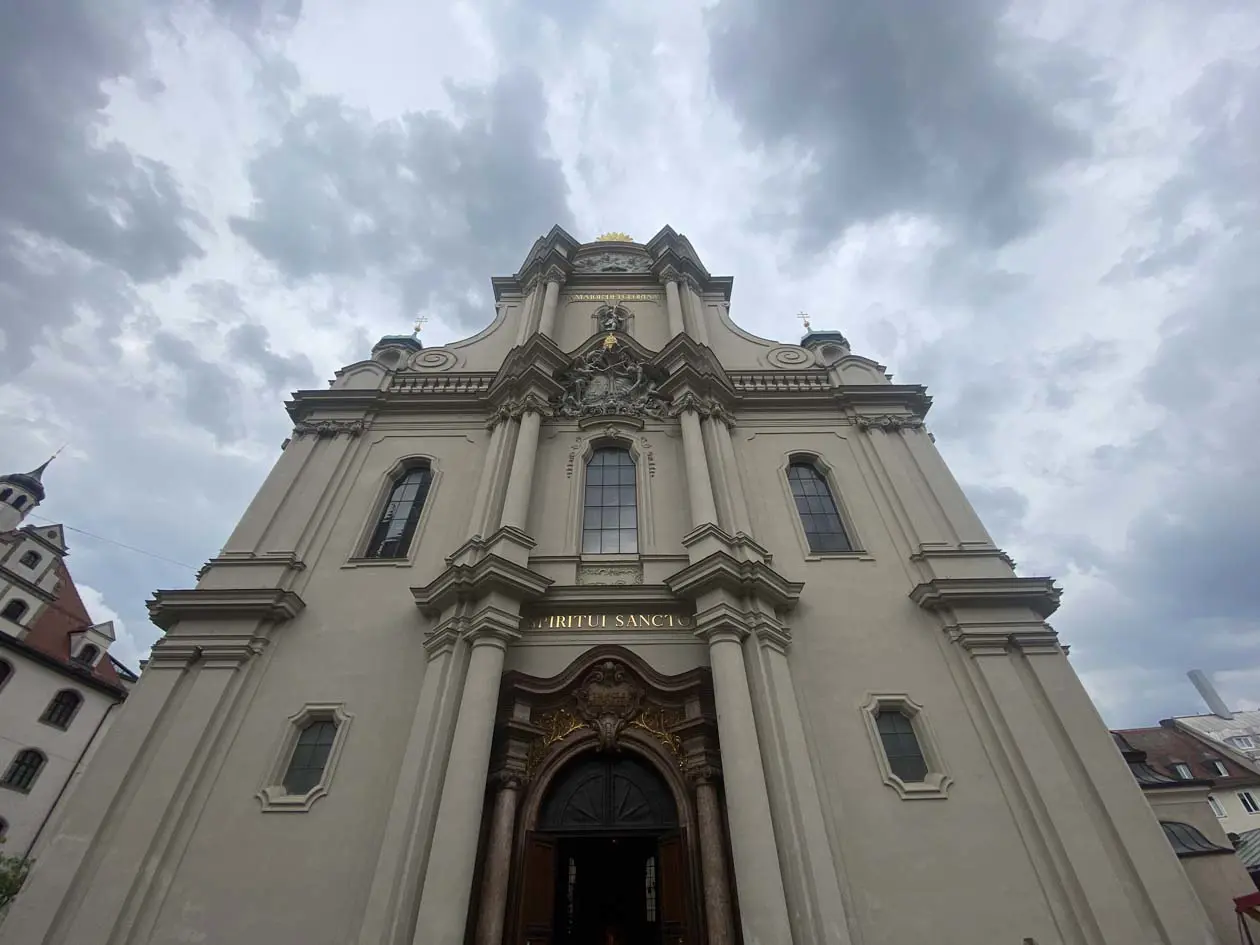
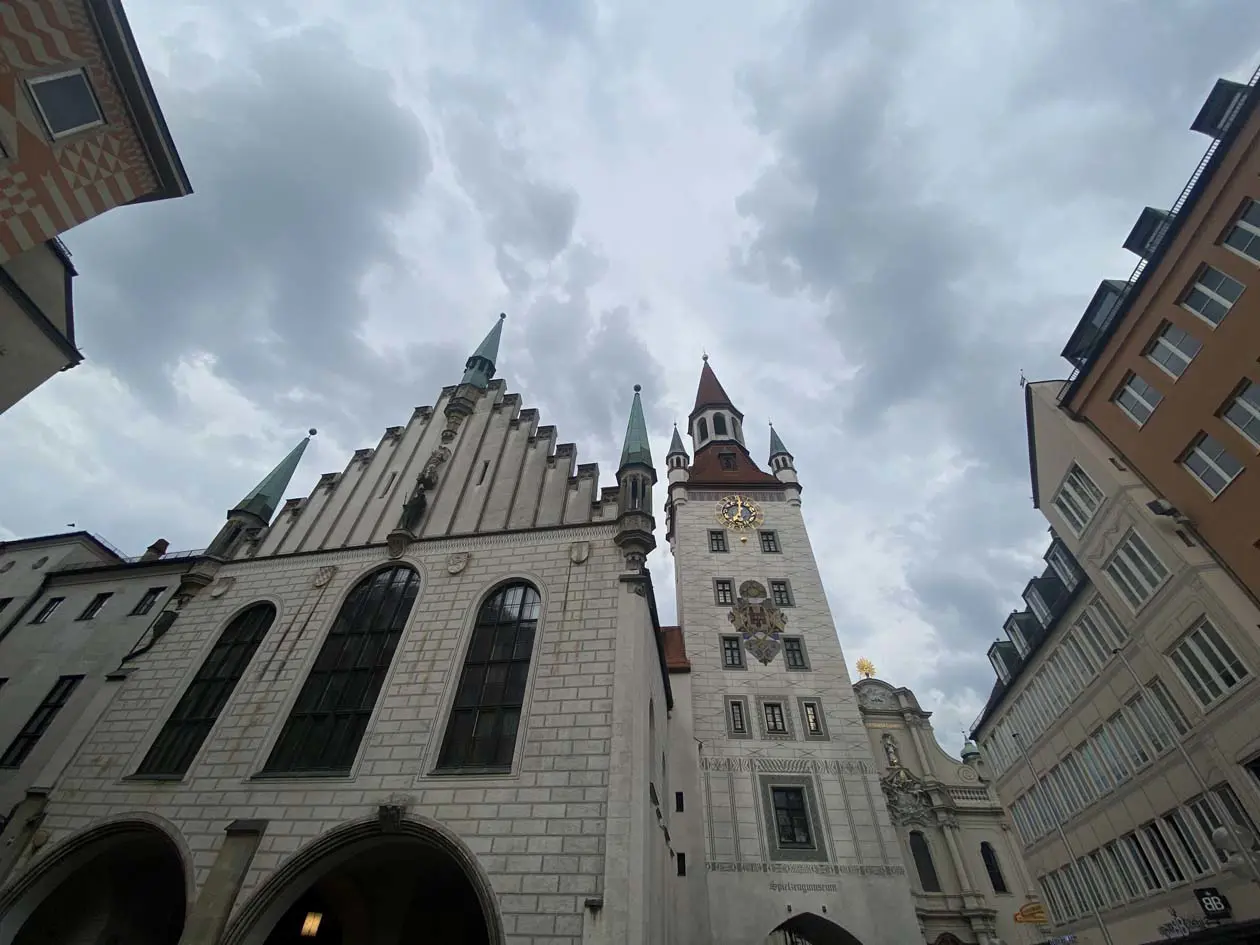
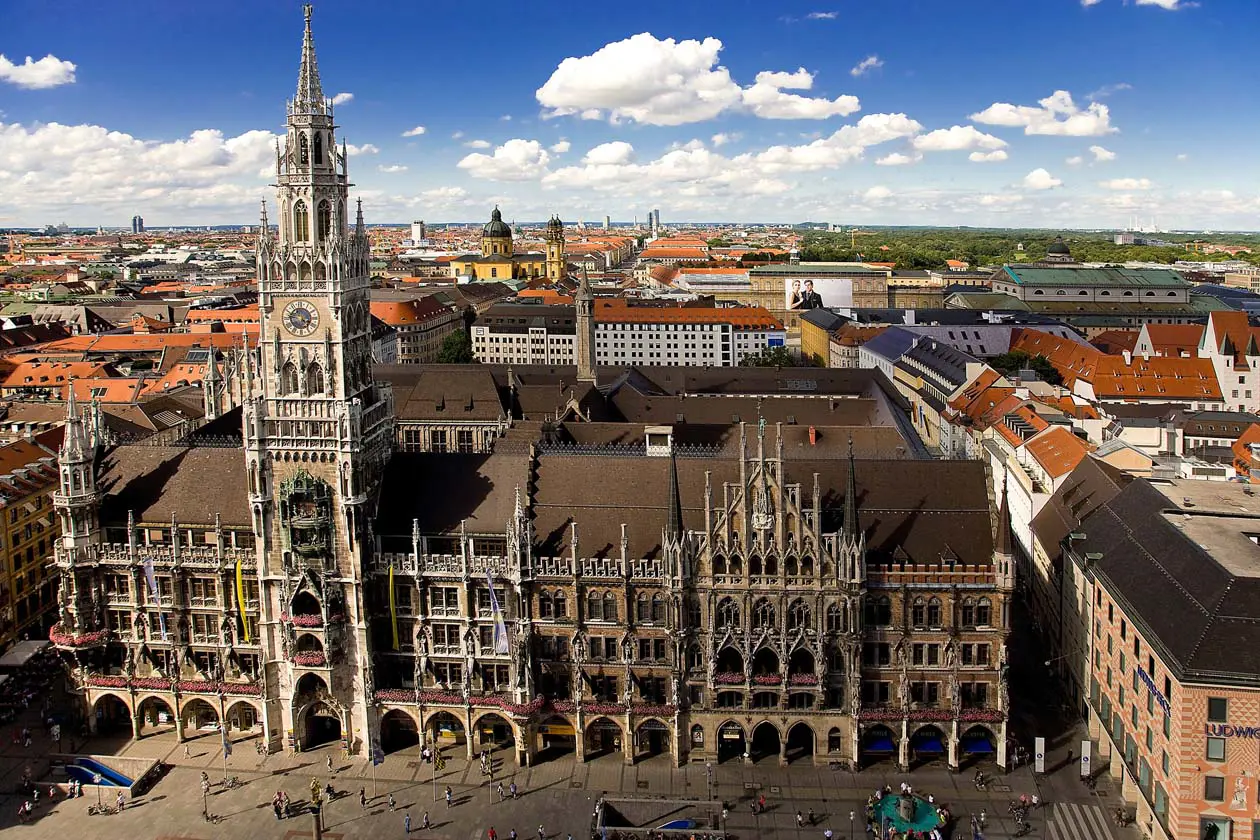
From 1890 onwards, Viktualienmarkt expanded to reach its present size, alongside the development of nearby Marienplatz, established in 1854 as the city’s main square and still the focal point of any visit to Munich. The square is dominated by the Neues Rathaus, the neo-Gothic New Town Hall completed in 1905, whose tower houses the famous Glockenspiel. With its 43 bells, it is one of the largest carillons in Europe and remains one of Munich’s most popular attractions.
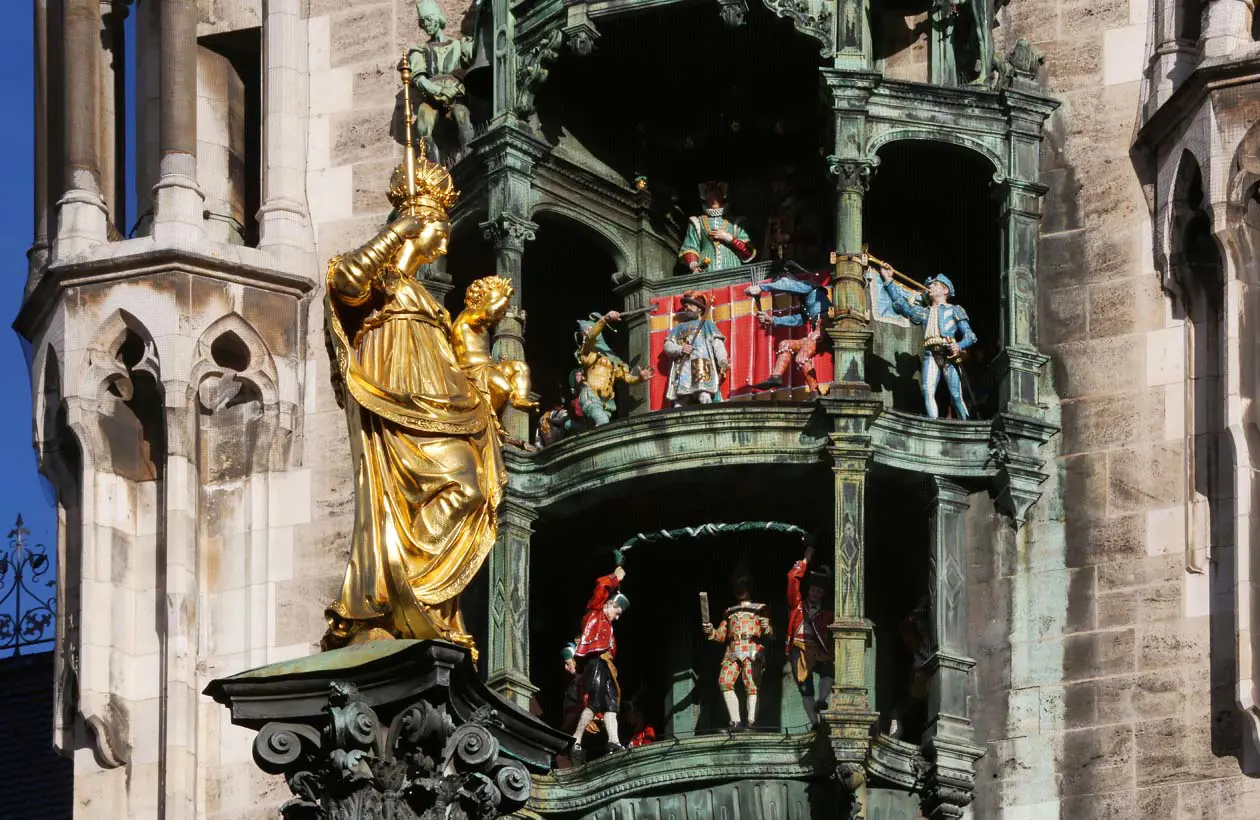
Every day at 11 a.m. and 12 noon, visitors to Marienplatz can watch the Glockenspiel’s colorful figures perform to the sound of music; from March to October, the show is repeated at 5 p.m. Marienplatz is also home to the Altes Rathaus, Munich’s Gothic Old Town Hall. The square takes its name from the Patrona Bavariae, represented by the Marian Column standing at its centre, and is the starting point for almost every walking itinerary through Munich’s largely pedestrian historic centre.
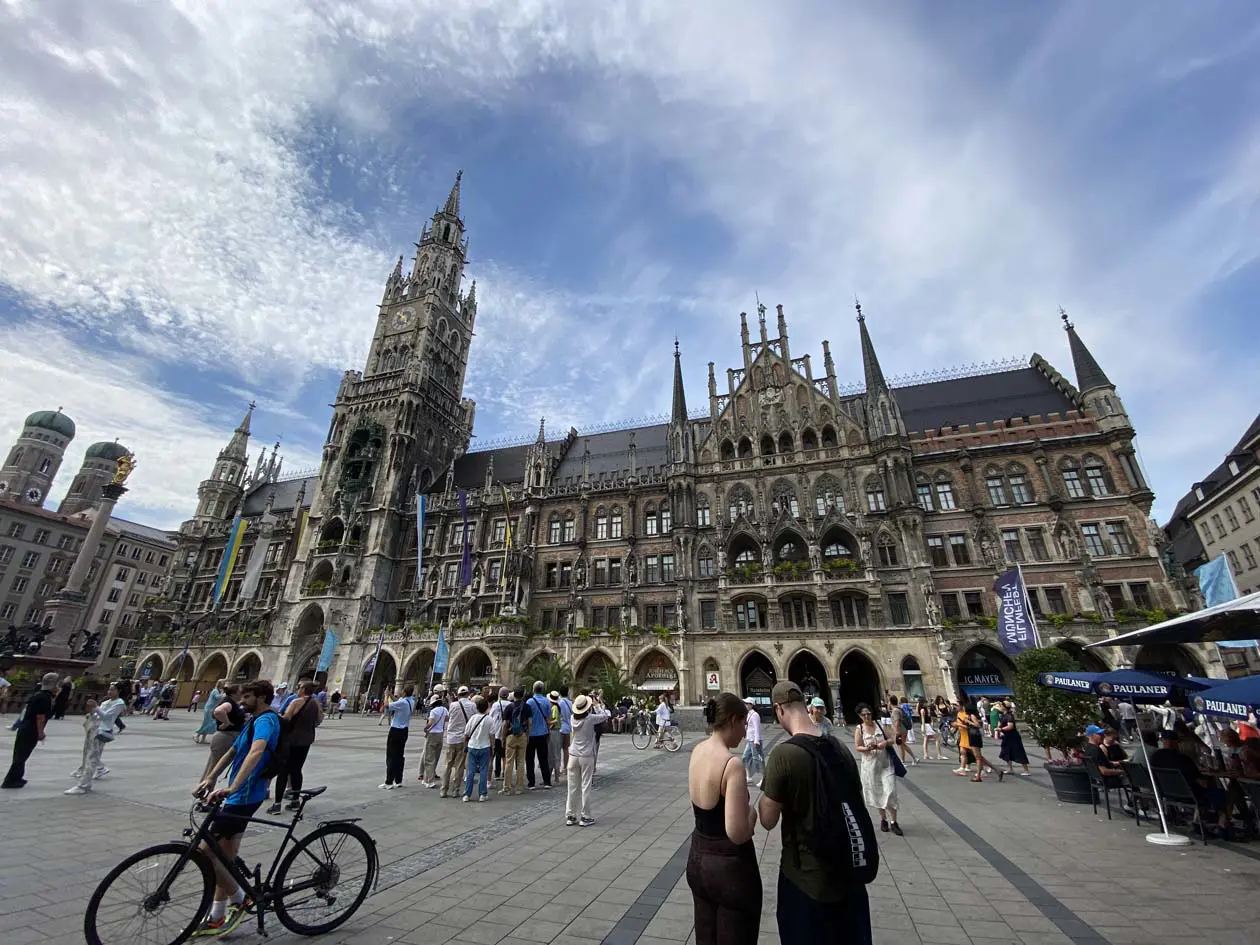
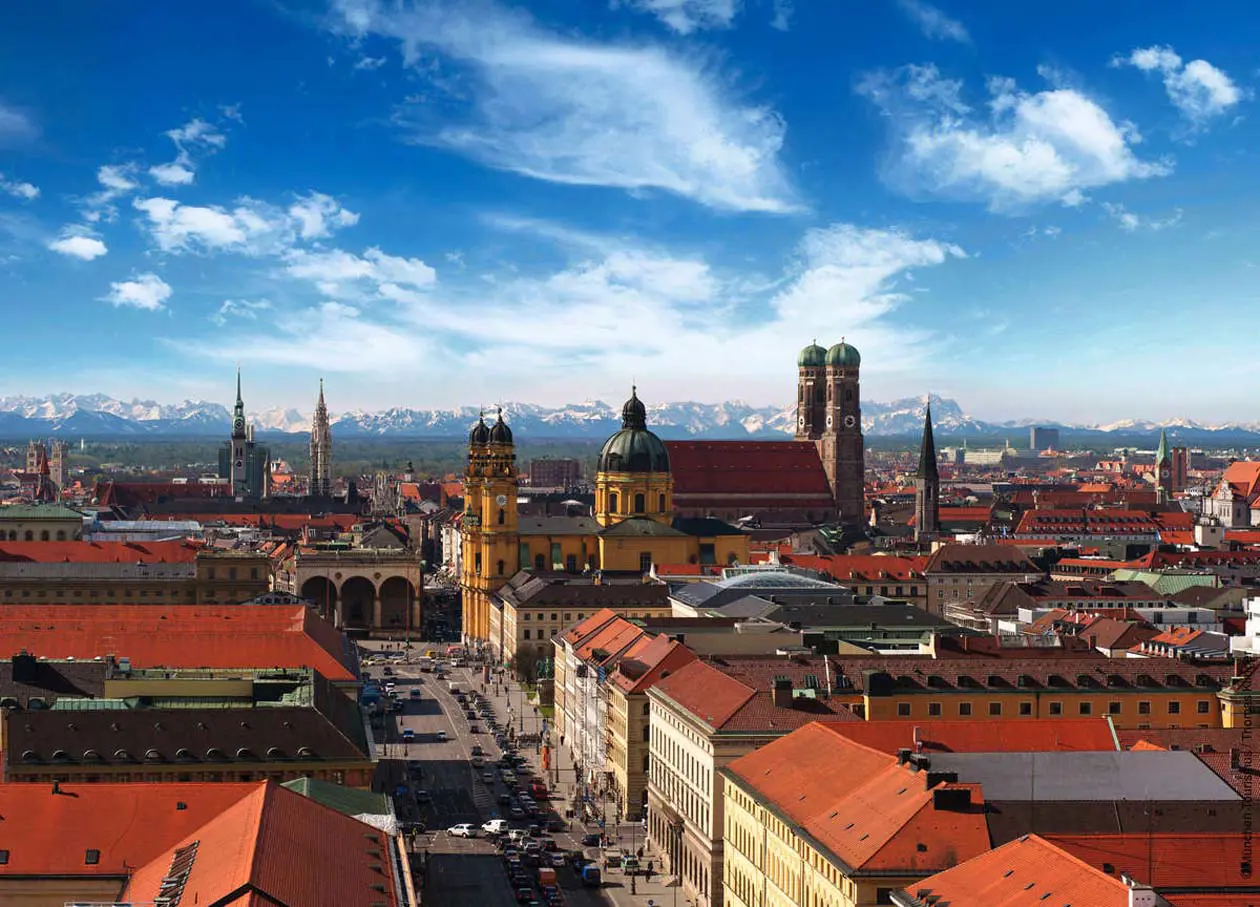
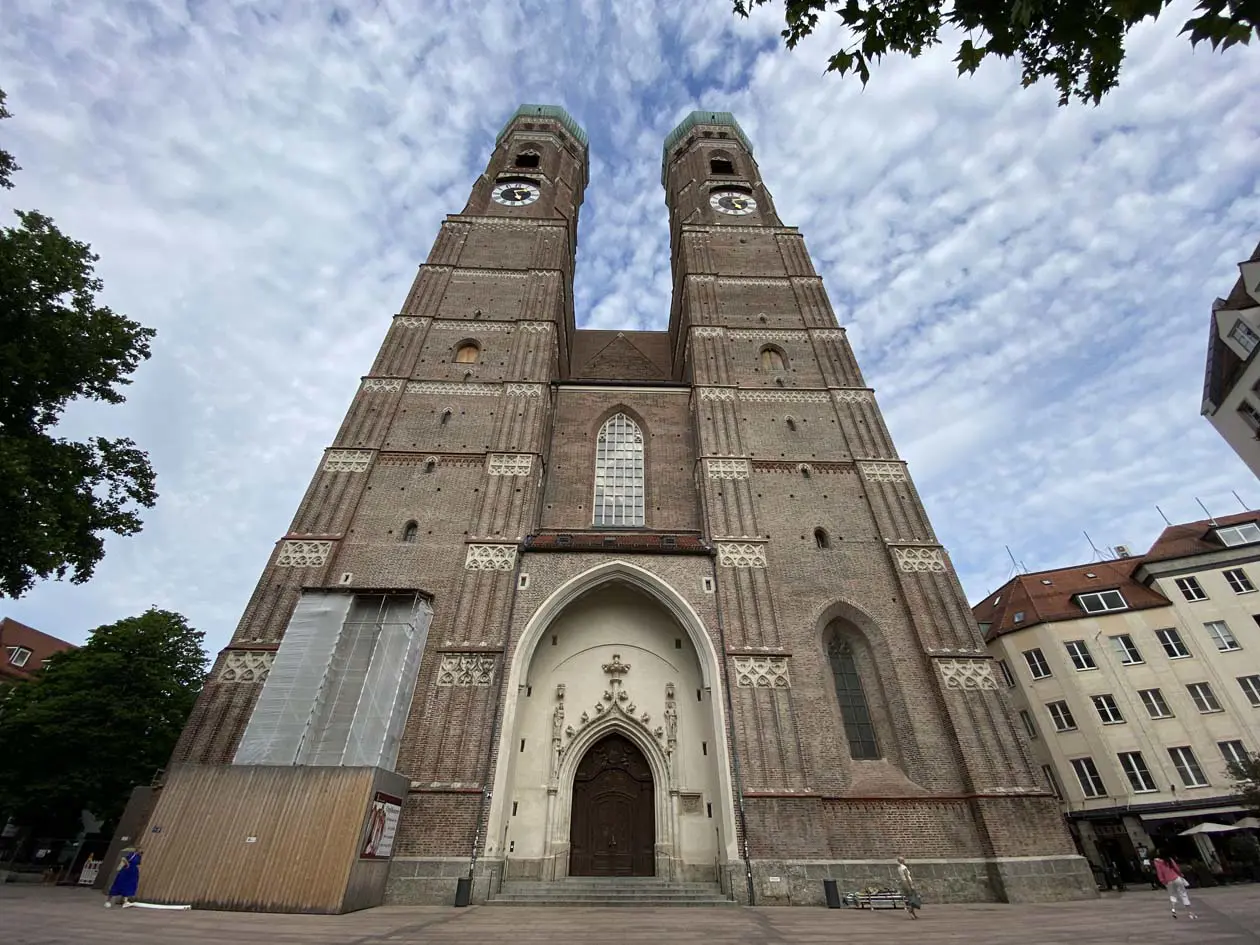
A short distance away stands the Frauenkirche, the Cathedral of Our Lady, built in the 15th century by architect Jörg von Halspach in the Gothic style and now one of Munich’s most recognisable landmarks. Its two twin towers – the north tower rising to 98.57 metres and the south tower to 98.45 metres – are topped by distinctive onion-shaped domes added in 1525. Visible from many parts of the city, they have come to define Munich’s skyline. After being heavily damaged during the Second World War, the cathedral was rebuilt in a more restrained style. Also worth a stop is Peterskirche, St Peter’s Church, the oldest church in Munich. Its 96-metre bell tower offers one of the finest panoramic views over the rooftops of the historic centre.
Around Munich’s historic centre, there are plenty of opportunities to shop for local products, handicrafts, porcelain – produced in the city since 1747 – traditional clothing such as the Dirndl, and souvenirs. The area is also filled with taverns, bars and restaurants where visitors can stop for a gourmet break and taste Bavarian specialities accompanied by the city’s famous beer and a traditional Breze. Those looking for a glimpse of Munich’s more elegant and social side can head to Odeonsplatz, a refined square dominated by the Feldherrnhalle and the Theatinerkirche, instantly recognisable by its distinctive yellow façade.
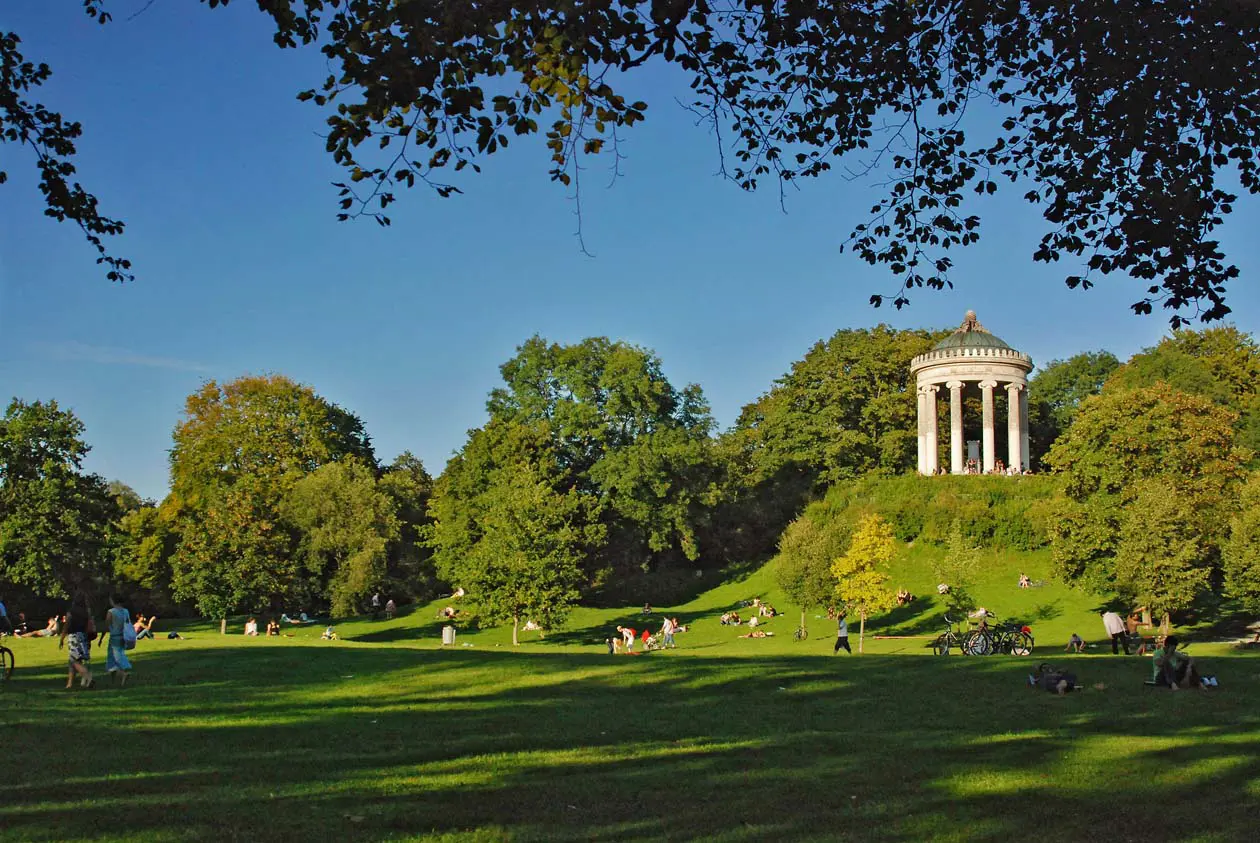
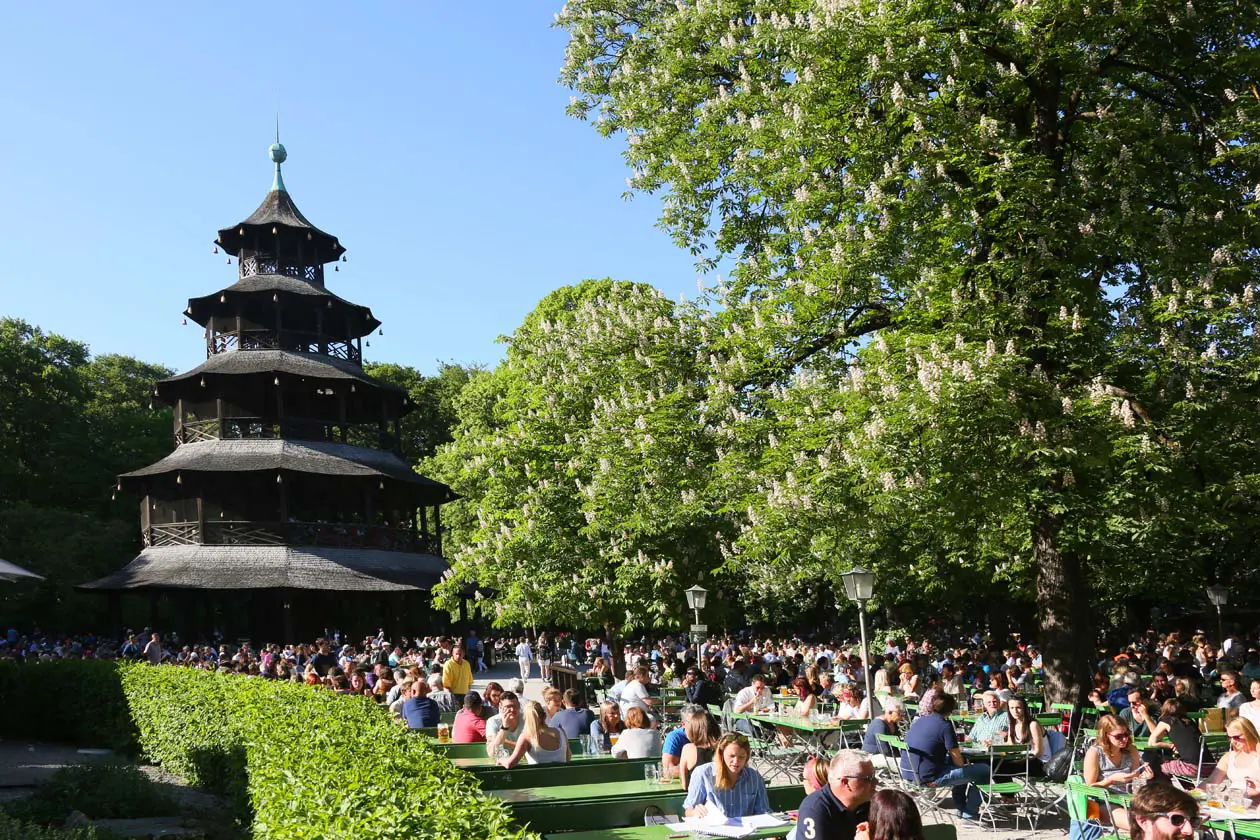
Nature lovers should not miss the Englischer Garten, one of the largest urban parks in the world and home to one of Munich’s best-known and most popular Biergärten, located beside the Chinesischer Turm (Chinese Tower). Once the historic centre has been explored, visitors can set off to discover some of Munich’s lesser-known, alternative and distinctive neighbourhoods, which reveal another fascinating side of the city.
Schlachthofviertel:
alternative, creative, trendy and underground
There is a corner of Munich that lies far from the classic postcard image of the historic centre and, for precisely this reason, is well worth discovering: Schlachthofviertel, the city’s former slaughterhouse district.
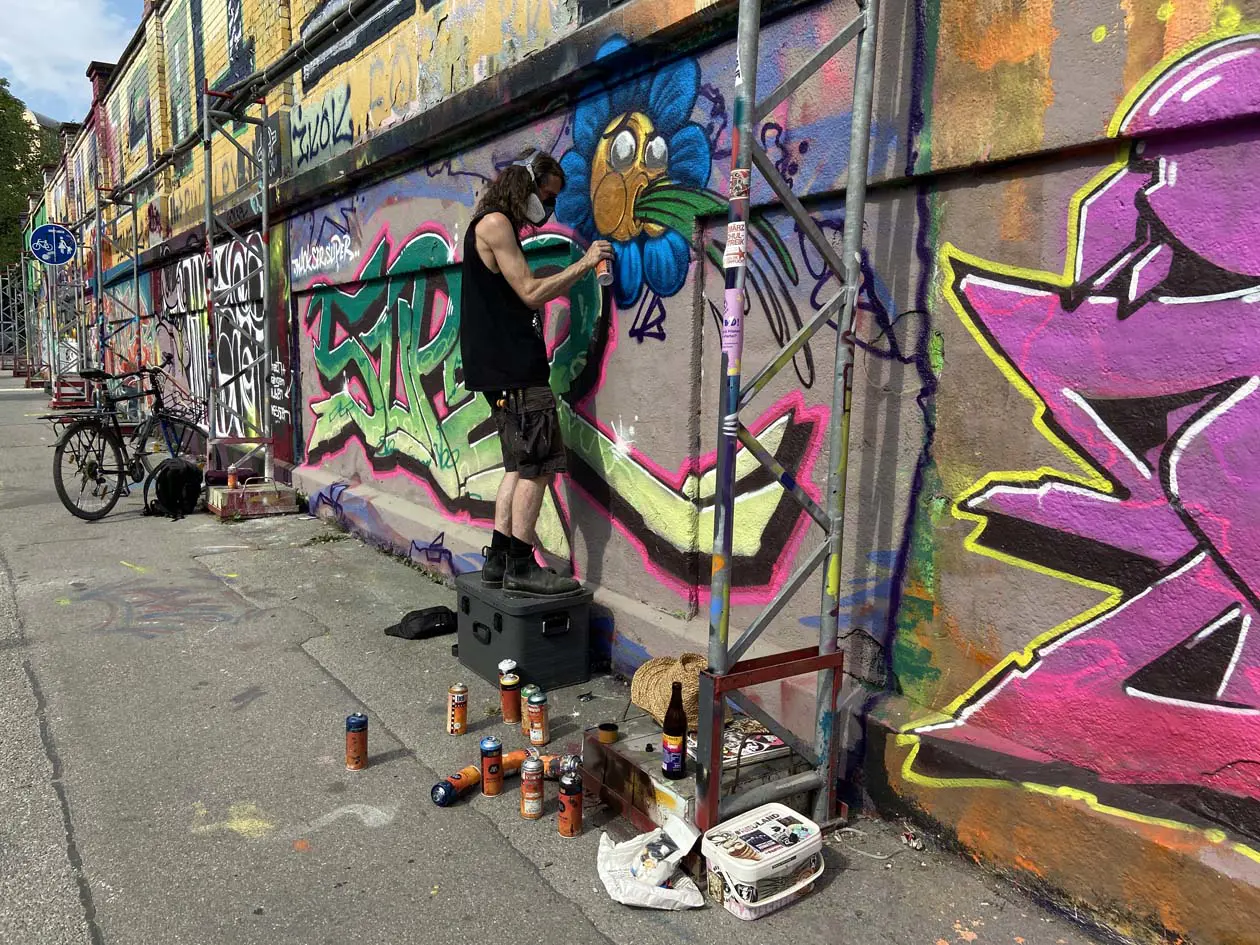
Here, Munich reveals a rawer and more vibrant side, shaped by murals, converted industrial buildings and containers repurposed as creative spaces and events with a creative, authentic energy that in recent years has attracted artists, young creatives and travellers looking for a different side of the city.
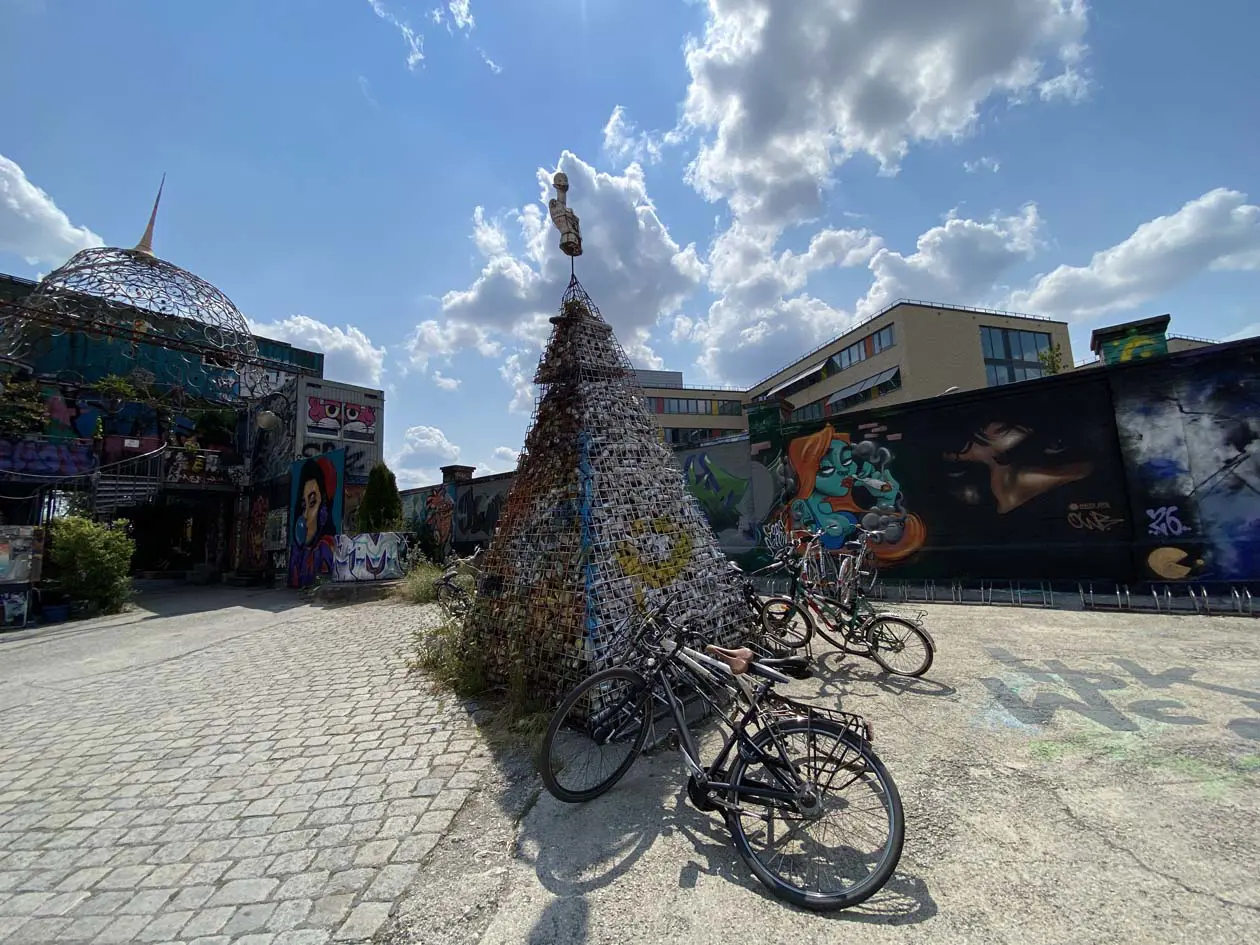
If you are looking for street art in Munich, there is no need to venture far from the city centre: simply head to this neighbourhood, home to the city’s longest and most densely covered legal graffiti wall. Nearby, the Bahnwärter Thiel cultural venue – a former railway signal box transformed into a space for events, music and underground culture – perfectly captures the spirit of the area: regeneration, reuse and creativity.
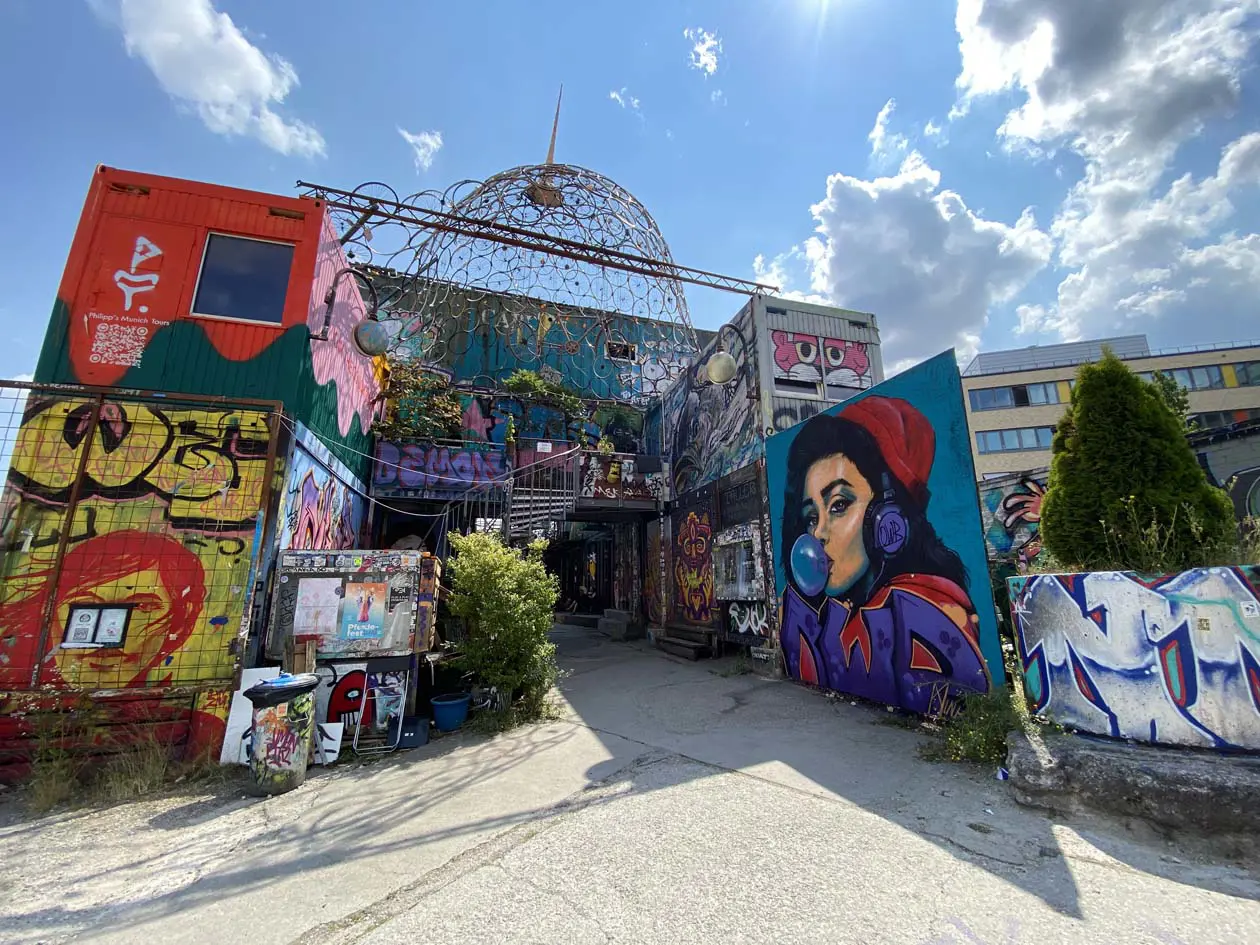
As in other parts of the world, large-scale wholesale businesses in this area – including butcheries, warehouses and facilities linked to the meat trade – are gradually relocating elsewhere, freeing up vast spaces in the heart of the city. The result is a phased regeneration process that, over the years, has transformed former warehouses into studios, bars and exhibition spaces, gradually giving this part of Munich an entirely new identity. Geographically, the district forms part of Isarvorstadt, with a small extension towards Sendling, and remains an area in constant transformation. Interestingly, the slaughterhouse itself has never actually closed: it has been operating since 1878 and still receives daily deliveries, although most meat production and commercial operations have now been outsourced.
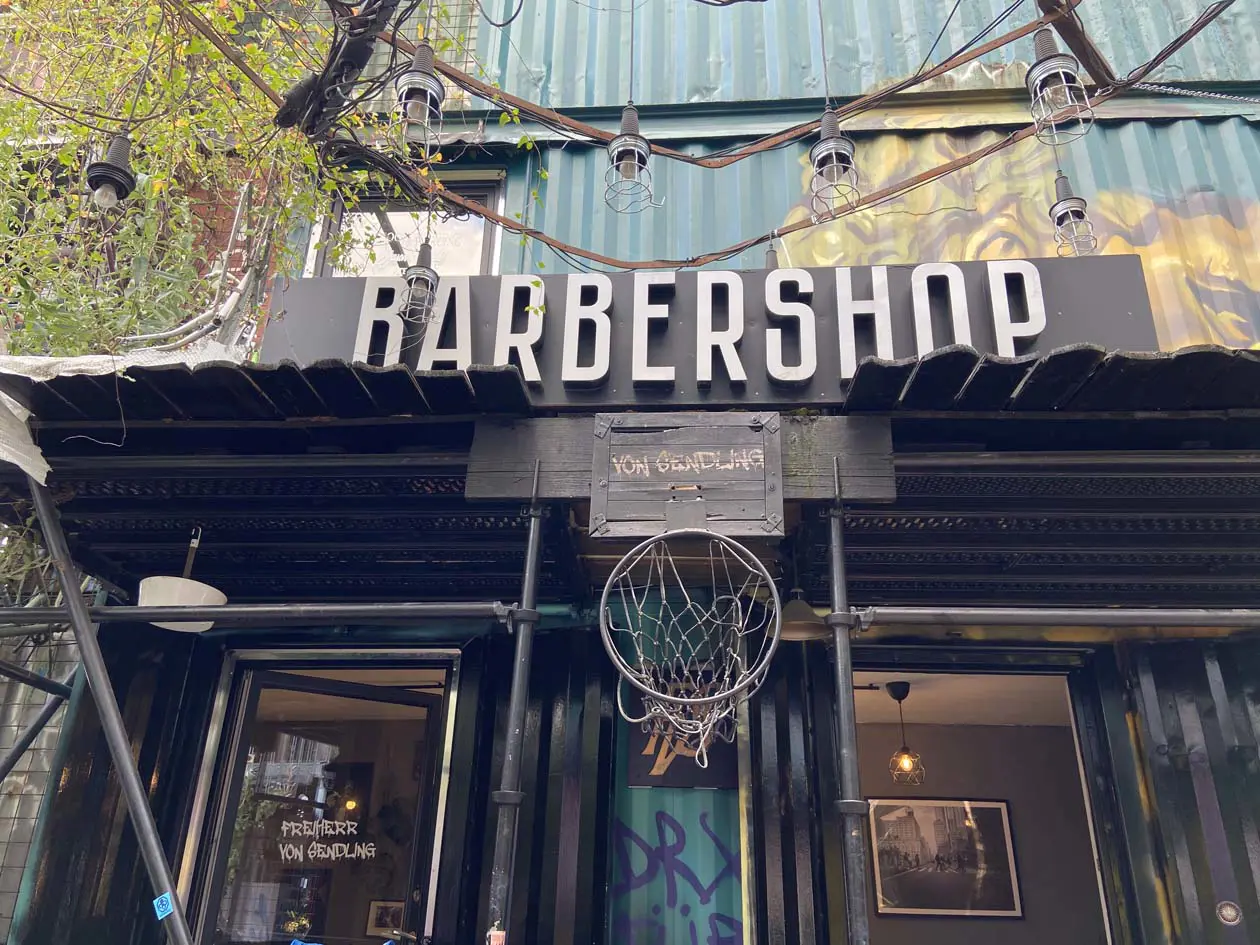
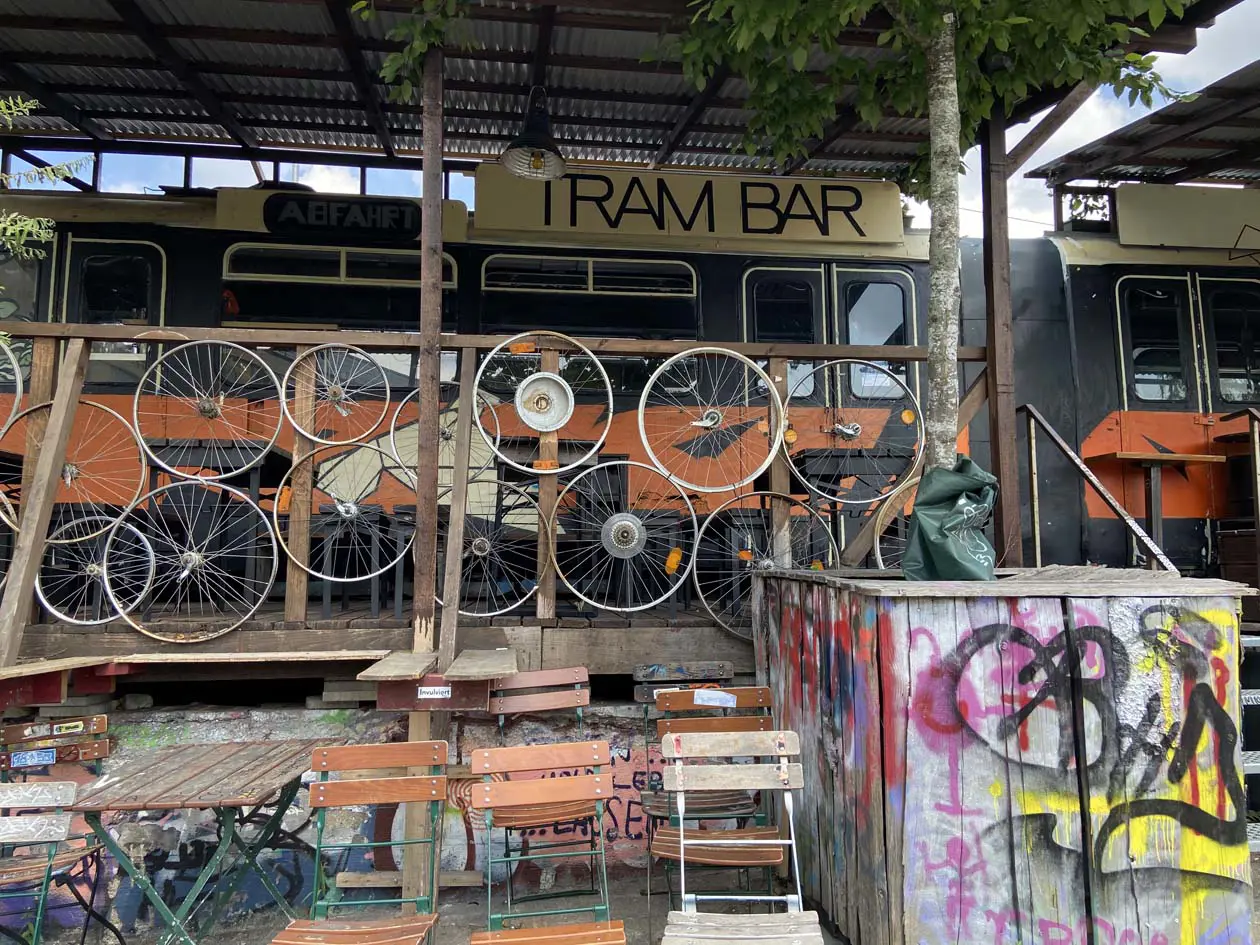
The wholesale market area is known as Märkte München (Munich Markets). Alongside what remains of the district’s traditional butchery trade, the area hosts a comprehensive wholesale market dealing in meat, vegetables, fish, cured meats and flowers, as well as supplying equipment for the city’s catering industry.
It is not a public market in the usual sense, but food lovers can still shop for high-quality ingredients at Frischeparadies, a true haven for anyone looking for gourmet products. The restaurants and eateries around the market are also worth discovering, serving excellent dishes both during the day and after shopping hours, taking full advantage of their proximity to some of the freshest produce available in the city.
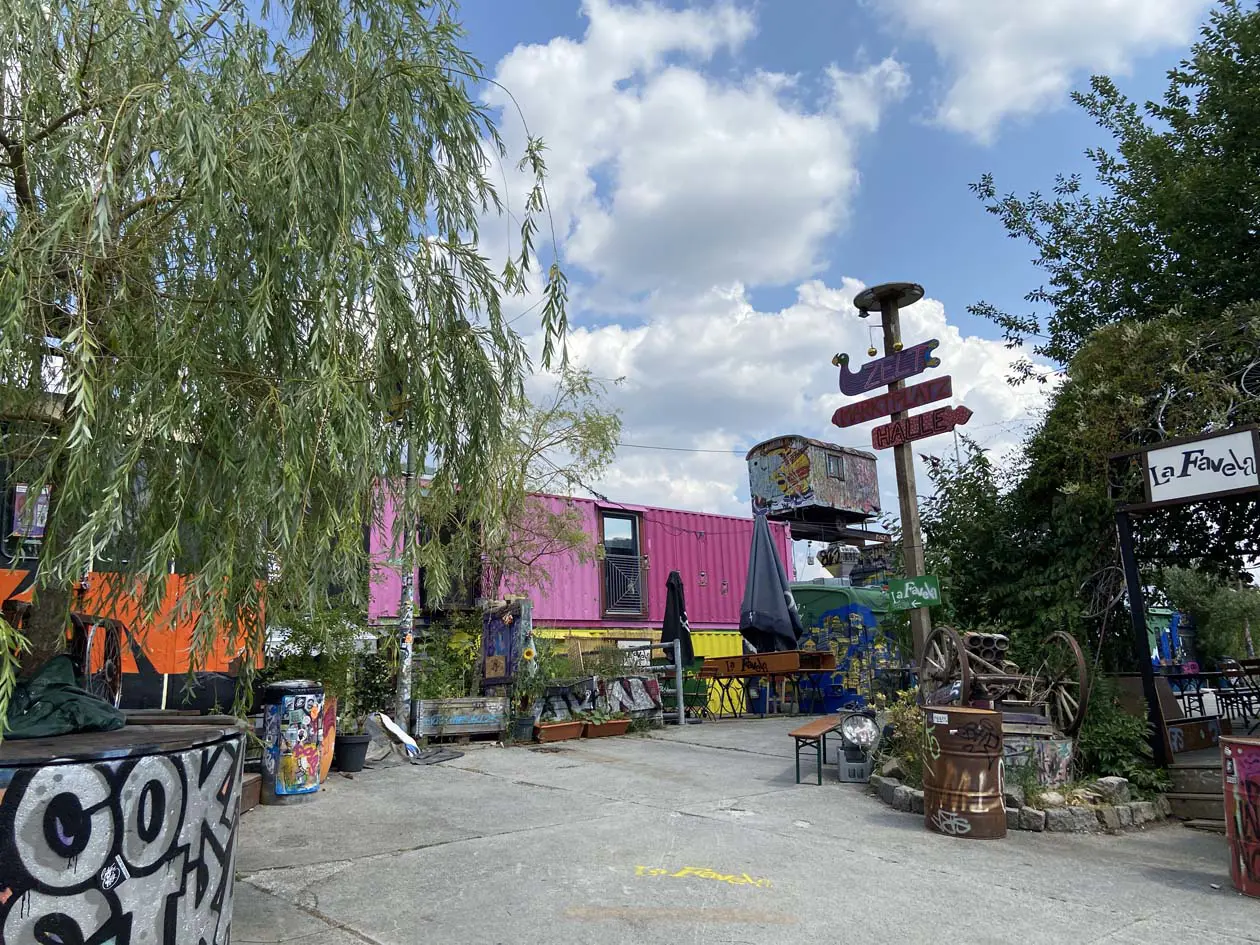
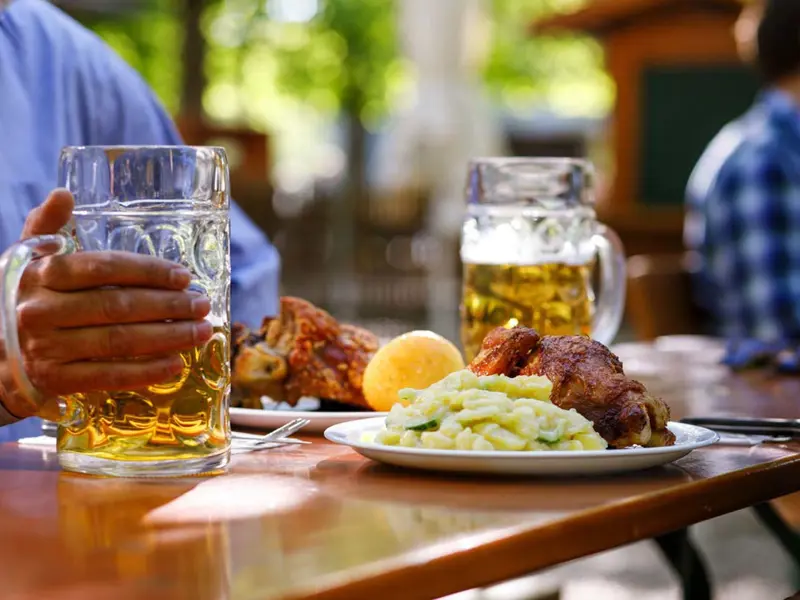
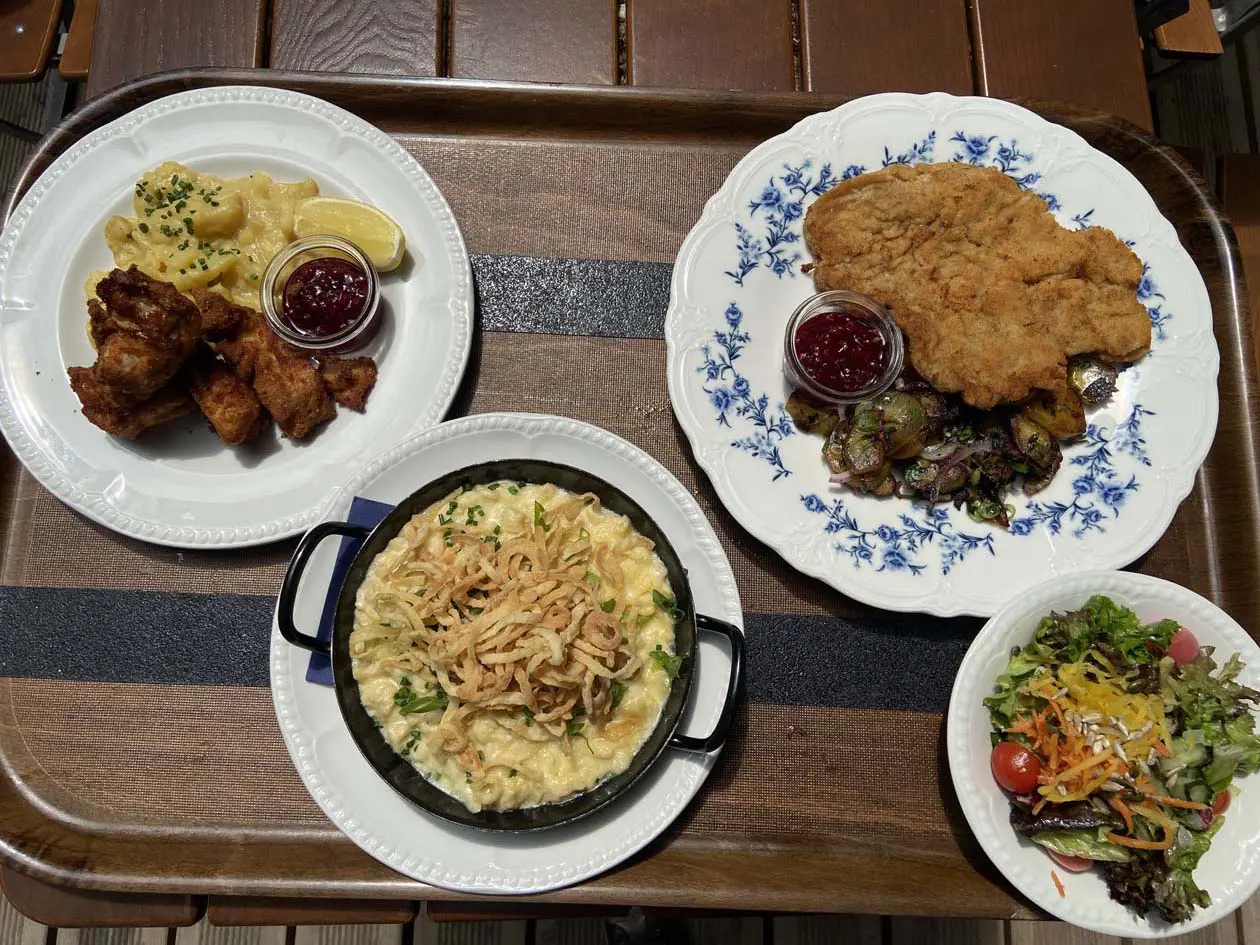
The neighbourhood’s true speciality is best enjoyed at breakfast. Weißwürste, the traditional Bavarian white sausages, are particularly well represented here. Every morning, the inn run by Wallner serves them freshly made. The venue’s official name is Gaststätte am Großmarkt and, on maps, it appears in Untersendling, right on the edge of Schlachthofviertel. A short distance away, on Schmellerstraße, it is also worth stopping to sample traditional Bavarian dishes. And, of course, there is no shortage of local beer, including craft beers and other small-batch brews associated with the neighbourhood.
Seen from a distance, it looks rusty and almost out of place. Yet Alte Utting is actually one of Munich’s most surprising spots: a former excursion boat that spent decades sailing on Ammersee – a lake in Upper Bavaria, around 35 km from Munich and the third largest in Bavaria – has now been lifted onto a disused railway bridge and transformed into a venue where visitors can sit down, have a drink, eat and stay on for a lively night out.
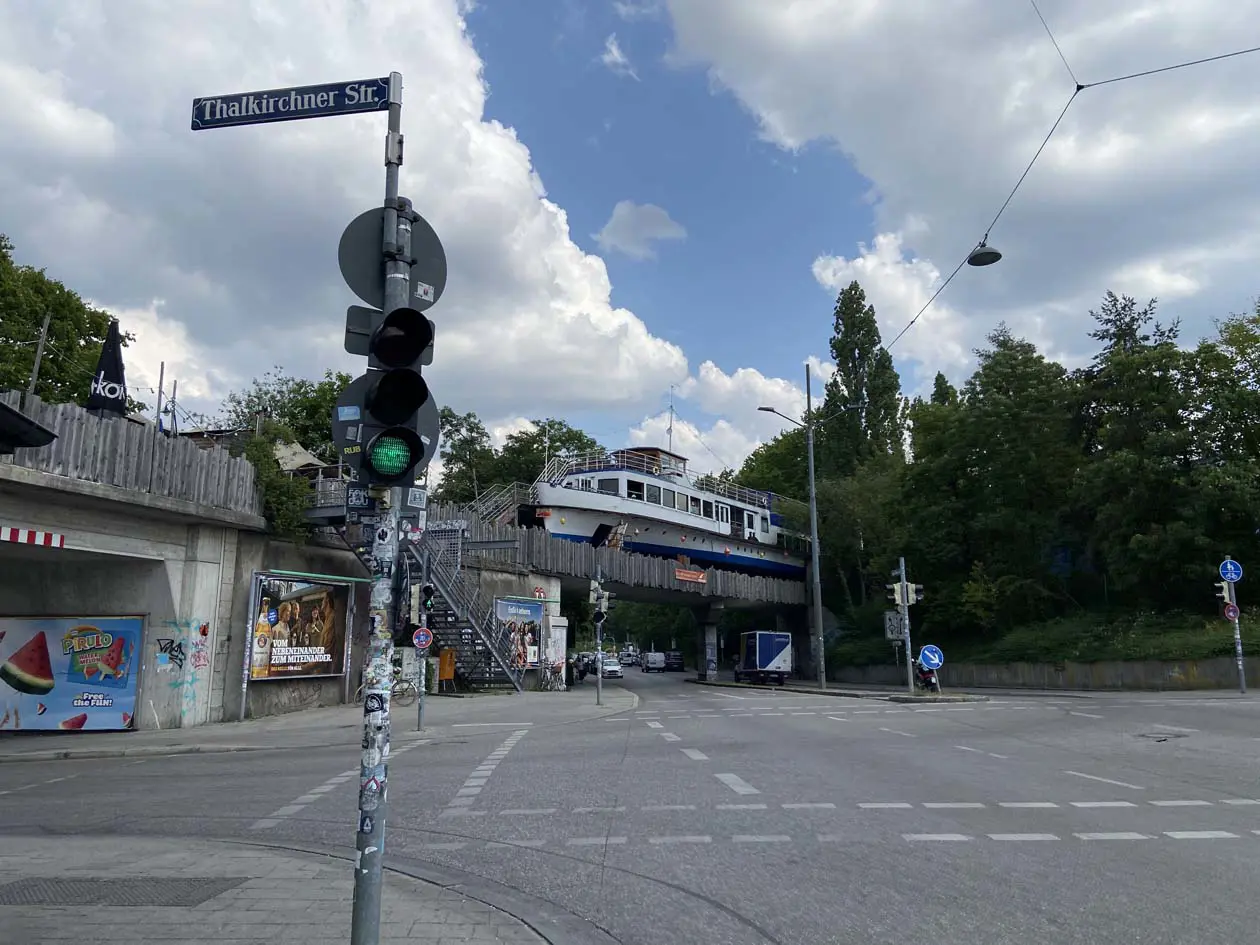
It is one of those places that perfectly captures the spirit of Munich beyond the usual tourist routes: irreverent, slightly punk and capable of turning a piece of industrial heritage into a lively meeting place. The view from up there is just as unusual as the concept itself and, on summer days, the outdoor tables set along the bridge make Alte Utting a stop that is absolutely worth adding to the itinerary.
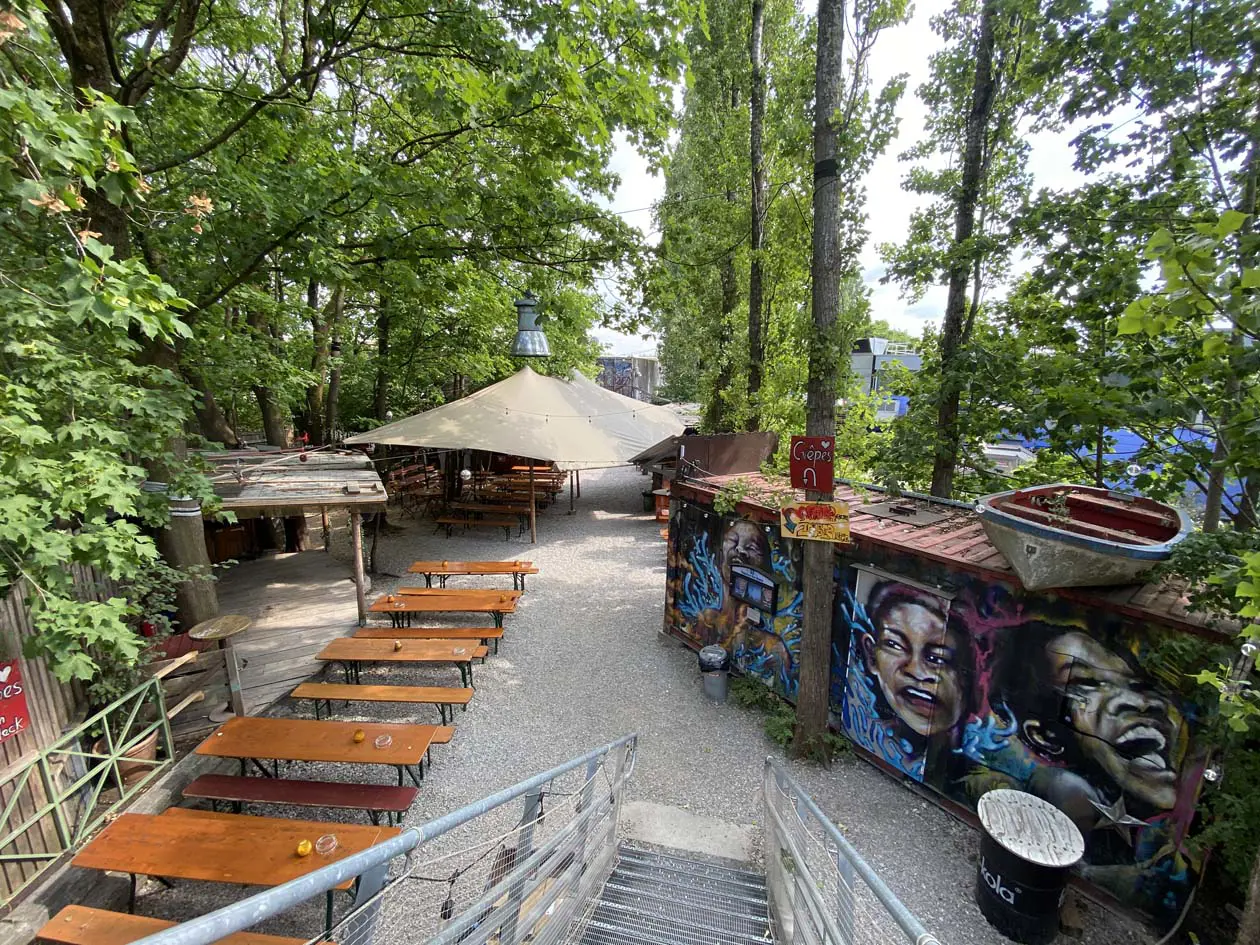
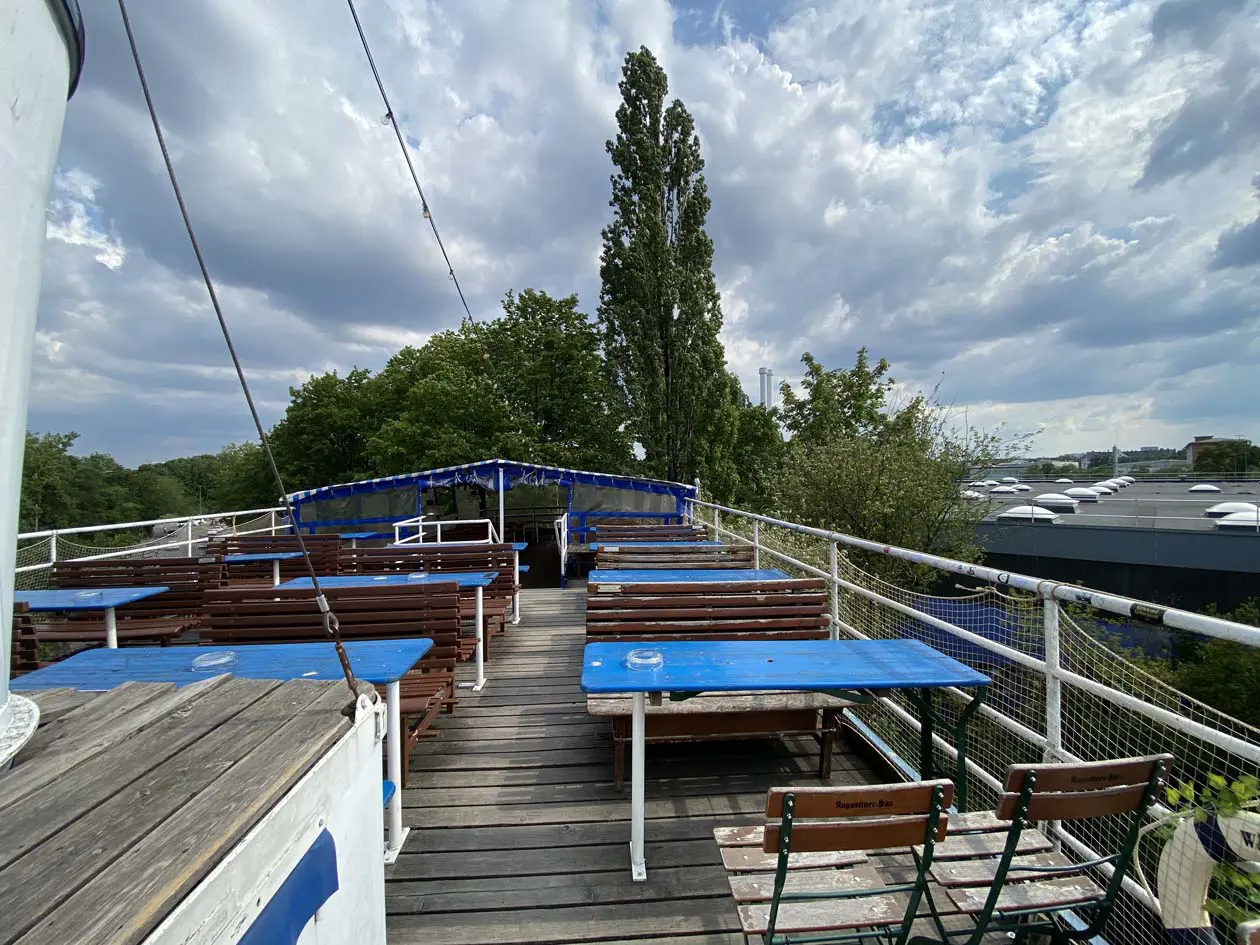
From this elevated position, the view leads directly to the Volkstheater, the new popular theatre exclusively in German that has become one of the most striking buildings in the district. Together, the two landmarks offer the perfect combination for travellers looking to discover a different side of Munich, suspended between industrial heritage and contemporary architecture.
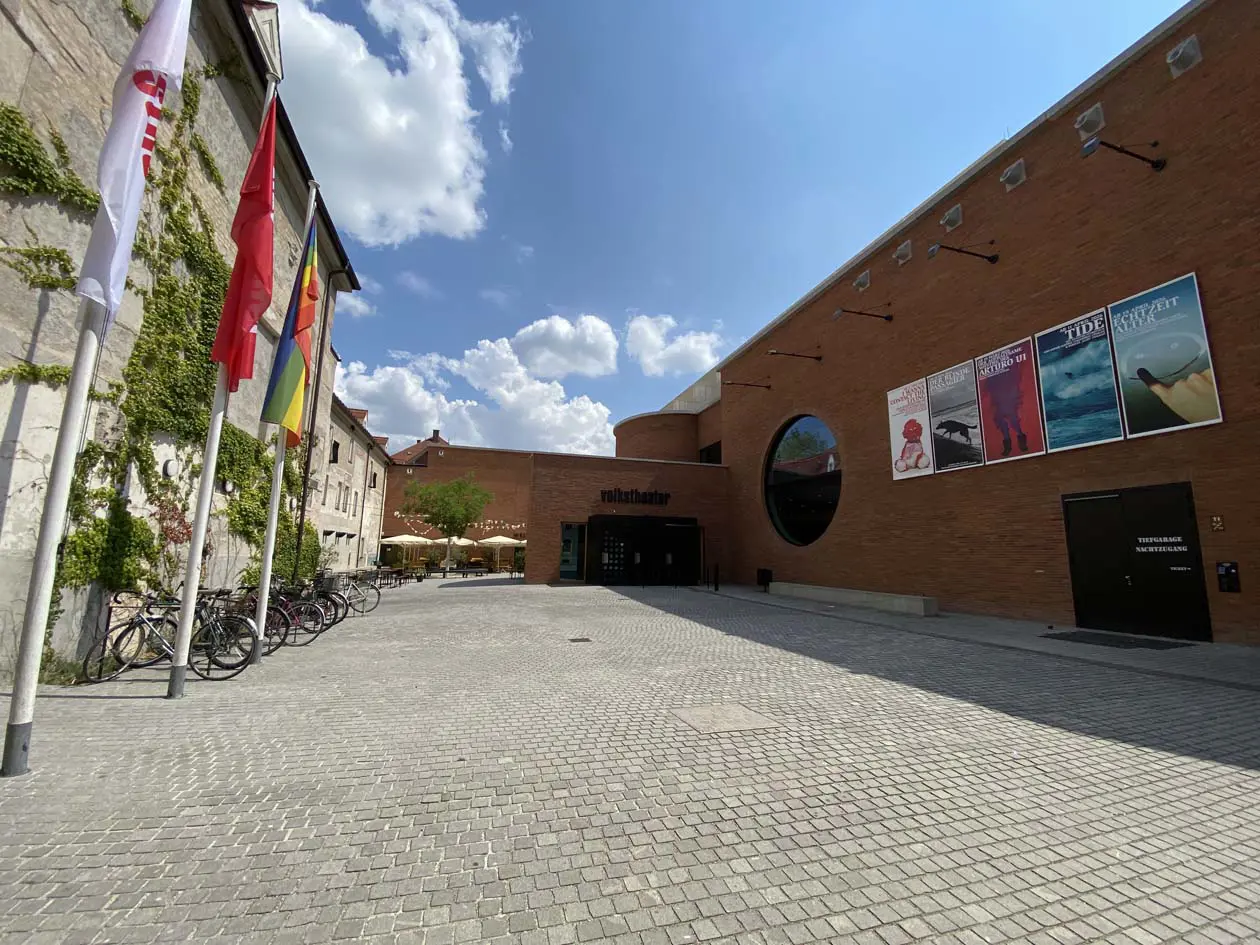
The Volkstheater is the building reshaping the skyline of this part of Munich. It is not simply the city’s new theatre, but a true architectural statement. One of its most distinctive features is the brick-clad exterior wall, a design choice that recalls the former timber depot that stood on this site until just a few decades ago. Visitors walking through the area can still sense this industrial heritage, now reinterpreted in a contemporary way.
Also catching the eye is a massive white tower projecting from the centre of the building, which has become a visual landmark for anyone approaching this part of the city – and one more reason to extend the walk this far during a stay in Munich.
Glockenbachviertel: trendy and inclusive
Gärtnerplatz and Glockenbach embody Munich’s trendy and inclusive spirit. Here, visitors will find restaurants that have played an important role in the city’s culinary scene, quiet inner courtyards hidden behind elegant façades, carefully designed minimalist shops, antique stores, boutiques inspired by the 1950s and 1960s, and small artisan workshops. It is precisely this unexpected mix that gives Gärtnerplatz and the Glockenbachviertel their distinctive charm, making them two areas that deserve far more than a quick walk-through.
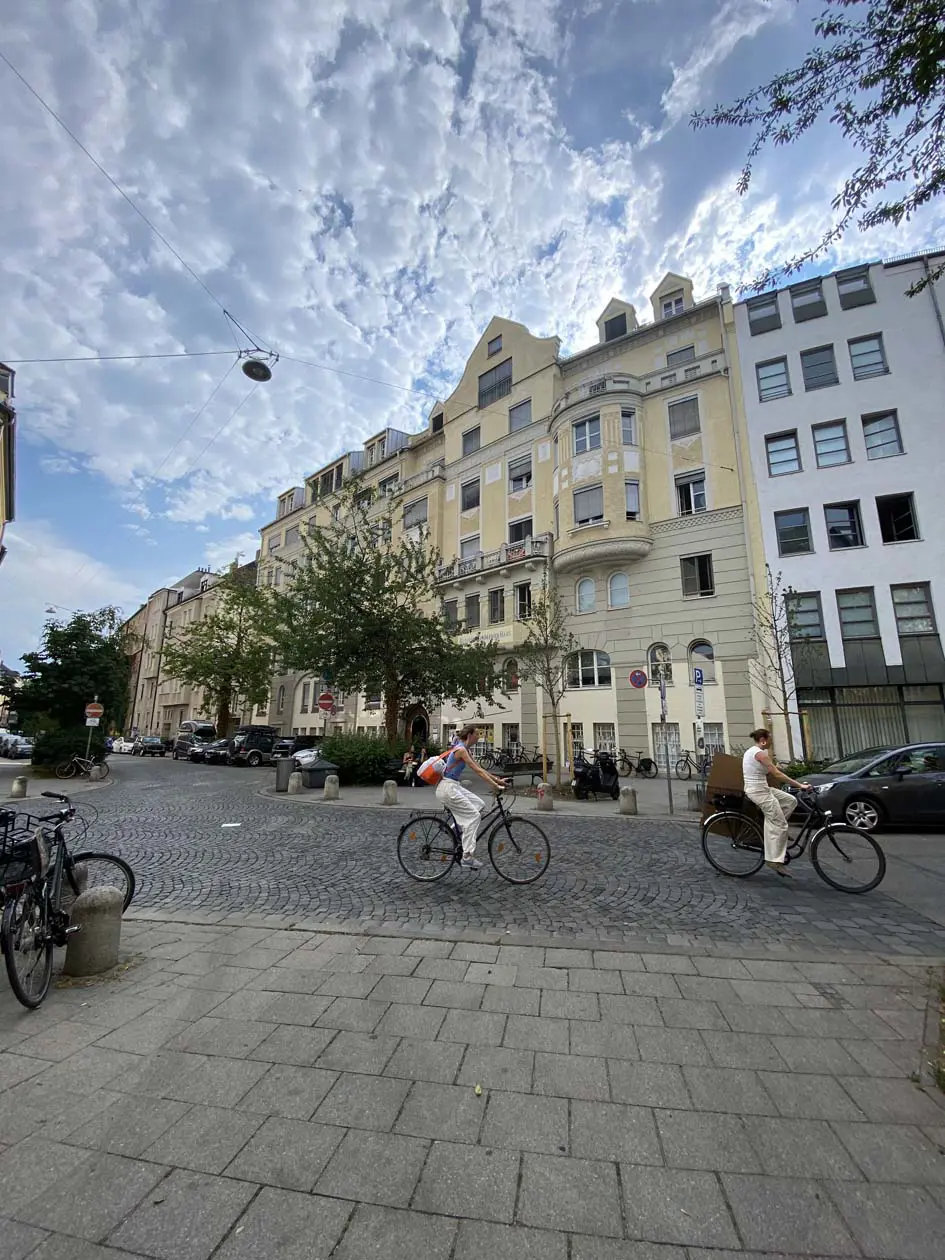
Between the old town and the River Isar, these two neighbourhoods are often referred to as a single area, but in fact they have distinct yet complementary identities. Gärtnerplatz lies to the east, while Glockenbach extends westwards, with Fraunhoferstrasse running between them. Their names already tell part of their story: Gärtnerplatz pays tribute to Friedrich von Gärtner, court architect to King Ludwig I of Bavaria, while the second, Glockenbach, takes its name from the stream that gives this part of the district its name and derives from a historic bell foundry - Glocken meaning “bells” in German - that no longer exists.
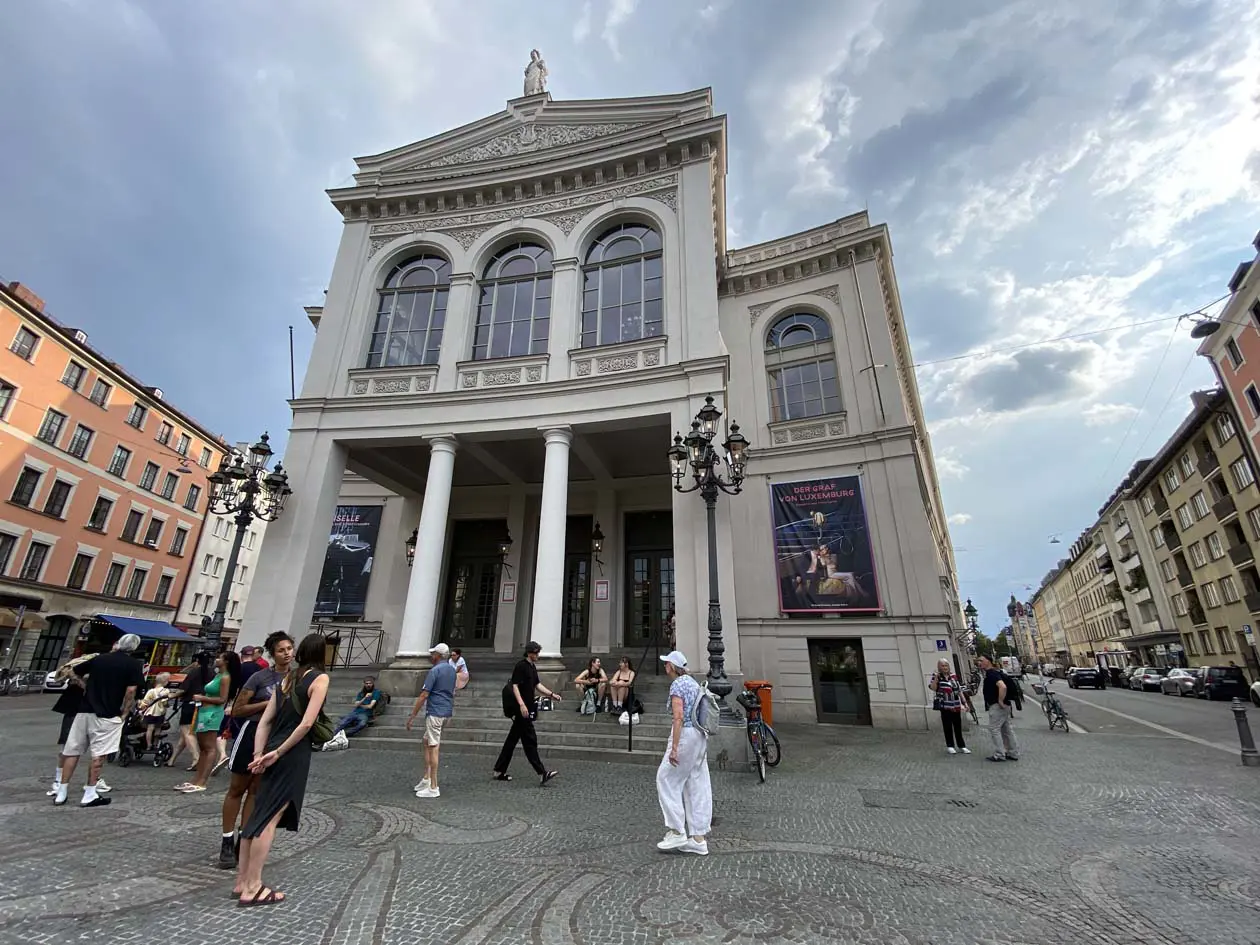
At the heart of the district stands the Staatstheater am Gärtnerplatz, the historic theatre dedicated to operetta and musicals, which dominates the square with its striking presence. Around it, a ring of buildings unfolds with remarkable architectural consistency: the same height, generally between three and four storeys, and a harmonious colour palette made up of different shades of red. Locals refer to this distinctive tone as “Gärtnerplatz red”, a small but meaningful source of neighbourhood pride.
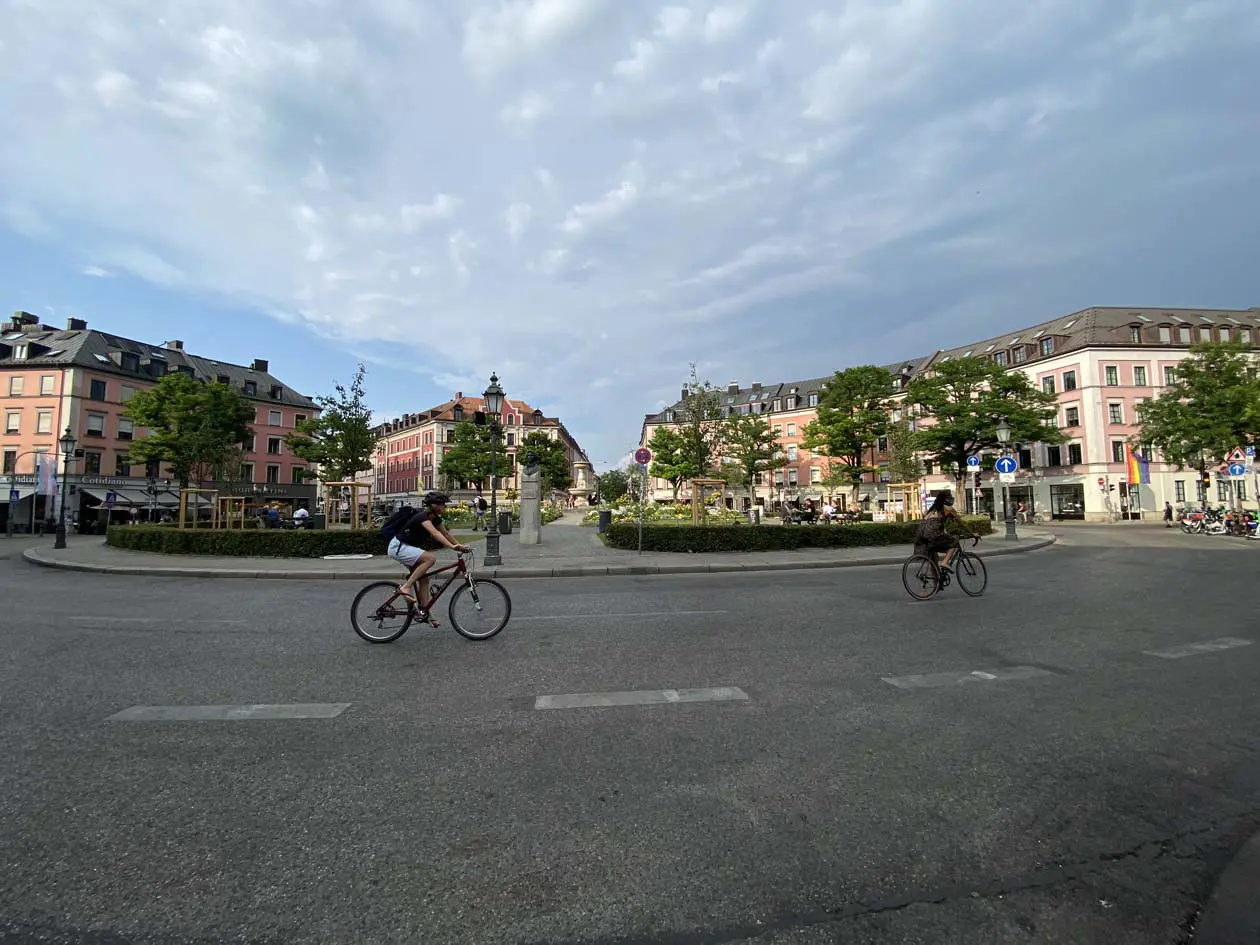
At Gärtnerplatz, the distinctive circular layout, carefully maintained flowerbeds and central fountain create an almost suspended atmosphere in the heart of the city, naturally inviting visitors to sit down, slow the pace and enjoy a few moments of relaxation.
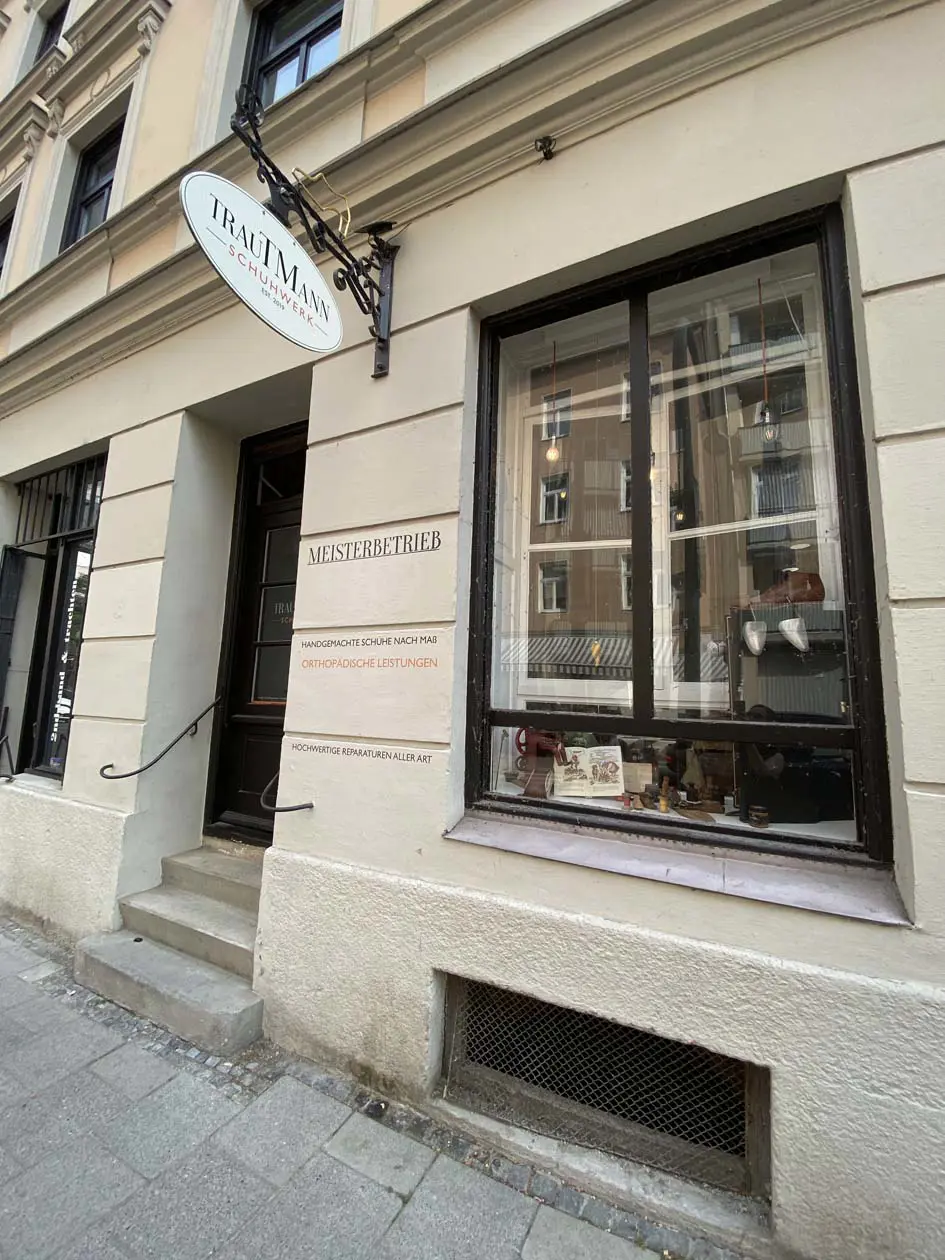
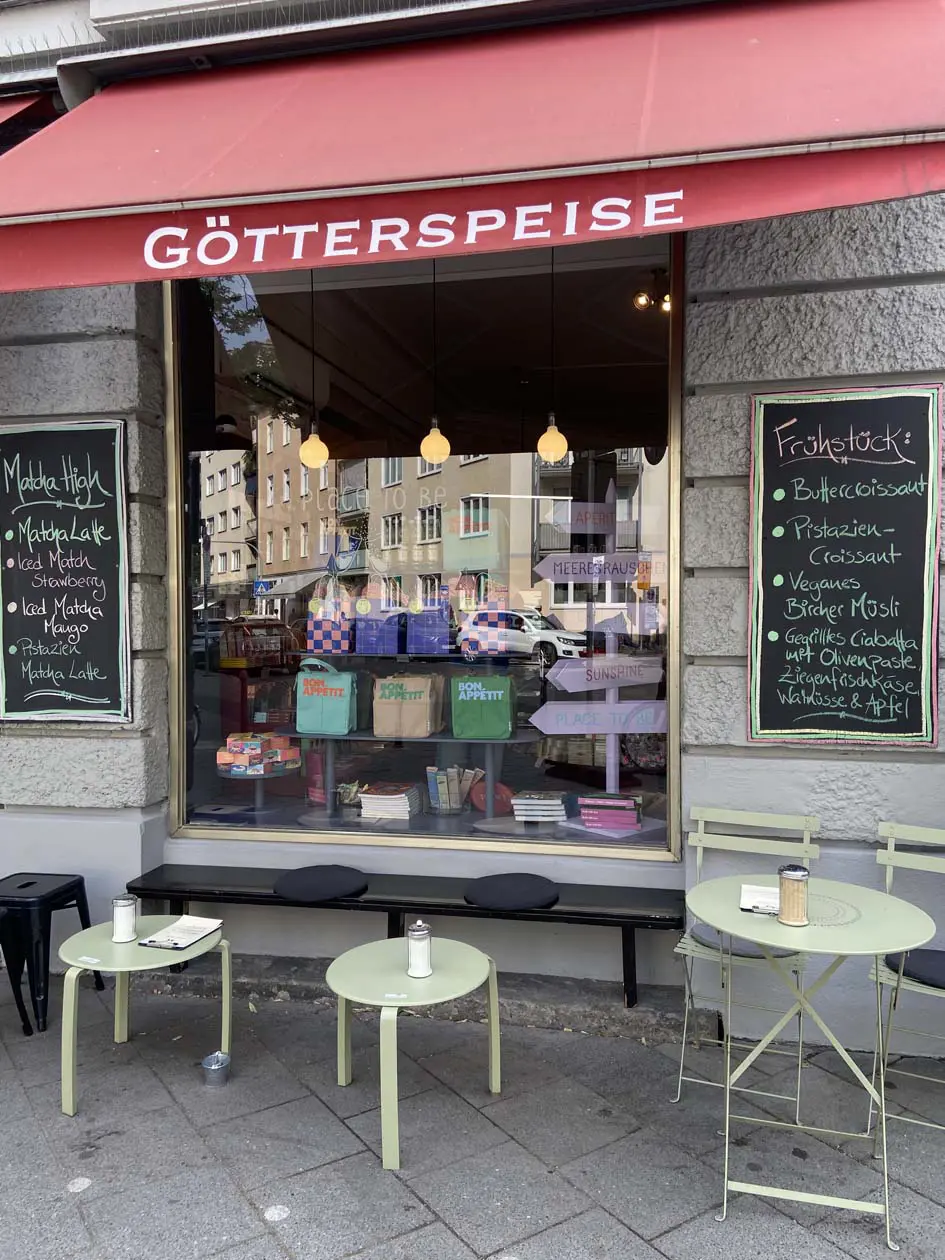
During the day, the square is lively with cafés, small specialist shops and food stores. As evening falls, the atmosphere changes and theatre-goers take over, filling the surrounding venues before and after performances.
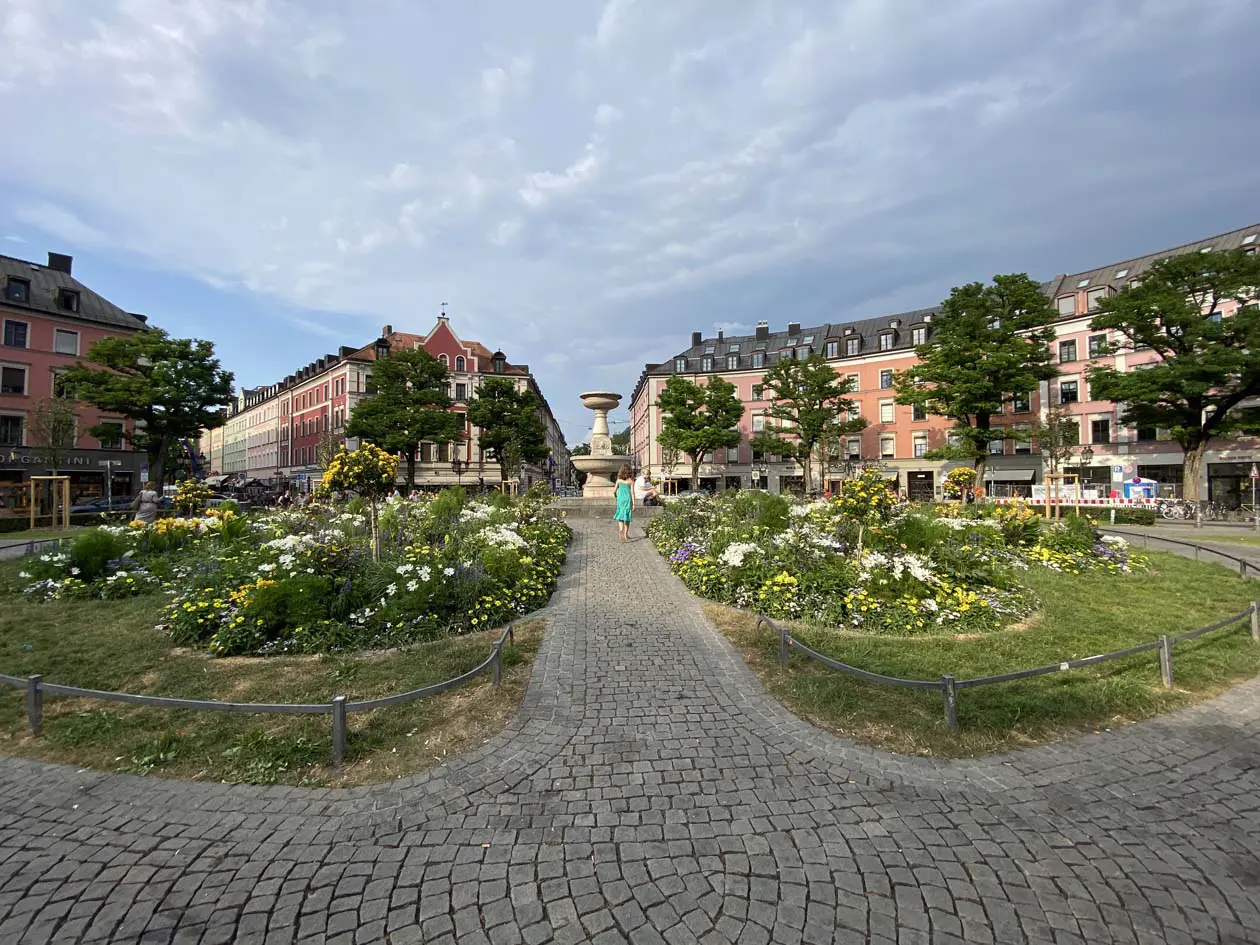
The spirit of Gärtnerplatz and Glockenbach is reflected above all in their welcoming atmosphere. Singles and families with children, older residents and younger generations, heterosexual and LGBTQ+ communities all live side by side here in a natural balance. In summer especially, Gärtnerplatz becomes an ideal spot to meet friends, spend time outdoors or stop for an aperitif.
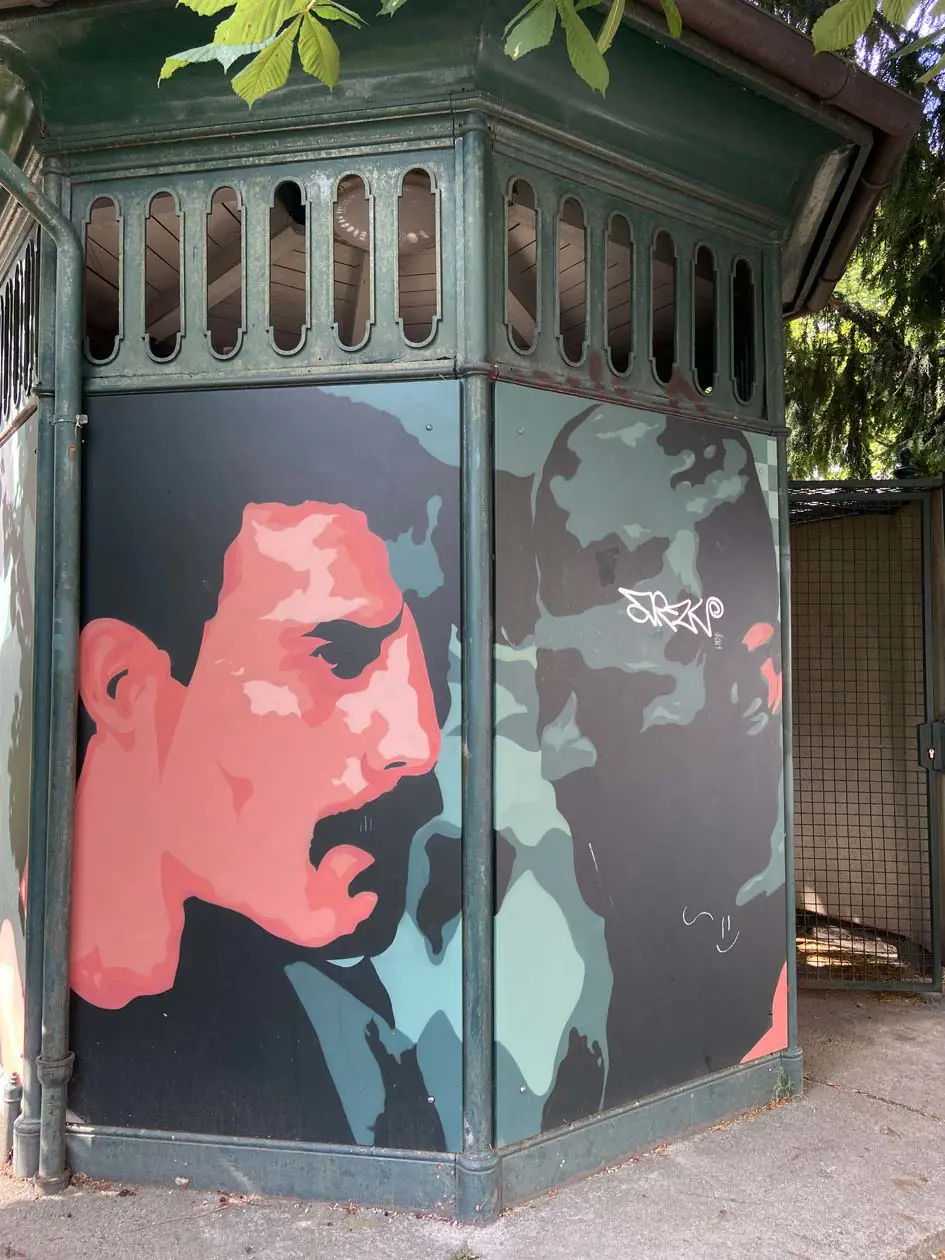
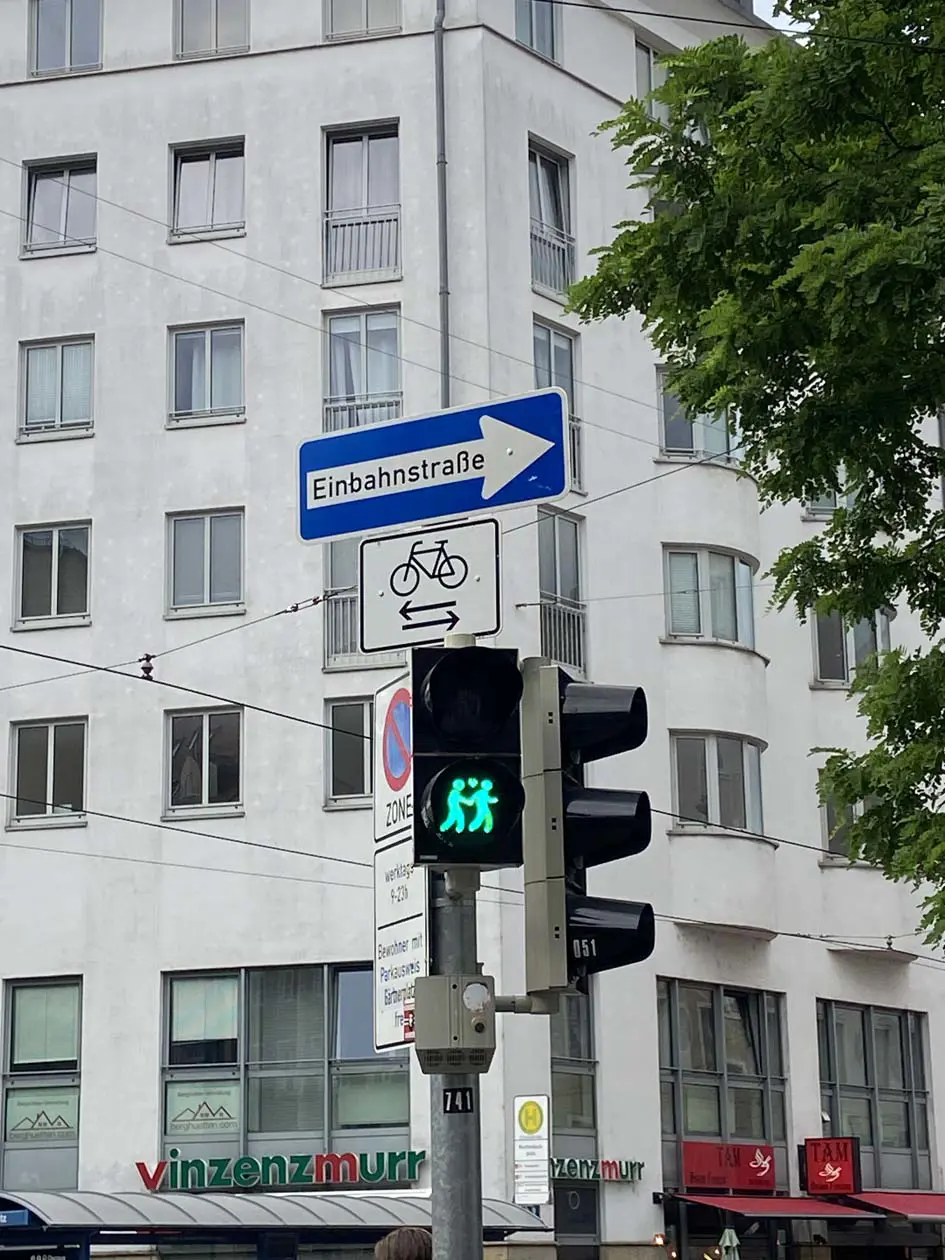
Both Gärtnerplatz and Glockenbach are known for their lively nightlife, where relaxation is enjoyed with style, especially around Hans-Sachs-Strasse and Reichenbachstrasse, as meeting and leisure spaces for the gay community. Cult bars, pubs and trendy venues make the area a popular destination for anyone looking for an unconventional night out.
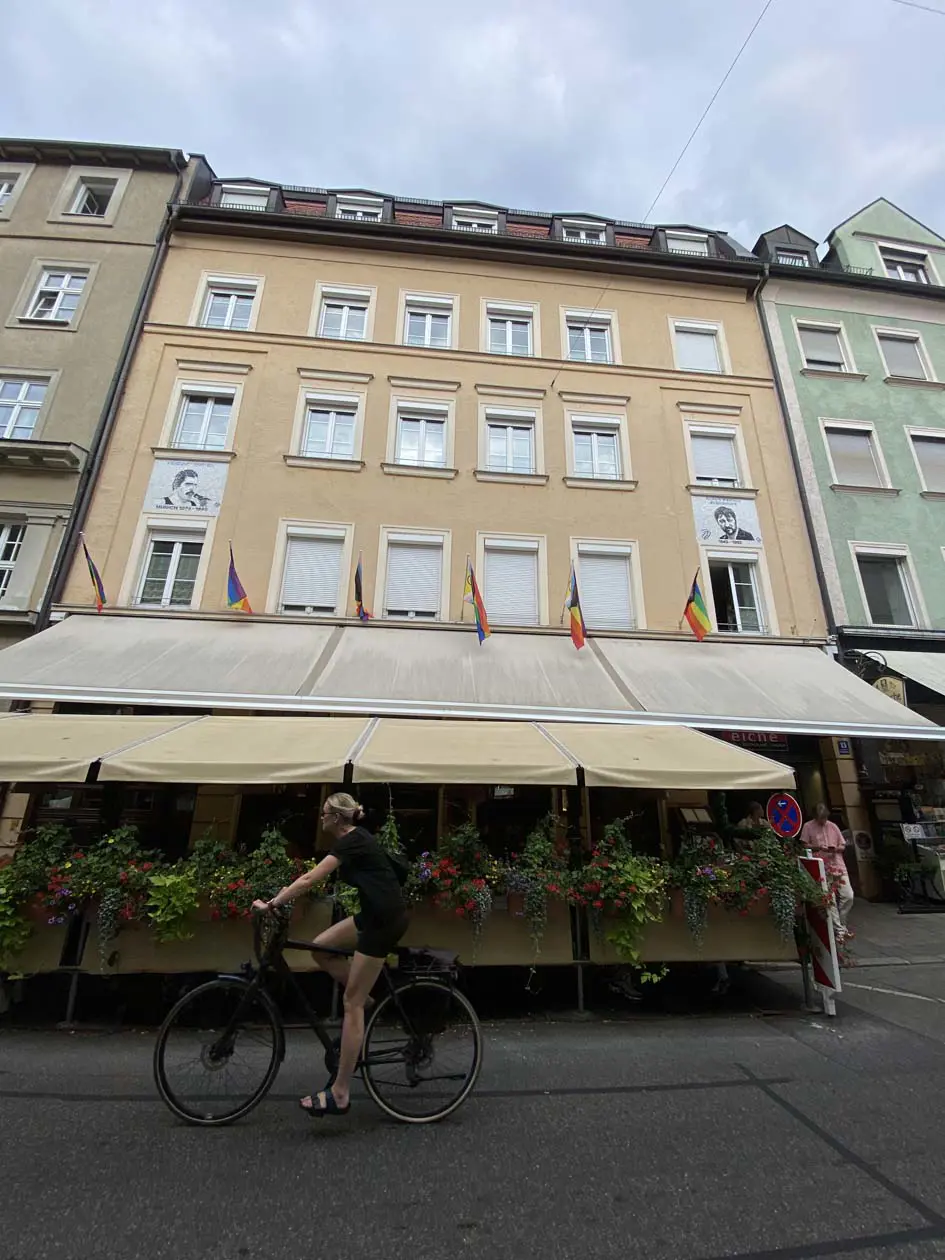
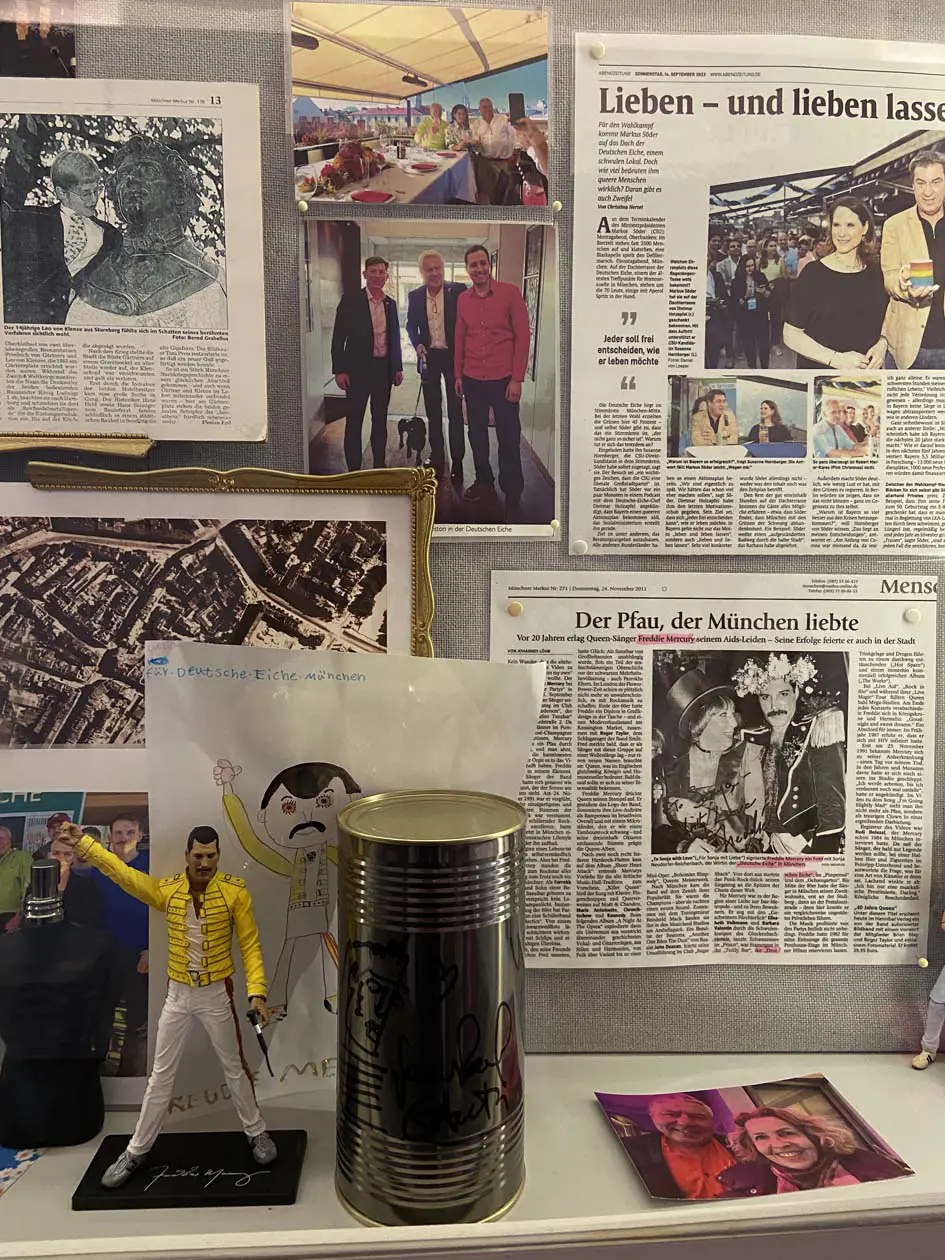
The area’s reputation has long since become legendary. It is no coincidence that Freddie Mercury, frontman of Queen, spent one of the freest periods of his life here during the 1980s, frequenting iconic venues such as the Old Mrs. Henderson – now Paradiso Tanzbar, where he celebrated his 39th birthday and filmed 'Living on My Own', one of his most successful music videos - as well as Deutsche Eiche and Frisco, now Vertigo. It was during those years that he temporarily moved into an apartment in the neighbourhood, at the heart of this vibrant side of Munich’s nightlife, an area that still bears traces of his presence today. This was perhaps one of the happiest chapters of his life, when he was able to live his homosexuality more freely, away from the scrutiny of the British and international press.
Schwabing: Munich’s bohemian quarter
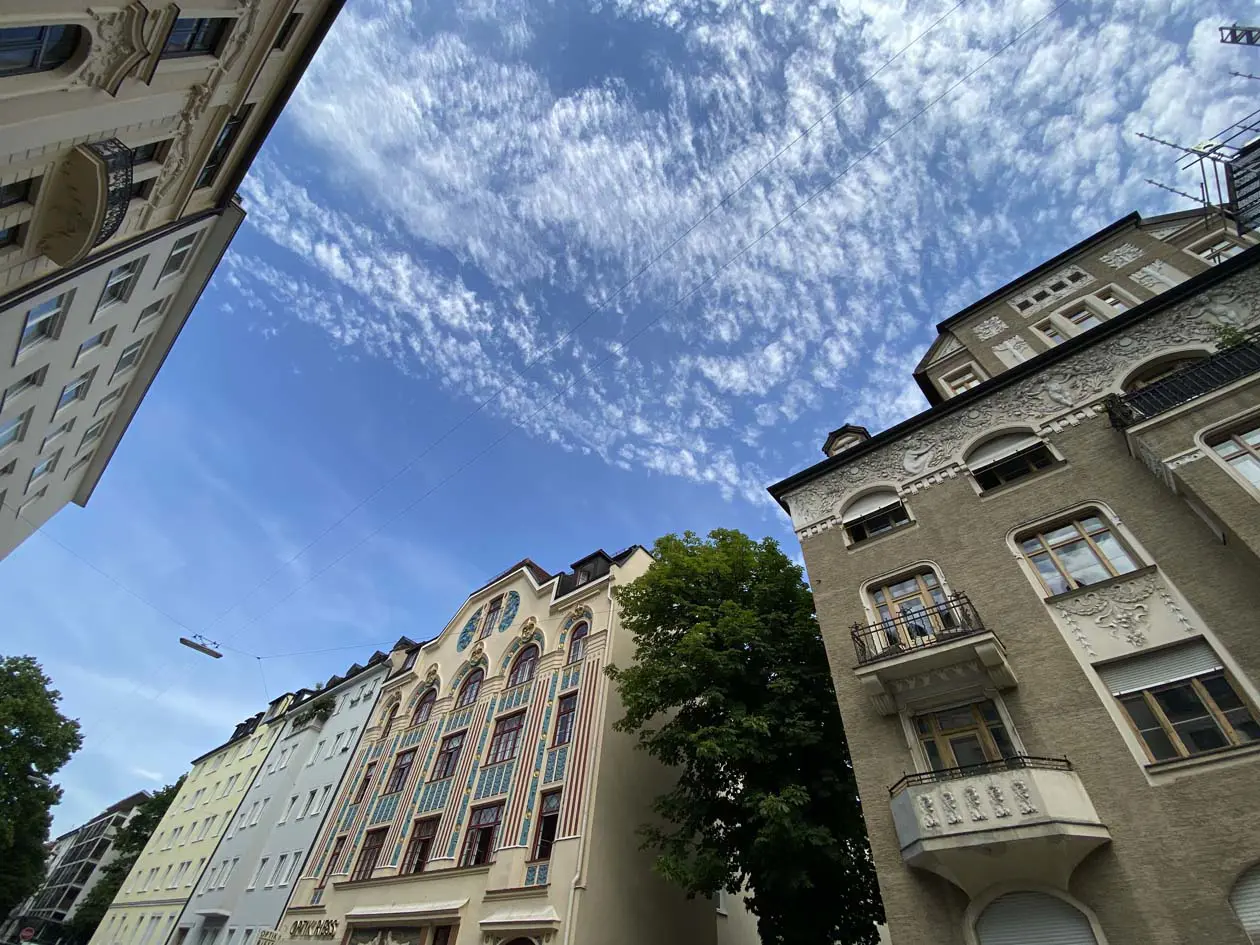
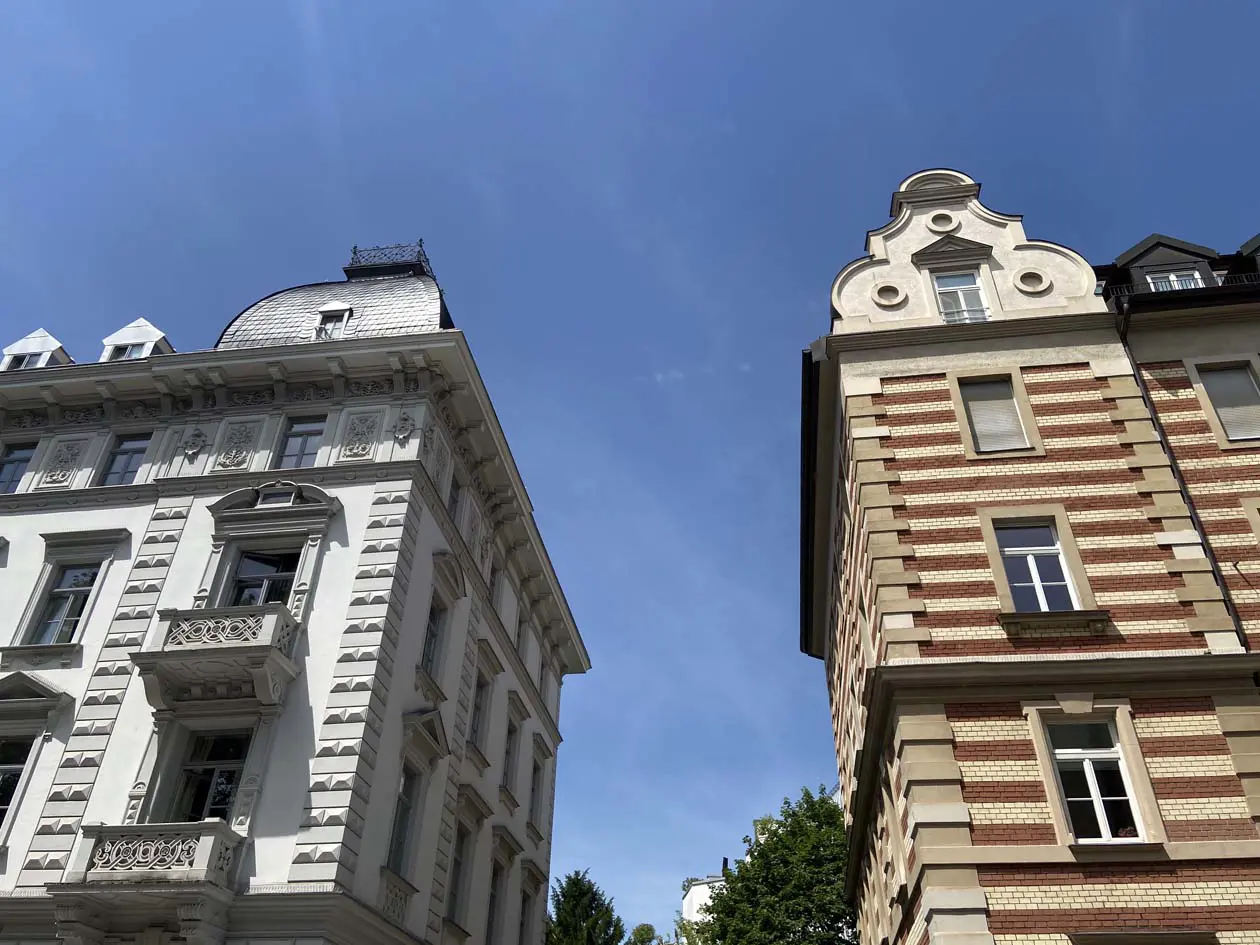
There was a time, around 1900, when Schwabing was not simply a neighbourhood of Munich, but represented a genuine way of life. It was a golden age in which artists, writers and intellectuals were drawn here by the university and the Academy of Fine Arts, transforming these streets into one of Europe’s most vibrant cultural laboratories.
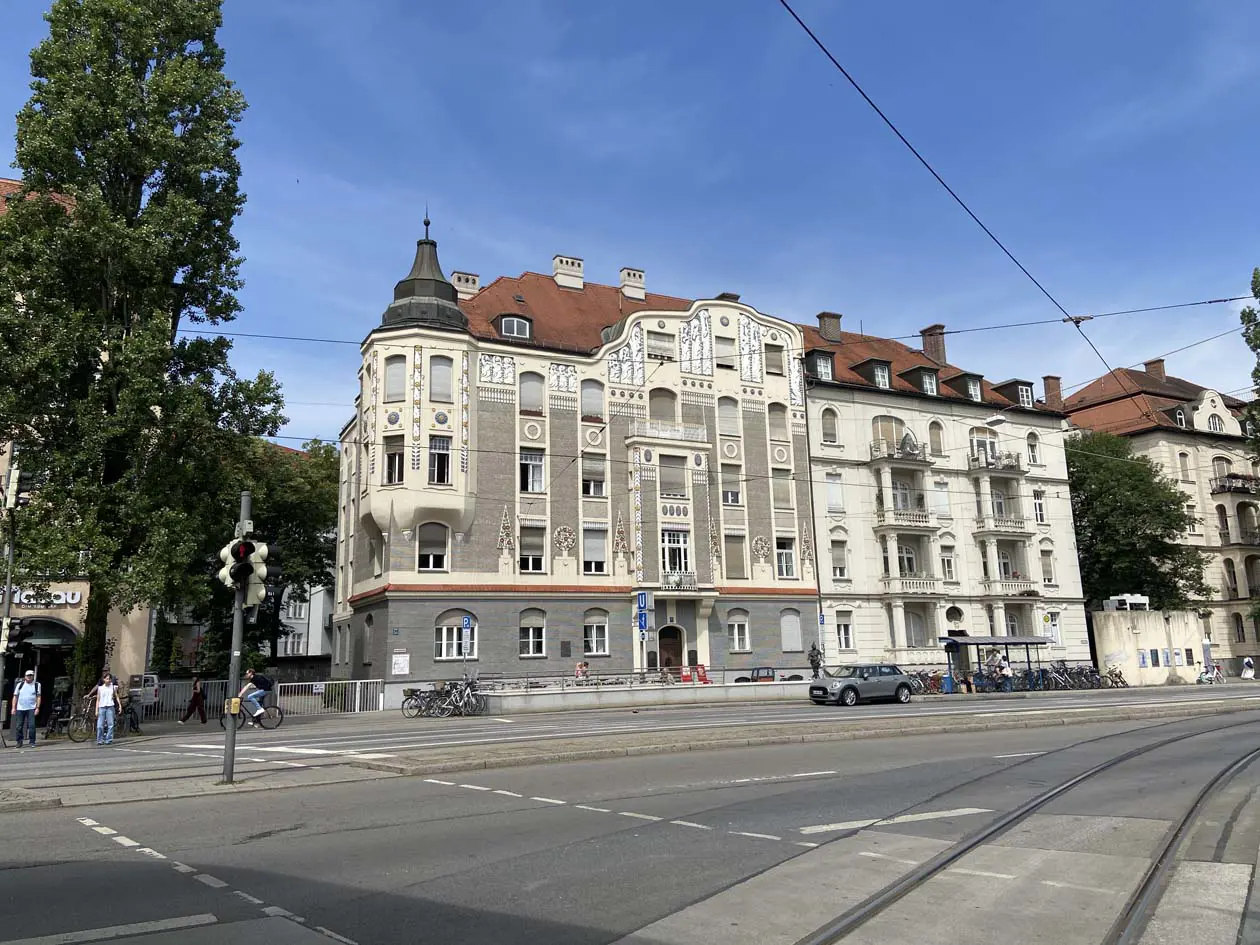
The neighbourhood enjoyed its artistic golden age until the First World War, before becoming associated with resistance to Nazism – commemorated today by the White Rose Memorial at the university and the light installation in Georg-Elser-Platz, which illuminates every evening at 9:20 p.m. After the Second World War, Schwabing underwent reconstruction and later experienced a new revival, with restored Art Nouveau buildings and a renewed role as one of the centres of Munich’s nightlife and cabaret scene. Historic venues such as the Münchner Lach- und Schießgesellschaft are still active today.
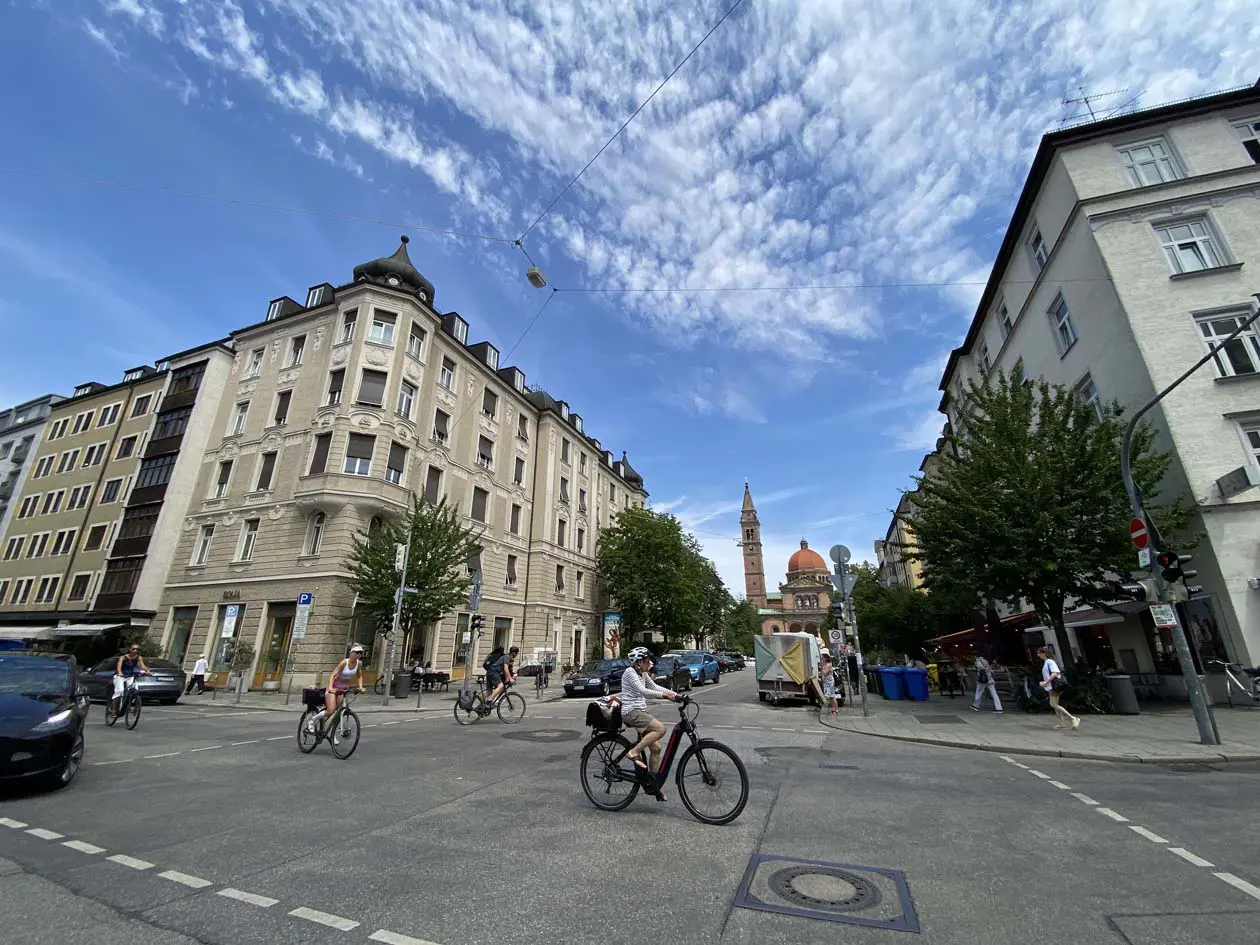
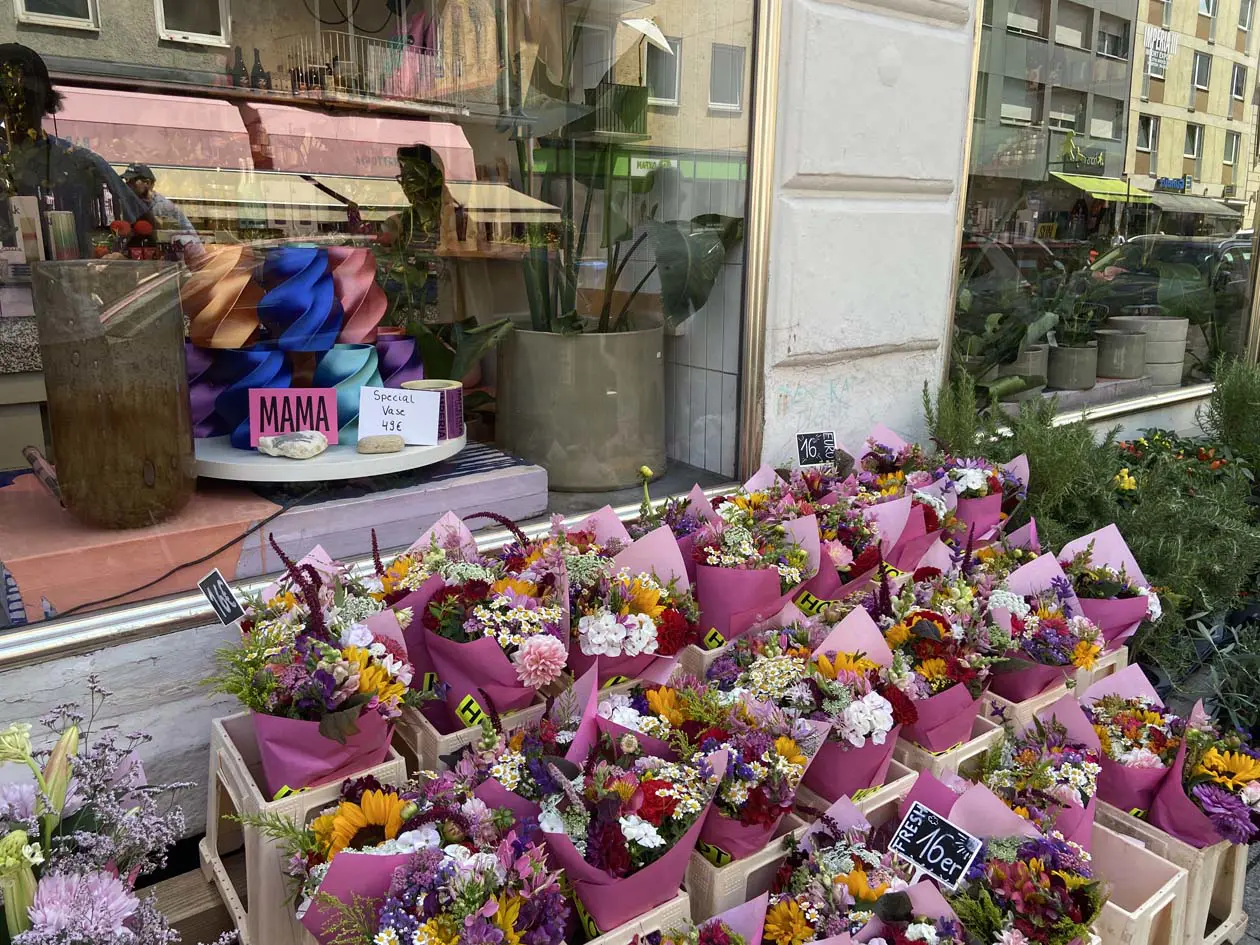
Today, Schwabing is an ideal destination for visitors looking to discover a different side of Munich beyond the historic centre. You can browse bookshops, flower shops and antique stores, try Munich vodka or stop for a cocktail on Occamstrasse. From there, you can stroll towards Wedekind-Platz or, for something more unusual, try Weißwurst-flavoured ice cream on Amalienstrasse.
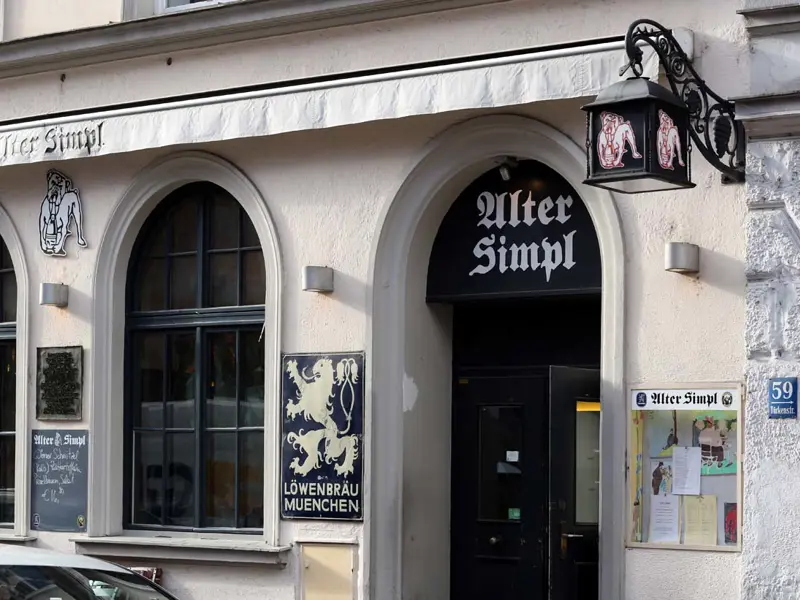
You can also recharge in the greenery of the Englischer Garten (English Garden), one of the largest urban parks in the world. A final must-see stop is Alter Simpl, a historic bohemian venue dating back to the early 20th century, which is still open and popular today.
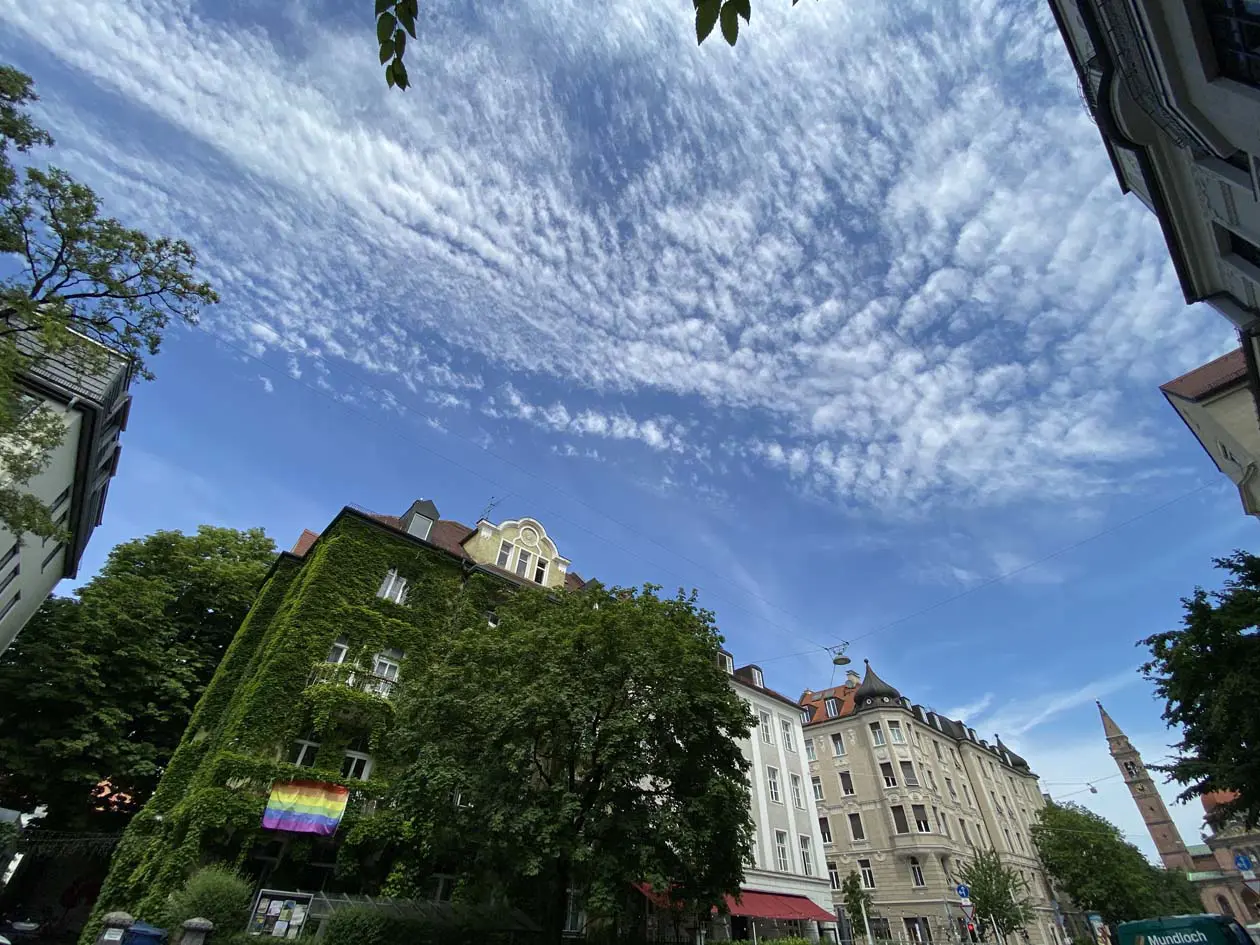
Walking through the streets of Schwabing today, among the cafés and bars around the university, it is still possible to come across places associated with figures who have shaped German cultural history. The district has been home to filmmaker Doris Dörrie, writers Patrick Süskind and Hans Magnus Enzensberger, as well as free thinkers and idealists such as Rainer Langhans, a prominent veteran of Germany’s 1968 protest movement who advocated and practised free love within his commune.
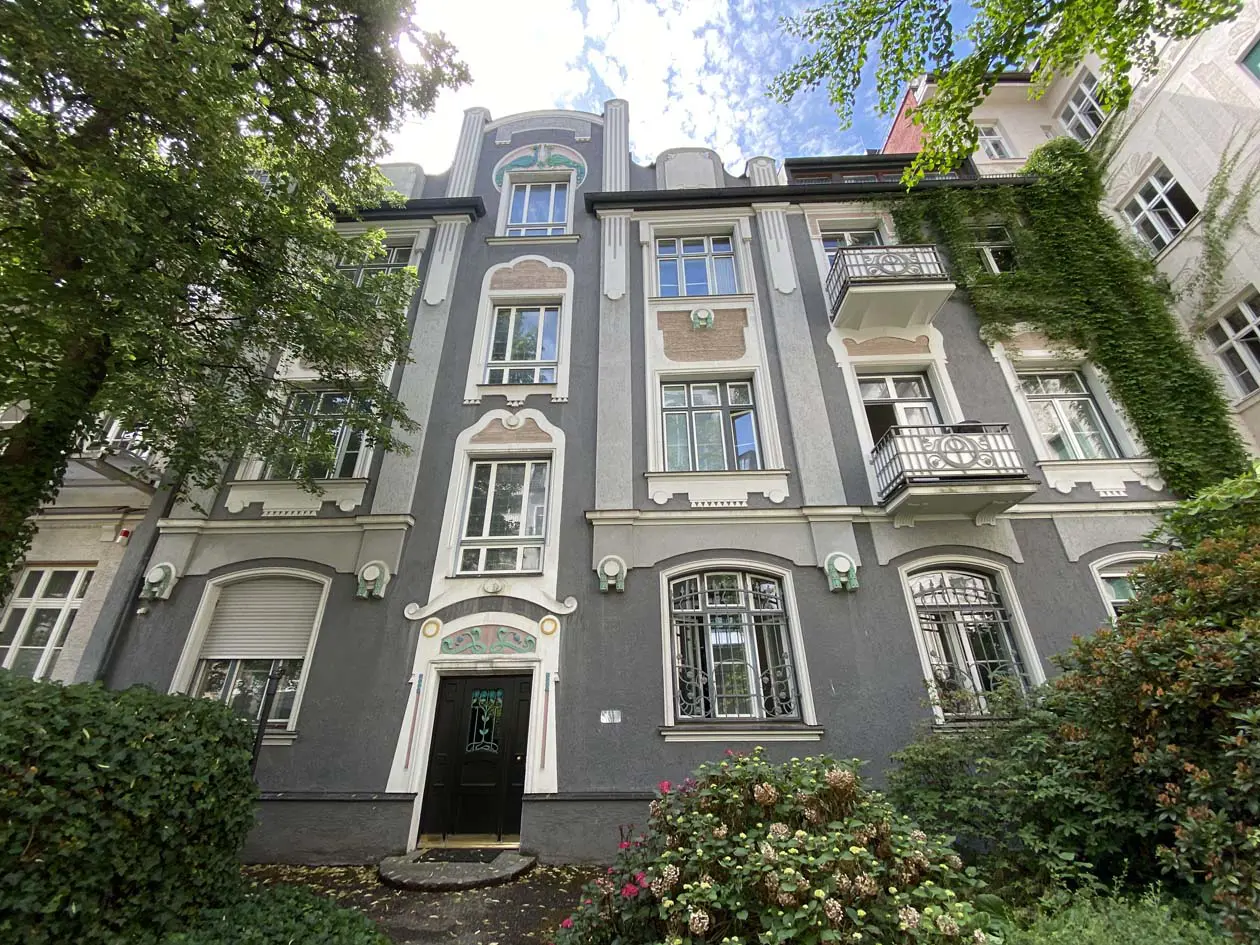
At the beginning of the 20th century, Schwabing was home to critically minded writers such as Erich Mühsam, Stefan George and Frank Wedekind, who lived and worked here for many years. It was no coincidence that this fertile cultural environment also gave rise to the avant-garde artistic movement Der Blaue Reiter (The Blue Rider), which went on to become one of the most influential currents of European Expressionism.
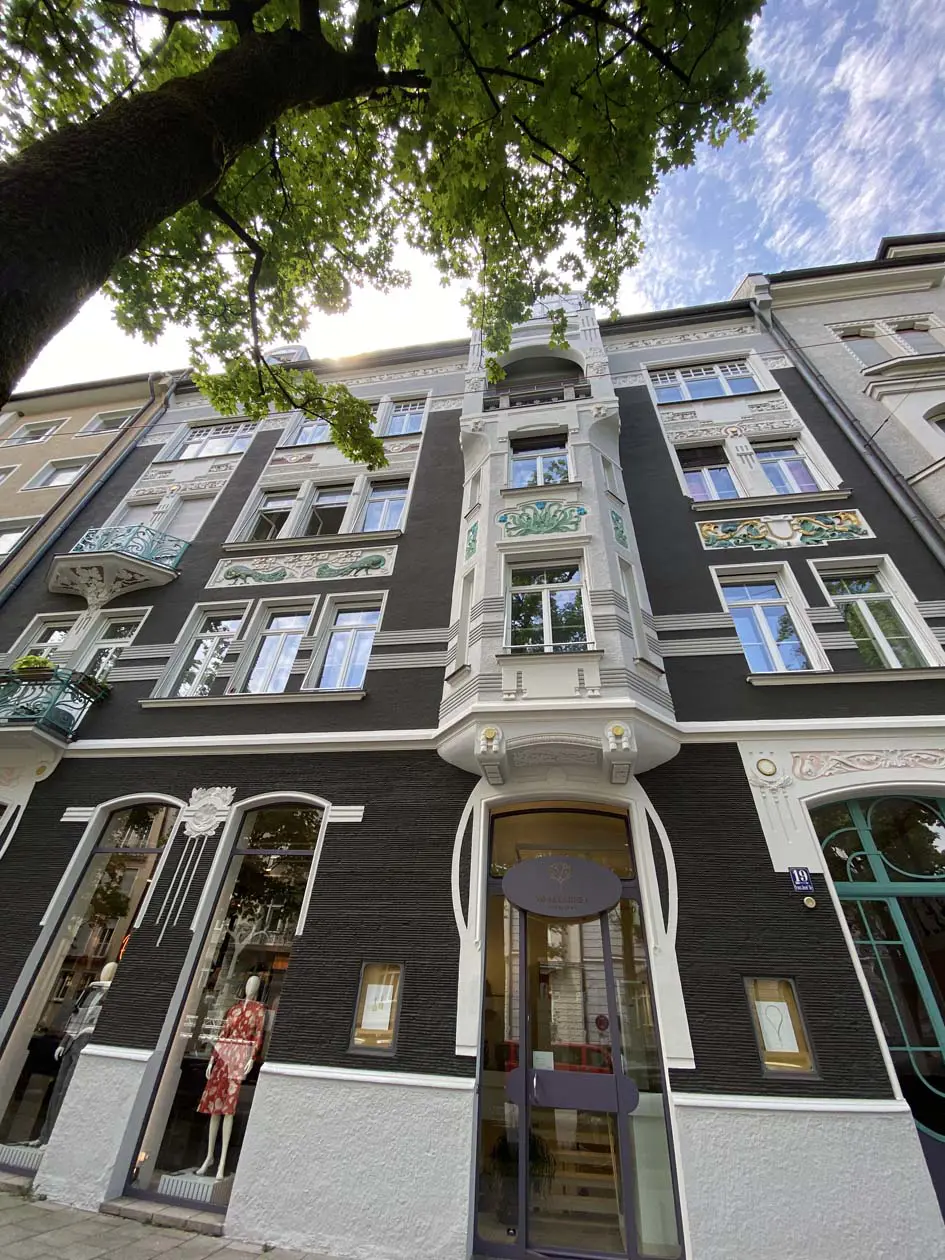
The painter Paul Klee loved organising festivals for artists at his former Suresnes Castle on Werneckstrasse, where he also had his studio. Not far away, on Ainmillerstrasse, other leading figures of the artistic scene also lived: the couple formed by painter Gabriele Münter and Wassily Kandinsky, who painted his first abstract work here, as well as the poet Rainer Maria Rilke and zoologist Marianne Plehn. Within just a few streets, Schwabing thus brought together an extraordinary concentration of creative talent.
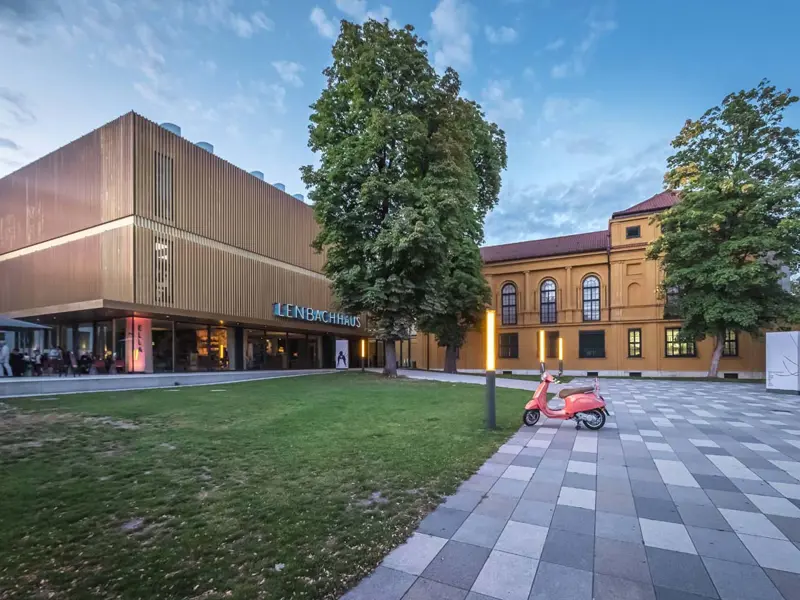
Those who still want to experience that atmosphere today can do so at the Lenbachhaus Museum, home to the world’s largest collection of works by the Der Blaue Reiter movement, as well as numerous paintings by Wassily Kandinsky. This remarkable collection owes much to Gabriele Münter, a member of the artists’ association, who chose to donate part of her artistic estate to the city that had been her creative home for many years.
Werksviertel district
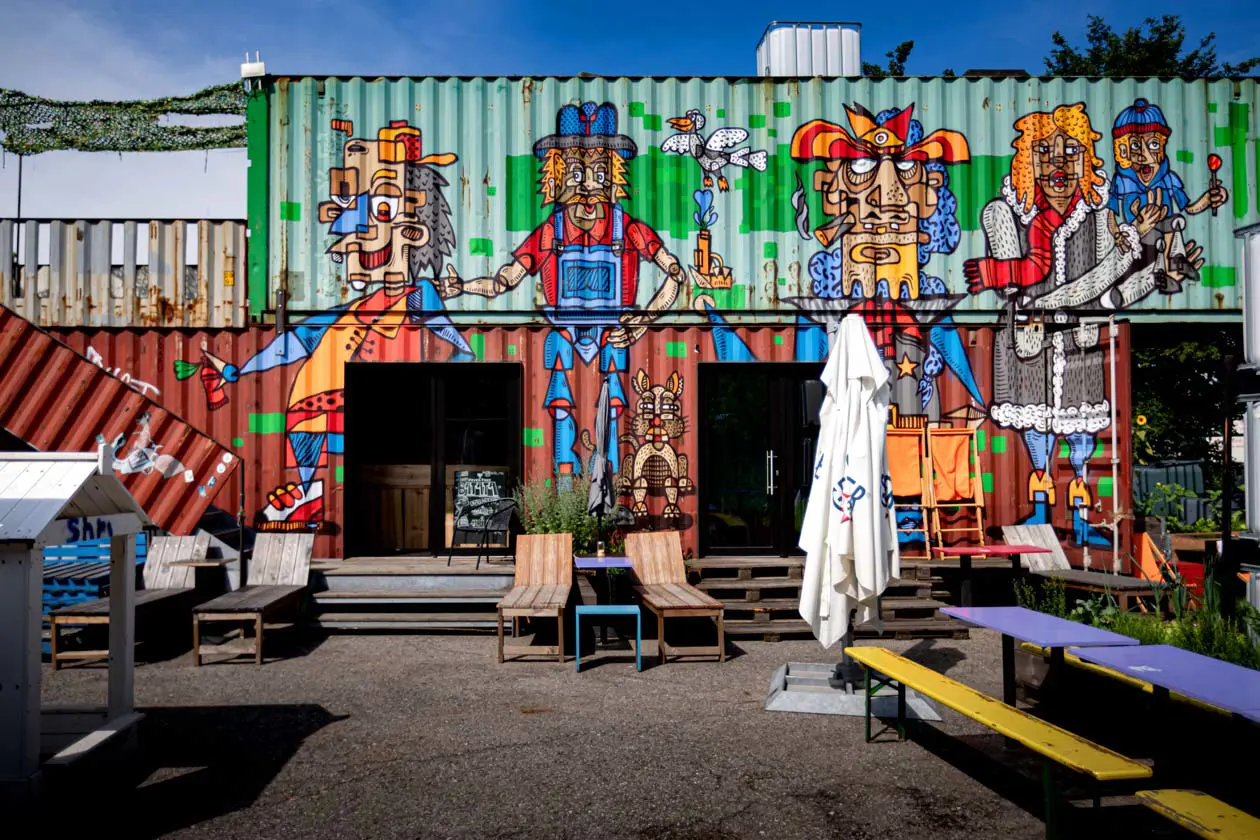
One of Munich’s most dynamic urban areas can be found around Ostbahnhof, the East Station. Once an industrial zone and later a major nightlife district, Werksviertel-Mitte has now evolved into a new creative, cultural and residential neighbourhood. Behind the station, colourful containers, old railway carriages, artists’ studios, small shops, bars and informal spaces still reflect the area’s experimental spirit. Visitors can stop at seating made from pallets, enjoy a coffee, beer or glass of wine, while families, creatives, students and curious travellers mingle in a district that offers a less conventional side of Munich.
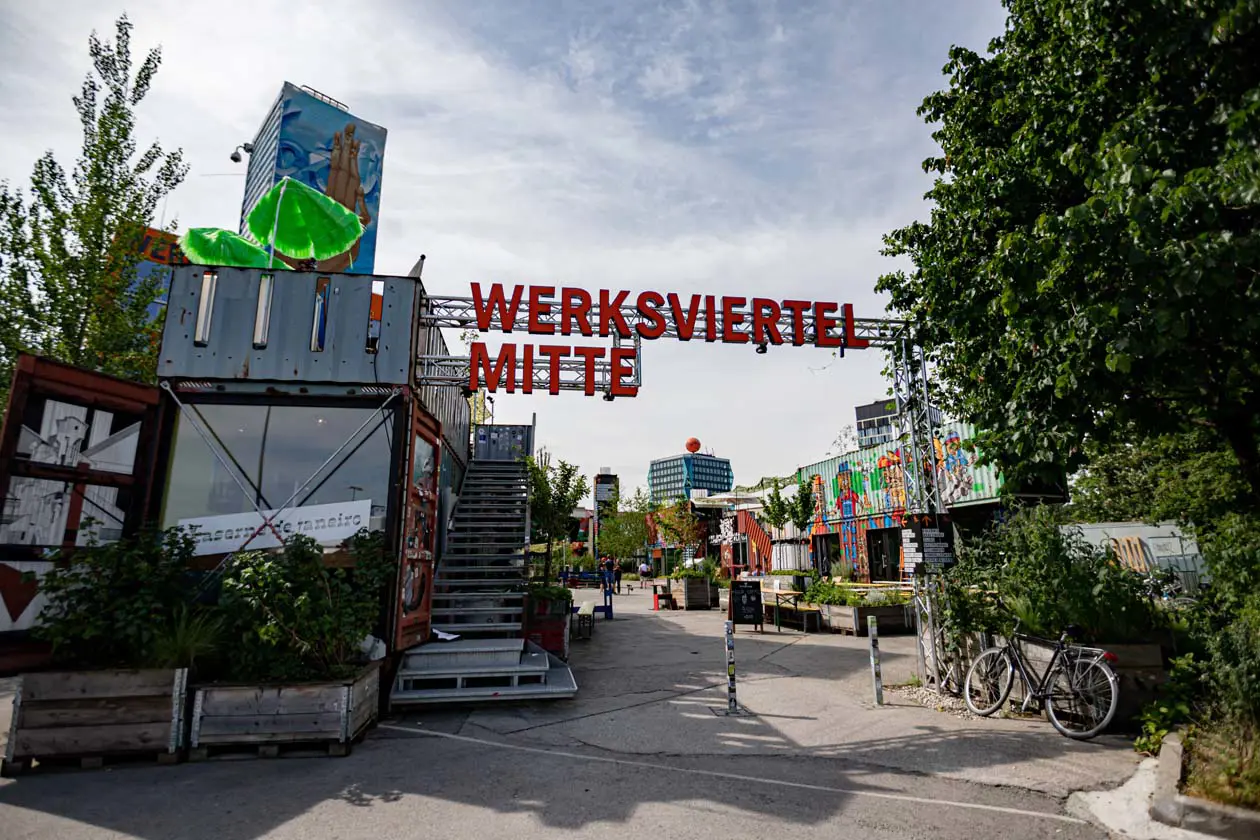
The appeal of Werksviertel-Mitte also lies in its industrial heritage. The Werksviertel area was developed mainly on the former site of the Pfanni factories. The railway tracks still embedded in the ground are a reminder of that manufacturing past. Today, some of them are even used to move large flower containers around the district, giving a new function to one of the most visible traces of the site’s industrial history.
After the factories closed, from the mid-1990s onwards the district was transformed into a major entertainment hub, with nightclubs, clubs, bars, amusement venues and artists’ studios. By the early 2000s, the area had become famous as one of the largest nightlife districts in Europe.
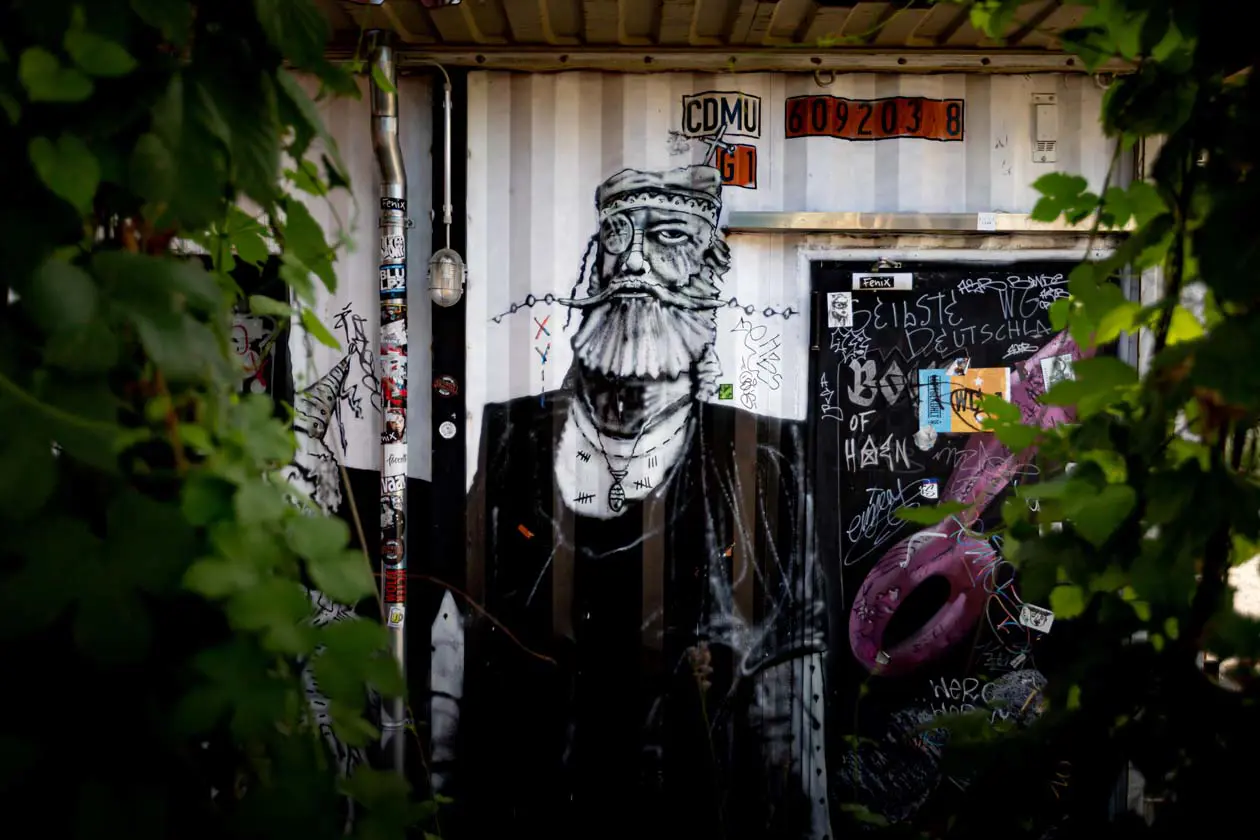
Today, that chapter has given way to a new-generation urban development project. Since 2012, the Werksviertel-Mitte masterplan has aimed to transform the former industrial area into a neighbourhood of the future, preserving its strong presence of start-ups, creatives and cultural activities while adding new residential spaces, offices, services and venues for performances and live music.
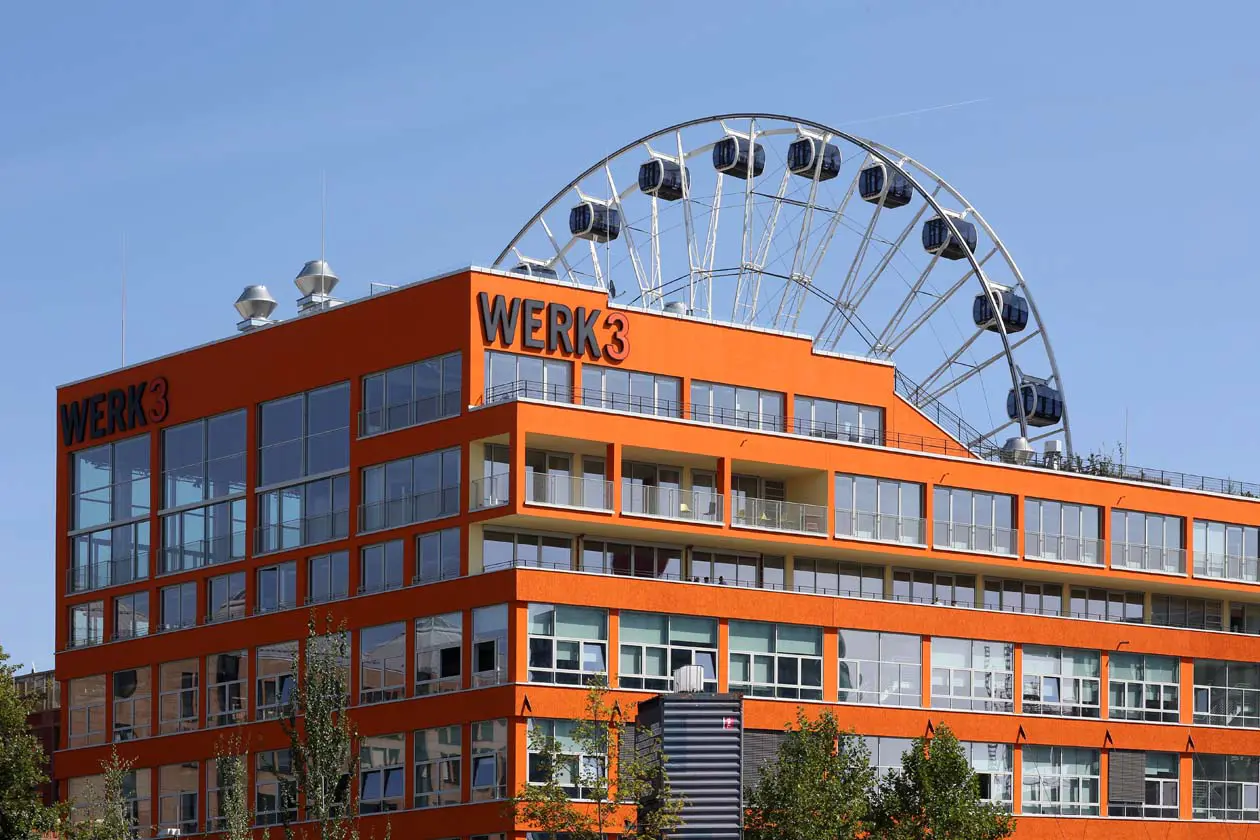
Among the most important projects is the future concert hall for the Bavarian Radio Symphony Orchestra, set to become a new cultural landmark for the district. Around it, theatres, cinemas, event venues and new spaces dedicated to creativity are also taking shape. Near München Ost station, the area has also been home since 2019 to Umadum München, one of the world’s largest transportable observation wheels. Visitors can step into one of its 27 cabins and enjoy panoramic views over Munich from above.
Finally, an interesting detail: an authentic wooden mountain chalet has been built on the roof of the Werk 3 building, surrounded by a meadow and an urban vegetable garden. A small flock of sheep also lives there, while several beehives produce honey.
Text by Angela Trivigno, Avion Tourism Magazine
Photos: Copyright © Avion Tourism Magazine / Sisterscom.com
Photos: Copyright © München Tourismus, photo credits in the caption.
Tourism Board
www.munich.travel / www.germany.travel
Partnership with Travelpayouts
Where to sleep in Munich
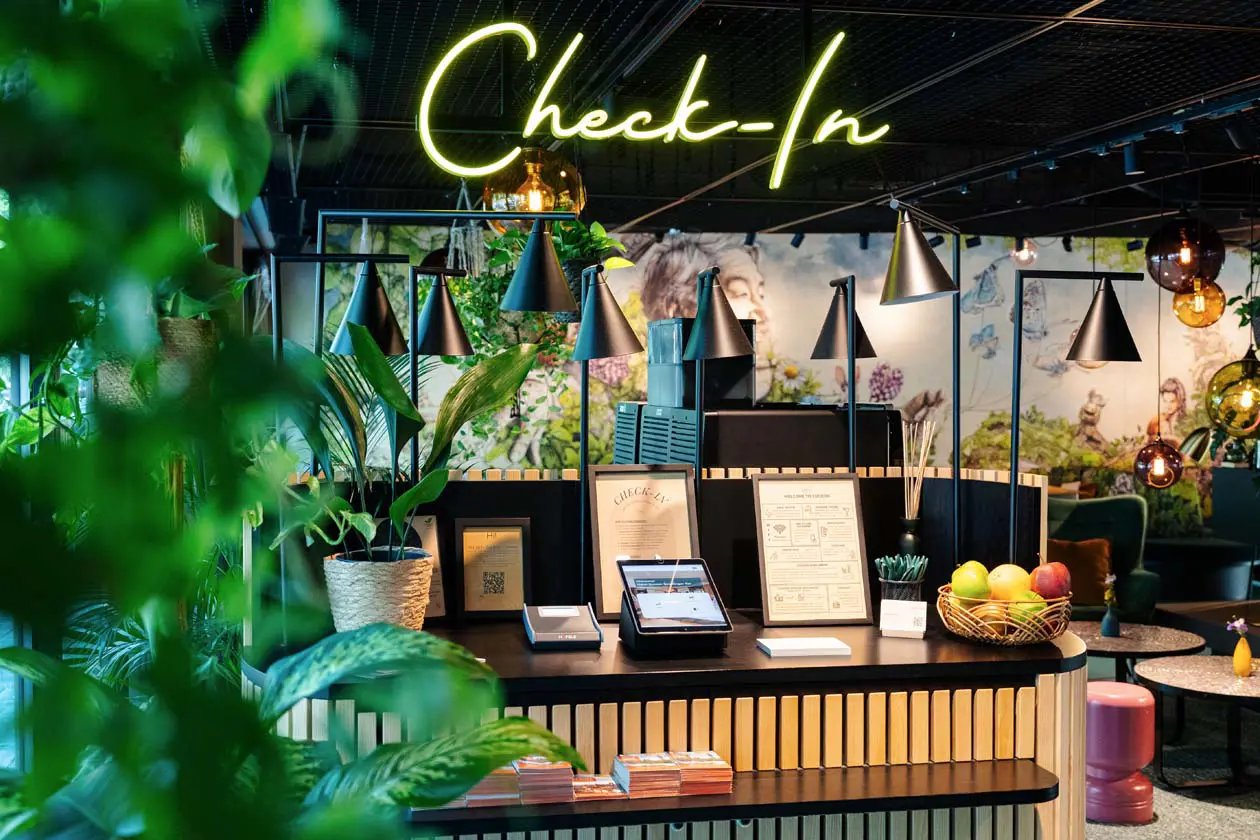
Munich is a welcoming city and offers a variety of accommodation options with every comfort. To find the ideal hotel and the best deals, you can search by star rating, neighborhoods, or landmarks.
B&B AND HOUSES
REGION / COUNTRY
Hotels in the region and country


KUNSTAREAL ART DISTRICT
AND VISIT TO MUSEUMS
The Kunstareal is the cultural heart of Munich, a district where art is not only visited in museums, but can be breathed by walking from one square to another. In a few blocks there are art galleries, galleries, collections, universities and spaces dedicated to creativity, in a continuous dialogue between ancient masterpieces, modern art, design, architecture and contemporary research. Munich's Museum Quarter is also nestled in the lively Maxvorstradt university district with boutiques, inns, taverns and cafes where you can stop for a break.
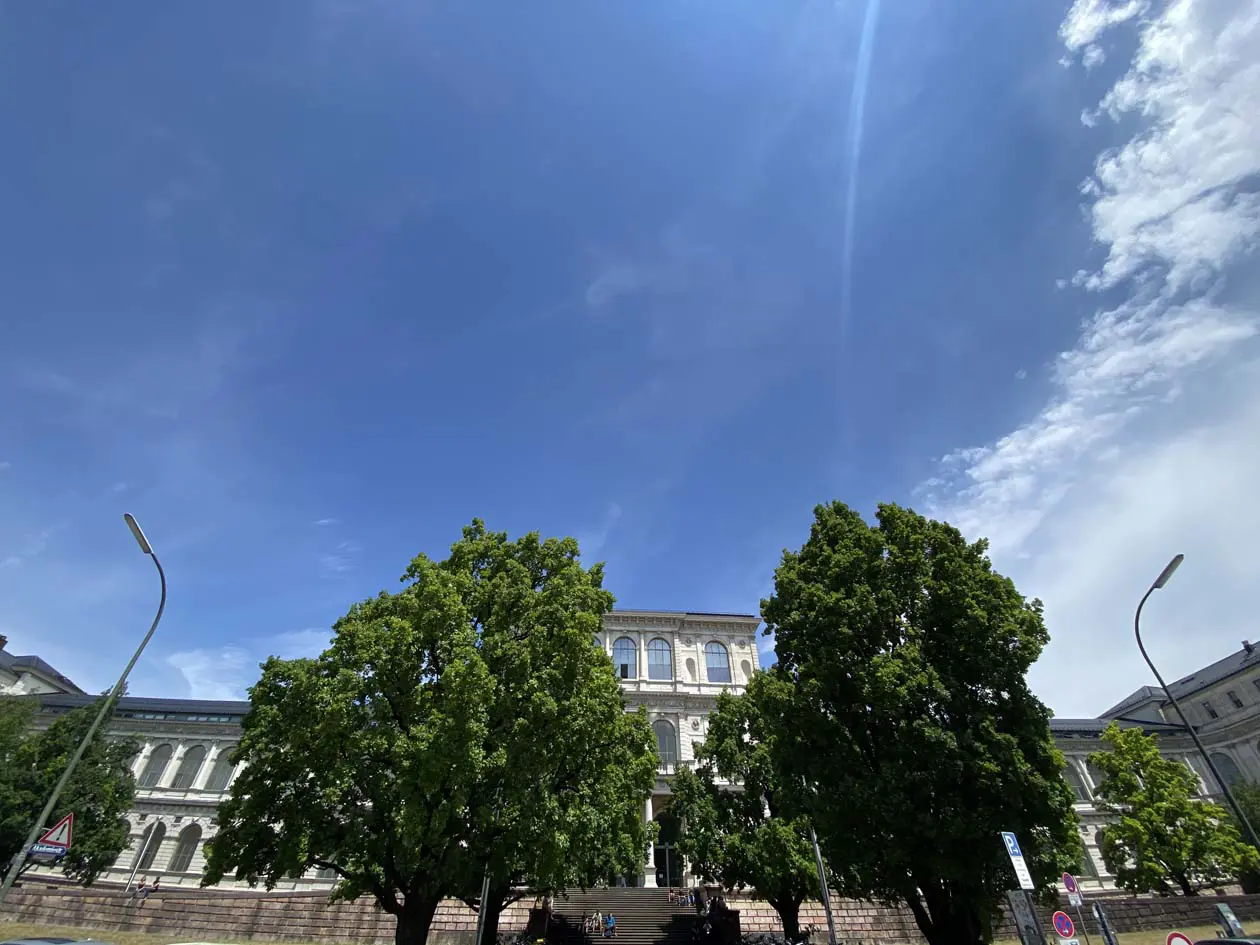
It is an ideal place to discover a more cultured and surprising Monaco, far from the most predictable itineraries. Here time slows down between exhibition halls, courtyards, bookstores and large museum buildings, offering the visitor a journey of discovery through centuries of beauty, ideas and experimentation.
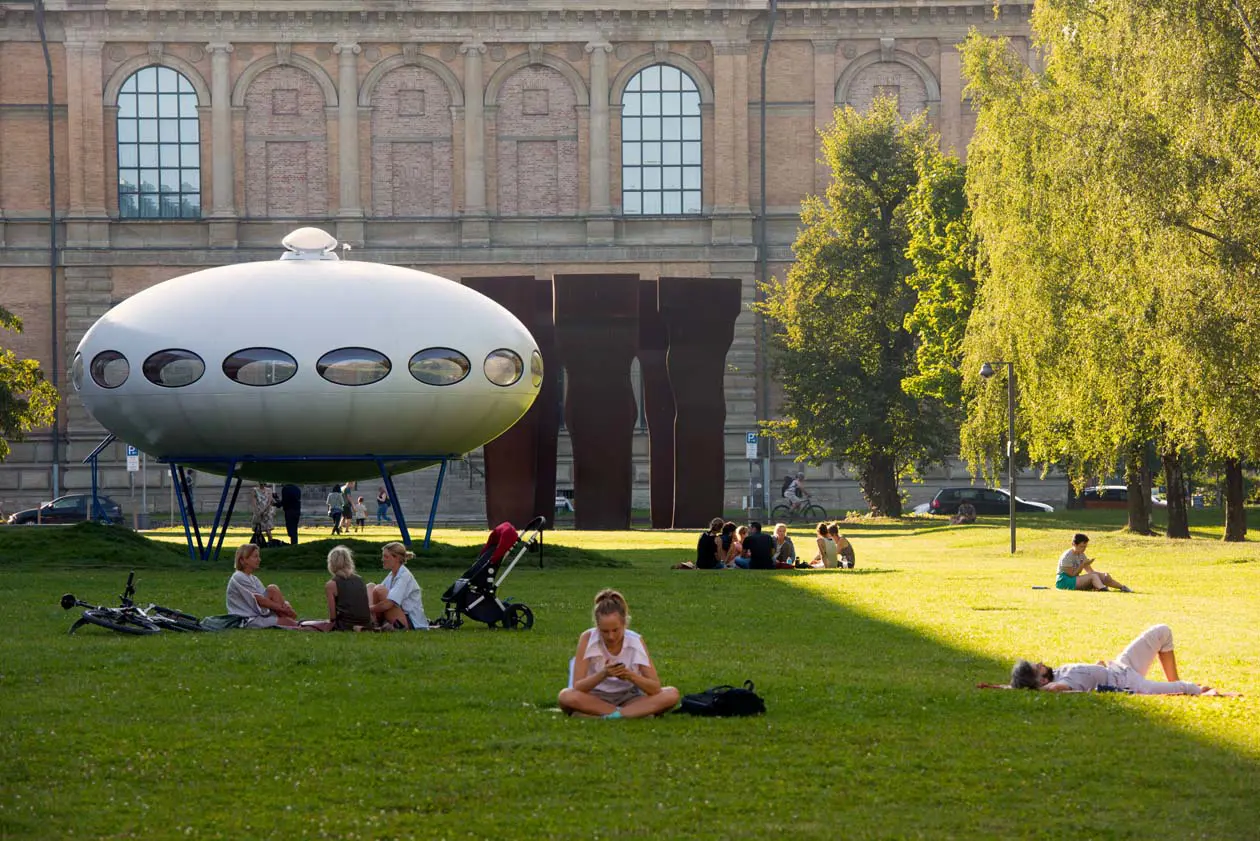
The Kunstareal München now brings together 18 museums and exhibition centres, over 40 galleries, six universities and numerous cultural institutions, making it one of the main centres of art, culture and knowledge in Munich.
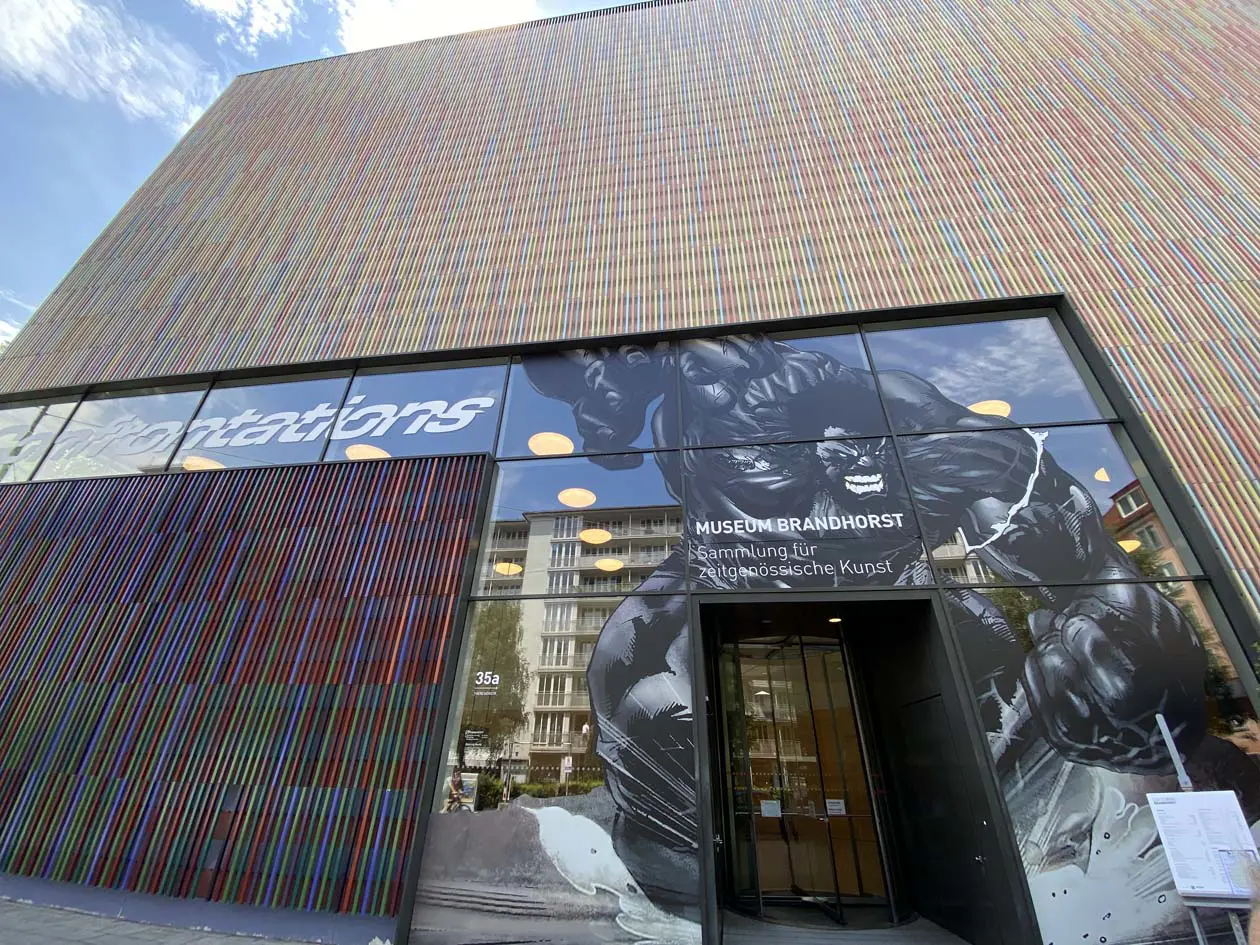
Museums in the Kunstareal district in Munich
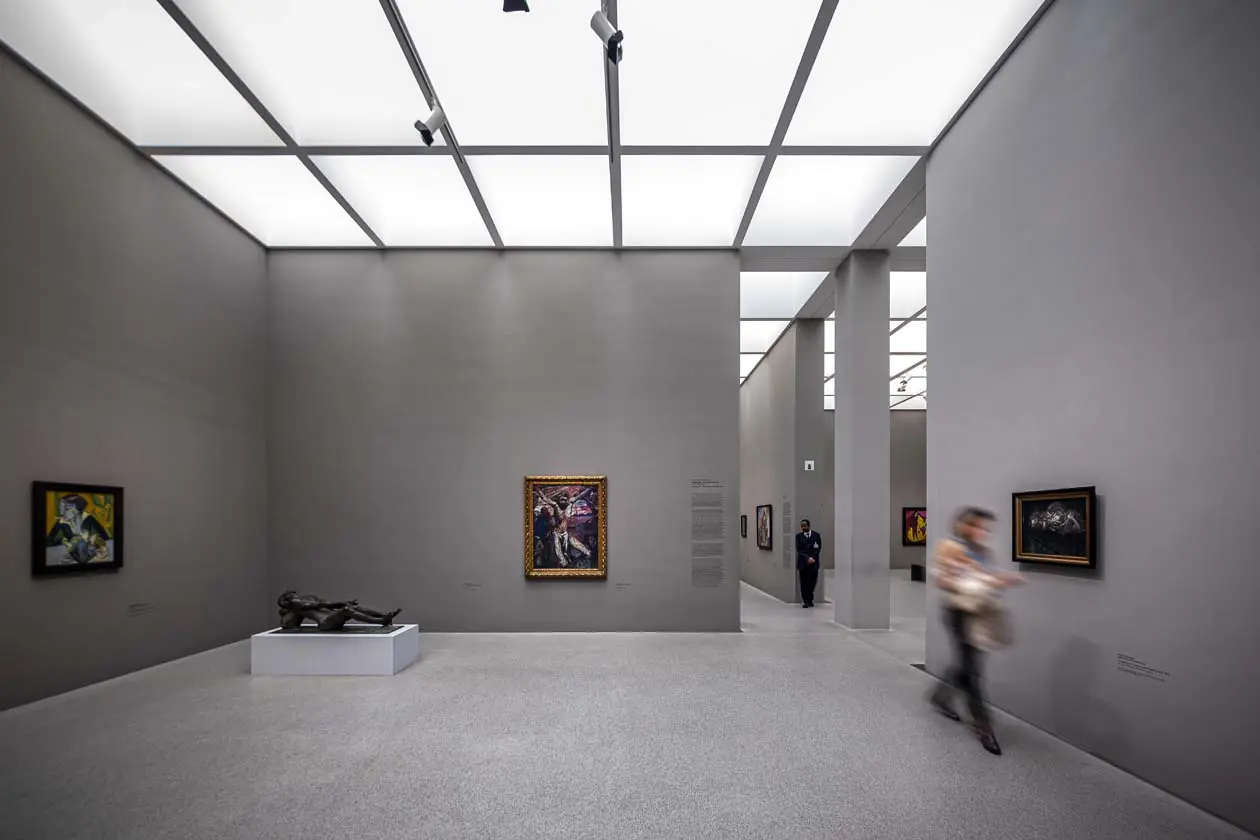
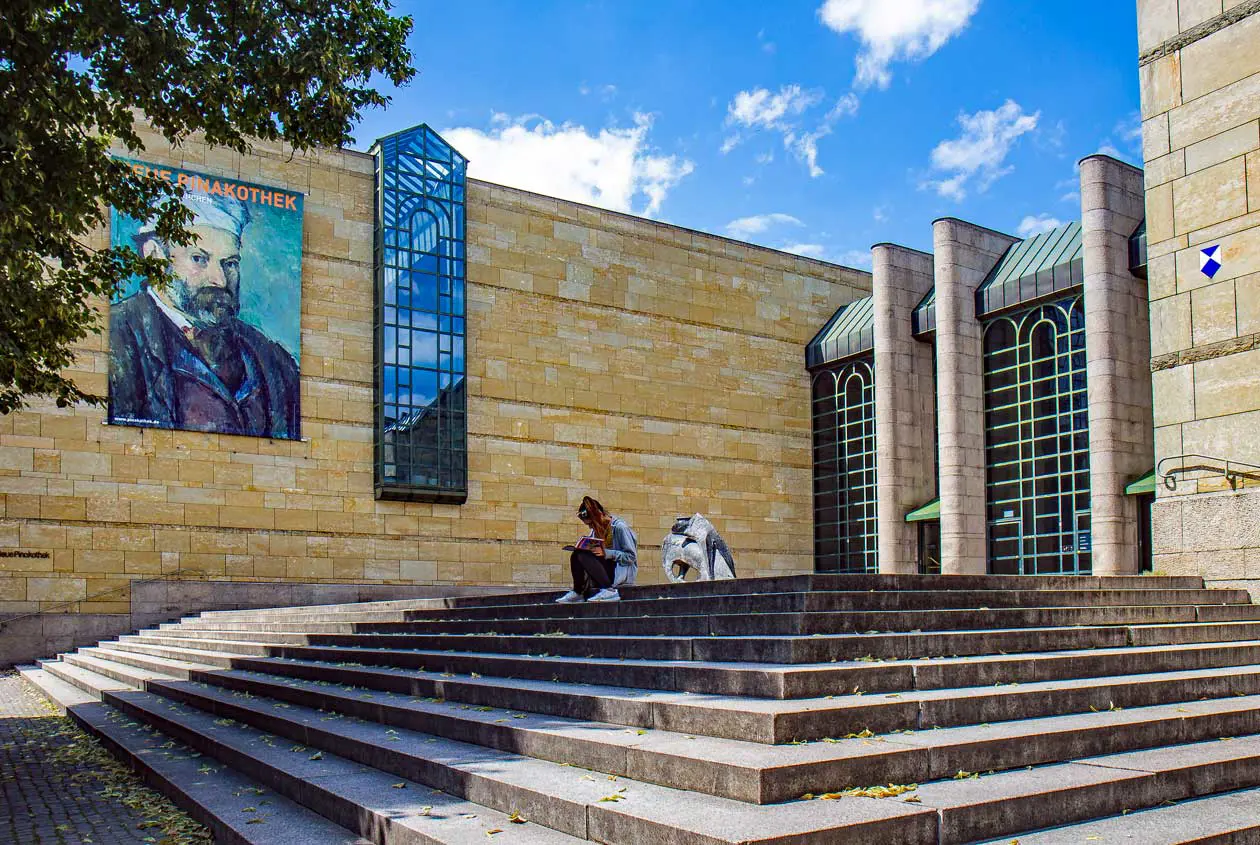
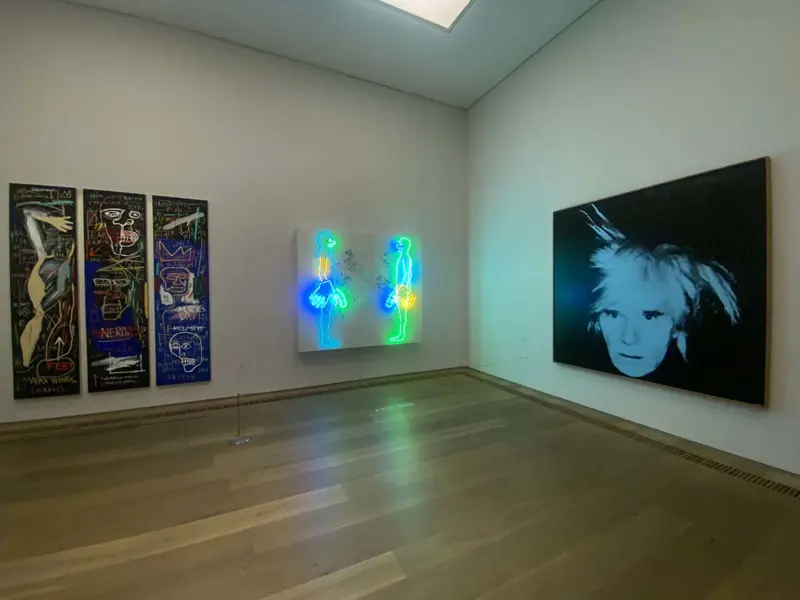
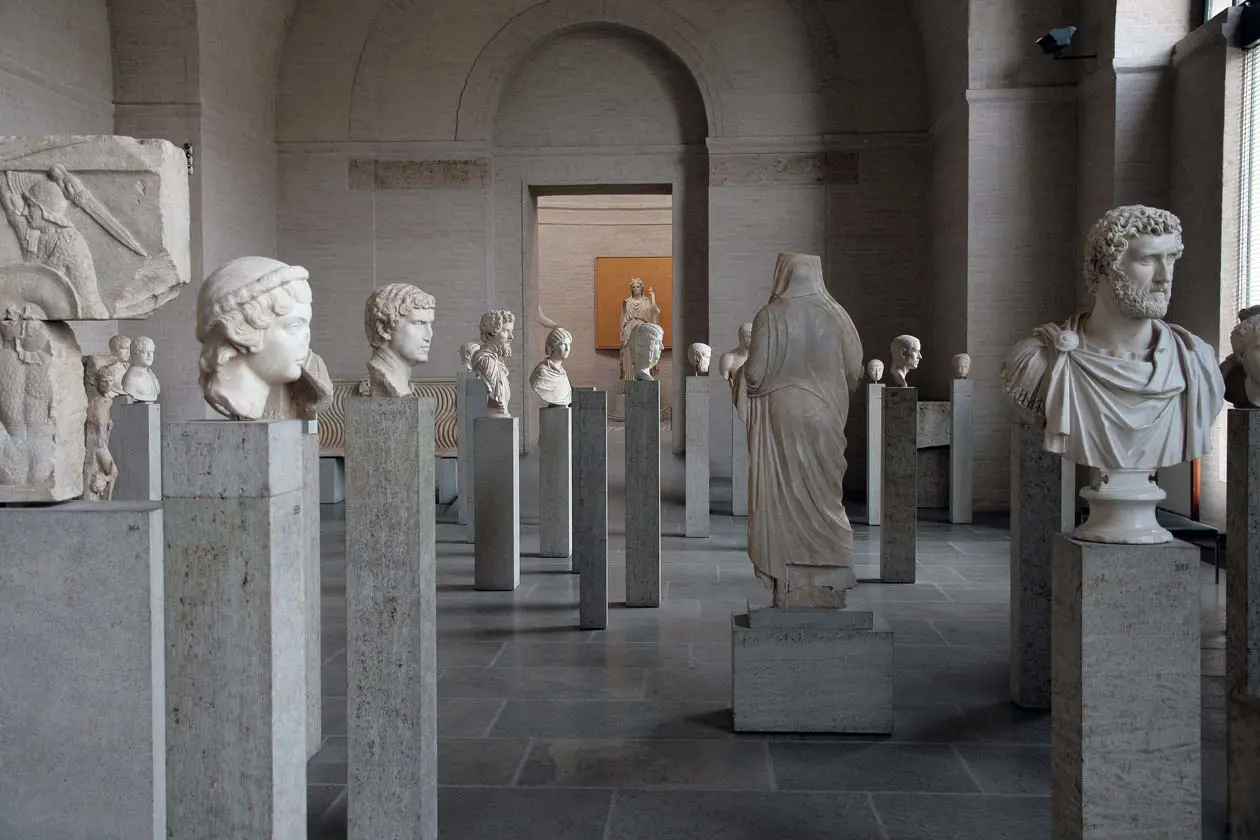
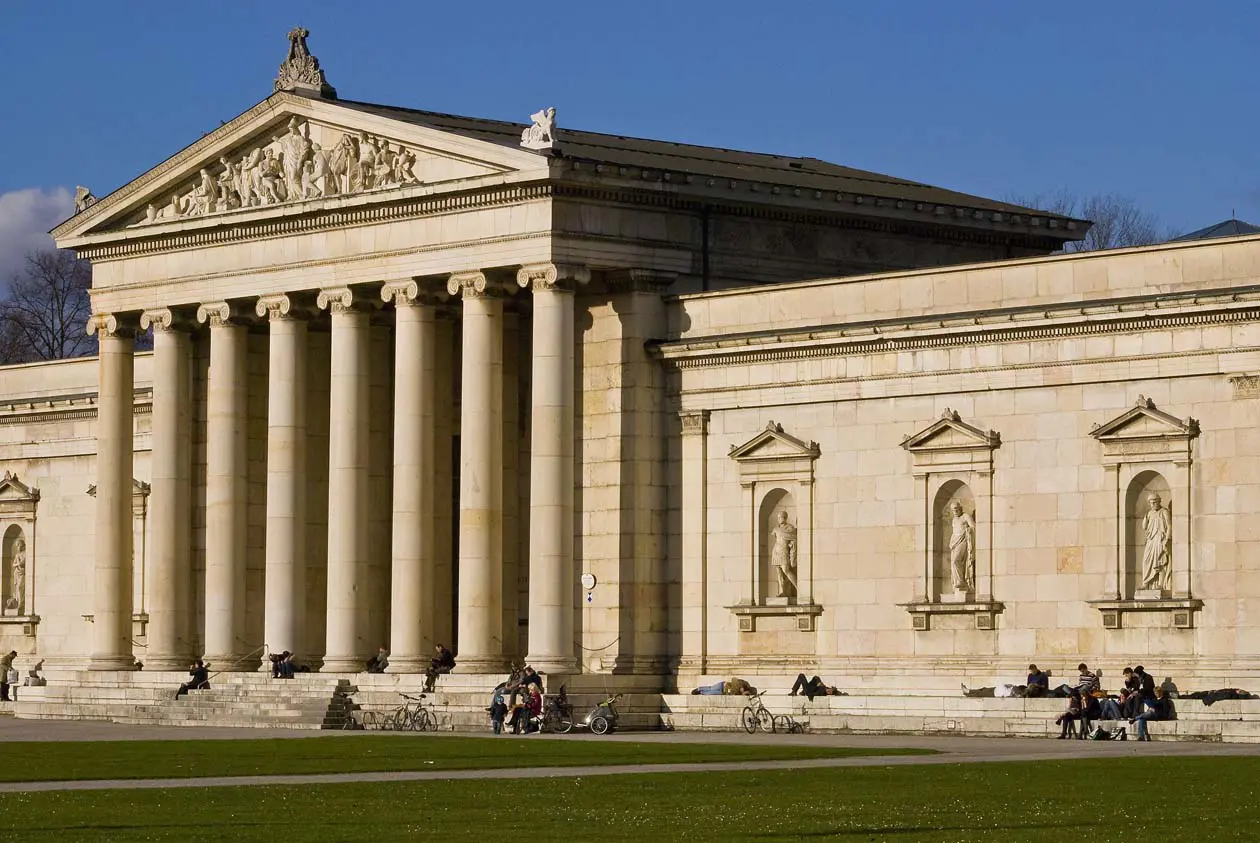
Among the main museums to visit in Munich in the Kunstareal district are: the Neue Pinakothek, the Pinakothek der Moderne, the Städtische Galerie im Lenbachhaus, Museum Brandhorst, Glyptothek, the State Collection of Classical Antiquities (Staatliche Antikensammlung), the NS Documentation Center (NS-Dokumentationszentrum) and the Egyptian Museum in Munich (Staatliches Museum Ägyptischer Kunst).
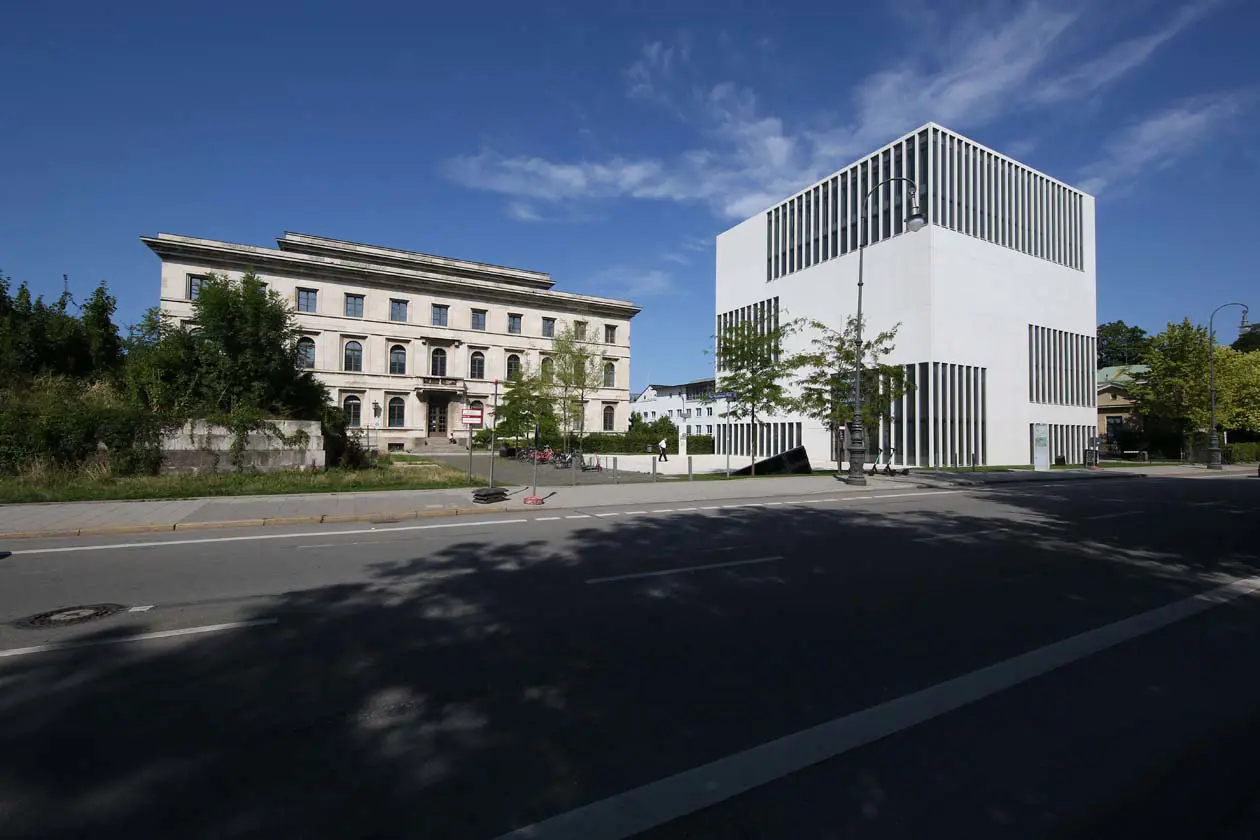
NS-Dokumentationszentrum
The NS Documentation Centre is located in the former headquarters of the National Socialist Party. The interesting permanent exhibition "Munich and National Socialism" presents images, documents and multimedia installations, offering a glimpse into the history of the city and Bavaria between the First and Second World Wars.
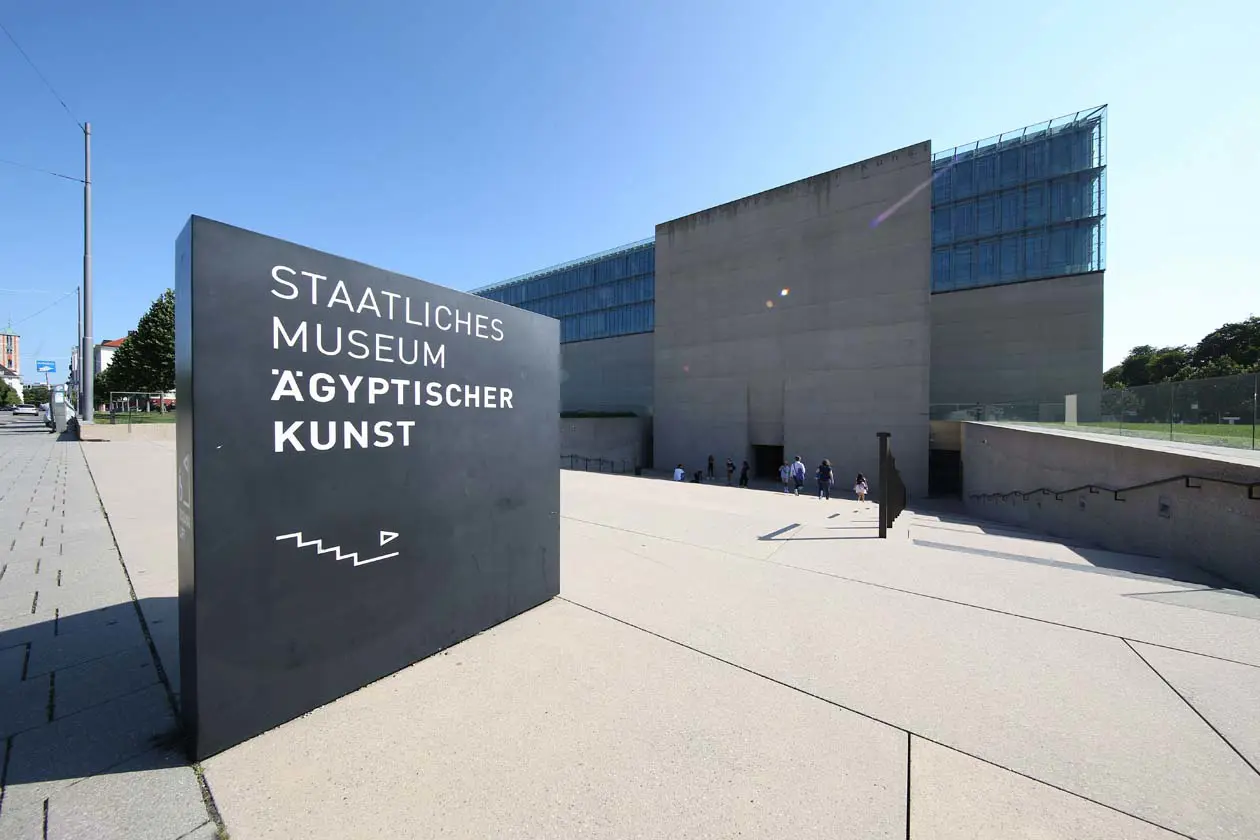
Egyptian Museum Munich
The Staatliches Museum Ägyptischer Kunst tells 5,000 years of Egyptian art and culture in its underground rooms. It is the only museum outside Egypt dedicated only to artifacts from ancient Egypt. The collection includes artifacts from all eras of ancient Egypt, up to the Coptic Christian culture as well as archaeological evidence.