Keith Haring in Rome: over 140 works at Palazzo Braschi between street art, music and civil commitment
Rome dedicates a major exhibition to Keith Haring, one of the most recognizable protagonists of art of the second half of the twentieth century. Until April 11, 2027, the Museum of Rome at Palazzo Braschi hosts an itinerary with over 140 works and materials, mostly from the Nakamura Keith Haring Collection, flanked by important public and private loans. The exhibition, open from October 6, 2026, is curated by Kaoru Yanase, Ilaria Miarelli Mariani and Claudio Zambianchi.
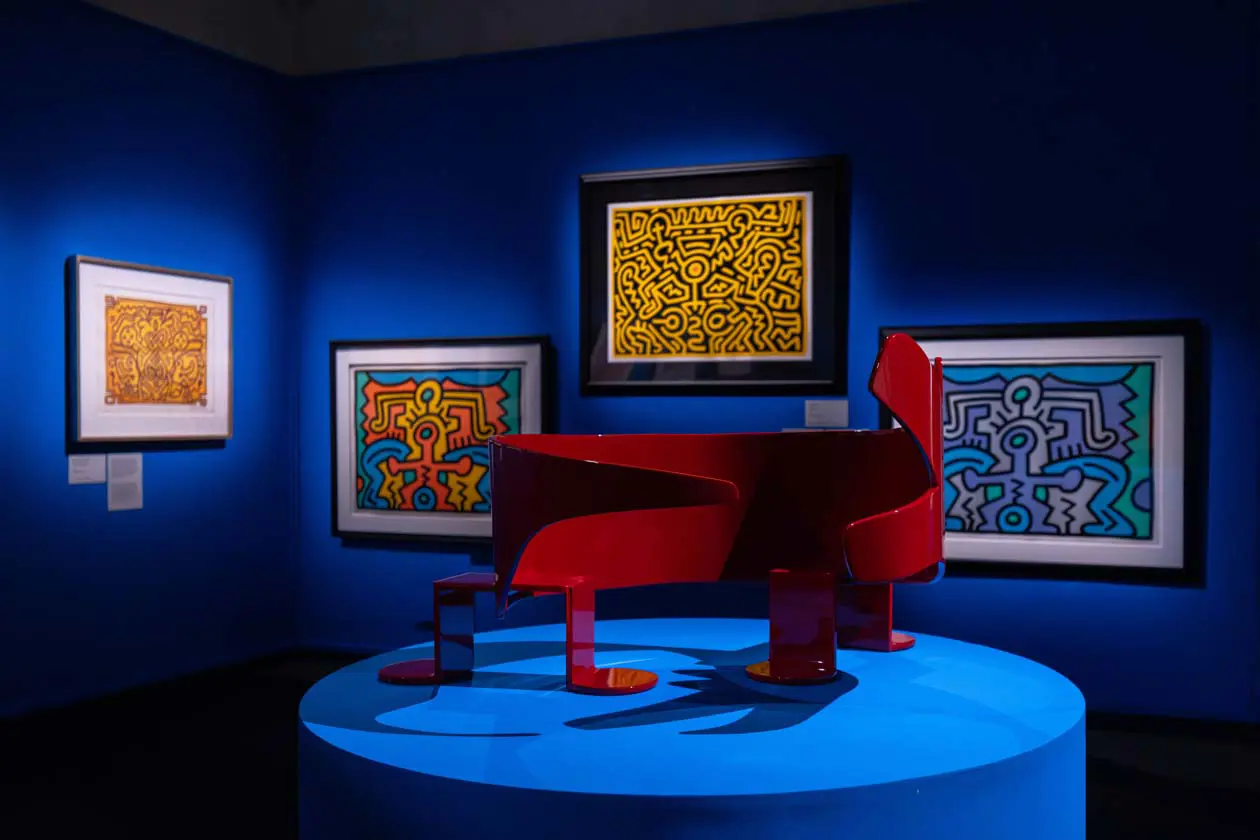
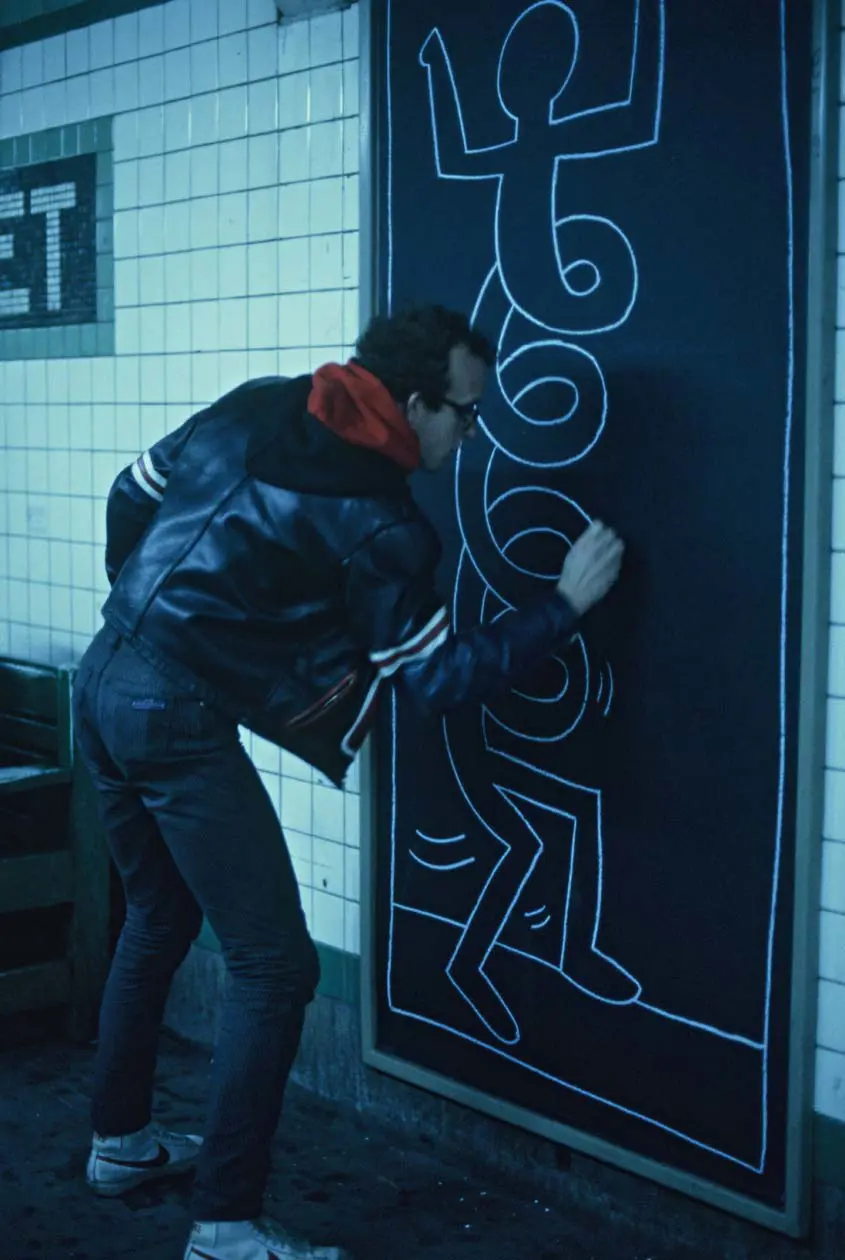
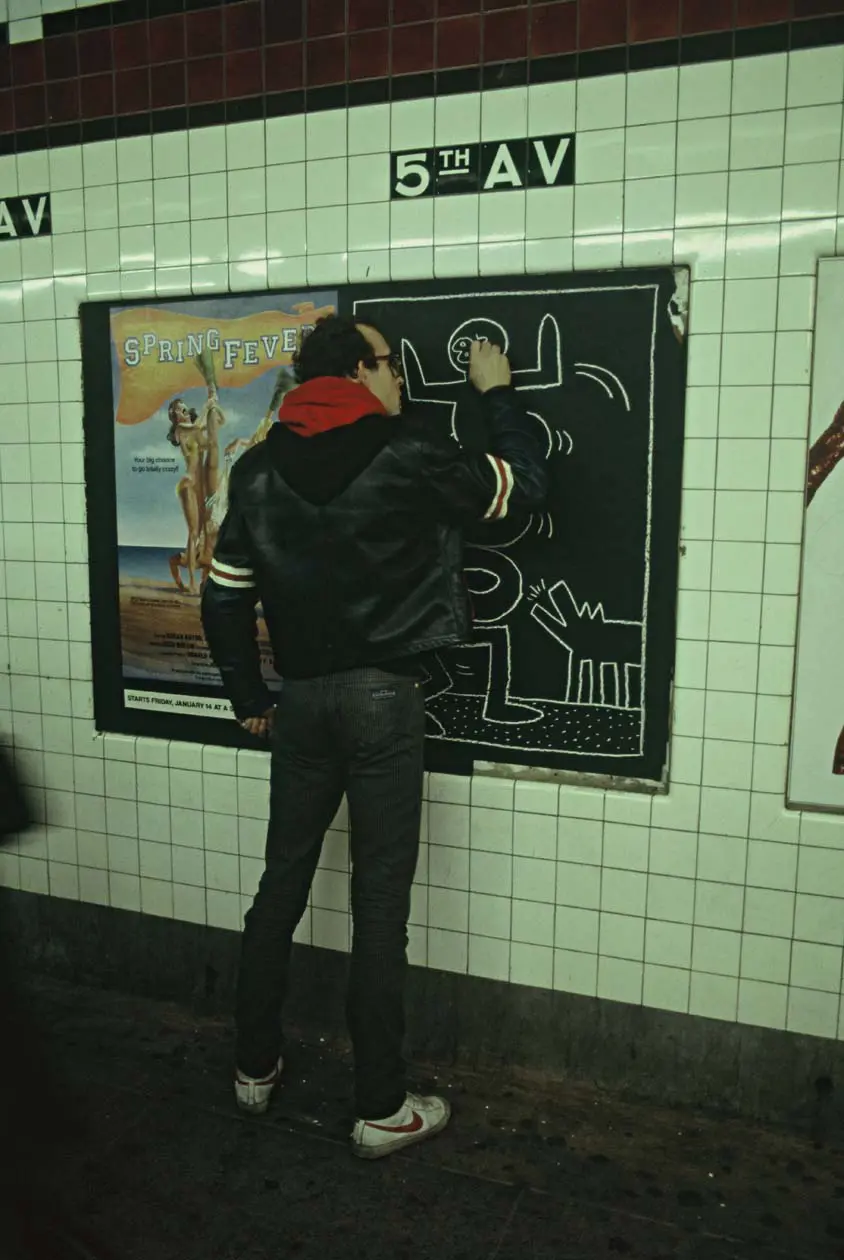
Prints, drawings, works on paper, posters, sculptures and objects tell the evolution of a visual language capable of passing from the New York subway to international museums without losing its immediacy. Among the most significant nuclei are the famous Subway Drawings, made in chalk on the unused advertising panels of the New York subway, and the spray-painted panels in 1984 along Manhattan's FDR Drive.
From the New York subway to a language recognizable all over the world
The exhibition starts from the origins of Keith Haring's work in New York in the eighties, where street art, hip-hop, club culture and activism were redefining the relationship between art and public space. For Haring, the city became a place of communication from the very beginning. The figures traced with a few sharp and dynamic lines on the subway panels were designed to be seen every day by thousands of people, far from the traditional circuits of galleries.
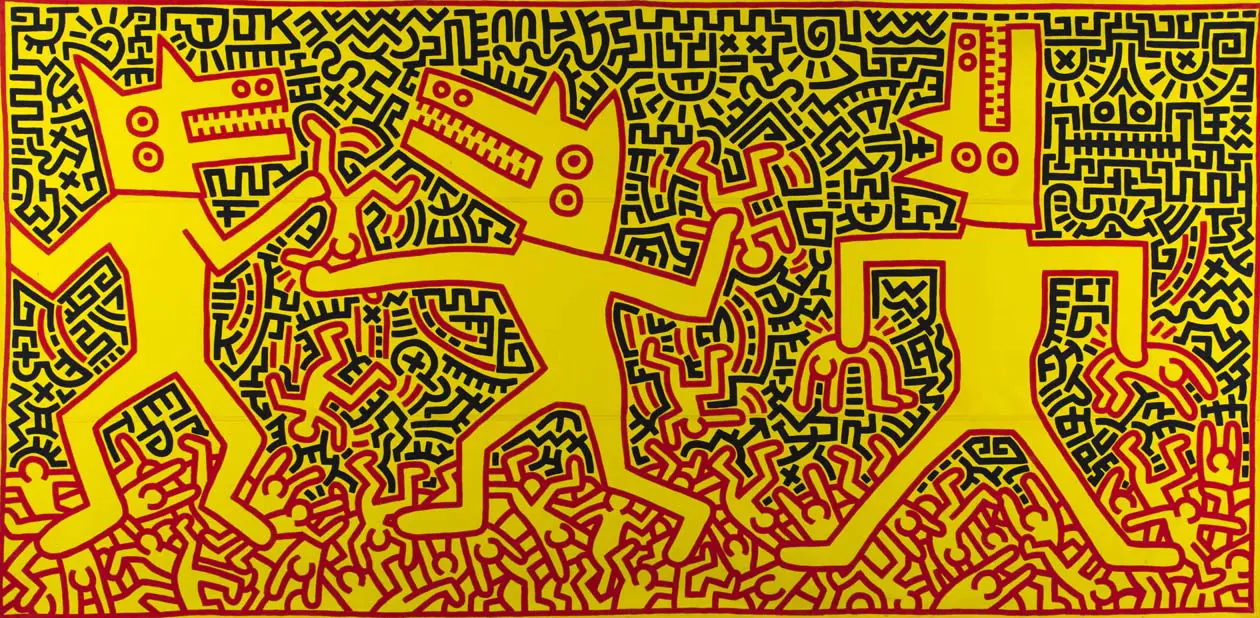
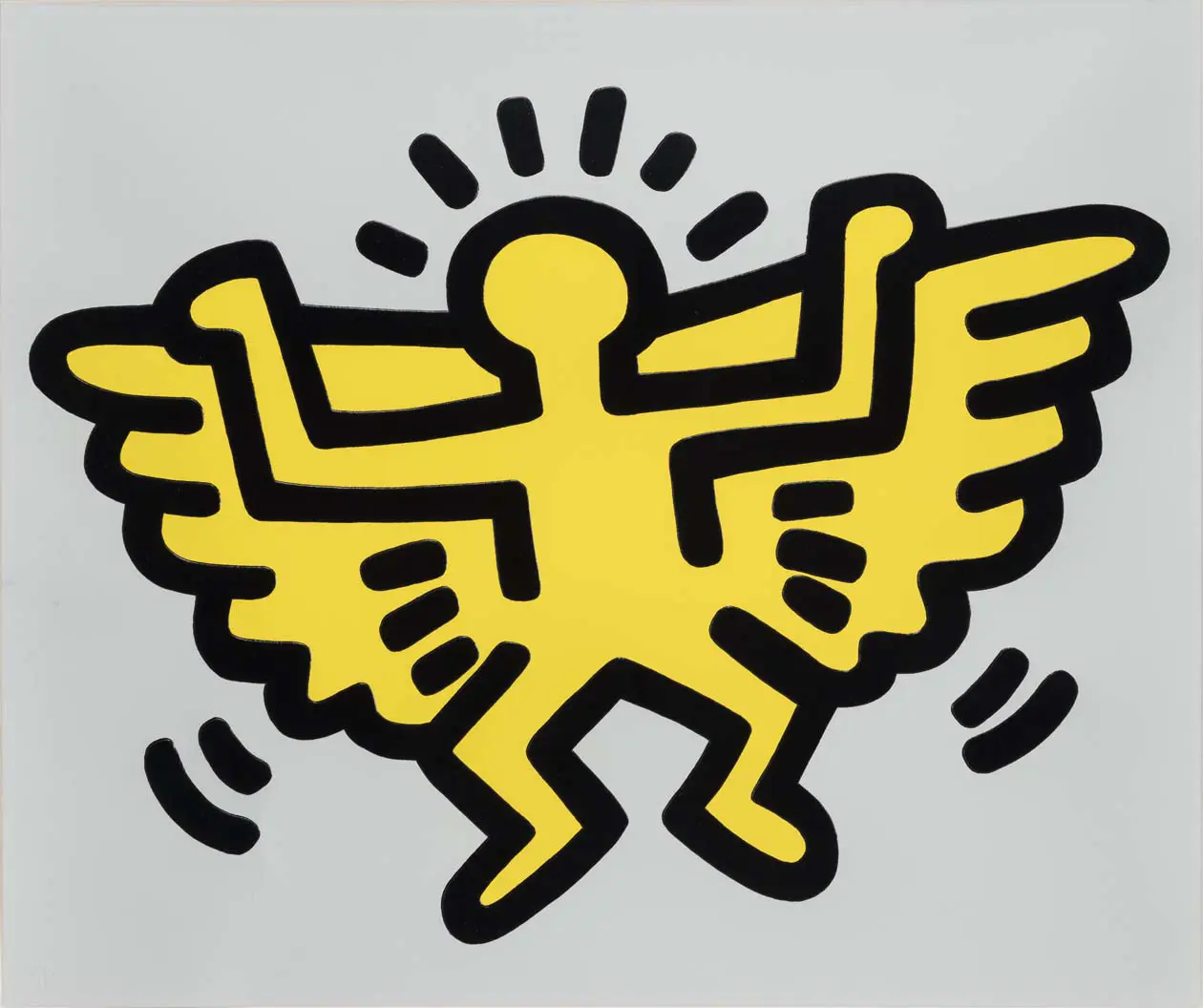
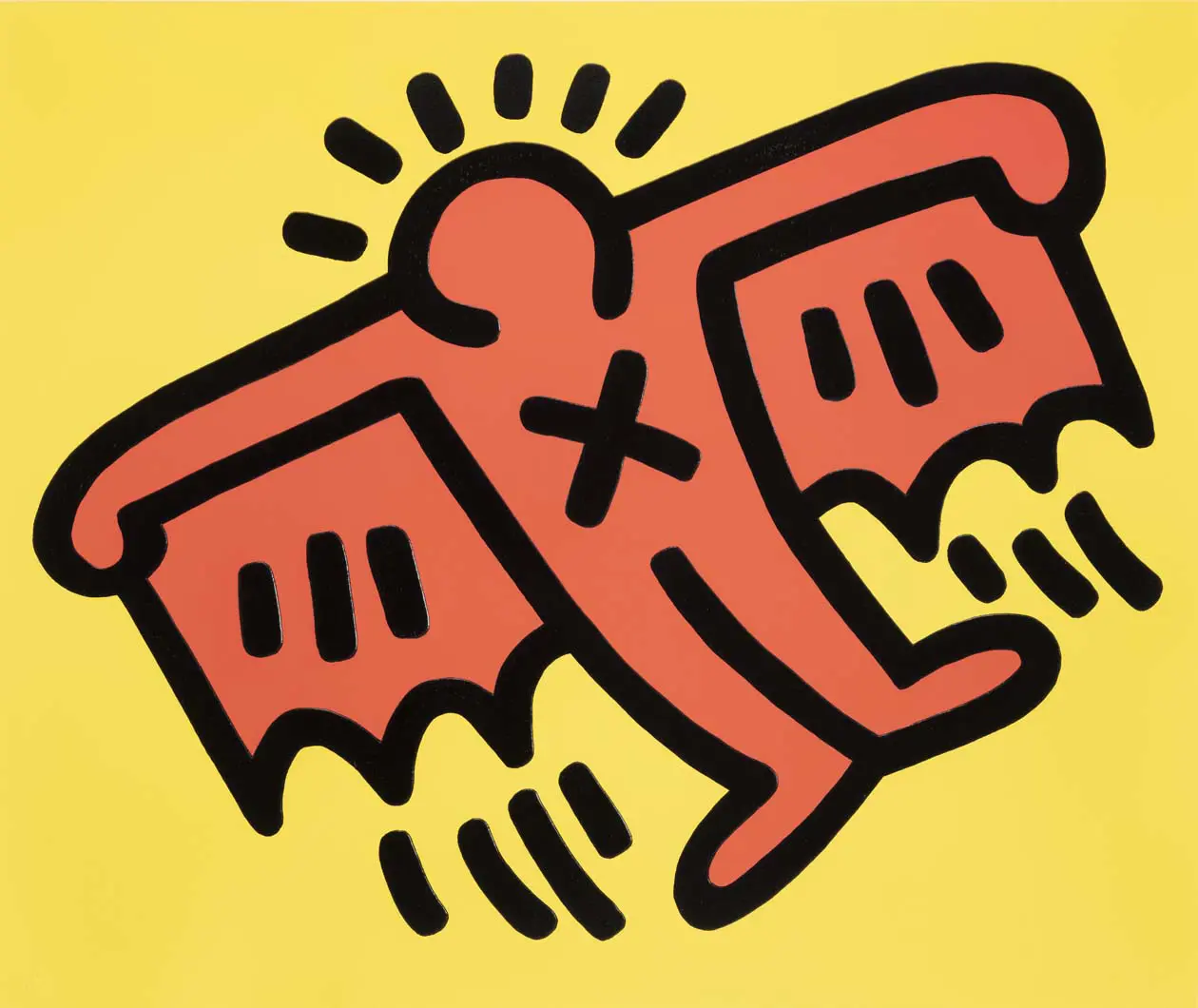
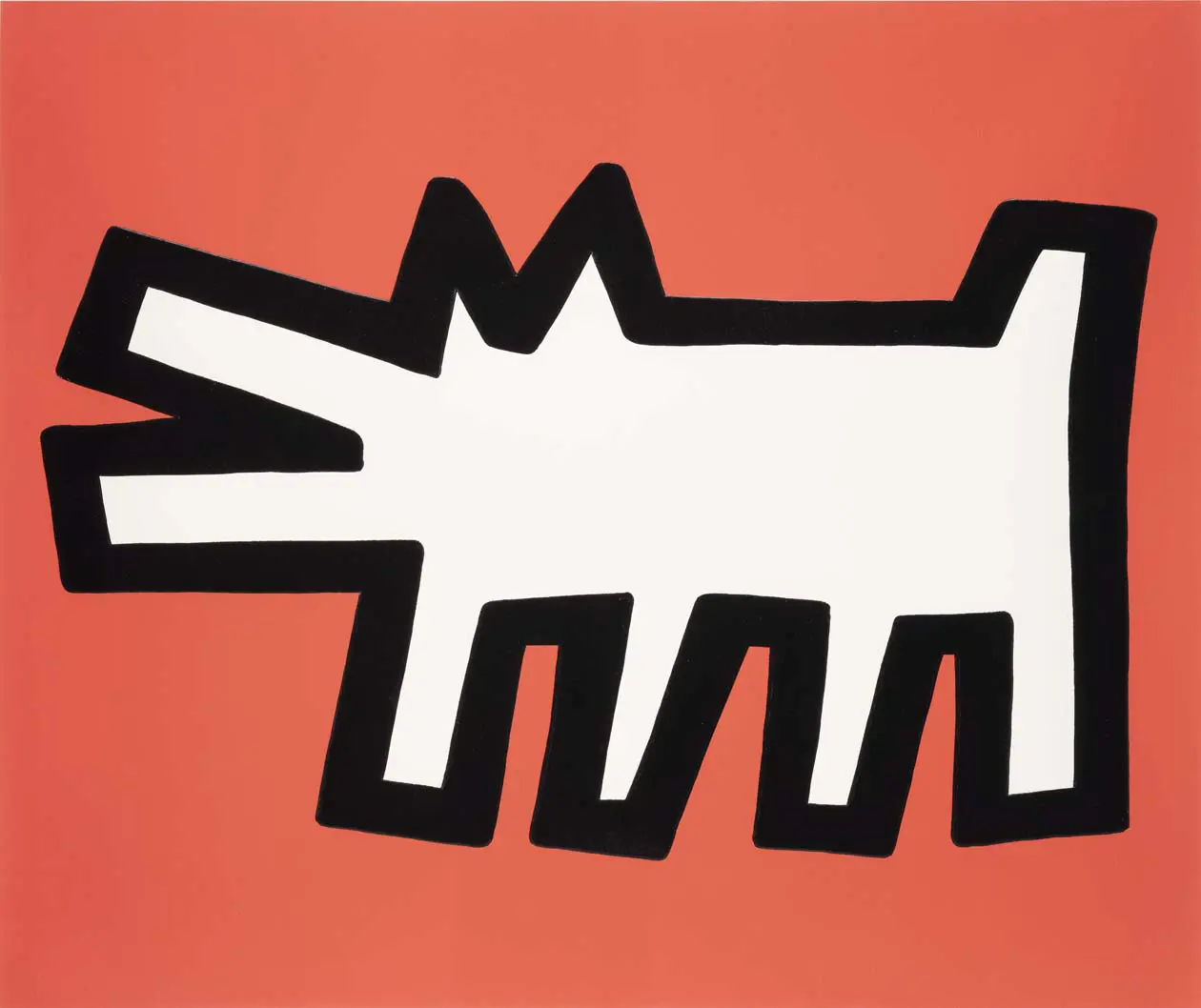
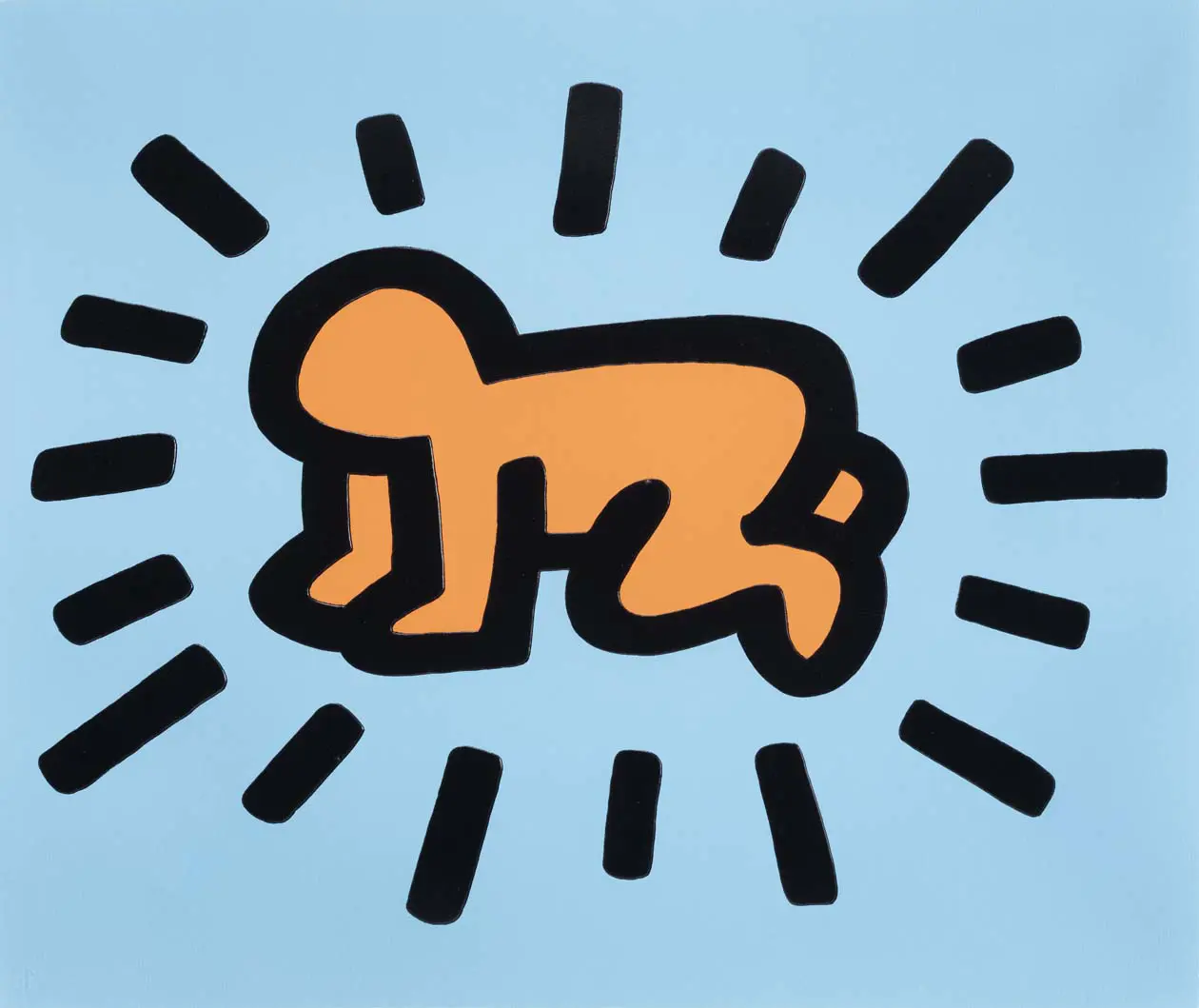
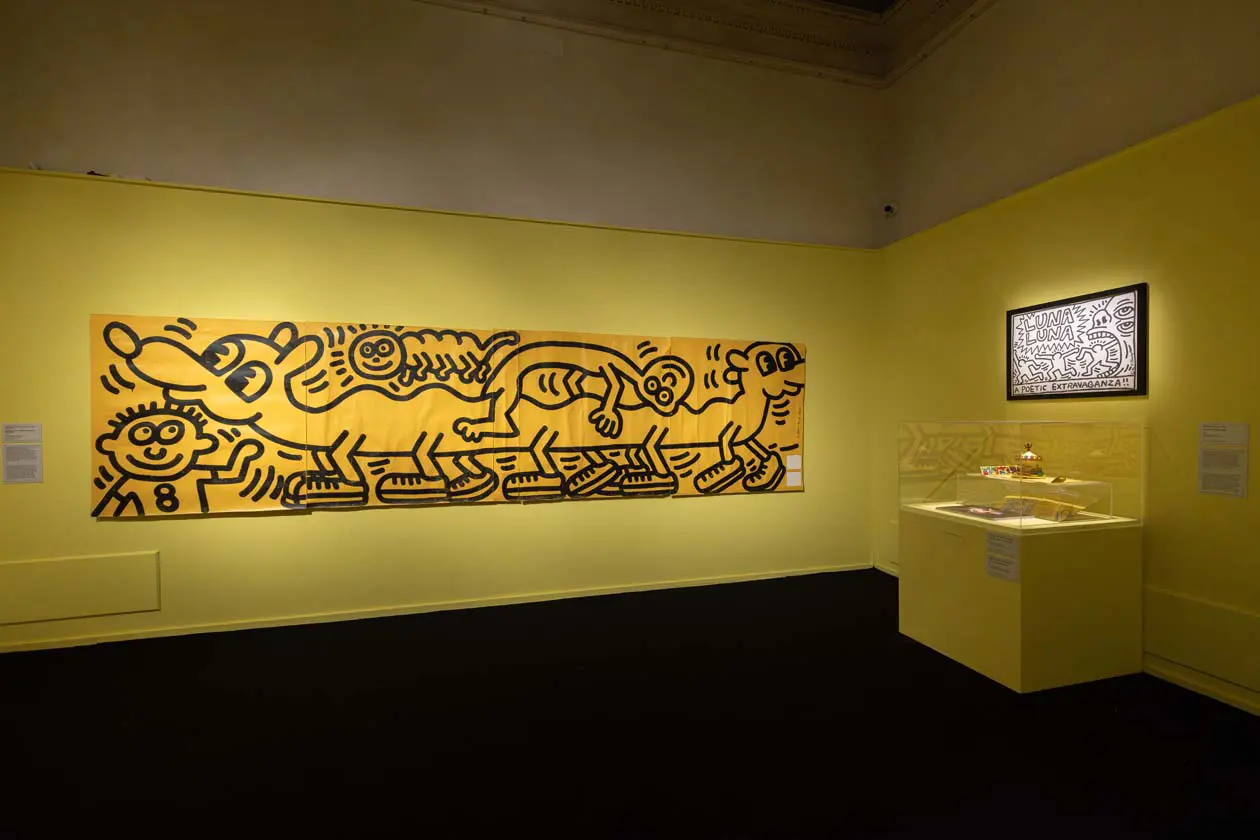
From this experience a real visual alphabet was progressively born. Radiant children, dogs, angels, winged men, dancing figures, hearts, televisions and pyramids become immediately recognizable images, capable of functioning as symbols beyond linguistic and cultural differences. The Icons series, created in 1990, brings together some of the artist's best-known figures and represents one of the central points of the Roman career.
Keith Haring and Italy: from Milan and Naples to Rome and Pisa
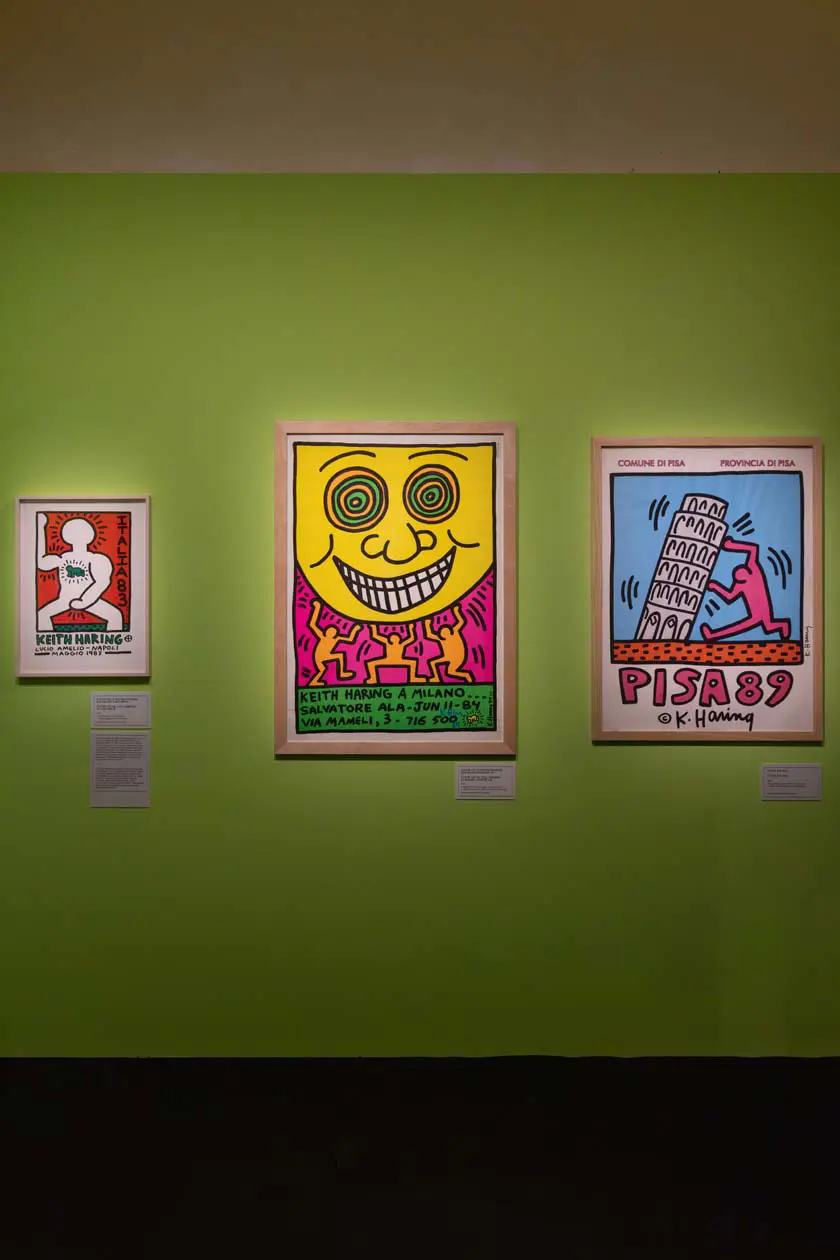
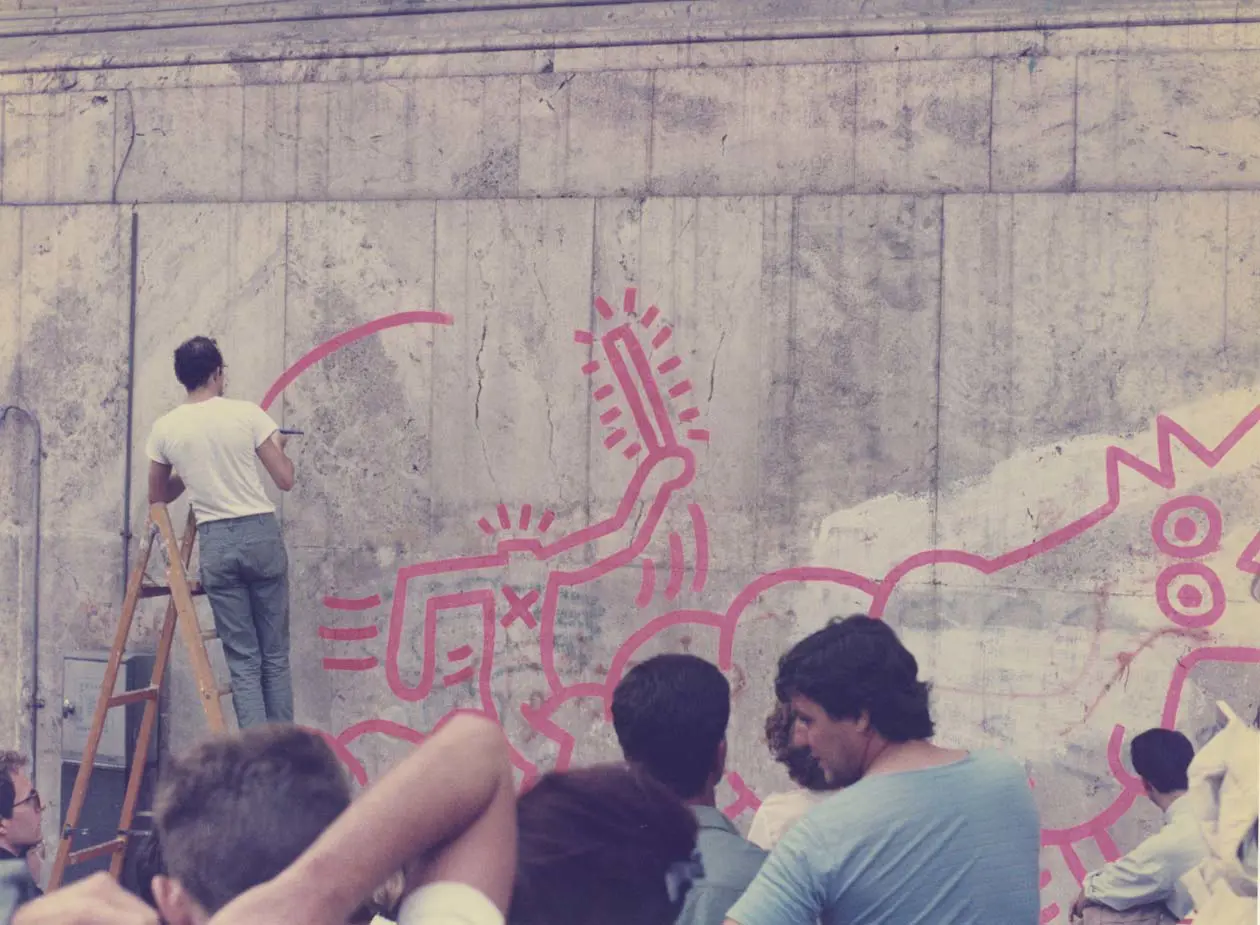
One of the most interesting aspects of the Palazzo Braschi exhibition is the relationship between Keith Haring and Italy, which began long before the artist became a global icon. In 1983 Haring worked in Milan at the Fiorucci flagship store and held his first Italian solo exhibition in Naples at the Lucio Amelio Gallery, also participating in the Terrae Motus project. In 1984 he returned to Milan, participated in the Venice Biennale and arrived in Rome for "Arte di Frontiera. New York Graffiti" at the Palazzo delle Esposizioni, where he made a major intervention on the external staircase in a few hours, now lost.
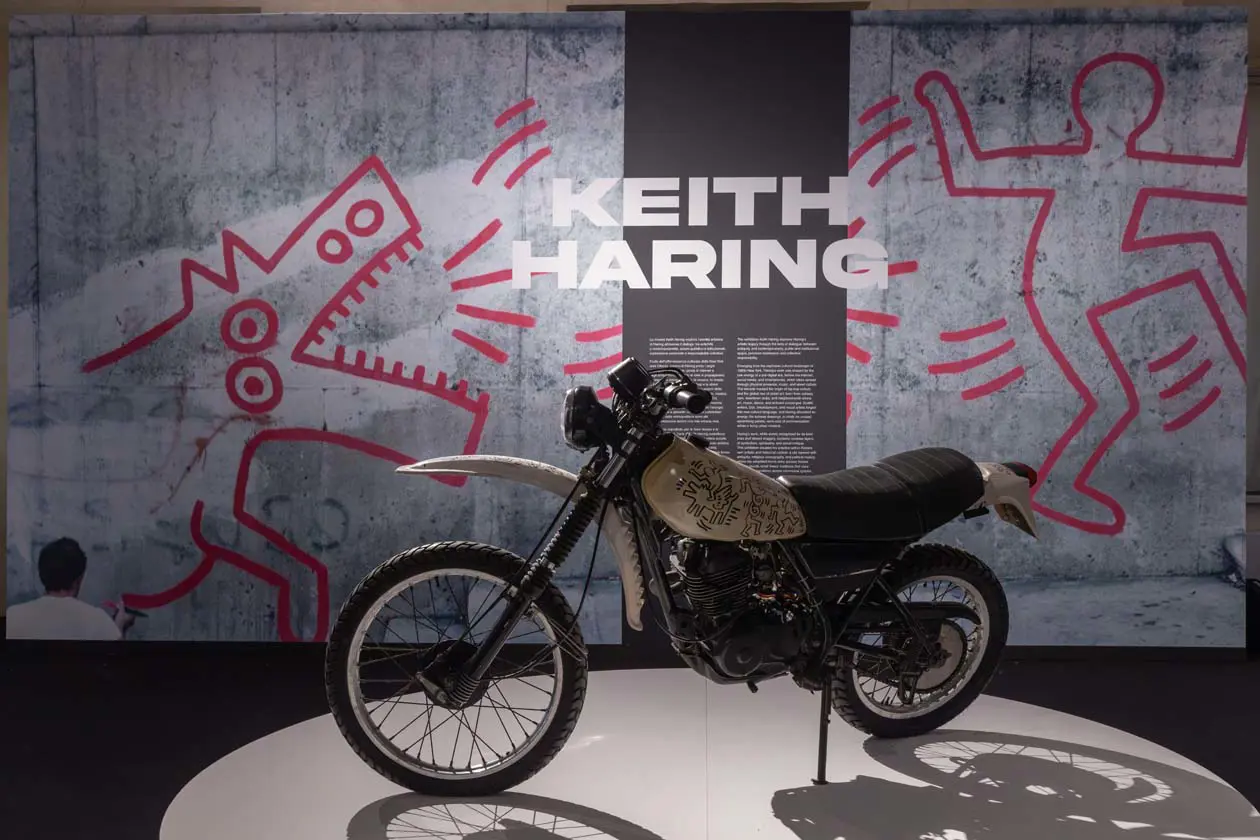
One of the most curious objects on display at Palazzo Braschi also belongs to the Roman presence of 1984: a Yamaha motorcycle painted by Keith Haring.
His relationship with Italy culminated in 1989 in Pisa with Tuttomondo, the monumental mural created on the wall of the convent of Sant'Antonio Abate and considered his last major permanent public work. Haring's presence at Palazzo Braschi therefore takes on a particular significance: Rome is not only the venue for the exhibition, but a city that has entered directly into the author's artistic history.
Art and activism: from civil rights to the fight against AIDS
Behind the graphic simplicity of Haring's figures there is often a very precise political and social content. A section of the exhibition brings together posters and works dedicated to themes such as racism, apartheid, nuclear disarmament, drugs, AIDS, LGBTQ+ rights and violence. Among the works presented are Free South Africa, Crack Down! and Safe Sex!, examples of how the artist used easily understandable images to reach a much wider audience than the traditional one of contemporary art.
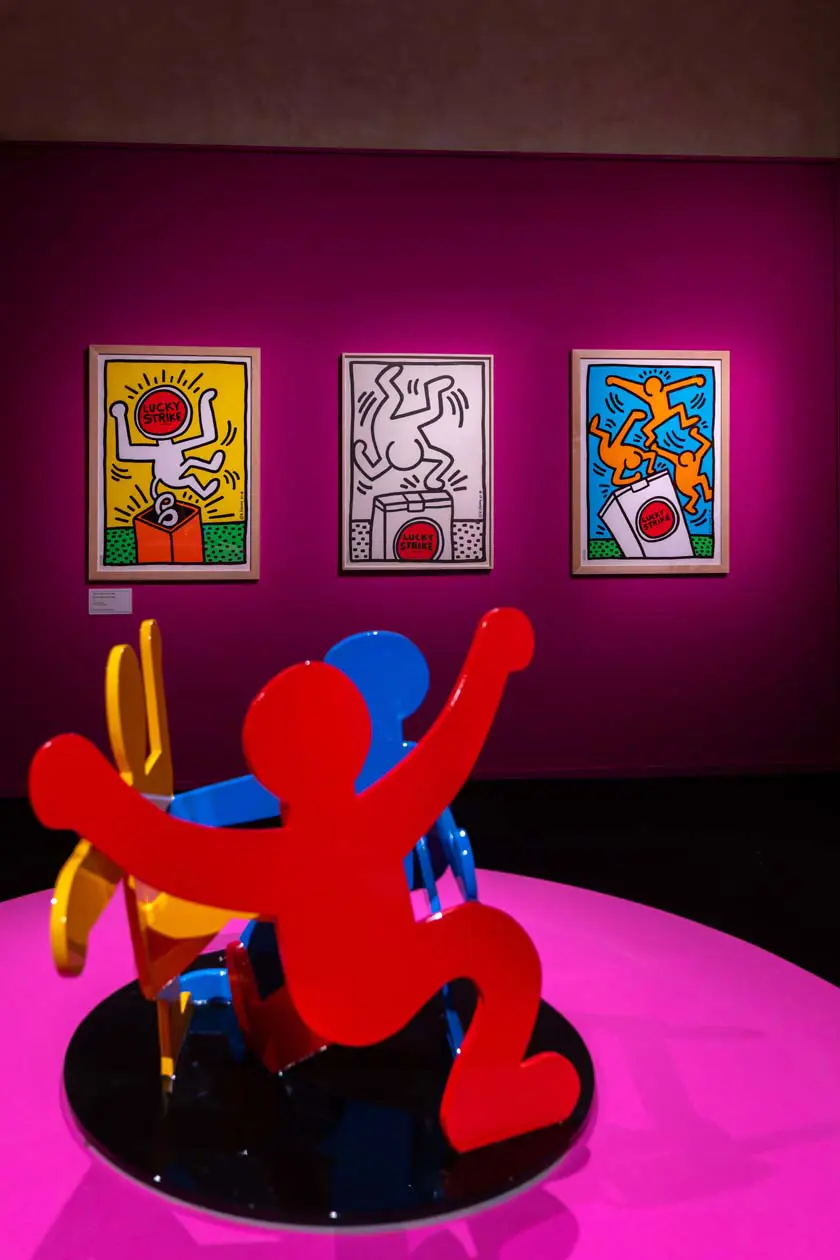
Haring created over one hundred posters over the course of his career, considering them one of the most immediate and democratic tools for bringing social and cultural messages into the public space.
Radiant Eros, the body and the joy of living
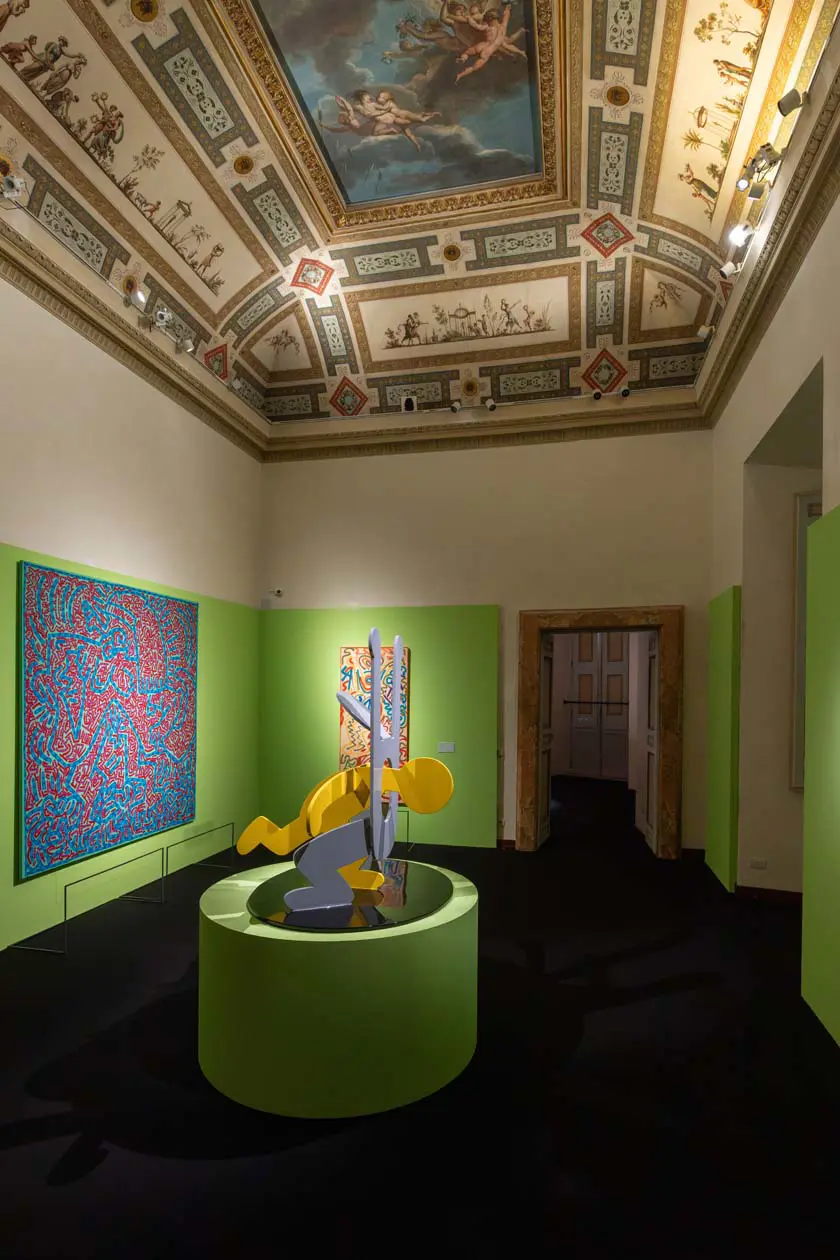
The section "Radiant Eros - Celebrate Life" explores the artist's relationship with the body, desire and vital energy during the years marked by the AIDS crisis. Among the most evocative works are works made with fluorescent pigments and Day-Glo colors, presented with black light to recreate the chromatic intensity imagined by the artist.
The Bad Boys panels, the five Untitled from 1983 and the monumental Untitled from 1984 tell of a moment in which celebrating the body, sexuality and love also took on the meaning of a stand against fear, discrimination and isolation.
Music as part of Haring's language
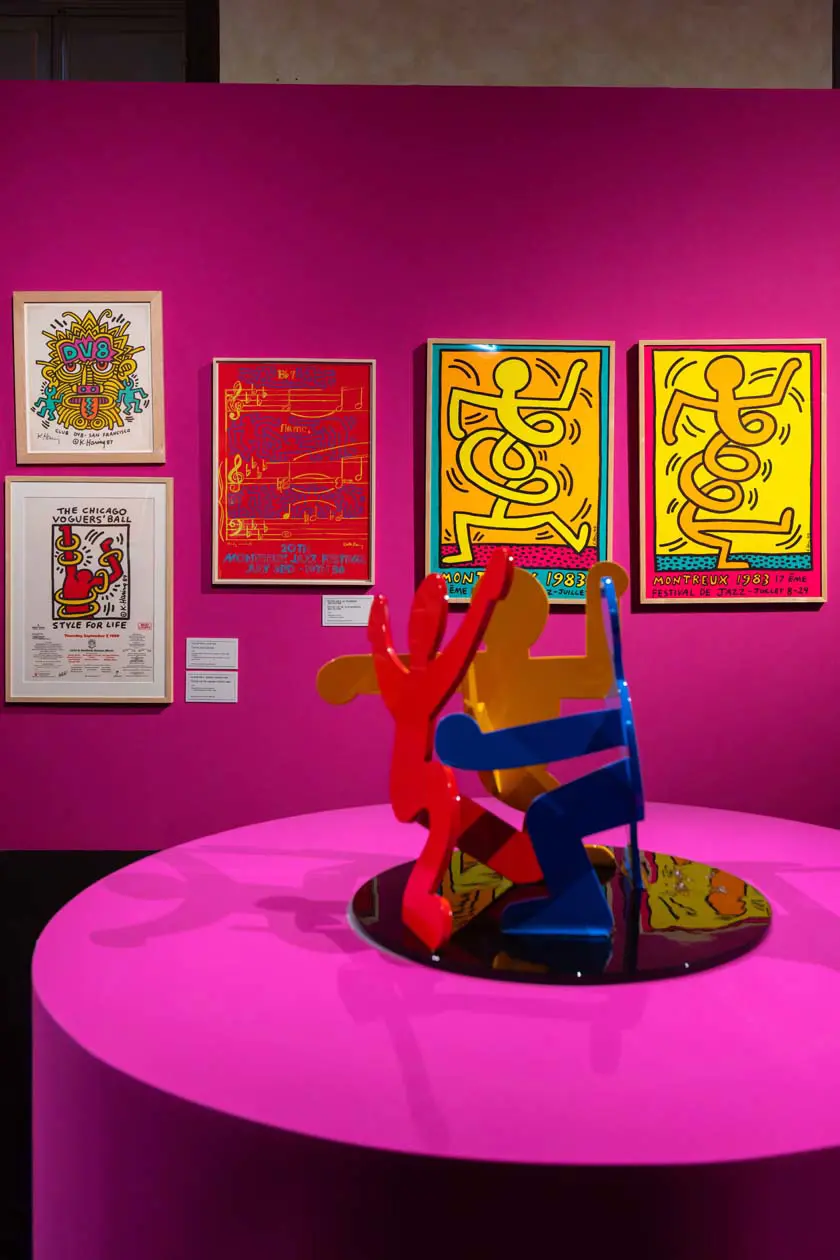
Music accompanies all of Haring's research. Clubs such as the Paradise Garage and Club 57 were fundamental places in the New York art scene in which painters, DJs, performers, musicians and dancers worked and met continuously. That culture enters directly into the works: dancing figures, lines that seem to vibrate and compositions built on rhythm transform the drawing into a kind of visual music. Haring also worked on posters, sets, festivals and record covers, moving naturally between contemporary art and popular culture.
Symbols, spirituality and artistic influences
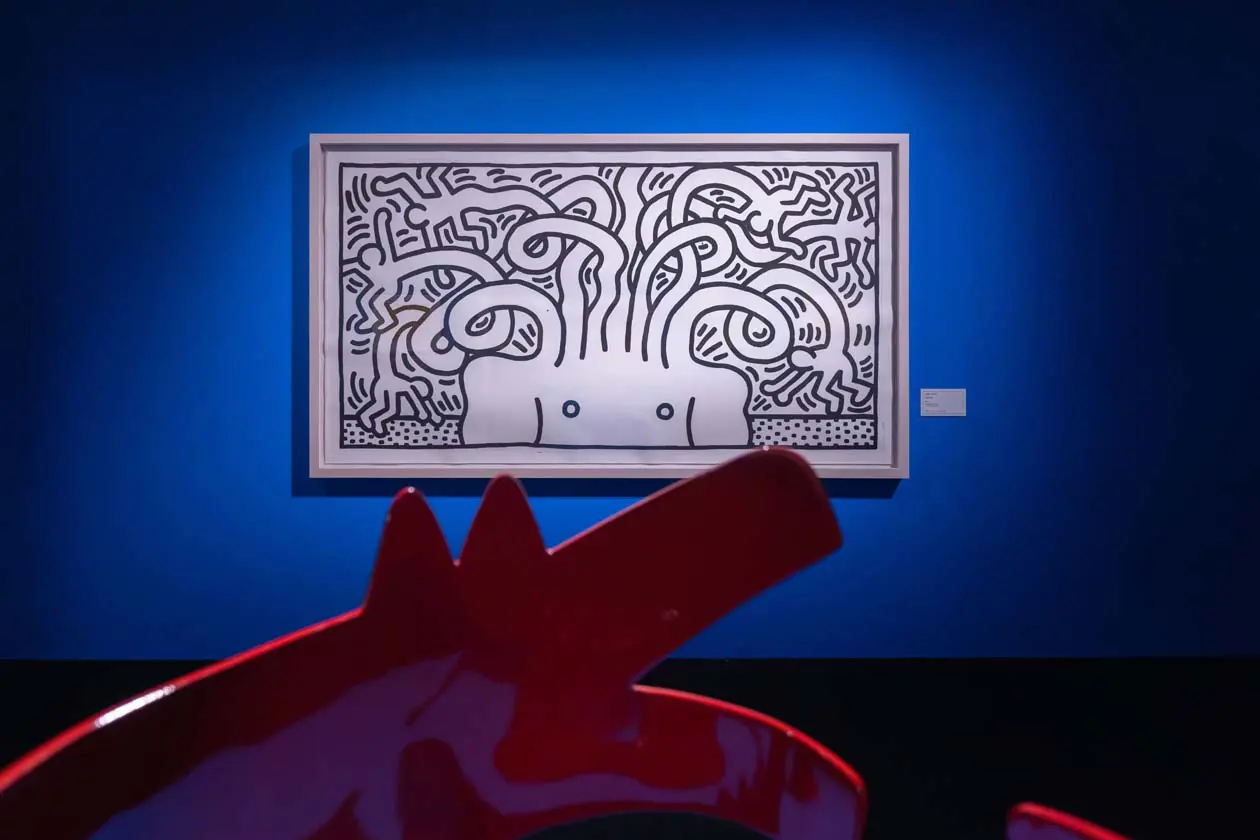
Another part of the itinerary delves into Haring's religious and symbolic imagery. Snakes, crosses, angels and pyramids are used as elements of an open visual vocabulary, capable of taking on different meanings related to life, transformation, faith and death. The artist looked at African, pre-Columbian and Aztec art, while during his stays in Italy he came into contact with the artistic heritage and Christian iconography of Rome. These influences converge in a language in which symbols from different eras and cultures coexist with the urban graphics of contemporary New York.
Apocalypse and the last reflection on life and death
The final part of the exhibition takes on a more intimate tone with Apocalypse and Altarpiece: The Life of Christ, two works related to the last years of the artist's life. Apocalypse, created in 1988 in dialogue with the texts of the writer William S. Burroughs, translates images of destruction and instability into a cycle of 22 lithographs marked by strong visual tension.
Two years later, in the last year of his life, Haring created Altarpiece: The Life of Christ, recovering the structure of the Christian altarpiece to reflect on suffering, faith and transcendence. At Palazzo Braschi the work was symbolically placed in the chapel of the palace.
The path thus leads from the most immediate images of street art to a much more complex production, showing how Haring's apparently simple language was able to address political, spiritual and existential issues.
Art is for everyone
The concluding part returns to the conviction that runs through the artist's entire career: art must be accessible to all. It is a principle that Haring applied by working not only for museums and galleries, but also in public spaces, hospitals, libraries and through projects aimed at children. The exhibition therefore tells the story of an artist capable of transforming his own visual recognizability into a tool of collective communication. The drawing comes out of the canvas and becomes an object, mural, poster, performance and public intervention.
Keith Haring at Palazzo Braschi: the exhibition in the heart of Rome
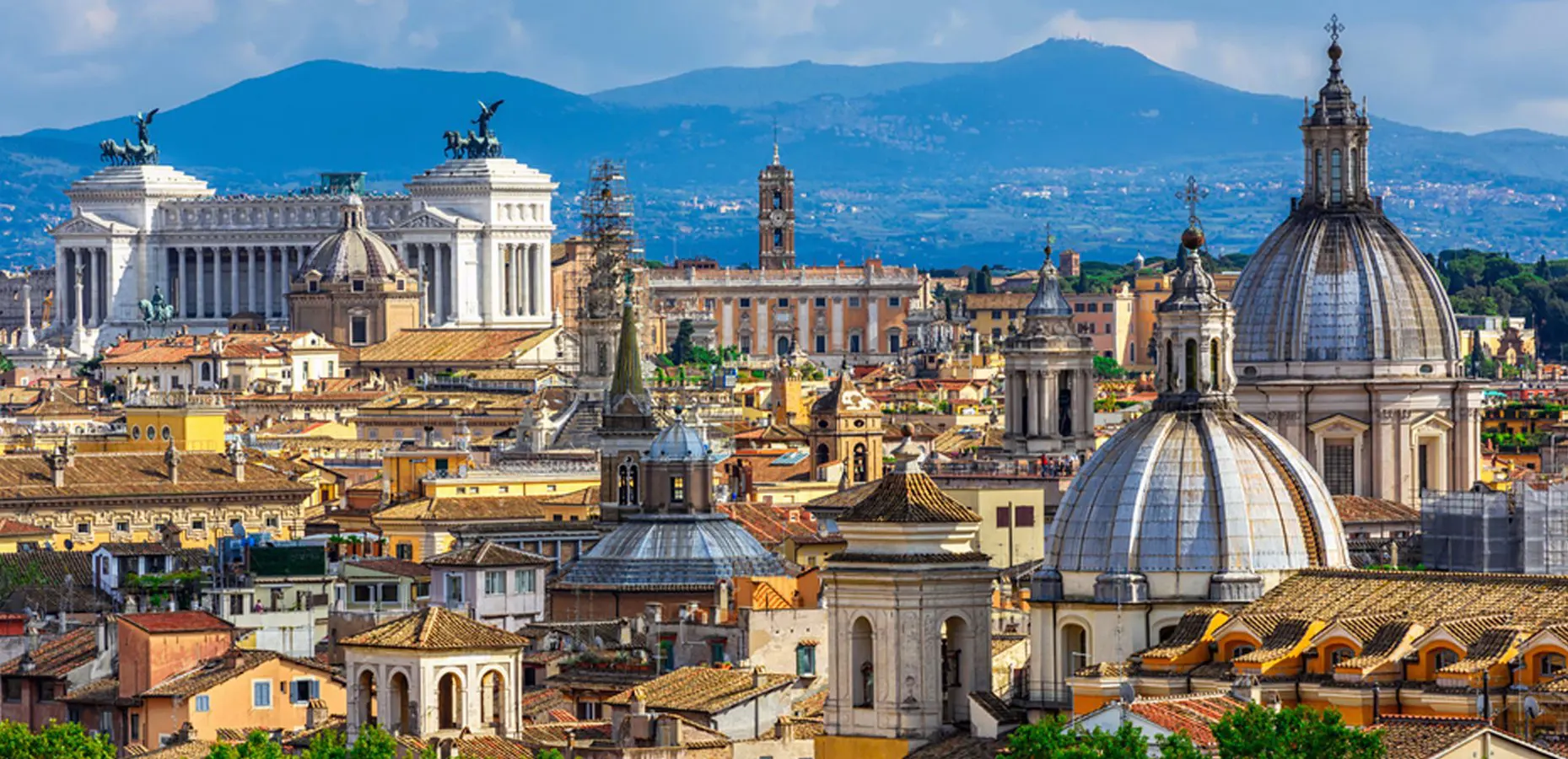
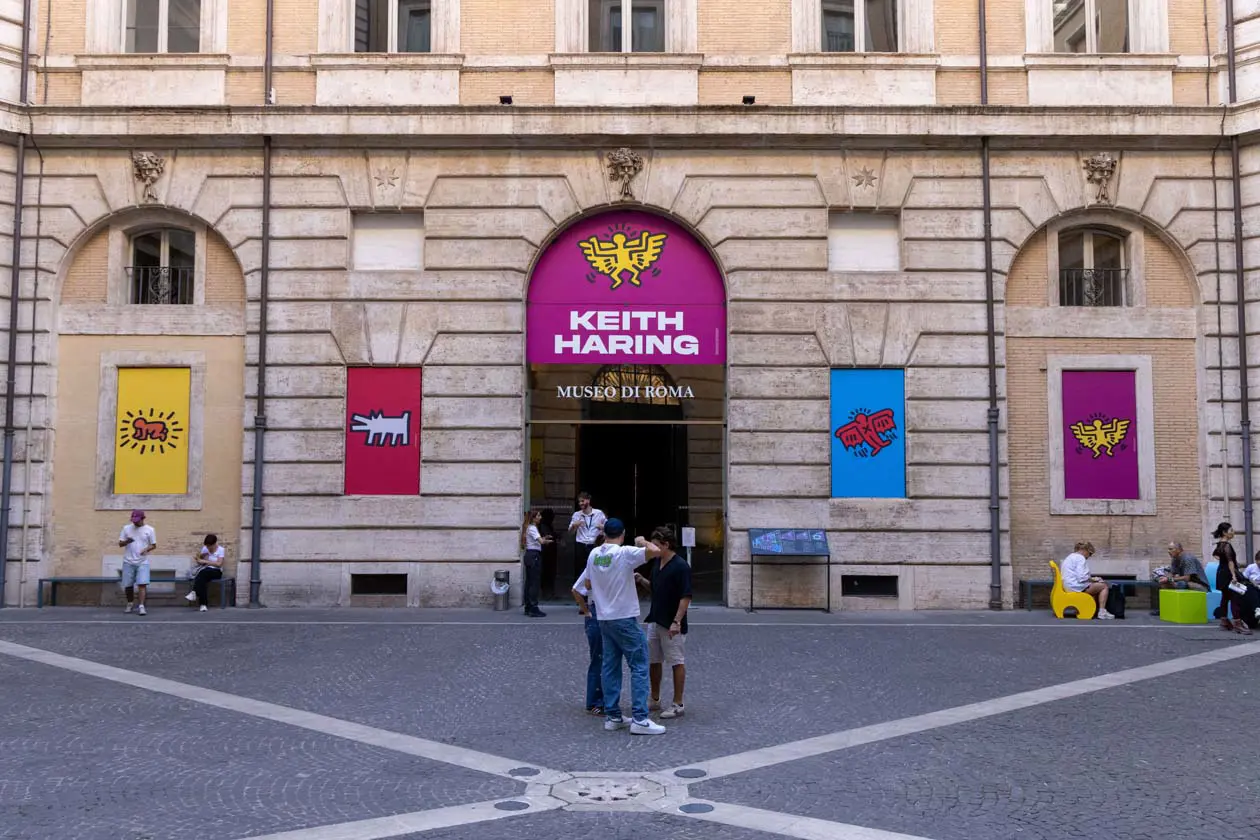
The Keith Haring exhibition can be visited at the Museum of Rome at Palazzo Braschi from 6 October 2026 to 11 April 2027. The venue, between Piazza Navona and Piazza San Pantaleo, allows the exhibition to be easily included in a visit to the historic center of Rome. The itinerary is also accompanied by an educational program dedicated to schools and young people, along with guided tours for the adult public.
For those visiting Rome in the coming months, the exhibition offers the opportunity to go beyond the most popular image of Keith Haring and to discover an artist deeply linked to urban culture, music, activism and the idea of art as a public and shared experience.
INFO Exhibition: Keith Haring - Art Without Borders