25 November 2024
World sustainable transport day
The aviation sector is facing a crucial challenge: reducing emissions without compromising global connectivity
On November 26, during World Sustainable Transport Day, the world reflects on how transport can evolve to reduce environmental impact. In this context, air transport plays a particularly important role: although it accounts for only 2-3% of global CO₂ emissions, its ecological footprint is set to grow as global demand for flights increases. Making aviation sustainable is not just a wish, but an urgent necessity to ensure a future in which global connectivity can coexist with the protection of the planet.
In recent years, the aviation industry has made significant technological advances to reduce its environmental impact. Investment in sustainable aviation fuels (SAF) is increasing rapidly: these are biofuels and synthetic fuels that can reduce CO₂ emissions by up to 80% compared to traditional fossil fuels. However, the production of SAF is still limited, with high costs hindering its large-scale deployment.
In parallel, the industry is exploring innovative solutions such as the adoption of hydrogen-powered aircraft and the development of electric aircraft for short-haul routes. Airbus, for example, plans to launch the first hydrogen planes by 2035, a milestone that could revolutionize the industry. However, these technologies require entirely new infrastructure, from airports to refuelling networks and global collaboration to become a reality.
Optimising flight operations also plays a key role. Strategies such as adopting more efficient routes, improving take-off and landing processes, and using lighter aircraft can help to significantly reduce fuel consumption. In addition, airlines are introducing initiatives to offset CO₂ emissions, often through reforestation projects and other environmental mitigation interventions. However, these compensation solutions, while useful in the short term, do not solve the root of the problem.
Another key element for more sustainable aviation is changing consumer habits. More and more travelers are attentive to the environmental impact of their journeys and choose more sustainable flights whenever possible. Companies such as KLM and Lufthansa have started offering passengers the possibility to buy airline tickets that include the use of sustainable fuels, a small but significant step towards decarbonizing the sector.
Despite progress, the challenges remain enormous. Global demand for flights is steadily increasing, especially in emerging countries, where economic growth and the expansion of airline networks are accelerating. While this growth represents an economic opportunity, it also risks undoing technological advances in reducing emissions. In addition, the cost of new technologies and the slow adoption of coordinated global policies risk slowing down the transition to greener aviation.
World Sustainable Transport Day is therefore an opportunity to highlight the importance of collective and coordinated action. Governments, industry and consumers must work together to accelerate the development of sustainable solutions, invest in research and innovation and promote a cultural shift towards more responsible air mobility. Only in this way will it be possible to transform the aviation sector into a pillar of global sustainable mobility, reducing the impact on the climate without sacrificing the benefits of global connectivity.
Air transport still has a long way to go to achieve climate neutrality, but emerging technologies and the growing commitment of all actors involved are a positive sign. Making the skies more sustainable is a complex challenge, but it is also a unique opportunity to drive change towards a carbon-neutral future.
By the editorial staff of Avion Tourism Magazine
Visual photo: Copyright © Sisterscom.com / Depositphotos
Partnership with Skyscanner
Search flights

Partnership with Booking.com
Hotel search
Advertising
Hotels
Flights

Tours and excursions

You might be interested in
Sustainability

Sustainable Mobility
easyJet reduces waste on board with new sustainable solutions
Across the European and UK fleet, around 1.5 million cardboard packages for crew meals will be eliminated each year
Sustainability
Sustainable Mobility
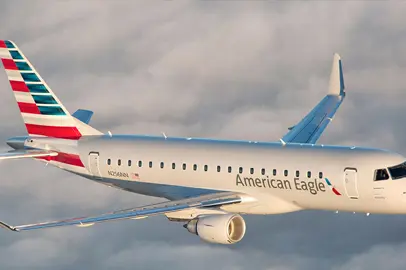
American Airlines flies with eSAF made from recycled CO₂
Flight between Corpus Christi and Dallas Fort Worth demonstrates the operational use of sustainable synthetic fuel developed by Infinium
Sustainability
Sustainable Mobility
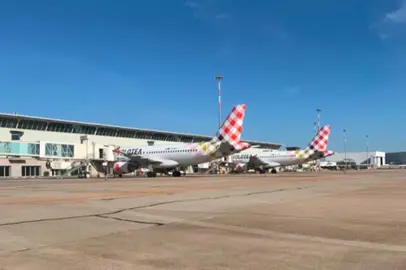
Olbia and Alghero airports reduce emissions
Olbia airport reaches ACA 3+ level, while both airports set the Net Zero target for 2040
AVION TOURISM MAGAZINE
in digital version
On this issue: The World Heritage Sites of Lazio