Wizz Air: one year after the Net Zero roadmap
One year after the presentation of the Flying Towards Net Zero roadmap, Wizz Air is releasing the results of a non-representative passenger survey to analyse perceptions and attitudes towards air travel, climate change and the industry's transition path.
The picture that emerges first confirms the central role of aviation in mobility and the economy. Globally, the sector supports about 86.5 million jobs and contributes about 3.9% to world GDP, supporting tourism, trade and regional development. In this scenario, the challenge remains to keep mobility accessible while reducing emissions.
According to the survey, public perceptions of aviation's climate impact still appear uneven. Respondents estimated that the sector is responsible for 20.9% of global CO₂ emissions, while current estimates stand at around 2.5%. For Wizz Air, this gap highlights the need for clearer and more fact-based communication, while acknowledging that aviation emissions are real and need to be reduced.
The study also shows that demand for flying continues to be supported by structural and social needs. 40% of respondents said they fly three to five times a year, while 35% fly six times or more. In addition, 69% say they have not changed their travel frequency due to climatic reasons. A figure that, according to the company, reflects the weight of factors such as geography, economic convenience, work needs and macroeconomic context, reiterating the importance of reducing emissions without compressing mobility.
Knowledge of the sector's decarbonisation journey also remains limited. More than 56% of respondents were unaware of aviation's Net Zero 2050 target, and only 24% said they were aware of it and understood its practical implications. Familiarity with SAF, the sustainable aviation fuel, is even lower, with 73% of respondents saying they were unfamiliar with the concept, despite initiatives such as ReFuelEU Aviation and the UK's SAF mandate coming into force from January 2025.
For passengers, these results show how the sector's transition path is still not very visible in its complexity. Many of the most important interventions – from fleet renewal to operational efficiency, up to the transition of fuels – are not immediately perceptible during the journey. Precisely for this reason, Wizz Air emphasizes that clear, transparent and accessible communication remains essential to accompany the transformation of the sector.
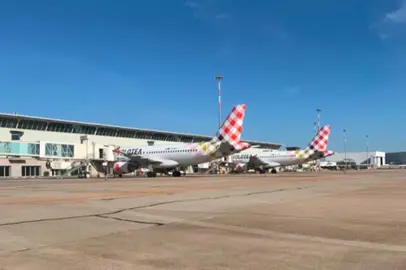
Twelve months after the launch of the roadmap, the company says it has focused its efforts on the areas where an airline can make the most impact. Today , 75% of Wizz Air's fleet consists of Airbus A320neo and A321neo aircraft, new generation models designed to offer greater fuel efficiency than previous aircraft. For the company, fleet renewal continues to be one of the main pillars for reducing the intensity of CO₂ emissions.
On the alternative fuels front, Wizz Air says it is fully compliant with the applicable requirements on SAF, which today accounts for around 2% of total fuel consumption. The company highlights that it has already prepared its operations for an increasing use of alternative fuels, as market availability increases. The expansion of SAF, however, will require constant collaboration between fuel producers, manufacturers, airports and policymakers.
Thanks to its young fleet and an efficiency-oriented operating model, Wizz Air also continues to rank among the European carriers with the lowest emission intensity. In the last twelve months, the company has recorded 50.6 grams of CO₂ per passenger-kilometer of revenue.
The work on sustainability is also developed along the supply chain. Wizz Air is partnering with Gen Phoenix to use recycled and circular cabin materials, with Geven for lightweight seating solutions that can improve efficiency, and is supporting investments such as Firefly Green Fuels, aimed at accelerating the development of sustainable aviation fuels.
Sustainability has also been integrated into the relationship with customers through the launch of the Customer First Compass initiative, which includes climate considerations alongside cost-effectiveness, operational reliability and passenger experience, in line with Wizz Air's approach to transparently communicating the progress of its roadmap towards Net Zero.
One year after the launch of Flying Towards Net Zero, Wizz Air therefore presents a report that combines operational results, public perception data and an implicit request to the sector: to really reduce aviation emissions, investments, supply chain collaboration and more effective communication to flyers will be needed.