Western Australia: what to see between pink lakes and natural wonders
Western Australia is Australia's largest region and one of the most spectacular wildlife destinations in the southern hemisphere. Here, nature does not follow conventional patterns: it rewrites them. From the Coral Coast to the remote Kimberley to the pristine beaches of the south, this state offers extreme landscapes, intense color contrasts and geological phenomena rare in the world.
Here are five iconic wonders to include in a Western Australia itinerary.
Hutt Lagoon, the pink lake of the Coral Coast
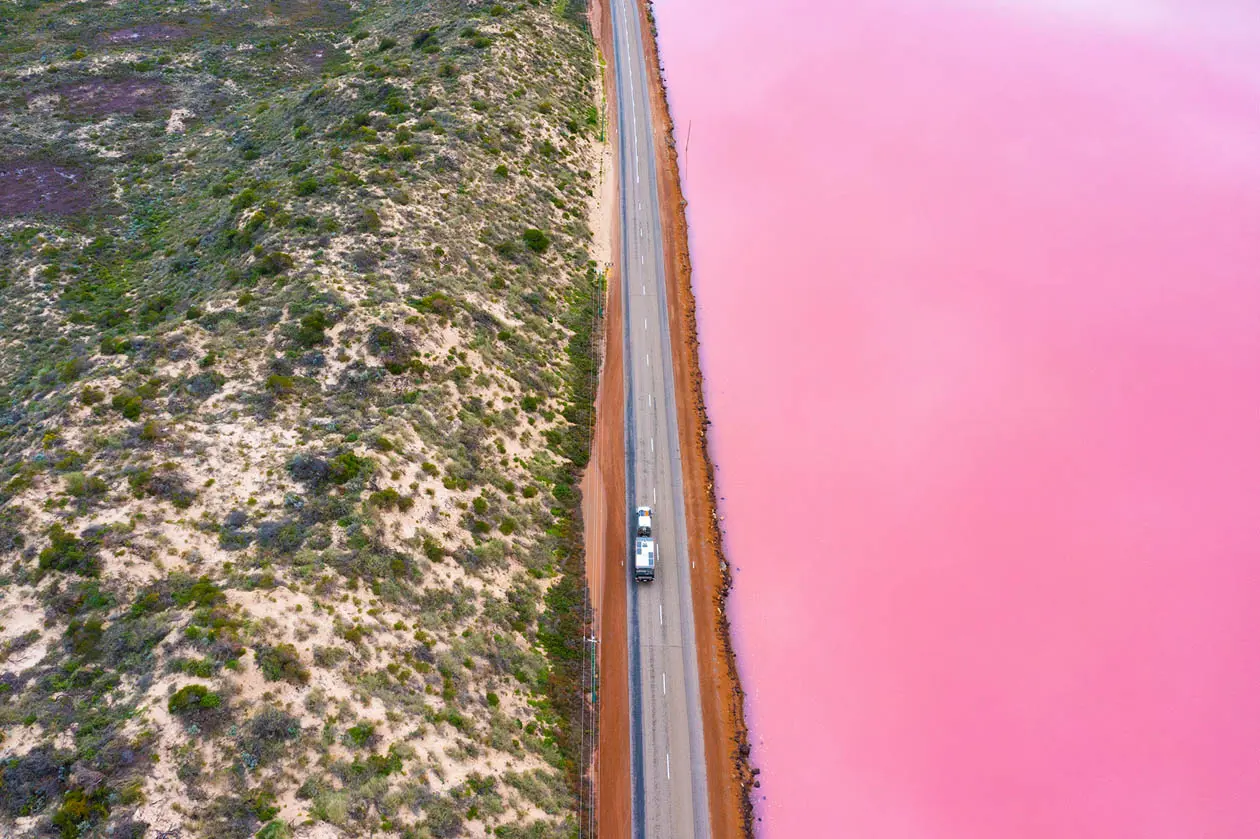
Near Port Gregory, along the west coast, is Hutt Lagoon, one of Australia's most spectacular pink lakes.
The intense fuchsia color is due to the high salt concentration and the presence of the algae Dunaliella salina, which produces natural red pigments. Depending on the light and climatic conditions, the shades vary from soft pink to bright magenta, creating a striking visual effect in contrast with the blue of the Indian Ocean and the green of the coastal vegetation.
Easily accessible by car along the Coral Coast Highway, it is an ideal stop on a road trip from Perth northwards.
Bungle Bungle Range, the striped mountains UNESCO World Heritage Site
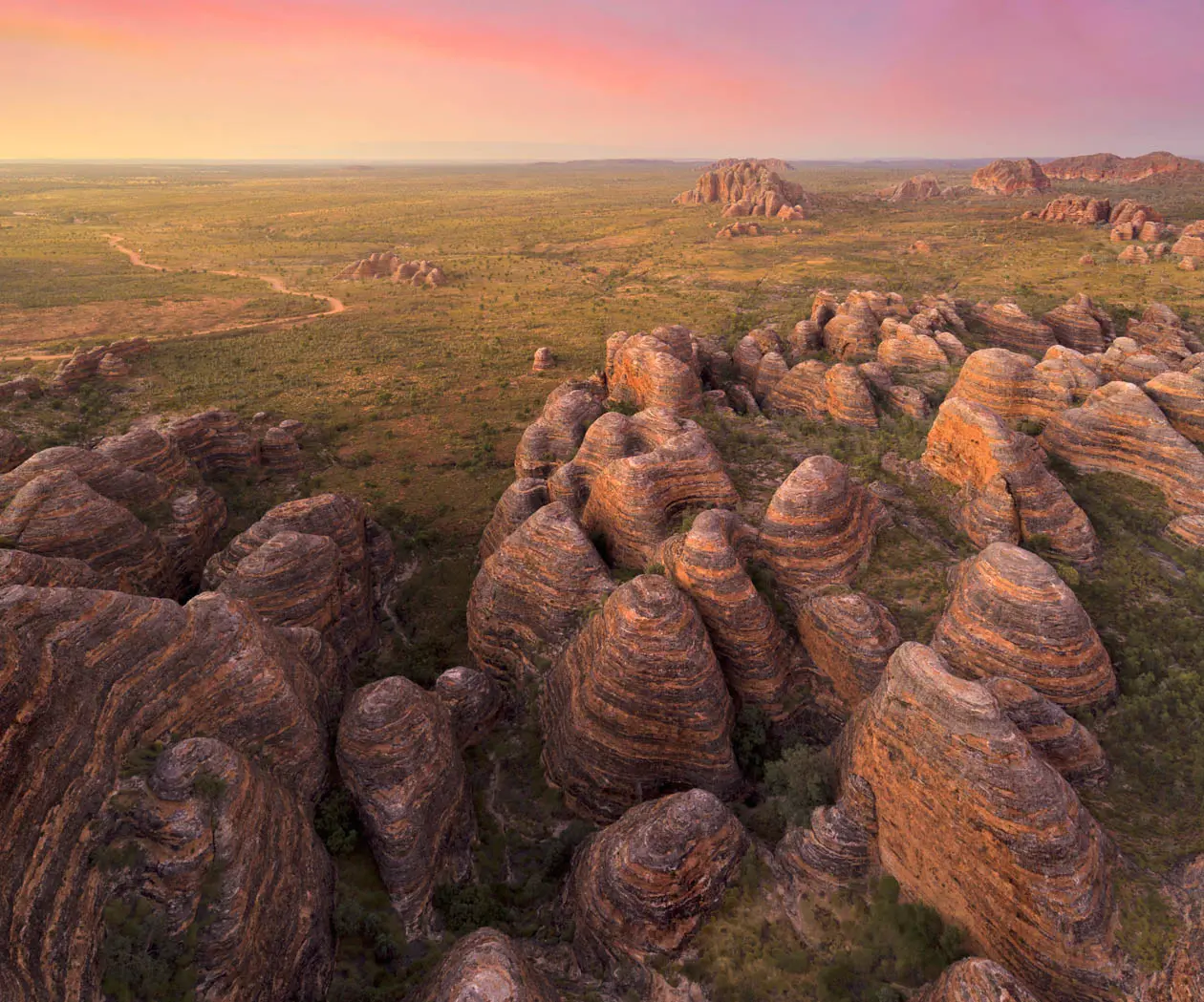
In the heart of the Kimberley region, Purnululu National Park is home to one of the country's most iconic geological scenery: the Bungle Bungle Range.
The famous sandstone domes, formed over 350 million years ago, are distinguished by their characteristic orange and black streaks. The chromatic alternation is the result of oxidation processes and the presence of cyanobacteria that protect the rock from erosion.
The experience can be enjoyed on foot along the guided trails or from above, with panoramic helicopter flights that allow you to fully grasp the repetitive geometry of these formations. The park can be reached during the dry season (approximately from April to October), when the weather conditions are more favorable.
Horizontal Falls, the phenomenon of "horizontal falls"
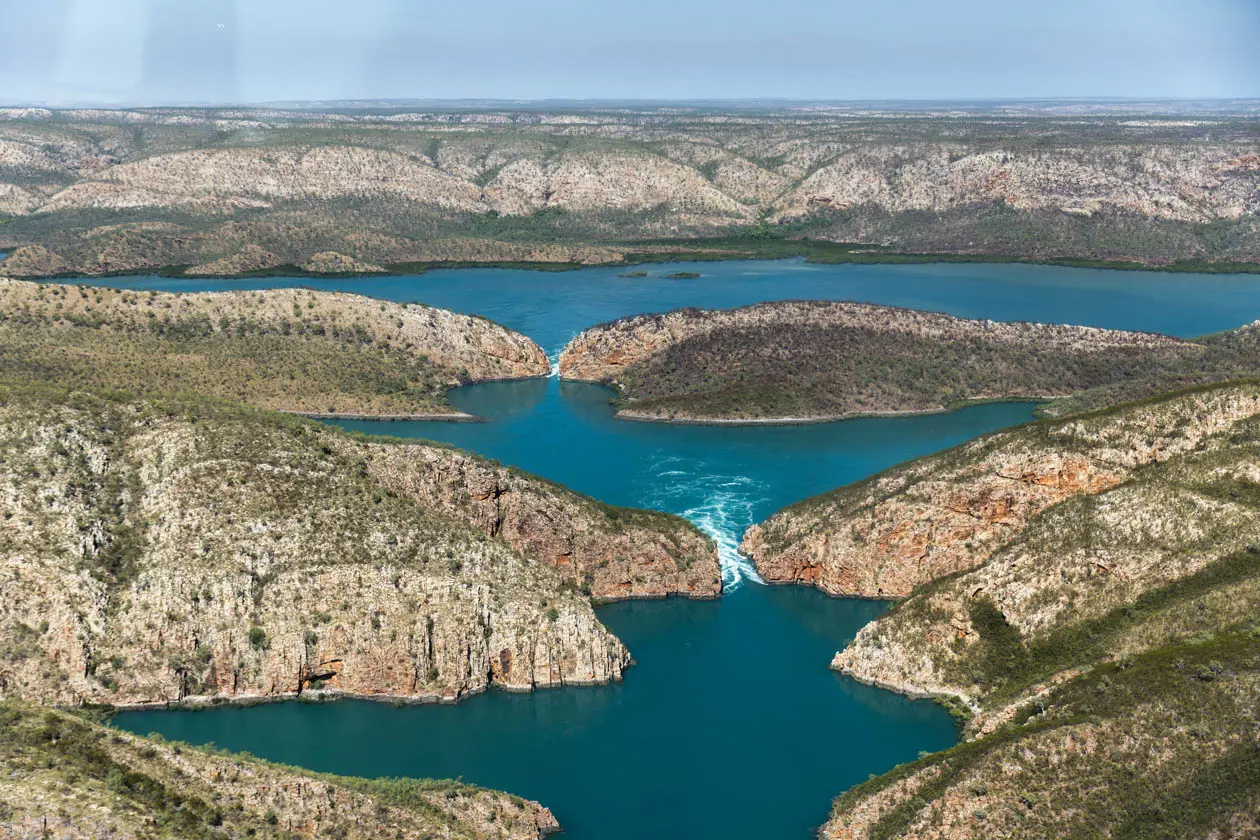
Also in the Kimberley, in the remote Talbot Bay, is one of the rarest natural phenomena in the world: the Horizontal Falls.
Here the water does not fall vertically, but is pushed by the tides through narrow rocky gorges, generating powerful currents that flow sideways like a waterfall horizontally. The tidal range, one of the highest in Australia, creates spectacular rapids and a highly dynamic experience.
Tours are usually organised by boat or seaplane from Broome or other locations in the northwest.
Lucky Bay and Simpson Beach, between absolute white and primordial red
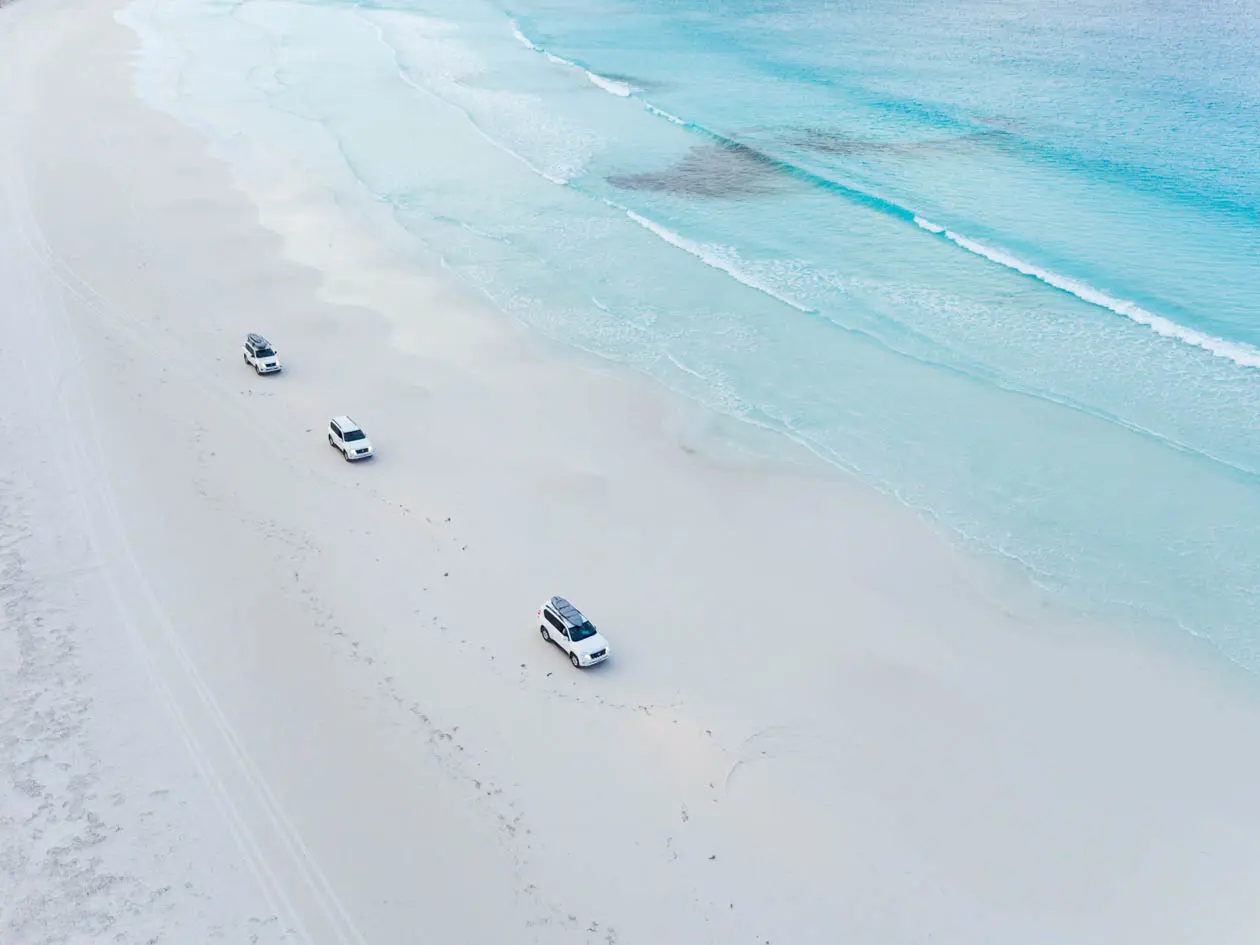
Western Australia is also famous for its beaches with extraordinary colors. In Cape Le Grand National Park, a short drive from Esperance, Lucky Bay is considered one of Australia's whitest sand beaches. The beach extends for over five kilometers and offers an almost unreal atmosphere, often shared with kangaroos that move freely along the shoreline in the coolest hours.
Simpson Beach, near Broome, is a completely different setting, where the deep red sand – the result of the erosion of the ancient rocks of the Kimberley – contrasts spectacularly with the deep blue of the ocean. The landscape takes on even more striking hues at sunset, when the sky amplifies the warm shades of the earth.
The Pinnacles, limestone towers in the golden desert
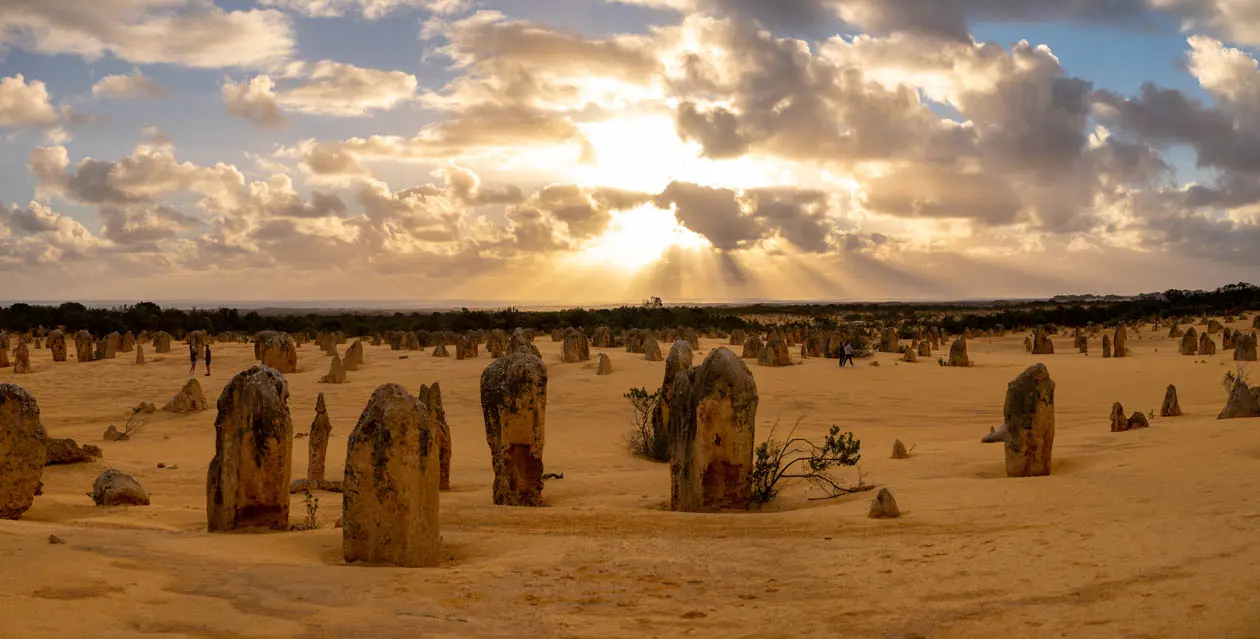
About a two-hour drive from Perth, in Nambung National Park, lies one of Western Australia's most surreal scenery: The Pinnacles.
Thousands of limestone columns emerge from the golden sand like natural sculptures, formed millions of years ago as a result of the transformation of ancient sea shells into rock. The structures vary in height and shape, creating a landscape reminiscent of a movie set or extraterrestrial territory.
The best time to visit them is at sunset or sunrise, when the long shadows and ochre tones amplify the scenic effect.
When to visit Western Australia
- Kimberley and tropical north: ideal time from April to October (dry season).
- Perth and the south of the region: Mediterranean climate, pleasant all year round with warm summers and mild winters.
How to get to Western Australia from Italy
The main access is Perth, the state capital. Qantas Airways operates a seasonal direct connection between Rome Fiumicino Airport (FCO) and Perth, generally operating between May and October, with a duration of about 15-16 hours.
From other Italian cities, connections with a stopover are available via Middle Eastern or Asian hubs.
From airports such as Milan Malpensa (MXP) and other Italian airports there are no direct connections to Perth, but it is possible to reach Perth with a stopover through international hubs such as Dubai, Doha or Singapore with partner airlines or by codeshare.

Partnership with Booking.com / Travelpayouts