Smaller islands of Sicily: where the Mediterranean becomes adventure, relaxation and discovery
There is a Sicily that begins exactly where the coast ends and the mainland gives way to the horizon. It is the galaxy of the smaller Sicilian islands: fragments of rock, light and history profoundly different from each other, but united by the same Mediterranean root. Volcanoes that are still active, fishing villages that have remained intact, some of the richest seabeds in the Mediterranean, heroic vineyards and intact nature reserves make each island a universe in itself, capable of responding to a precise idea of a holiday.
Volcanic islands: trekking, geology and underwater archaeology
On the islands of volcanic origin, travel stops being an umbrella relaxation and becomes an exploration of a landscape that is still in motion, shaped every day by natural forces visible to the naked eye.
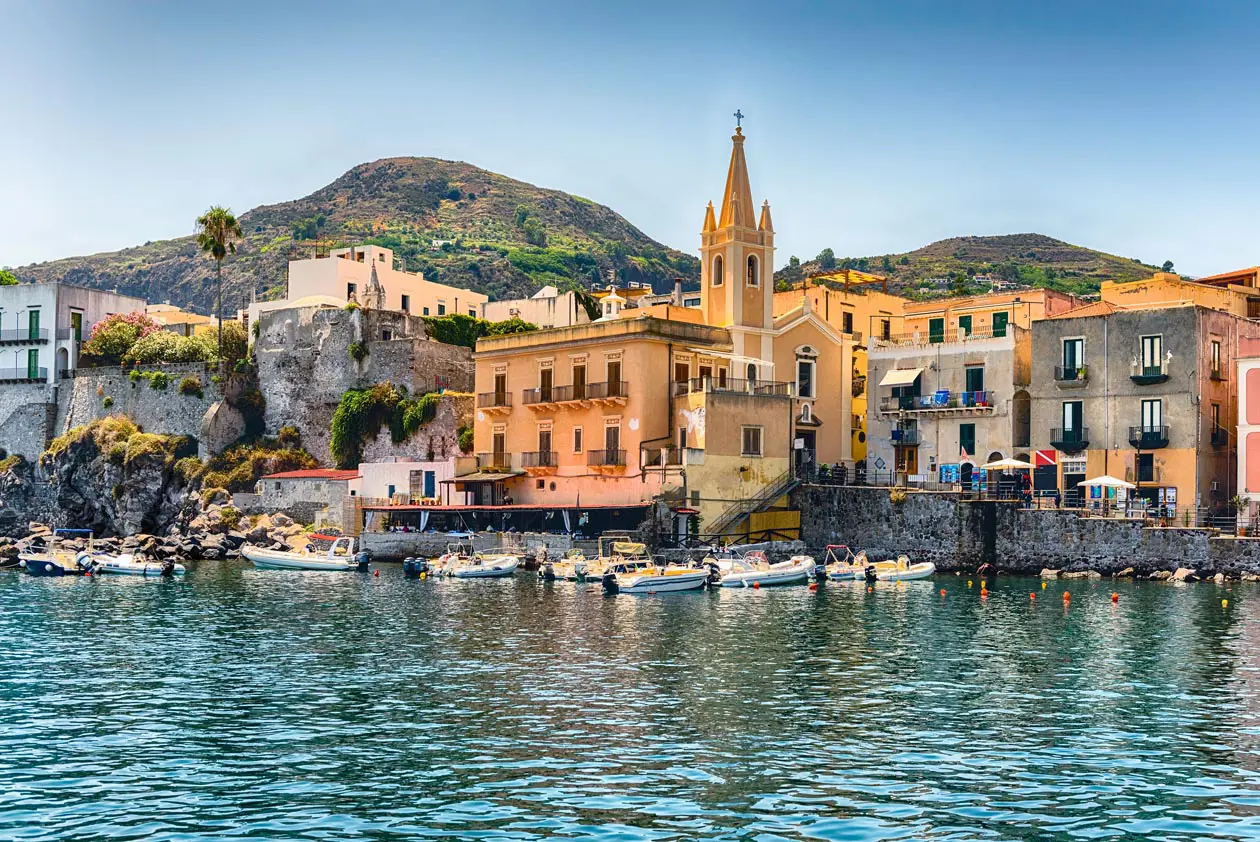
Lipari, the capital of the Aeolian archipelago, is the ideal starting point: the Norman castle, the volcanological museums and the alleys of the historic center make it the cultural compass from which to orient yourself between millenary history and geology.
On Stromboli, the volcano that the Aeolians familiarly call "Iddu" has been erupting regularly for centuries: guided excursions to the crater, at dawn or at night, allow you to observe the Sciara del Fuoco lighting up orange, between black lava sand beaches and a silence interrupted only by the breath of the mountain.

In Vulcano, fumaroles, underwater hot springs and sulphurous mud offer a natural regeneration that precedes any wellness center by millennia, while the paths of Vulcanello and Capo Grillo offer direct contact with an environment that is still alive.
Ustica, the first Marine Protected Area established in Italy, instead houses a submerged museum made up of caves, walls and underwater archaeology sites, completed on the surface by panoramic paths and sunsets on the islet of Colombara.
Food and wine and slow tourism: Salina and Favignana
There is a way of traveling that measures the quality of time in flavors, conversations with producers and prolonged stops in front of a rural landscape and it is the one that best tells Salina and Favignana.
Salina is the island that you eat: Malvasia grows in terraced vineyards overlooking the sea, the capers of Pollara are a Slow Food presidium and the pani cunzatu of Lingua is a small daily ritual. A walk to the Fossa delle Felci, or a stop in Pollara, complete a cultured and never hurried sensory experience.
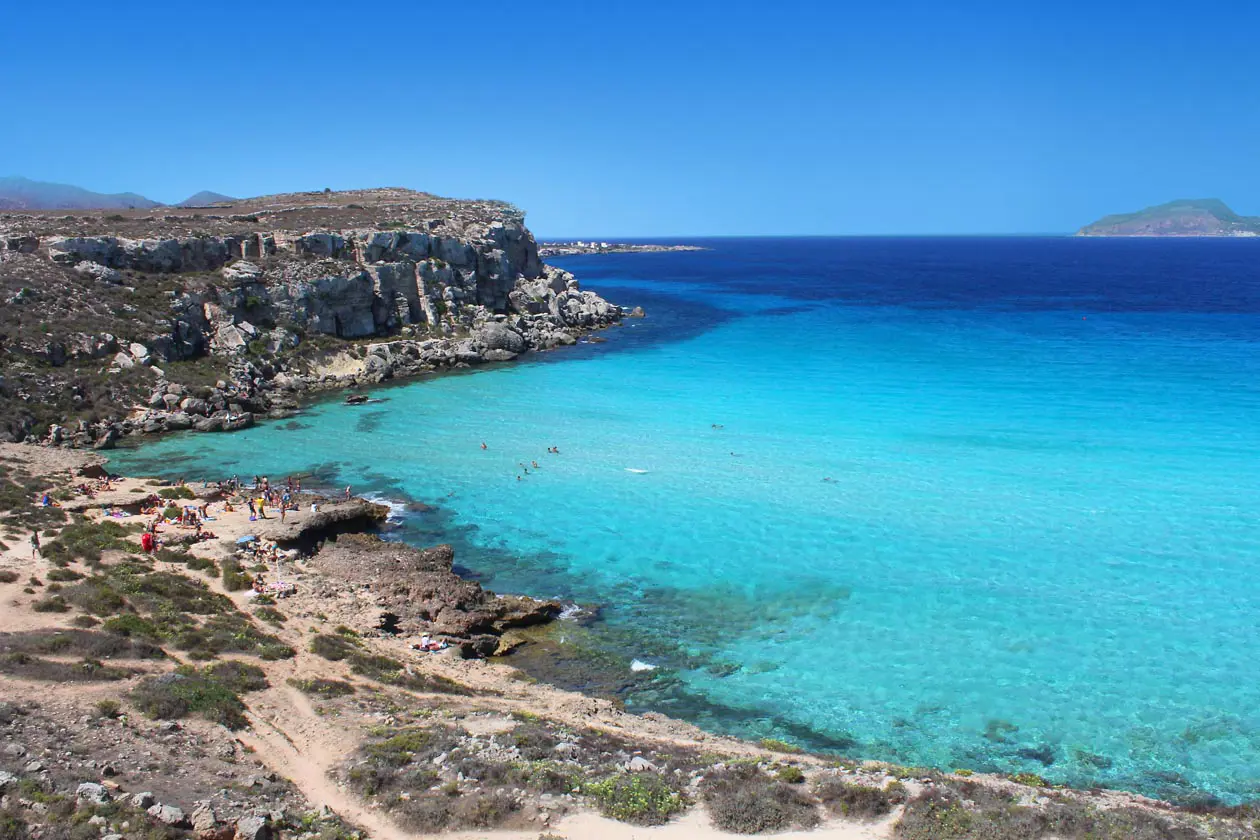
In the Egadi archipelago, Favignana interprets the same slow spirit on two wheels: a flat island in yellow tuff, you can explore comfortably by bicycle among the ancient open-air quarries and coves such as Cala Rossa and Cala Azzurra. The Ex Stabilimento Florio, linked to the tradition of tuna slaughter, is now a museum that transforms the ritual of the tuna fishery into an anthropological and industrial story.
Wilderness and digital detox: Alicudi, Filicudi, Levanzo and Marettimo
For those seeking radical silence and total disconnection, the Sicilian archipelago offers some of the wildest islands in the Mediterranean.
Alicudi has no roads, cars or nightlife: only stone staircases, donkeys and a deep blue sea, where digital detox is a natural consequence of geography.
Filicudi shares its spirit, among fishing villages, paths towards the Fossa delle Felci and pristine seabeds that guard the Torre della Borgia and spectacular sea caves, not far from the prehistoric settlement of Capo Graziano.
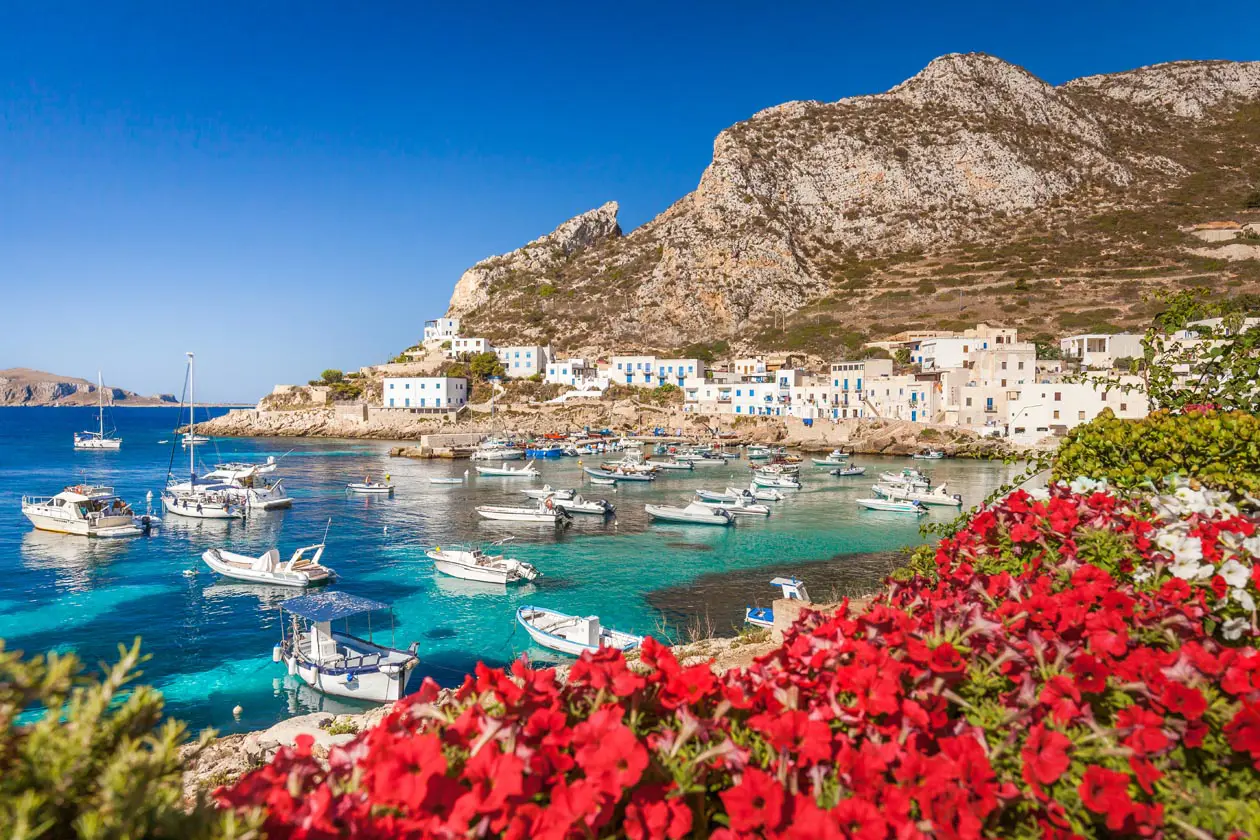
Levanzo, the smallest of the Egadi Islands, preserves some of the oldest cave paintings in the Mediterranean in the Grotta del Genovese, in an atmosphere made up of white houses gathered around the port and fragrant paths of Mediterranean scrub.
Marettimo, the wildest and furthest from the coast, is a true Dolomite mountain that emerges from the sea: a paradise for sailors, hikers and divers, with a network of sea caves among the most intact in the entire Strait of Sicily.
Protected biodiversity: Lampedusa and Linosa
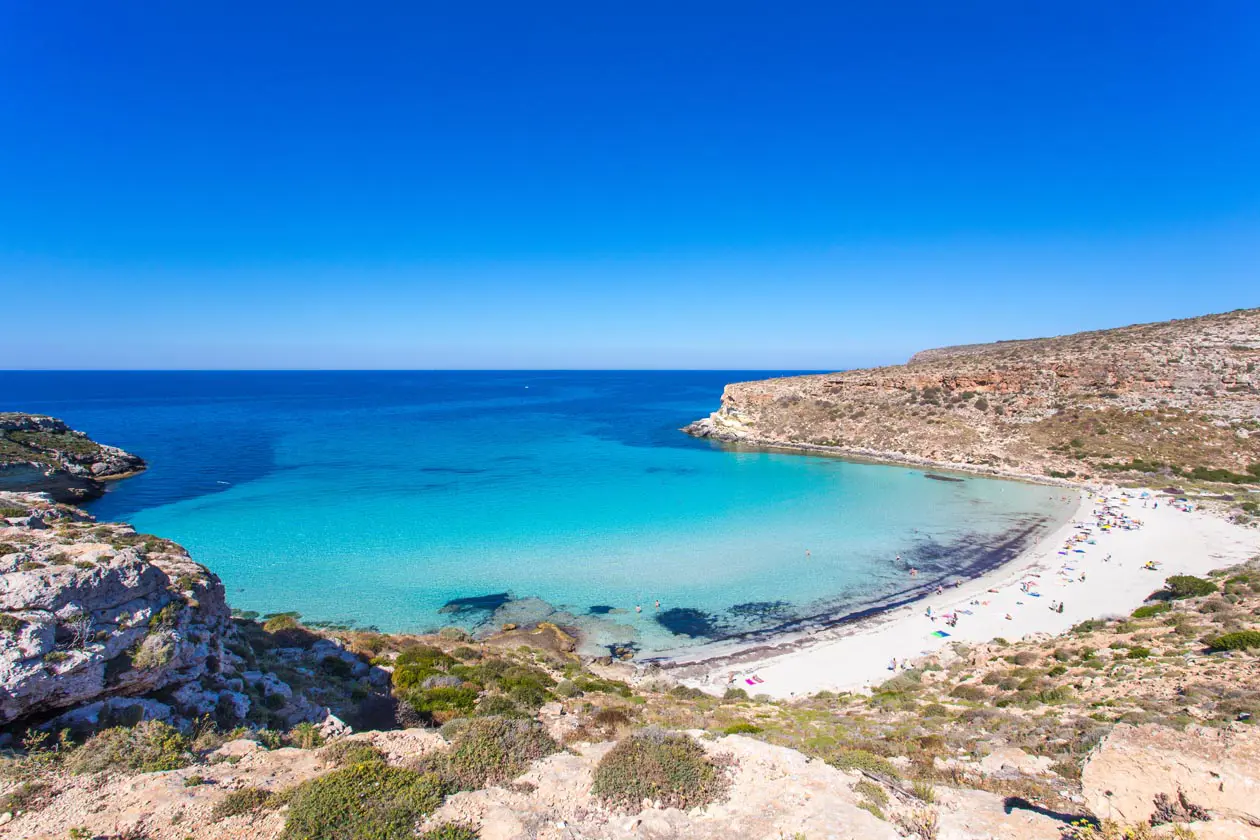
In the Pelagie Islands, environmental protection is not a constraint but an attraction. In Lampedusa, the Isola dei Conigli provides regulated access and compulsory reservations to protect the summer nesting site of the Caretta Caretta turtle, making the island a true laboratory of responsible tourism.
Linosa, more secluded and surprising, is the volcanic soul of the Pelagie Islands: ancient craters, dark cliffs and endemic flora frame one of the most important colonies of Cory's shearwater in the Mediterranean, as well as being a crucial site for the Caretta Caretta itself. Here, traditional agriculture and the protection of marine fauna coexist in an authentically ecological travel experience.
Discreet luxury and identity: Panarea and Pantelleria
Finally, there is an elegance that does not need ostentation, but is expressed through history, tradition and vernacular architecture.
Panarea, the smallest of the inhabited Aeolian Islands, filters its exclusivity in white architecture, flowered terraces and coves such as Cala Junco: between yachting and high-level hospitality, its seabed hides underwater fumaroles and the wreck of an English merchant ship.
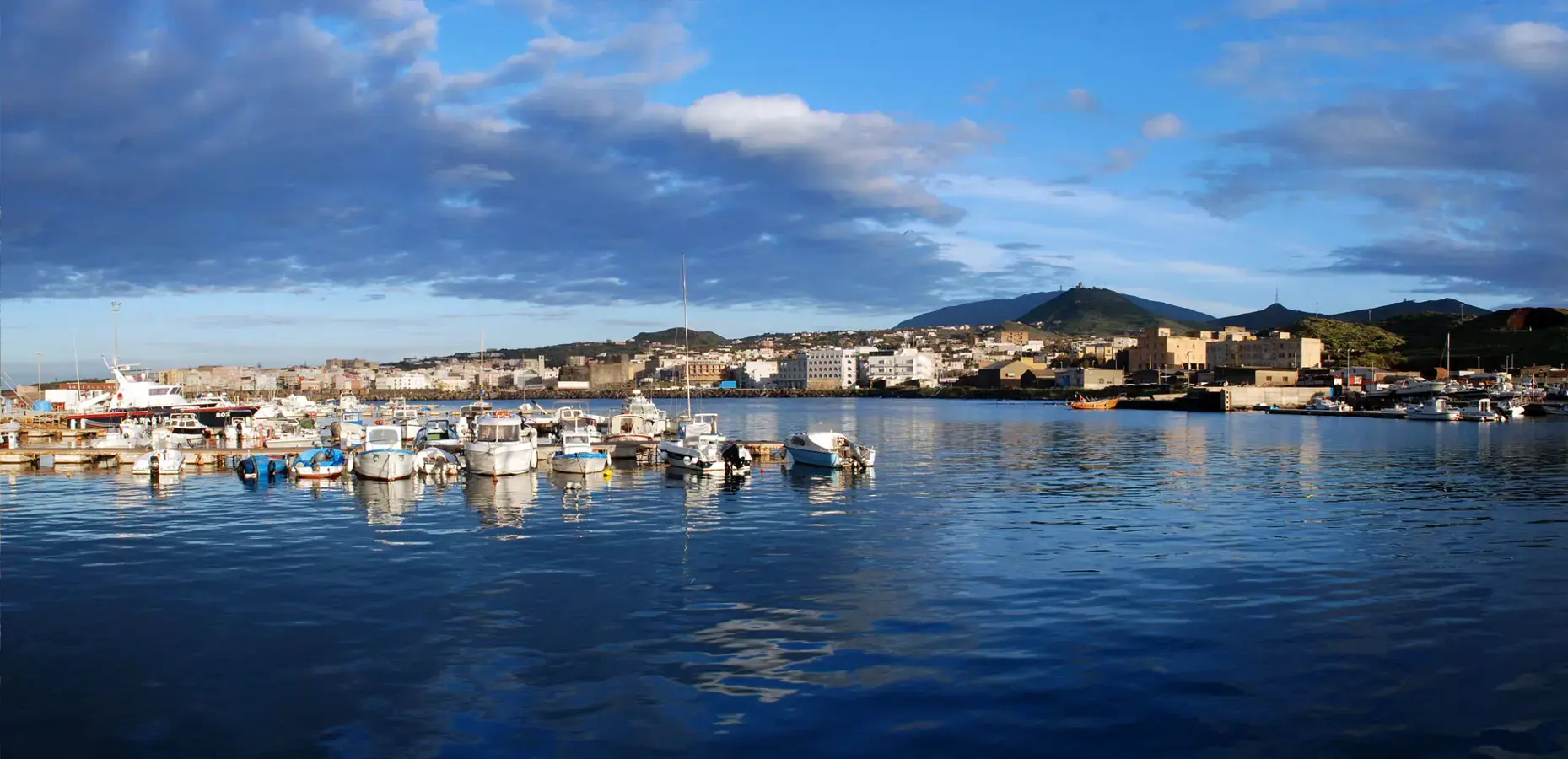
Pantelleria, sculpted by the wind, has no sandy beaches but jagged coves, lava stone dammusi and the thermal mud of the Mirror of Venus: the sapling vine, a UNESCO World Heritage Site, resists the mistral giving Zibibbo and Passito. Stone houses and Pantelleria gardens, millennial responses to drought, today can be read as an ante litteram design, ideal for those looking only for wind, stone, vines and sea.
Frequently asked questions about the smaller islands of Sicily
When is the best time to visit the smaller Sicilian islands?
The ideal season is from May to October, with June and September suitable for those looking for pleasant temperatures and avoiding the tourist flows of the middle of August.
Which islands to choose for volcanic trekking?
Stromboli and Vulcano offer the most spectacular excursions to the active craters, while Lipari serves as a logistical and cultural base for the entire Aeolian archipelago.
Which islands are best suited for those seeking tranquility and disconnection?
Alicudi and Marettimo are the most isolated destinations, with no vehicular traffic and limited connectivity, ideal for a real digital detox.
Where are the best marine nature reserves?
Ustica, the first Marine Protected Area in Italy, and the Pelagie Islands (Lampedusa and Linosa), essential for the nesting of the Caretta Caretta turtle.