The faces of the Fayum in Rome at the Ara Pacis: the portrait in Roman Egypt on display
From November 5, 2026 to May 2, 2027, the Ara Pacis Museum in Rome hosts "The power of the portrait. Egypt and Rome. The faces of the Fayum", an exhibition dedicated to one of the most fascinating testimonies of ancient painting. Over 110 works, including painted panels, shrouds, funerary masks, marbles, plaster casts and goldsmiths, compare the portrait tradition of Roman Egypt with that of imperial Rome.
Curated by Claudio Parisi Presicce and Laura Petacco, the exhibition brings together works from important international museums and collections. The central nucleus includes almost 50 portraits of the Fayum, extremely delicate artifacts that are rarely loaned and that are only present in limited numbers in Italian museums. Among the symbolic works is the Tondo of the Two Brothers, from the Egyptian Museum in Cairo and presented in Rome after a major restoration.
What are Fayum portraits
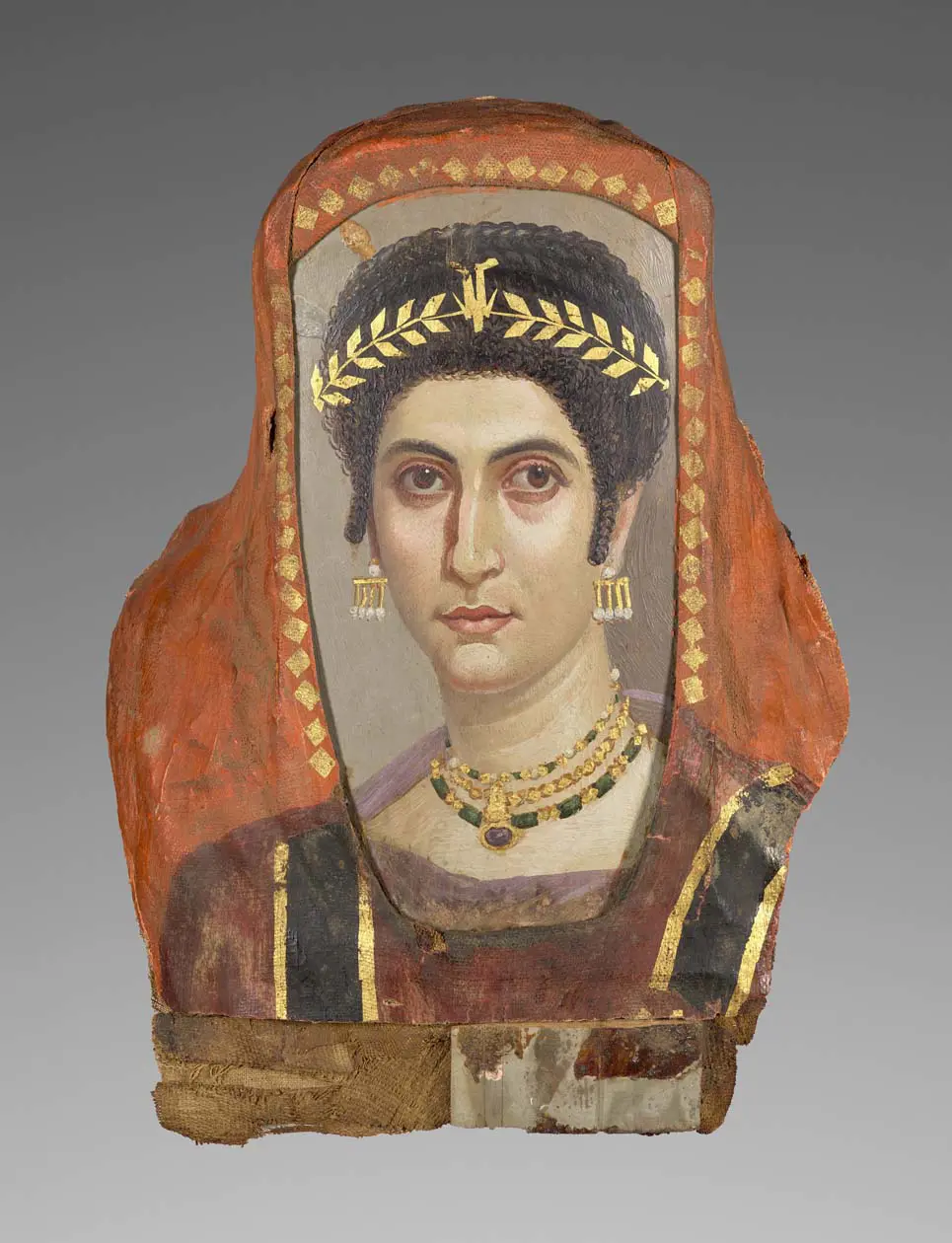
The name Fayum portraits identifies a set of funerary images made in Egypt especially during the Roman period. Just under a thousand are known in the world and many come from the Fayum area, although specimens have been found in other regions of the country.
These are mainly thin wooden boards painted in tempera or encaustic, a technique in which pigments are worked with wax. The portraits were placed at the height of the deceased's face and inserted between the mummy's bandages.
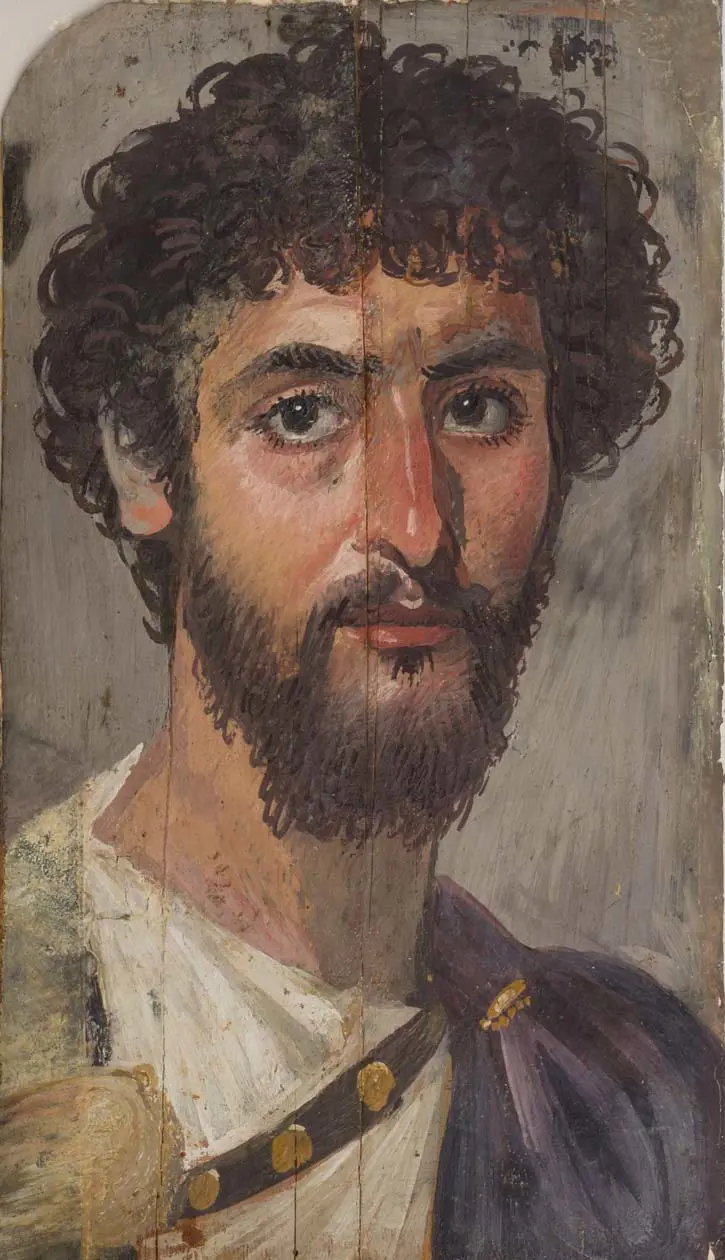
The result is surprisingly close to modern sensibility. The eyes turned towards the viewer, the differences between the features, the hairstyles, the beards, the clothes and the jewels return people who seem to emerge from antiquity with a strong individuality. It is precisely this immediacy that constitutes one of the central themes of the Ara Pacis exhibition: understanding how the portrait could continue to preserve a person's identity even after death.
Between Egypt, Greece and Rome
The faces of the Fayum were born within a society in which different traditions coexisted. The Egyptian practice of mummification met Greek figurative culture and the growing Roman interest in individual representation.
The exhibition highlights precisely this contamination. Alongside the funerary tables, masks, painted shrouds, marble portraits, plaster casts and jewels are on display, allowing different ways of representing the face and constructing identity in antiquity to be compared.
Roman Egypt thus became a privileged observatory on a Mediterranean much more connected than it may appear today, where images, techniques, fashions and cultural models shifted and transformed.
Hairstyles, beards and ornaments also become precious elements for understanding the era. In fact, many portraits show fashions widespread in the Roman world, while their function remains closely linked to the Egyptian funerary tradition.
The Tondo of the Two Brothers comes from Cairo
One of the most anticipated works is the Tondo of the Two Brothers, from Antinoopolis, in Middle Egypt, and dated to the mid-second century AD. The painting depicts two young men traditionally identified as brothers half-length. The similarity of their features suggests a family bond, but the painter carefully distinguishes their physiognomies, complexions and clothing.
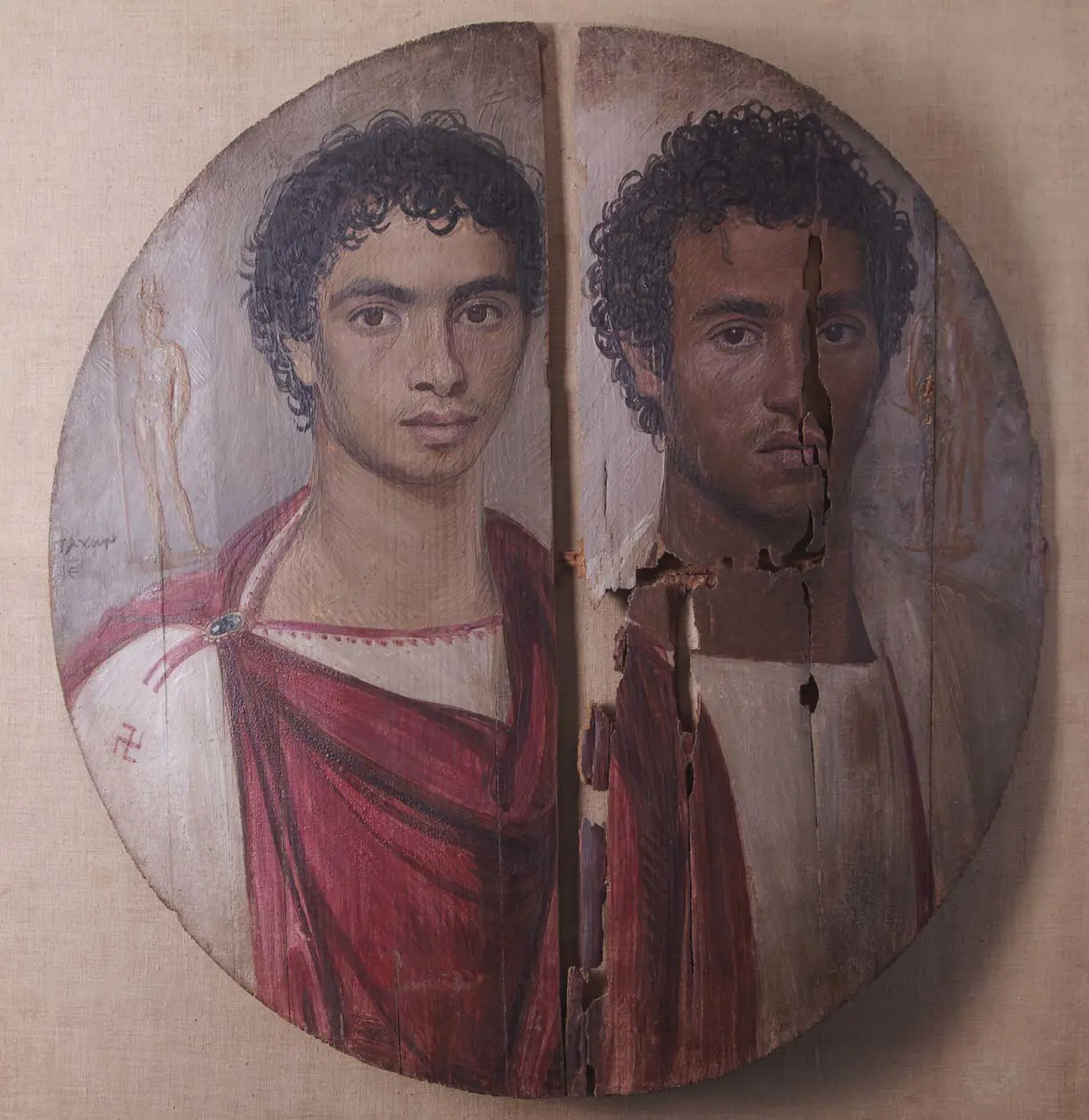
The gazes constitute the point of greatest intensity of the work. Dense brushstrokes, luminous touches on the eyes and shadows used to shape the faces give the two figures a particularly lively presence.
The Tondo is also a rare object due to its very structure: instead of the more common individual rectangular portraits linked to mummies, it presents two people within a circular composition. Before moving to Italy, the Tondo of the Two Brothers underwent a delicate conservation operation in Cairo, carried out in collaboration with the Egyptian authorities.
Almost 50 portraits brought together exceptionally in Rome
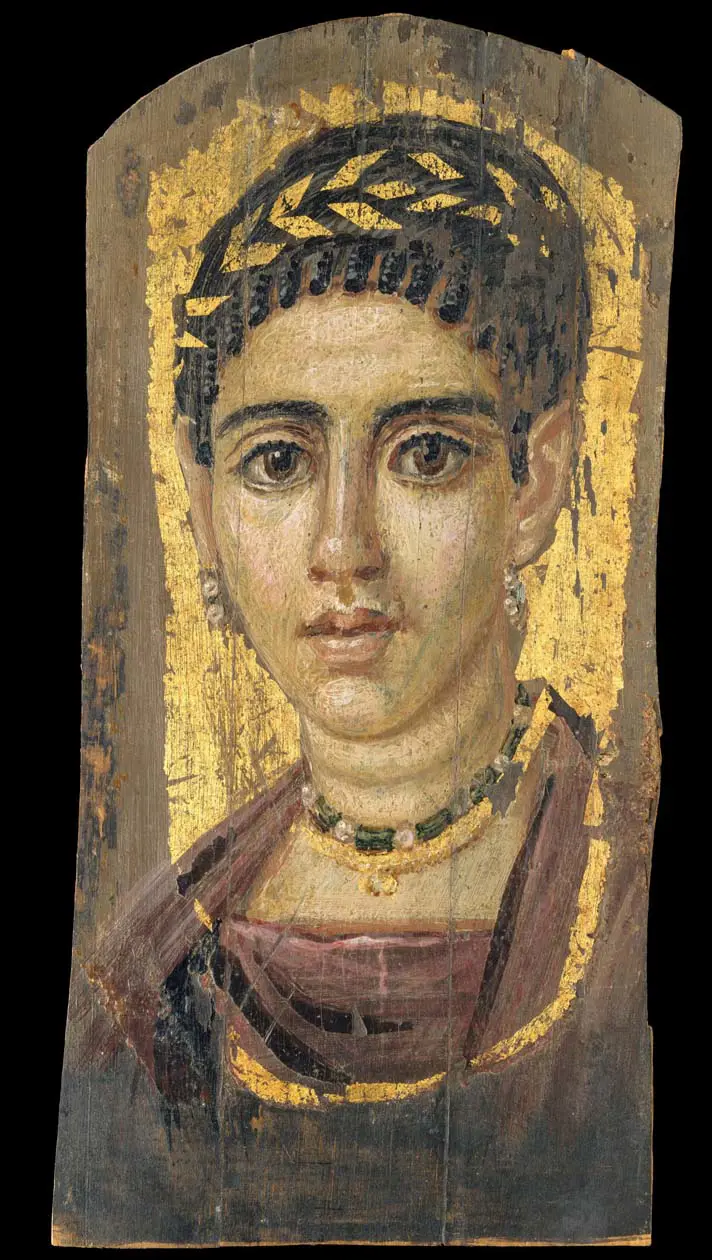
The Ara Pacis exhibition brings together almost fifty portraits of the Fayum, creating a particularly significant ensemble in terms of number and provenance. The loans come from institutions such as the Egyptian Museum in Cairo, the Musée du Louvre in Paris, the Getty Museum in Los Angeles and the Metropolitan Museum of Art in New York, as well as important European, Egyptian and Italian museums and collections.
A common element emerges: behind the funerary function, each image seeks to preserve the presence of an individual and the portrait as a memory of the person. The theme of the exhibition therefore goes beyond the archaeological fascination of the finds.
Almost two thousand years later, the strength of these images derives precisely from their ability to overcome their original function. They do not appear only as archaeological finds, but as the faces of real people who continue to establish direct contact with the observer.
Visiting the exhibition of Fayum portraits in Rome at the Ara Pacis also makes it easy to include the visit in an archaeological and cultural itinerary in the center of Rome: the museum is located next to the Mausoleum of Augustus, a short distance from the Spanish Steps and Piazza del Popolo.
INFO Exhibition: "The power of the portrait. Egypt and Rome. The faces of the Fayum".