The pearl of Kuwait, between desert and sea
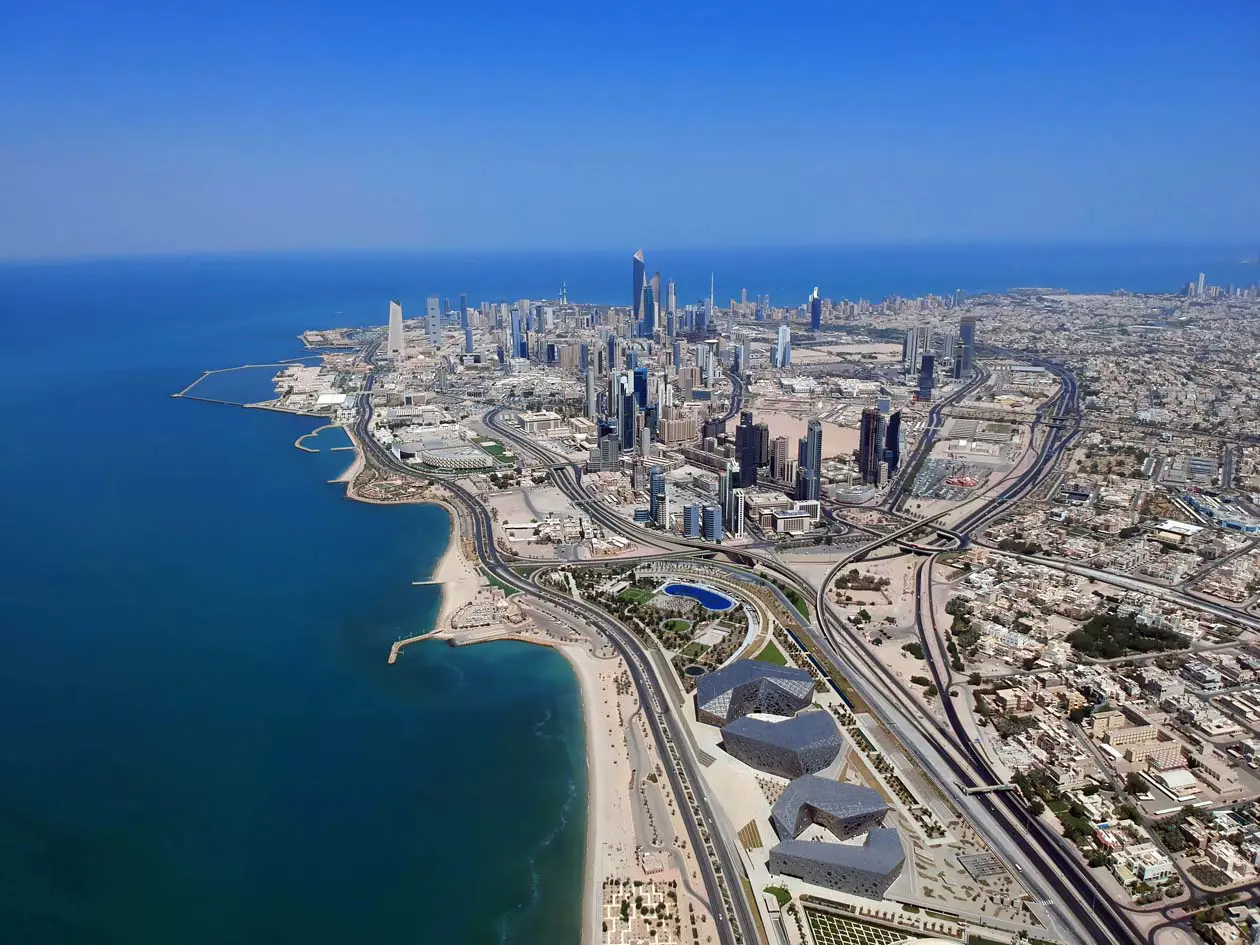
Kuwait City is the capital of the Emirate of Kuwait, overlooking the sea of the Persian Gulf in Kuwait Bay, between ancient Mesopotamia (land between the Tigris and Euphrates rivers, area of present-day Iraq and parts of Syria/Turkey) and the Arabian Peninsula, in a historical meeting point and settlement of different civilizations such as Sumerians, Akkadians, Babylonians and Assyrians.
The city is located right in the heart of the country which, in the 1700s, first distinguished itself as a small fishing village and then gradually became an important trading center for the transit of goods between India, Muscat, Baghdad, Persia and Arabia. Subsequently, Kuwait City was established in 1756 into a Sheikhdom, ruled by the Al Sabah dynasty.
For centuries, pearl fishing was one of the country's main sources of wealth. Even today, this tradition is celebrated with annual festivals animated by folk songs and dances, a reminder of a time when Indian teak dhows were carefully prepared for the sea and scuba diving. In addition to pearl farming, Kuwait was renowned throughout the Persian Gulf for shipbuilding: its boats sailed the routes to India, East Africa and the Red Sea. In more recent times, the country has experienced a period of great prosperity thanks to oil, discovered in 1938, establishing itself as one of the largest producers and exporters in the region.
Kuwait City is now the largest and most populous city in the country. Surrounded by desert, it is characterized by a hot desert climate: very long and scorching summers, from May 21 to November 4, with temperatures frequently exceeding 45°, and short and mild winters, from December 6 to February 15, with little rainfall.
The city offers numerous tourist attractions useful for understanding the history and culture of the whole of Kuwait. Must-sees include the National Museum of Kuwait, the Museum of Modern Art, the Al-Salam Palace Museum, the Maritime Museum, the Al Shaheed Park Museum, and the Islamic art collection of Sheikh Nasser Sabah Al-Ahmad Al-Sabah.
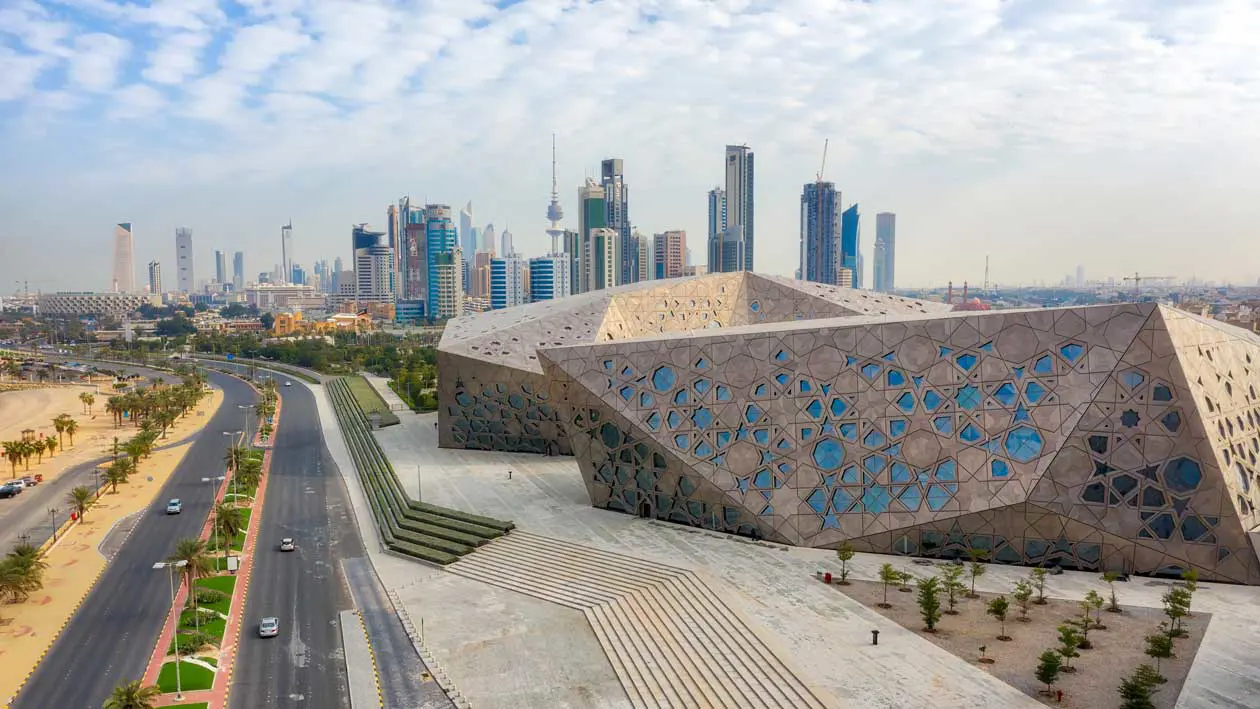
Alongside the museums, there are symbolic places of local culture such as the Sadu House, dedicated to Bedouin handicrafts, and the Sheikh Jaber Al-Ahmad Cultural Center, set in a large park and destined, together with the Sheikh Abdullah Al Salem Cultural Center, to consolidate a new cultural district for the promotion of the arts, with a theater district open to music, poetry, theatre and cinema.
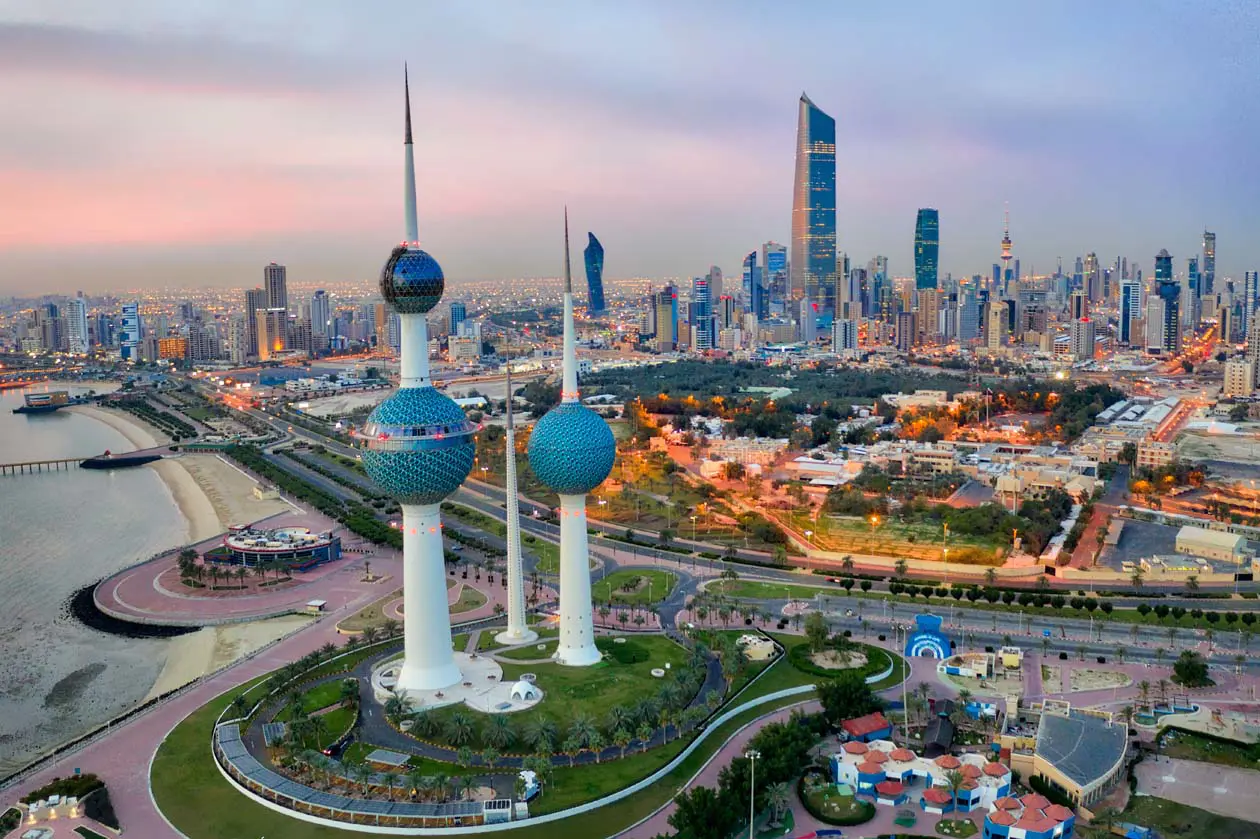
Among the most iconic architectures are the three Kuwait Towers, designed by Danish architect Malene Bjørn and towering over the Arabian Gulf Road in the Sharq district: they are among the country's most famous monuments and offer panoramic views of the city and the sea. Also of great interest are Sief Square with the Seif Palace and its watchtower, the Grand Mosque of Kuwait with its elegant Islamic architecture, the Souq Sharq Waterfront Market on the waterfront at the height of the marina - born as a traditional souk and now evolved into a modern shopping center - and again the Jaber Al-Ahmad Theater and Stadium.
The city skyline is dominated, in addition to the Kuwait Towers, by the Al Hamra Tower, 414 meters high and the tallest building in Kuwait, which also houses a panoramic restaurant, and by the Liberation Tower, 372 meters high. Among the most striking engineering works is the Sheikh Jaber AlAhmad AlSabah Causeway, a long sea bridge that connects Kuwait City, Subiya and the new Silk City, including two artificial islands, one to the north and one to the south.
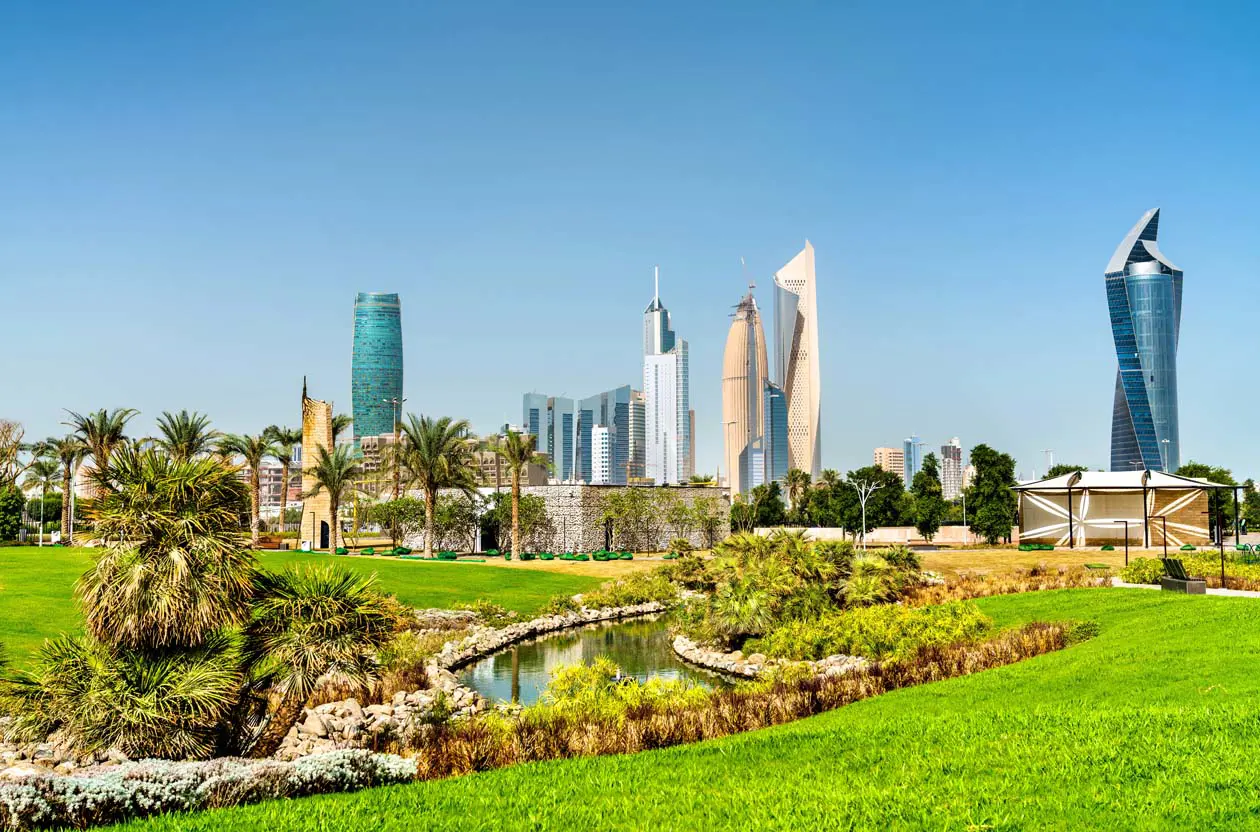
On the outskirts of the city lies Al Shaheed Park, the largest in Kuwait: a real green lung with botanical gardens, walking paths, trails, two museums, artificial lakes, jogging tracks and panoramic restaurants where you can relax, especially in the warmer months.
In the Salmiya area is Boulevard Park, a family-friendly amusement park with gardens, an open-air theater, restaurants, spa, shopping mall, and event space. Also very popular is the Trampo Center, with Trampoline Arena and Dodgeball Zone with Foam Pit, located in the Murouj Complex (near the Sahara Kuwait Golf Resort), the Promenade Mall and the Baroue Marina Mall. At the Science Center you can visit the Majbal Al Mutawa Aquarium, where you can observe sharks, sea turtles and coral reefs, or the Kuwait Zoo, in Omariya on the Airport Road.
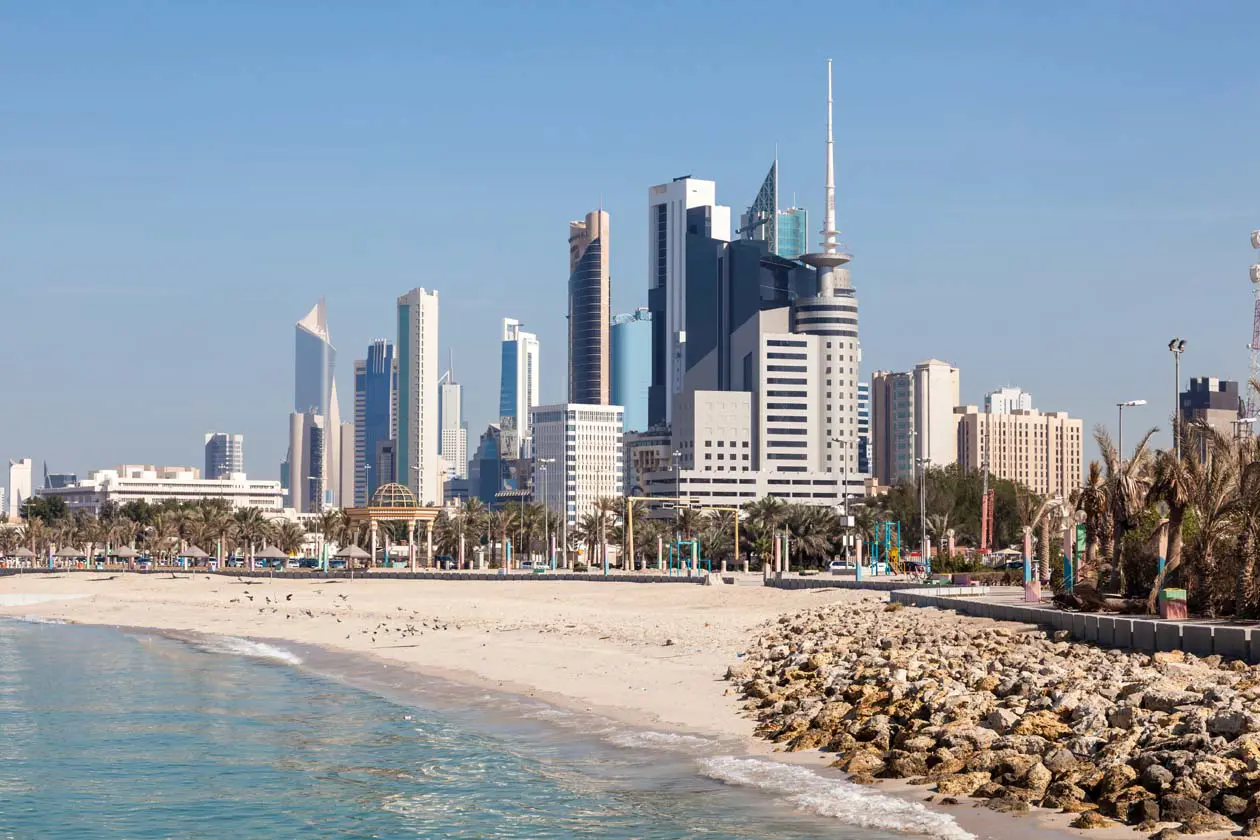
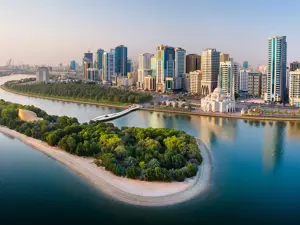
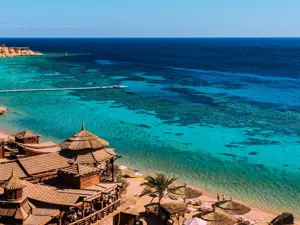
Popular beaches include Messilah and Oqialah, as well as the city's long waterfront. Of particular charm is Green Island, an artificial island built in 1988 near the Kuwait Towers, with a tourist tower, educational fortress, restaurants and bars. Families can also choose Shuwaikh Beach with play areas and sports fields or Zero Bay with beach and water park.
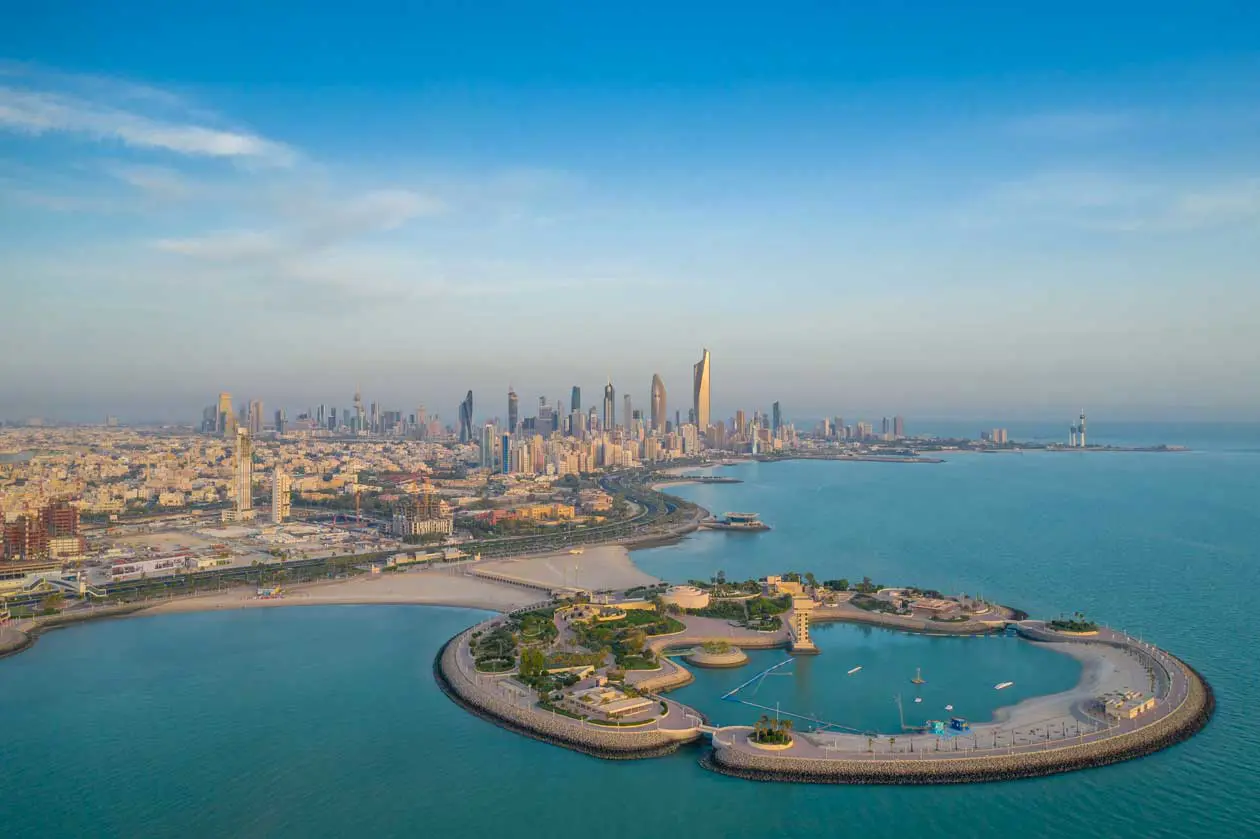
Kuwait also has nine largely uninhabited islands: Failaka, Bubiyan (the largest), Miskan, Warbah, Auhah, um al Maradim (populated by the 'Maradim' birds, from which it takes its name), um an Namil (rich in archaeological sites from the Bronze Age, the Dilmun era and the Islamic era), Kubbar (coral island rich in marine life) and Qaruh (with oil sediments leaking out of the rocks).
Failaka Island, the second largest and one of the most famous, is located about 20 kilometers from the coast and can be reached in two hours by ferry from Marina Crescent or the Ras Al-Ardh Marine Club. It is renowned for archaeological sites from the Bronze Age and the Hellenistic period, with Greek temples, ancient ruins and open-air museums.
Between sea and desert, relaxation or adventure in nature in Kuwait City is always guaranteed, such as a stay in a beach bungalow, a spring picnic in the desert or an adventure safari.
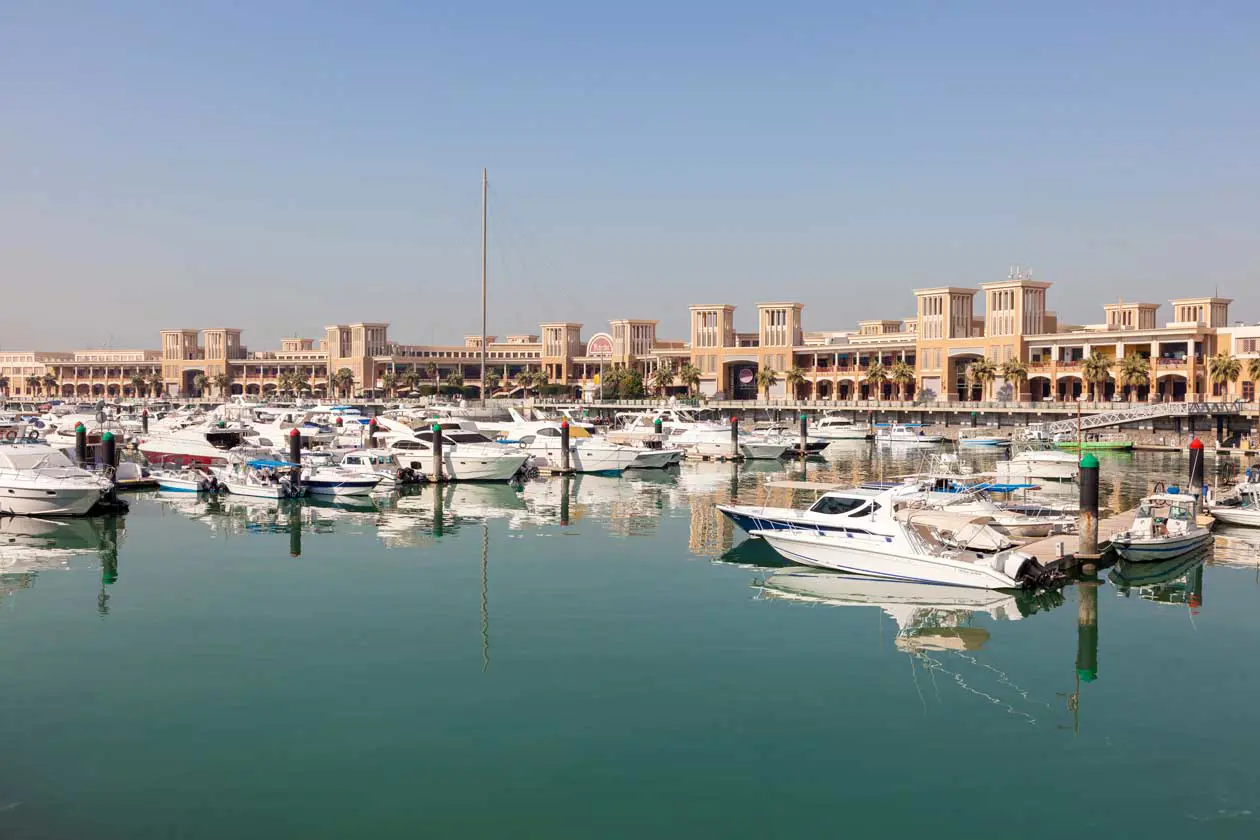
Along the coast and offshore, numerous water activities are practiced: speedboating, windsurfing, jet skiing, water skiing, sailing and scuba diving which are particularly appreciated thanks to the purification of the waters after the environmental damage related to the Gulf War following the invasion of Iraq in 1990: today the coral reefs and marine life offer evocative scenery. Kuwait is also a favorite destination for sailors, thanks to the favorable winds, the calm sea and the Kuwait City Yacht Club with an equipped marina, which has become a reference point for enthusiasts. Fishing is also widespread both on the rocks and in the open sea, for species such as sharks, barracudas, rays, pufferfish, mackerel, tuna, sole, snappers and sea bream.
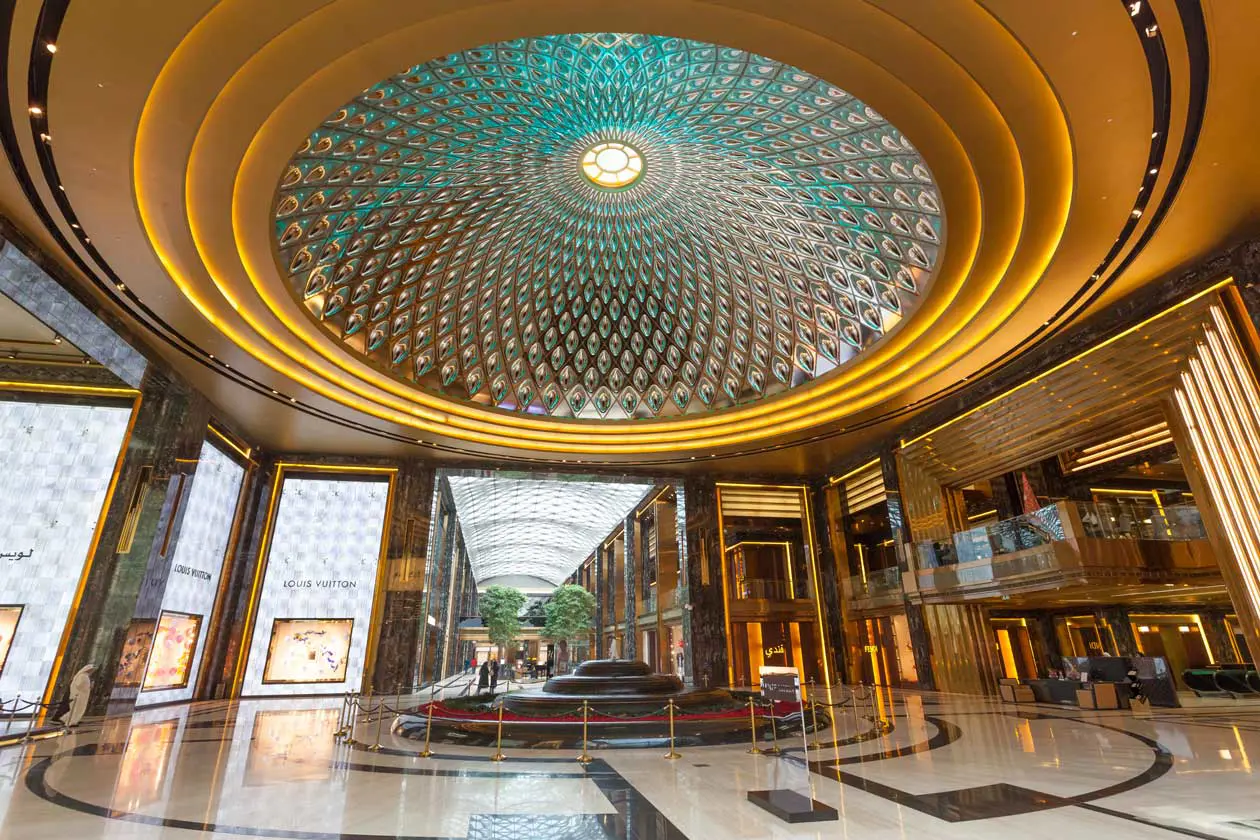
For shopping lovers, among the many Malls, The Avenues represents one of the most visited attractions in the country in a modern and cultural environment: here twelve design districts reinterpret both traditional souks and contemporary shopping malls, with restaurants, cafes, cinemas, children's areas and two connected hotels, the 4-star Hilton Garden Inn Kuwait and the 5-star Waldorf Astoria Kuwait. Located in Al-Rai along Sheikh Zayed Bin Sultan Al Nahyan Road, between Ghazali Street and Mohammed Bin Alqasem Street, it is only 15 minutes from Kuwait International Airport (KWI).
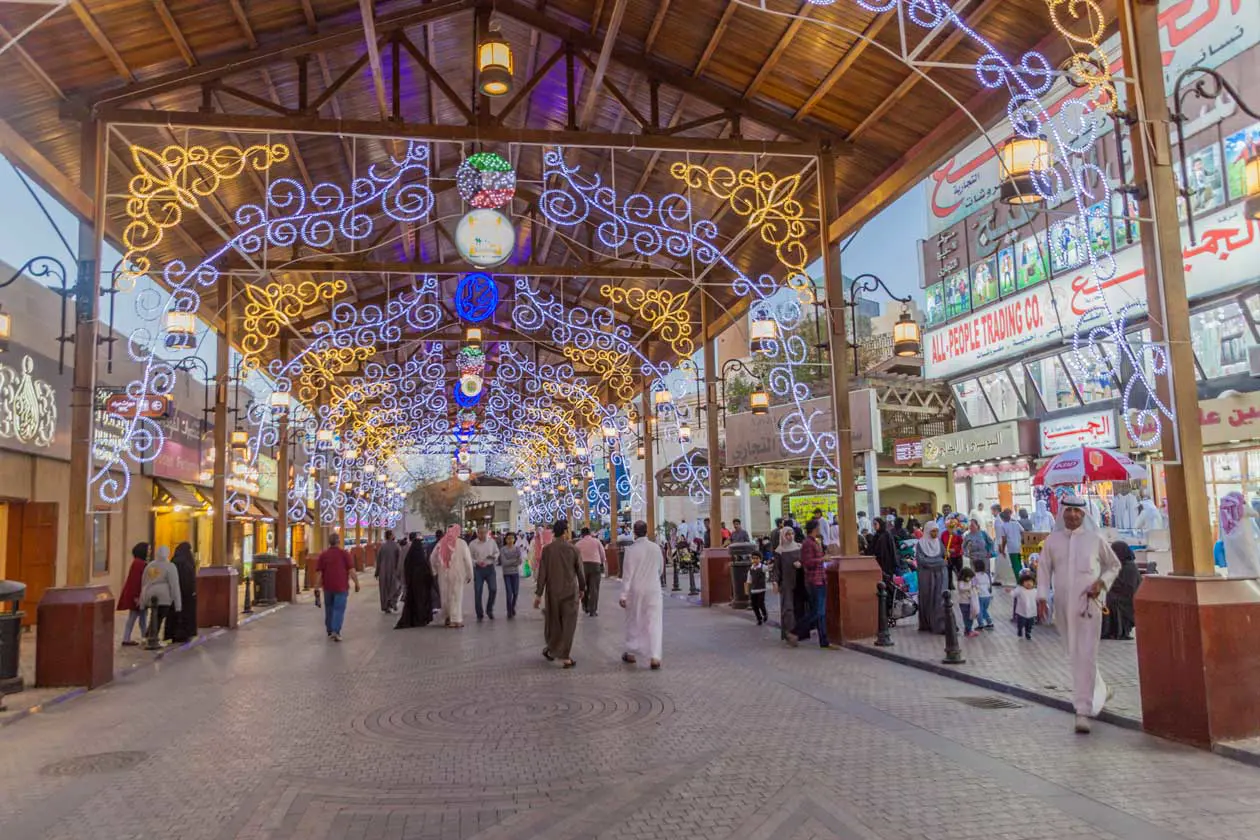
Those who want a more authentic atmosphere can visit the Friday market in the Al-Rai district, to shop for antiques and collectibles, or the Souq AlMubarakiya in the Qibla area, a historic market where you can buy ceramics, handicrafts, souvenirs, spices, traditional sweets, dates and honey. Around the souq are traditional-style cafes and restaurants, perfect for immersing yourself in the authentic flavors and aromas of ancient Kuwaiti food culture.
Kuwaiti cuisine
Kuwaiti cuisine offers a mosaic of flavors that reflects the influences of the Eastern Arab and Iranian tradition, together with Bedouin and Indian suggestions. In compliance with the precepts of Islam, alcohol and pork are excluded, while meats such as chicken, lamb and mutton find ample space, enhanced by a rich and aromatic use of spices.
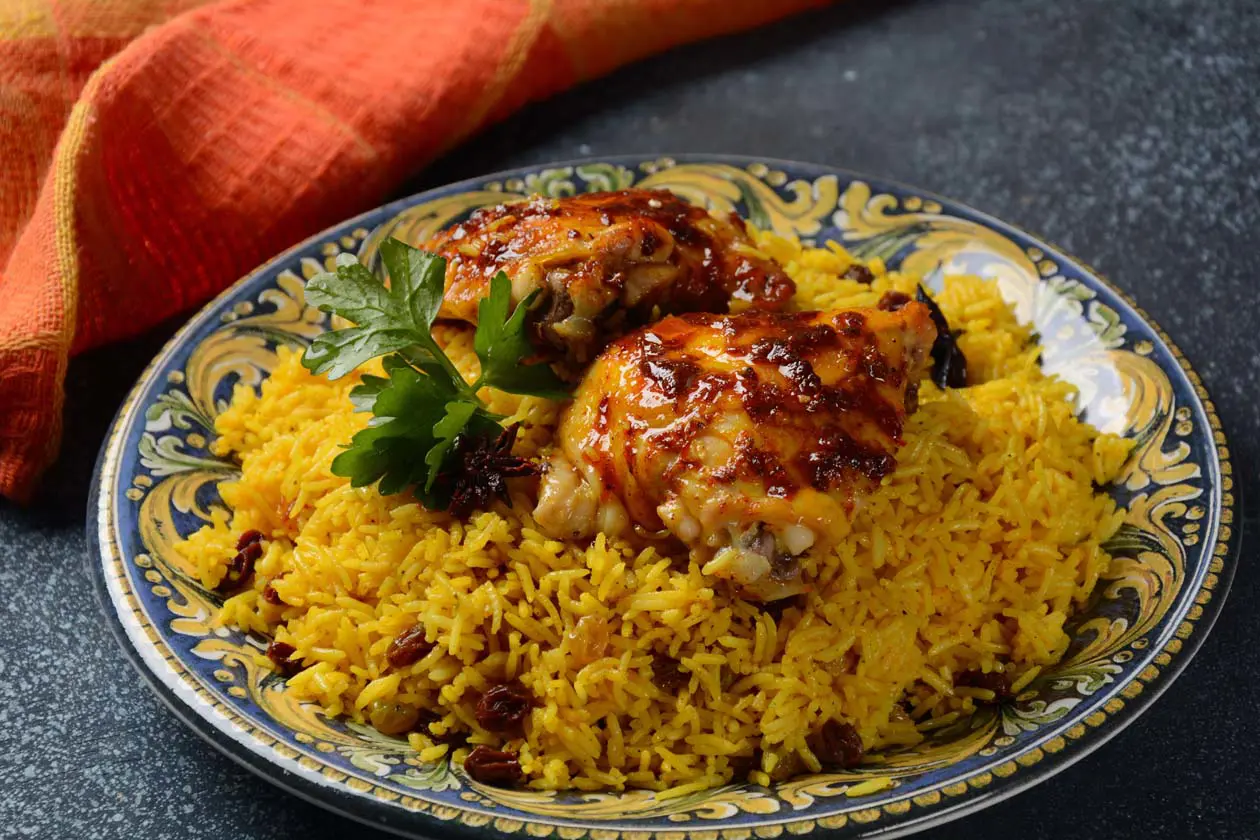
Among the most representative specialties stands out the Machboos, a dish based on basmati rice scented with spices and served with chicken or mutton. Biryani, prepared with rice, chicken or lamb, is also very popular, as are Gabout, dumplings stuffed with meat, and Jireesh, a kind of broken wheat porridge cooked with chicken or lamb.
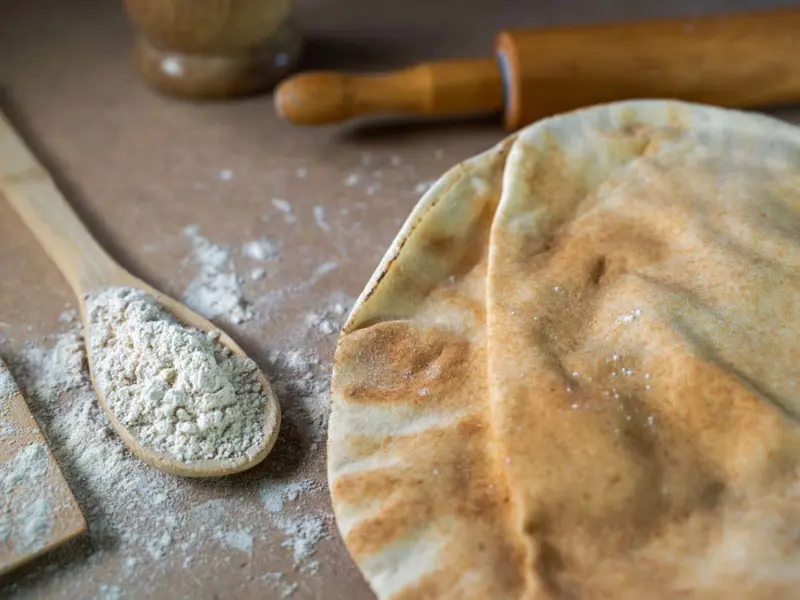
The dishes are traditionally served with Khubz, a typical flat bread baked in special ovens, sometimes enriched with sesame seeds or accompanied by spicy Mahyawa sauce, based on fish.

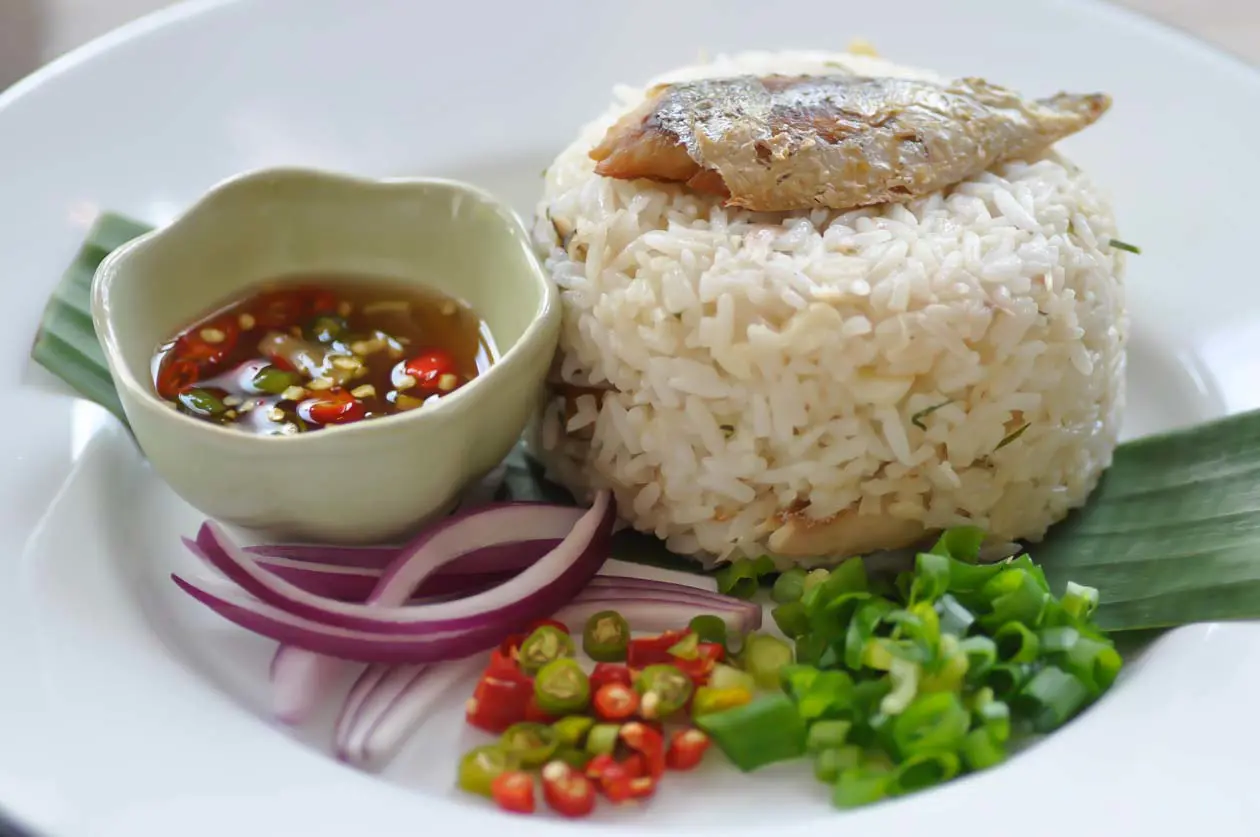
The country's historic maritime vocation can be found in the numerous fish and seafood dishes, often accompanied by rice. These include Mutabbaq Samak, considered one of the national dishes, with spicy fried fish served over rice and complemented by spicy sauces. Also very popular are the Hamour (grouper, grilled, fried or with biryani rice and spices), the Maid (mullet) and the Sobaity (sea bream), generally cooked on the grill or in the oven.
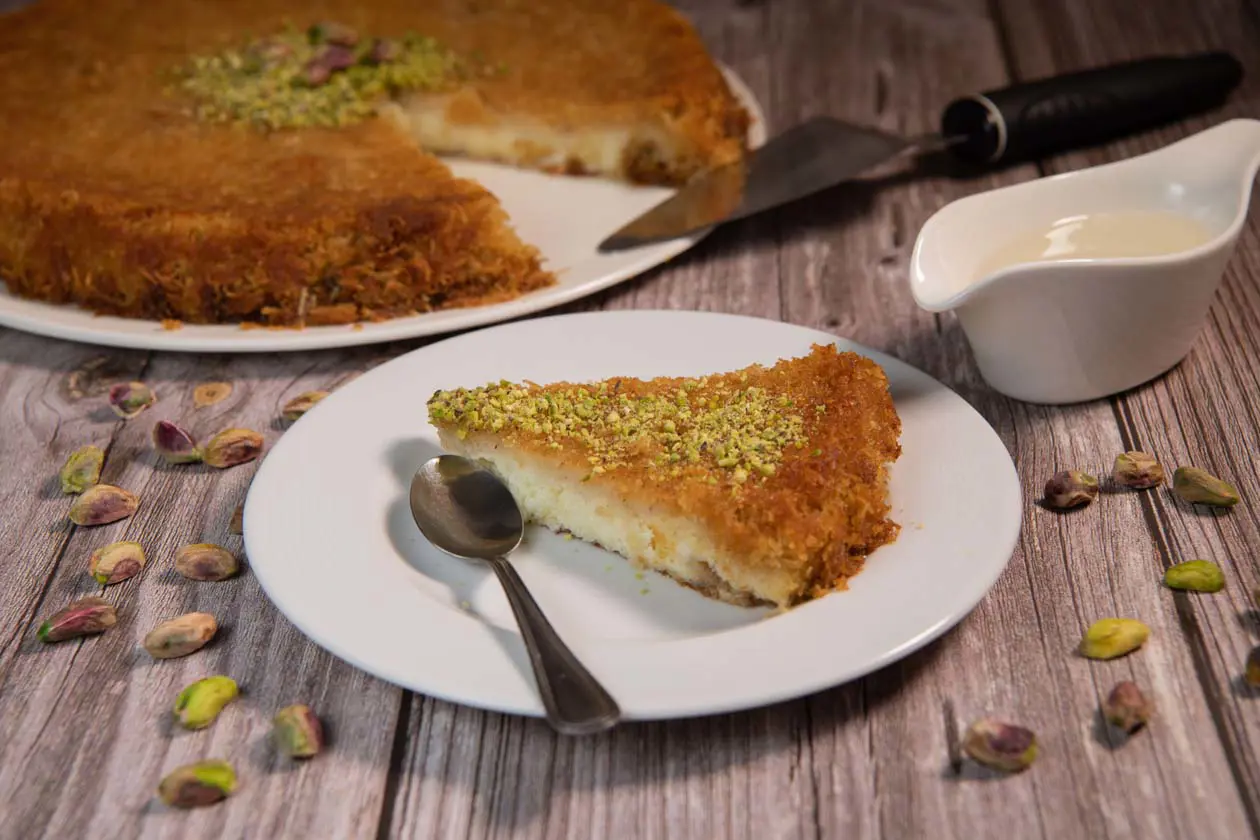
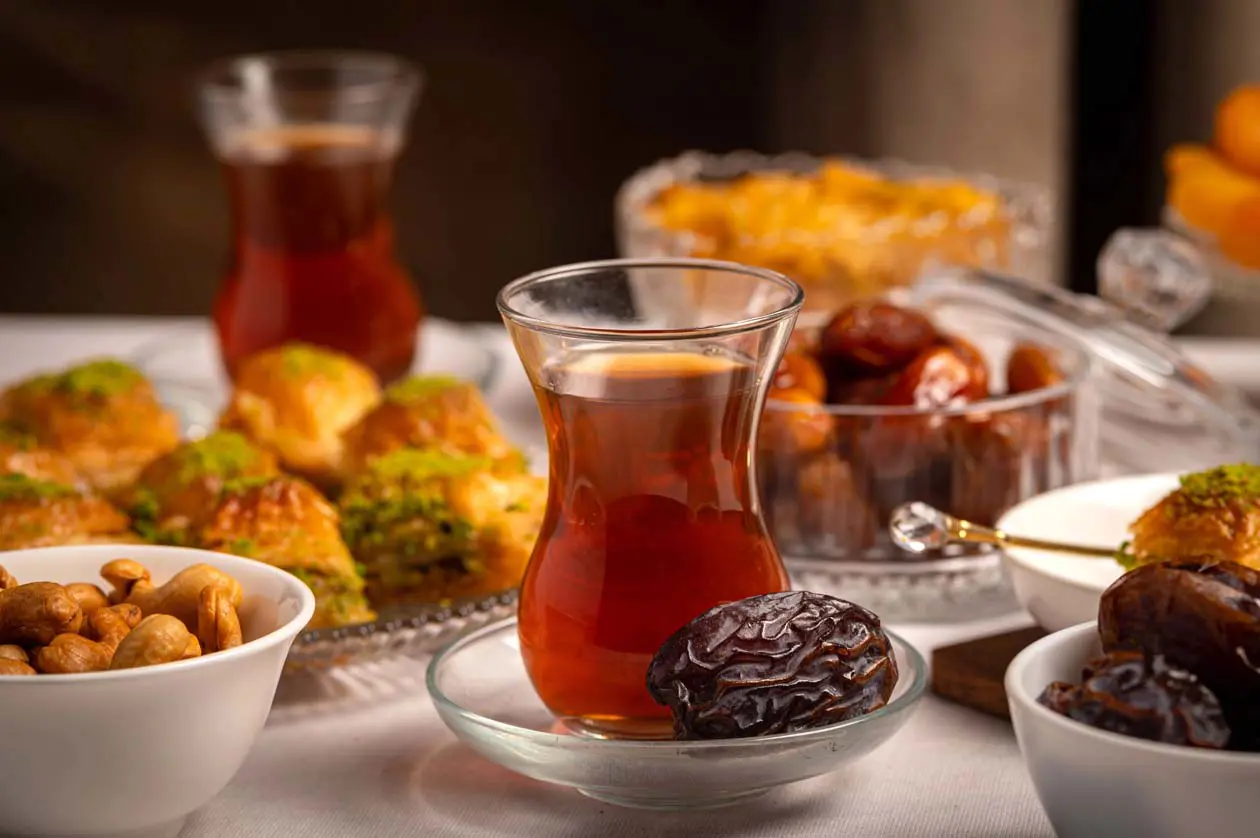
The confectionery tradition is equally rich. Try the Balaleer, a dish with a sweet-savory contrast consisting of sweet rice noodles flavored with saffron and topped with a savory omelette; Kanafa, a dessert made with sweet cheese and pistachios; the Gers Ogaily, a fragrant cake with saffron, cardamom or rose water; and Ghuraiba, crumbly biscuits often filled with walnuts or almonds and dusted with powdered sugar. There is no shortage of crunchy saffron-flavored biscuits and milk puddings such as 'Elba', flavored with saffron or cardamom. All this is traditionally accompanied by Arabic coffee or black tea, sometimes flavored with dried lime, and dates, consumed plain or filled with walnuts or sesame.
Text by Lisa Maria River
Avion Tourism Magazine
Photo: Copyright © Sisterscom.com / Depositphotos
All rights reserved. Reproduction is prohibited.
Tourist Board
visitkuwait.gov.kw
Partnership with Booking.com / Travelpayouts
Where to stay in Kuwait City
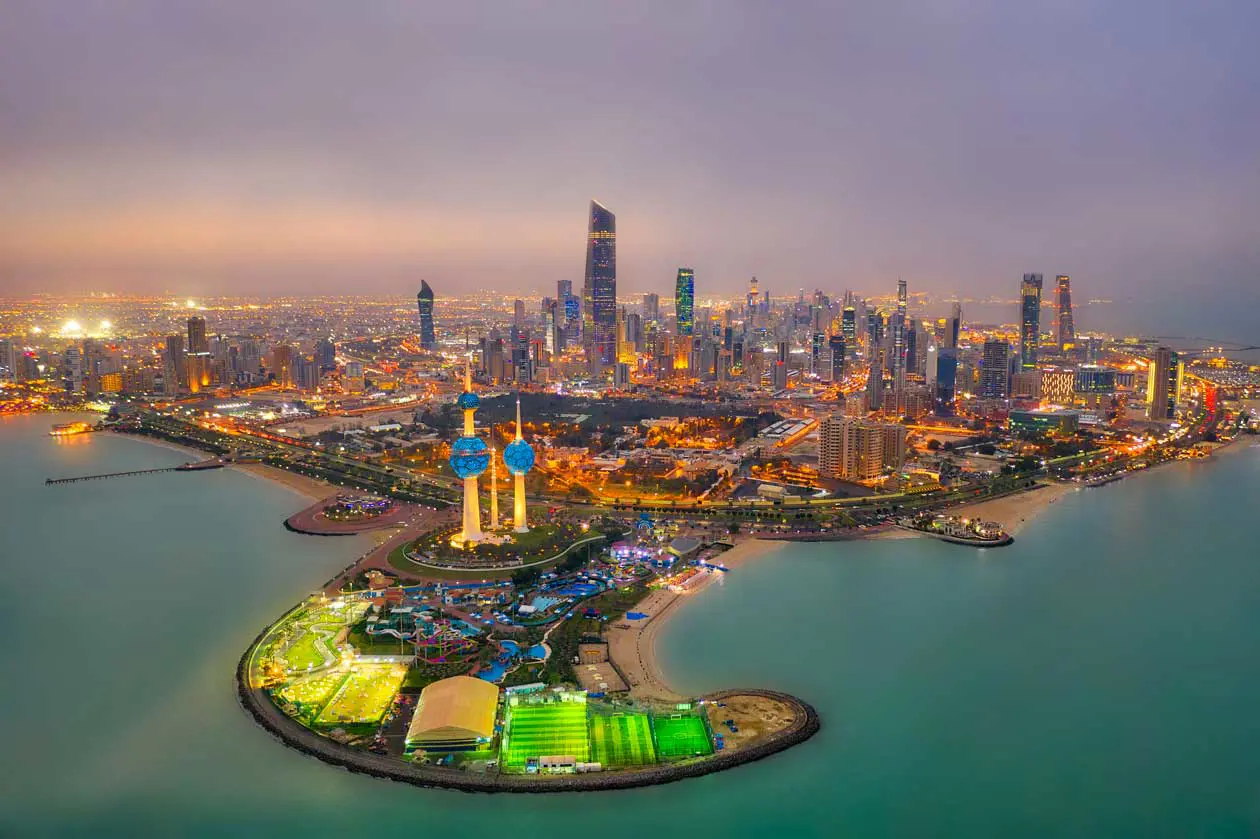
Kuwait City offers various possibilities for accommodation in facilities equipped with the best comforts.
To find the ideal hotel and offers, you can search by services offered or places of interest.


WHERE TO GO IN KUWAIT CITY
Monuments and tourist attractions in Kuwait City
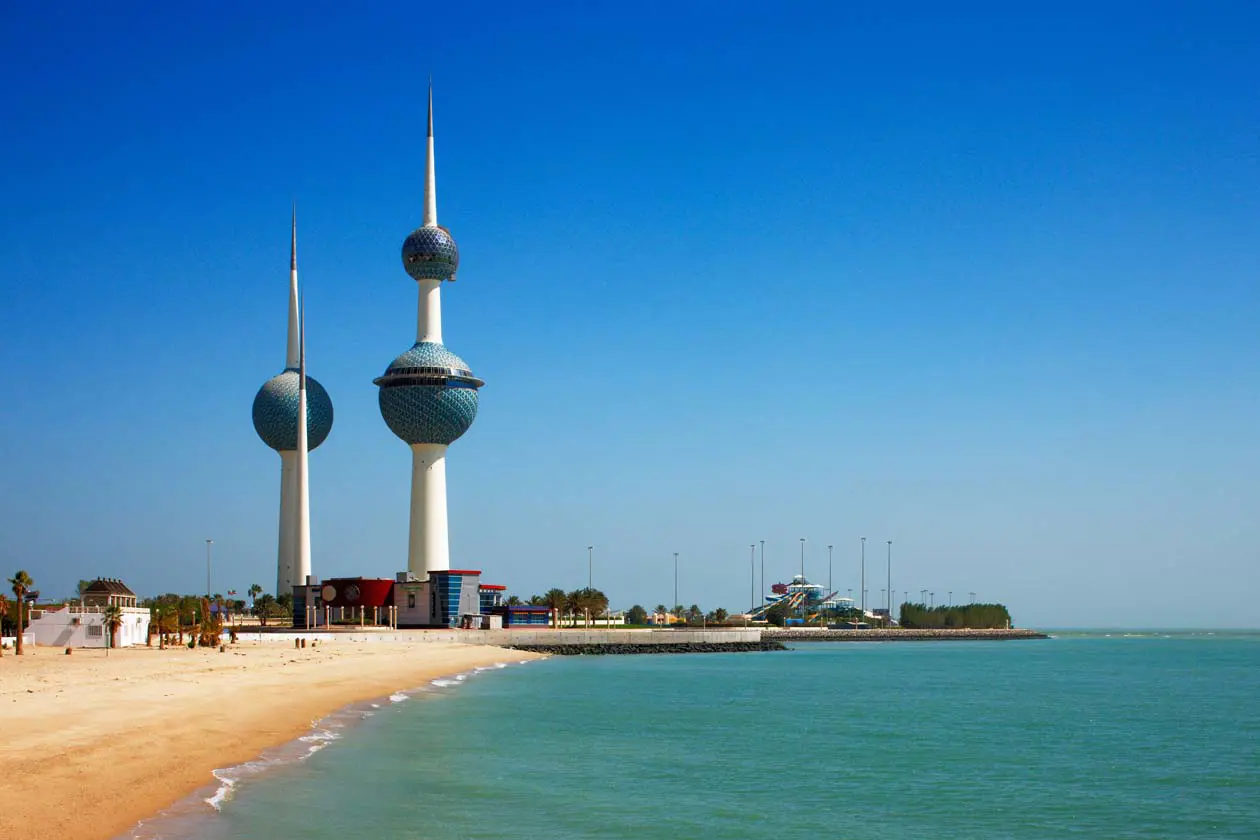
Kuwait Towers
An iconic symbol of the country, the Kuwait Towers represent one of Kuwait's most famous attractions and dominate the waterfront with their unmistakable silhouette. From the lookout tower, which reaches 120 meters above sea level, you can enjoy spectacular views of the Arabian Gulf and the entire city skyline. The observation deck makes a full 360-degree rotation every 30 minutes, offering a unique experience. Inside the complex there is also a café and two restaurants, open for lunch and dinner, ideal for taking a break overlooking the sea.
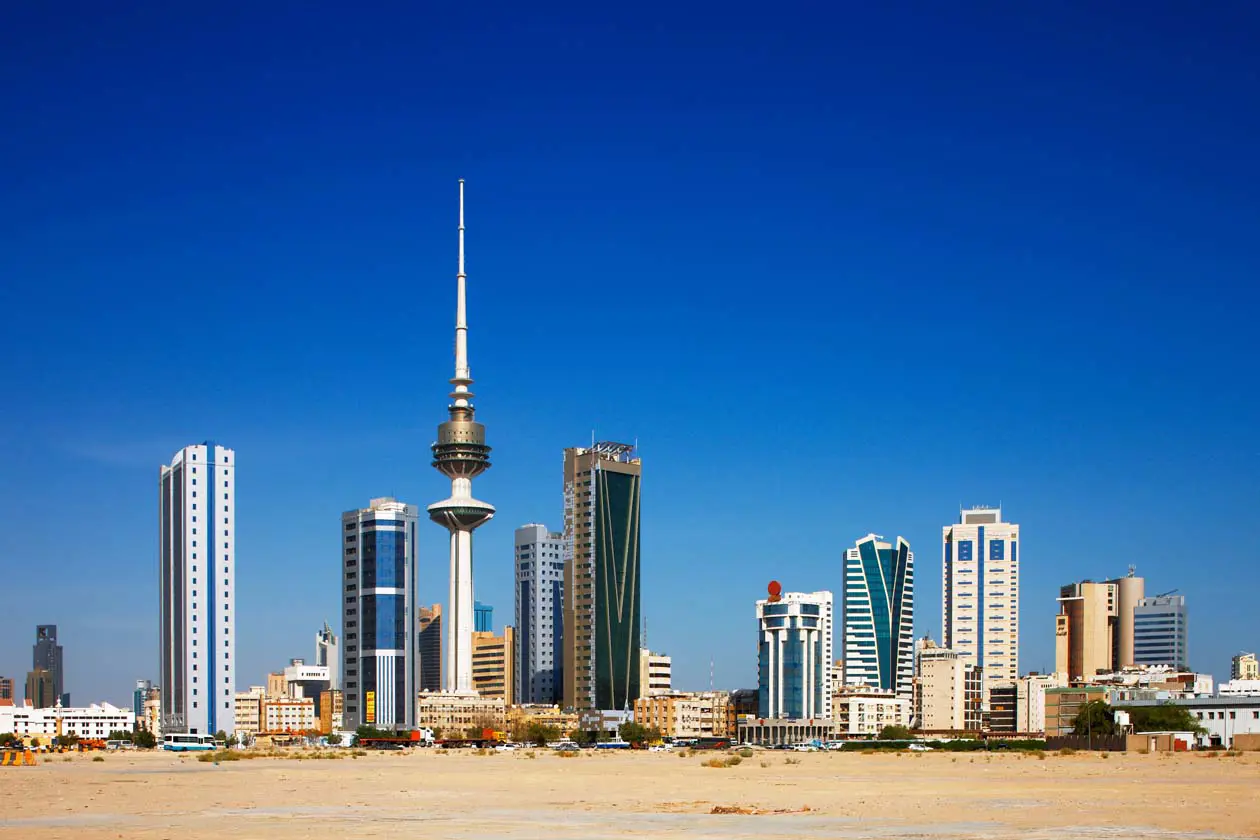
Liberation Tower
A symbol of liberation and freedom in Kuwait, the Liberation Tower is one of the country's most iconic architectural landmarks. At 372 meters high, it is the second tallest structure in Kuwait and is headed by the Ministry of Communication. The tower is not accessible to the public or tourists. Its construction began before the Iraqi invasion of Kuwait on August 2, 1990. The structure was undamaged and, after the expulsion of Iraqi forces on February 27, 1991, construction was completed in 1993 and inaugurated as the Liberation Tower, symbolizing Kuwait's liberation from Iraq.
Grand Mosque
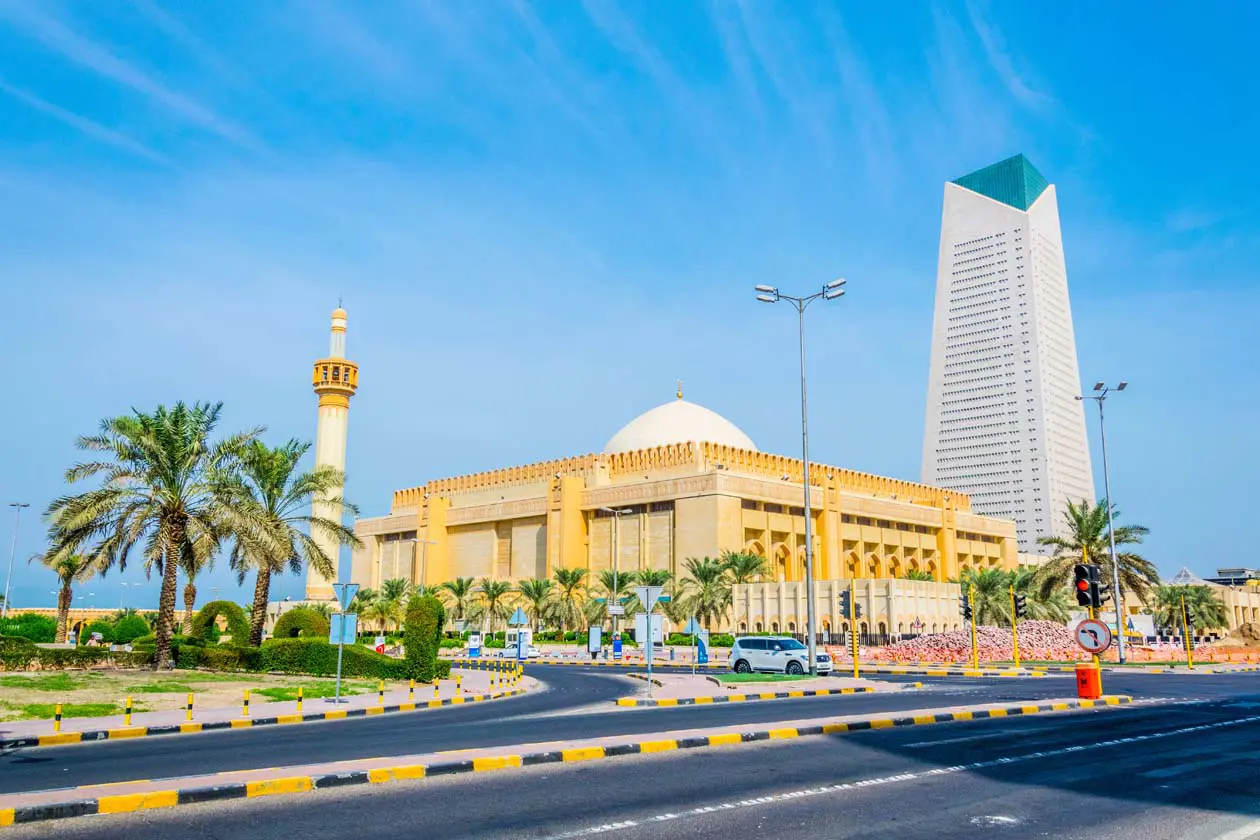
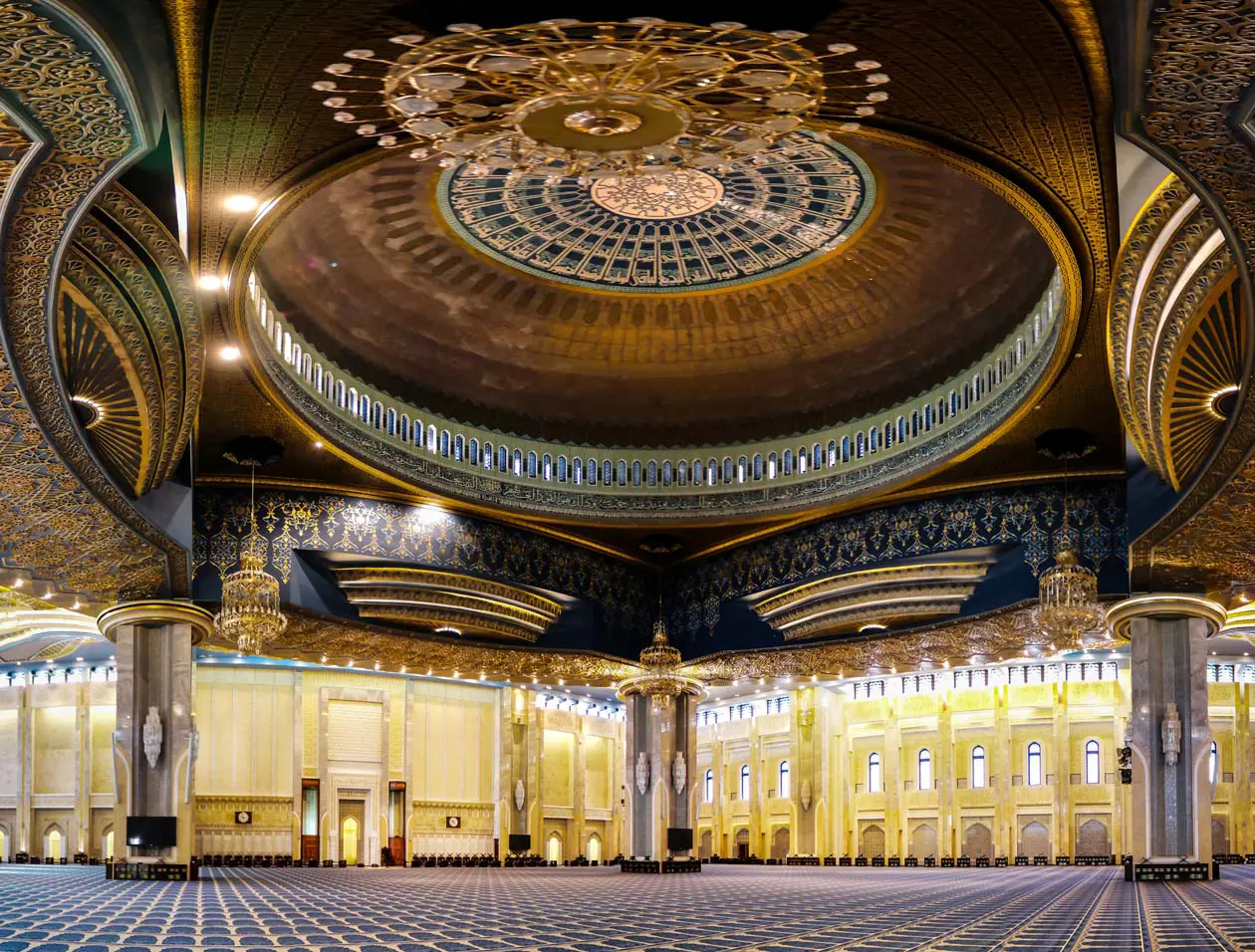
A true masterpiece of Islamic art, the Grand Mosque impresses with the harmony of its design and the spaciousness of its spaces. It is both a place of worship and a destination of tourist interest, ideal for getting closer to Islamic architecture and understanding its stylistic details. Its construction was commissioned by Sheikh Jaber Al-Ahmad Al-Jaber Al-Sabah, when the Grand Market Mosque was no longer able to accommodate the growing number of worshippers. From this need was born one of the most important Islamic monuments in Kuwait. The building is characterized by a large central dome and a minaret that recalls Andalusian architecture; inside it also houses a library. Construction work began in 1979 and was completed between 1986 and 1987.
National Library of Kuwait
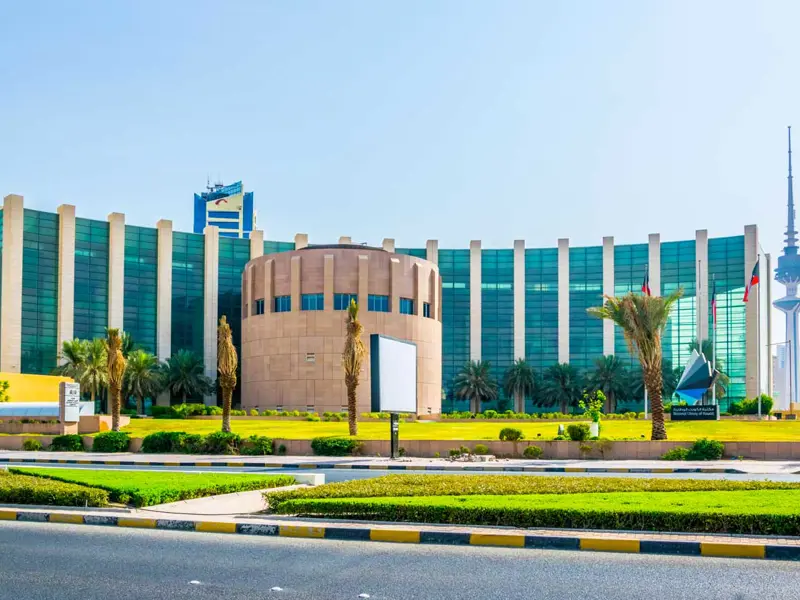
The National Library of Kuwait is one of the country's most important cultural monuments and a center for the preservation of Kuwait's intellectual and historical heritage. The library houses thousands of rare books, manuscripts and documents and offers research and cultural services to visitors and researchers. Also very important is the Al-Babtain Central Library for Arabic Poetry, the first library in the world dedicated to Arabic poetry and one of the most important cultural institutions in Kuwait. It houses books, manuscripts and rare poetry collections, as well as reading rooms and spaces for cultural events. It owes its uniqueness to its founder, the poet Abdul Aziz Saud Al-Babtain and was designed in the shape of an open book, an architectural choice that reflects its vocation.
Sheikh Jaber Al Ahmad Cultural Centre
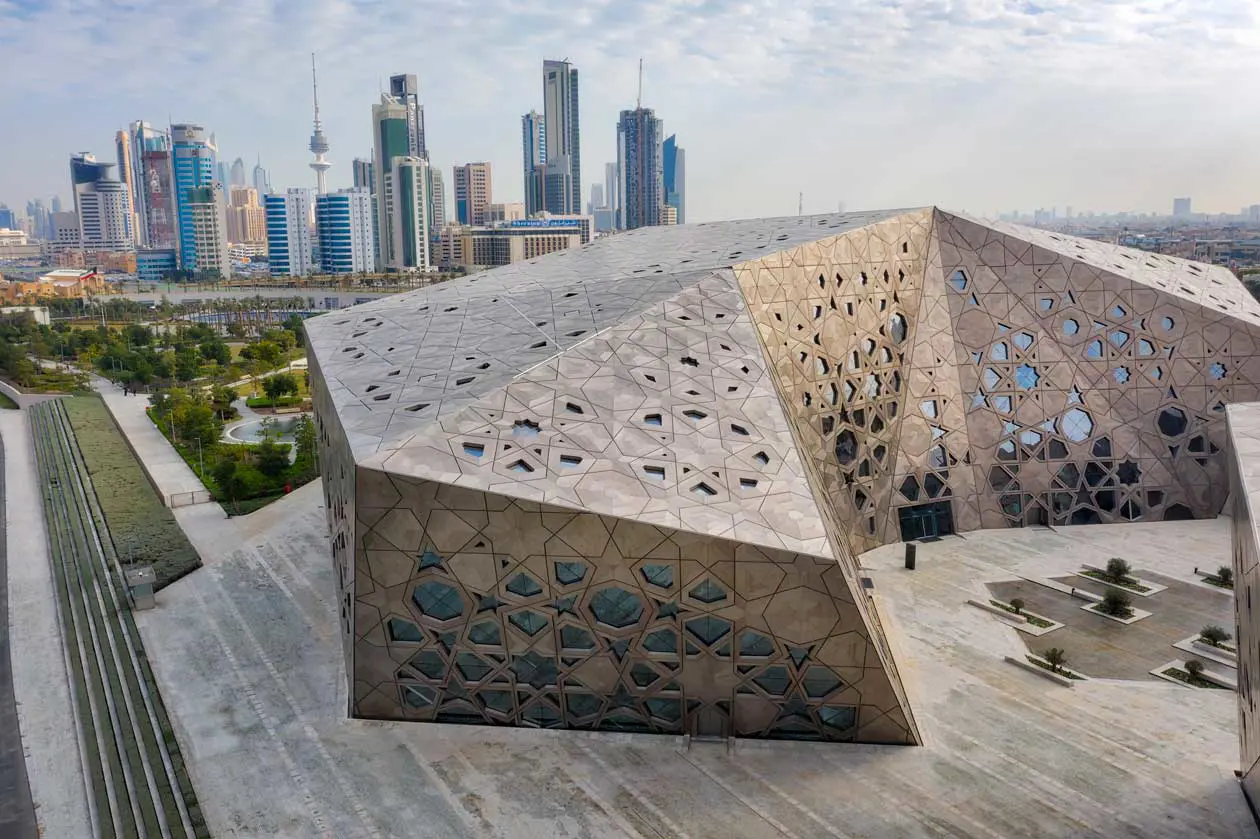
The Sheikh Jaber Al-Ahmad Cultural Center, a reference point for music in Kuwait, is located on Arabian Gulf Street and offers international musical and theatrical performances in the opera house, as well as exhibitions on the country's cultural heritage. Modern Islamic architecture is expressed by four buildings clad in a steel structure enclosed in a titanium and glass shell. The atriums of the buildings in the center are decorated with calligraphic works of art as well as the external walls of the theaters, halls and libraries. The centre for cultural exchange covers all cultural, artistic and literary sectors.
Sheikh Abdullah AlSalem Cultural Center
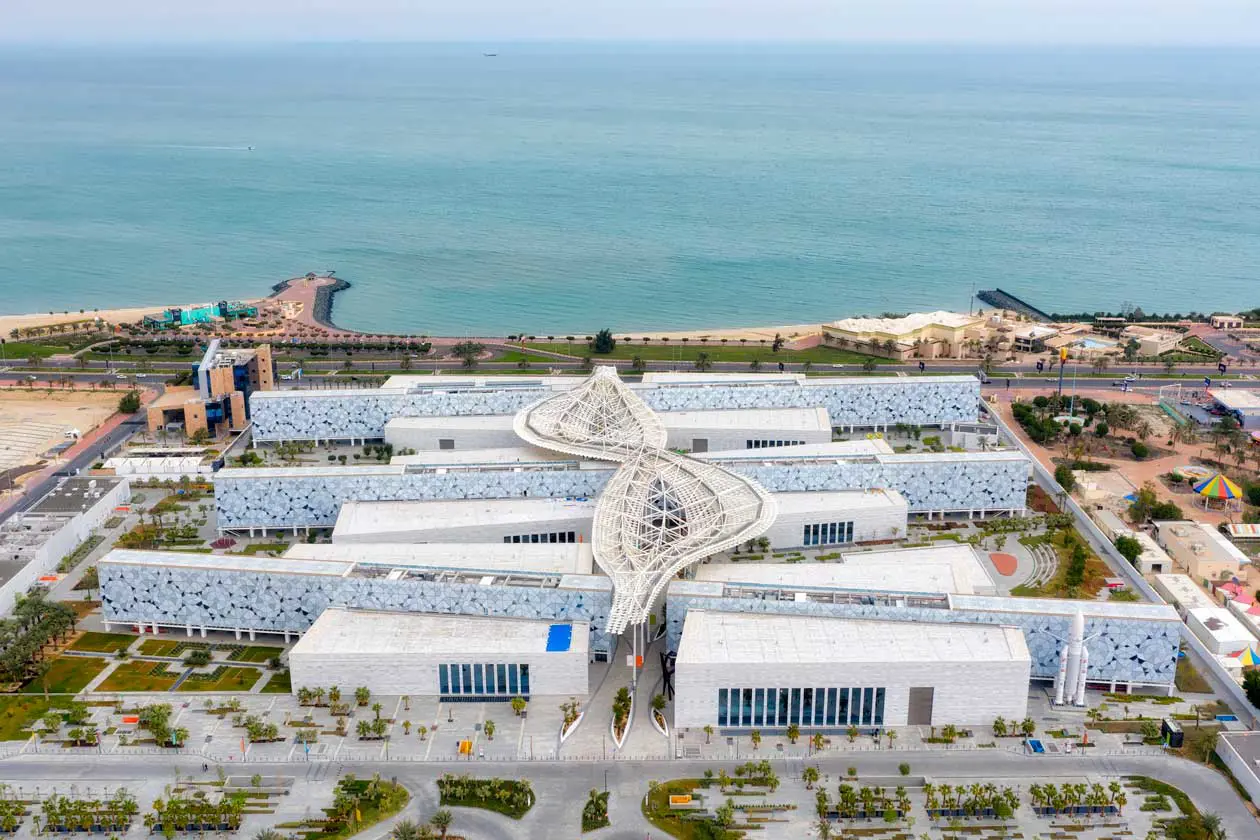
Located in the Al-Sha'ab district, the Sheikh Abdullah AlSalem Cultural Center is named after the late Sheikh Abdullah Al-Salem Al-Sabah, the eleventh ruler of Kuwait, the first emir and founder of modern Kuwait. The architectural structure houses museums and green spaces. Inside there are: the Museum of Science and Technology; the Museum of Natural History with prehistoric creatures and a Southeast Asian rainforest overlooking an aquarium; the Space Museum with Planetarium. The center also includes exhibits dedicated to Kuwaiti, Islamic, and Arab culture and history.
Museums in Kuwait City
Museum of Modern Art
The Kuwait City Museum of Modern Art is housed in the historic building of the Eastern School, one of the oldest schools in the country. Its architecture retains a traditional imprint that recalls a significant period in Kuwaiti history and gives an authentic image of the ancient local building. The building maintains a strong identity character thanks to the materials used in the construction, including sea rock, clay, gypsum, teak wood imported from India, as well as sandalwood and mats from Africa and Kenya. These elements give the spaces a historic and distinctive atmosphere. The former classrooms have been transformed into exhibition halls, where numerous works of art are housed. Each artistic field has a dedicated space, allowing you to explore paintings and artistic creations in a context that combines architectural memory and cultural enhancement.
National Museum of Kuwait
The National Museum of Kuwait in Kuwait City is one of the main custodians of the country's historical and cultural memory. It is a place that preserves and enhances Kuwaiti heritage, arts and identity, offering a journey through the different eras that have marked national history. The museum is divided into several sections and exhibition spaces. Heritage exhibits feature a collection of artifacts, traditional tools, and historical documents that chronicle Kuwaiti life and traditions. A specific area is reserved for archaeological discoveries, with finds from Failaka Island and other sites in the country, evidence of the ancient civilizations that inhabited this region. Inside the structure there is also a Planetarium, which offers astronomical events and insights into the universe. Activities include events and initiatives on local and international heritage.
Maritime Museum
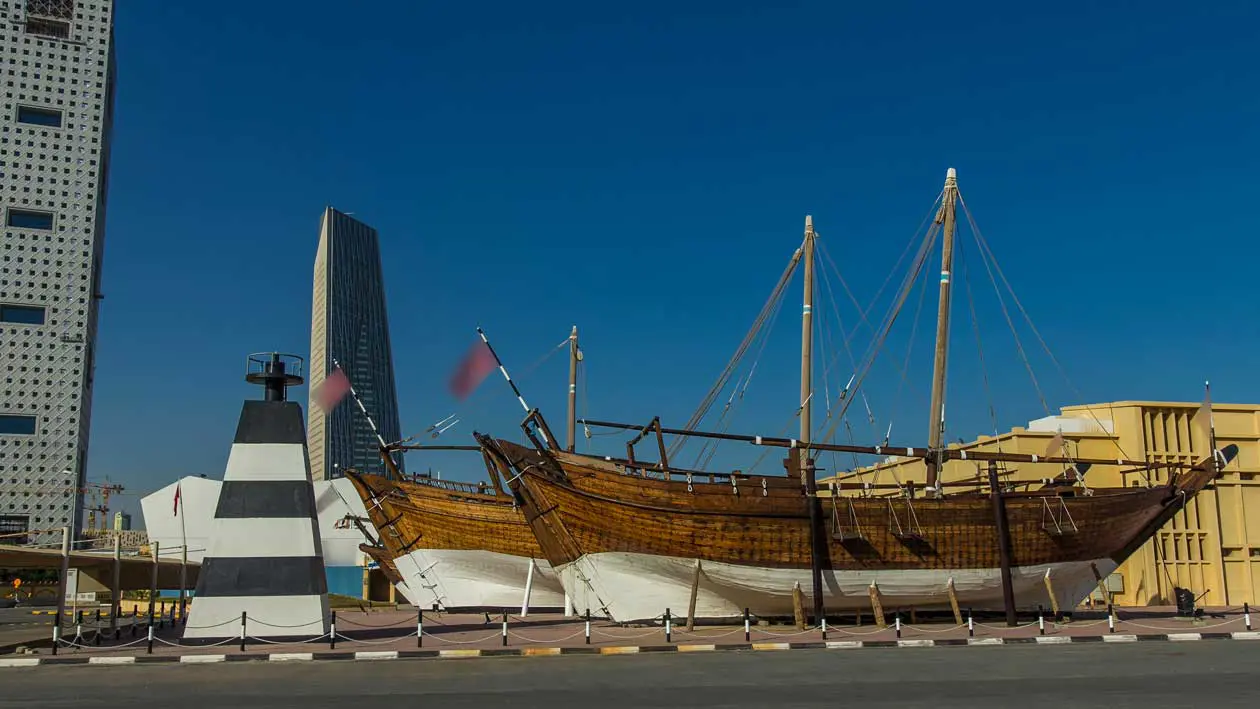
Overlooking the waterfront of Kuwait City, the Maritime Museum tells the story of the deep relationship between Kuwait and the sea, highlighting the fundamental role that maritime activities played in the life of the country before the discovery of oil. It is a tribute to a time of determination and spirit of adventure, when the local people lived on pearl fishing, traditional fishing and long commercial voyages aboard sailing ships. Models of wooden boats, including the Boom, Sambuk and Battil, are on display inside, along with diving instruments, pearls, fishing nets and ancient navigational instruments. The museum's rooms also feature photographs and historical documents that tell the stories of captains, divers and sailors, as well as illustrating the commercial and cultural ties that linked Kuwait to the ports of the Gulf, India and East Africa.
Al-Salam Palace Museum
The Al-Salam Palace Museum is the first official museum of the State of Kuwait. Restored and transformed into a museum space, it tells over 300 years of national history. The museum is divided into three main museums/sections: the history of Kuwait through its rulers; the history of the Al-Salam Palace; and the history of the territory and the civilizations that have inhabited it over the centuries. Al-Salam Palace was designed and built in the 1950s as a residence for Sheikh Saad Al Abdullah Al Salem Al Sabah. During the Iraqi invasion of 1990 the building was destroyed. After 23 years, Al Diwan Al Amiri started a renovation plan to convert it into a museum. In 2019, His Highness Sheikh Sabah Al Ahmad Al Jaber Al Sabah, the fifteenth ruler of Kuwait, inaugurated the Al-Salam Palace Museum, which is modern and also interactive.
Excursions
Green Island
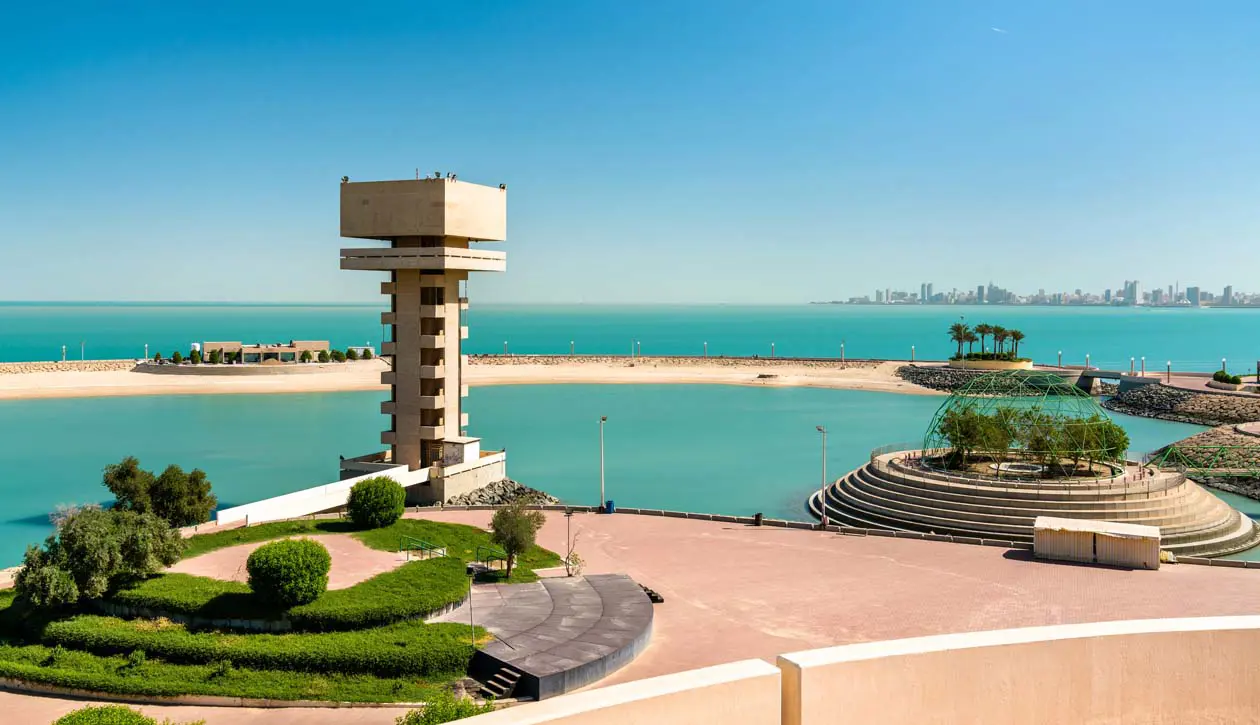
Green Island is the first artificial island in Kuwait, built off the Kuwait City waterfront by the Touristic Enterprises Company, near the Kuwait Towers. It covers a marine area of about 785,000 square meters and is one of the main recreational attractions of Kuwait City.
Opened in 1988, the Green Island was conceived as a tourist destination with the popular Khiran Resort, water park, picnic areas and various leisure facilities. Inside there is a panoramic tourist tower (Kuwait Towers), a children's fortress with moats and small waterfalls, as well as restaurants, cafes, play areas and other areas dedicated to entertainment, making it a popular destination for families and tourists.
Khiran Resort
The Khiran Resort is located in the Khiran district and has been one of Kuwait's busiest tourist destinations since its opening in 1987. Overlooking the Persian Gulf, it develops along a seafront of about 1.8 kilometers and covers an area of over 789,000 square meters, offering ample space dedicated to leisure and relaxation. Within the tourist area, you will find several attractions and recreational facilities, including the Kuwait Towers, amusement parks such as Kuwait Luna Park , and the Ferris Wheel Winter Wonderland. The complex also includes equipped beaches, picnic areas, restaurants, nautical clubs, areas dedicated to water activities and the Al Khiran Park, making it a reference point for families and tourists looking for recreation by the sea.
Beaches in Kuwait City
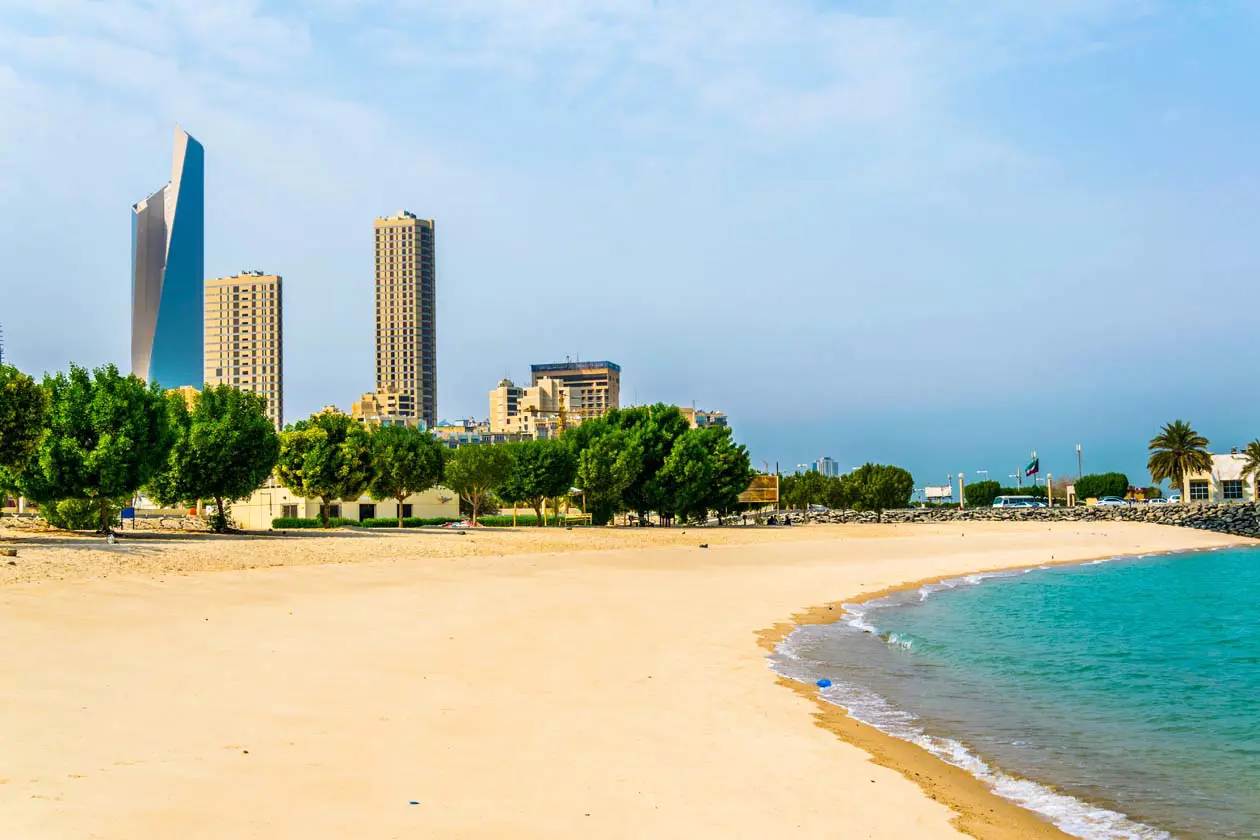
Kuwait City offers equipped beaches along the Persian Gulf, ideal for relaxation and outdoor activities. Among the most recent is Shuwaikh beach with a promenade on the sea, relaxation areas, children's play areas and sports fields. Bay Zero Kuwait, on the other hand, is designed for fun: it offers a beach, water park with rides and spaces dedicated to water activities. It is also popular in winter thanks to the relaxation areas and seasonal experiences. AlBlajat beach is ideal for water and air sports enthusiasts with swimming areas, relaxation areas, restaurants overlooking the Arabian Gulf and activities such as climbing and jumping. Finally, Villa Shams beach is home to Kuwait's women's beach club, a reserved space that offers moments of tranquility and privacy along the coast.
Al Shaheed Park
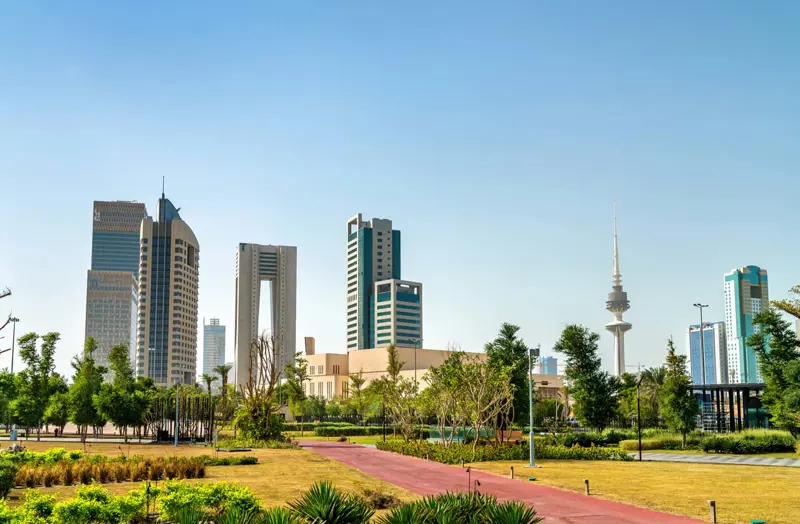
Al Shaheed Park is one of Kuwait City's most iconic green oases, a large urban space that combines nature, culture and historical memory in the heart of the capital. Set in a context that recalls the tradition and identity of the country, the park has become a point of reference for residents and visitors. Inside there are pedestrian paths and jogging tracks, areas dedicated to scooters, artificial lakes and green spaces for relaxation. There are also interactive spaces and museum institutions, as well as panoramic restaurants overlooking a suggestive landscape. Throughout the year, the park hosts shows and seasonal initiatives, including musical events, making it an ideal destination for those who want to alternate moments of leisure, culture and entertainment in the open air.
Partnership with GetYourGuide
Experiences
Kuwait City tour with desert adventure
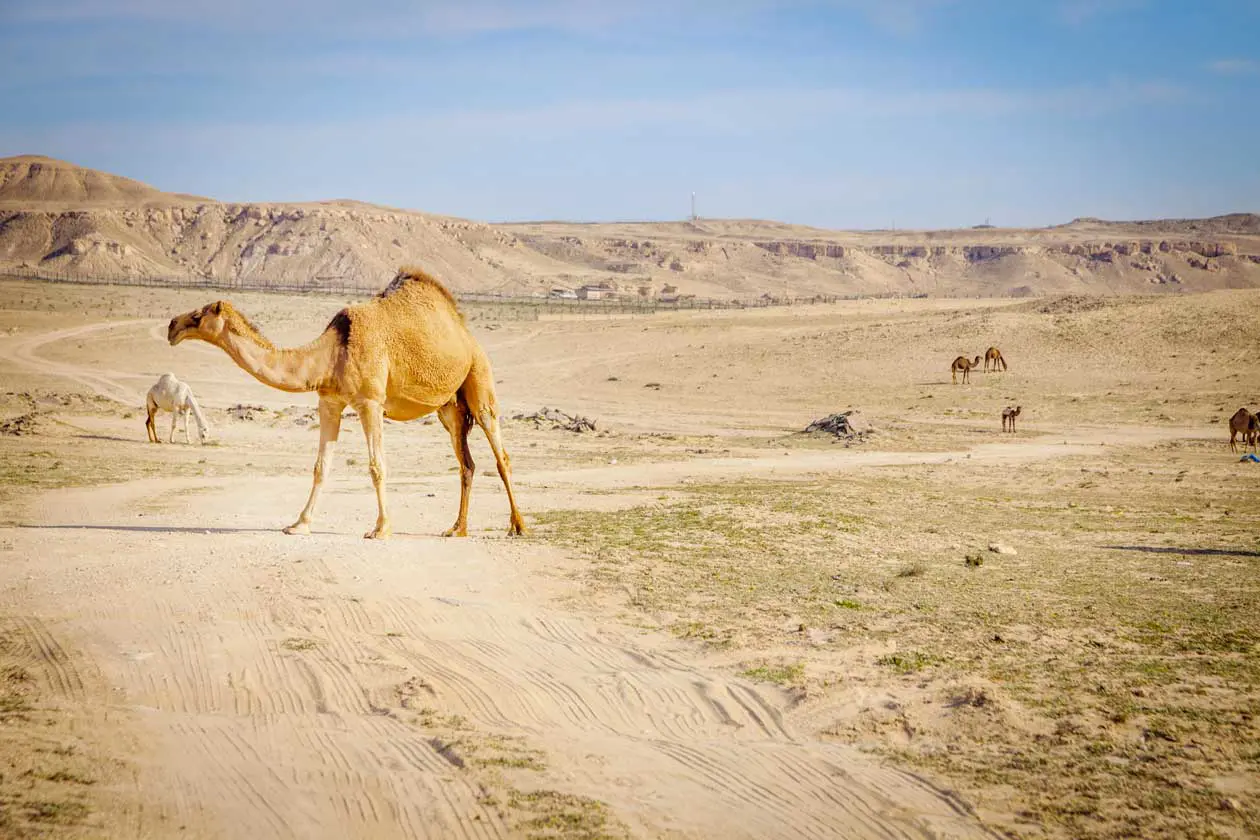
Half-day tour of Kuwait City and the Kuwait desert with a licensed guide between adventure, history and culture. Photo stop at Kuwait Towers, visit of the National Museum of Kuwait, guided walking tour with visit to the Grand Mosque of Kuwait. Then travel to a secret spot in the desert for a short off-road adventure. At the end of the tour, shopping at the lively Mubarakiya Old Market to taste local foods. Includes: pick and drop off service, water, juices, transportation, Wi-Fi Hotspot. Duration: 4-5 hours. Free cancellation up to 24 hours in advance and full refund. Book Kuwait City and Desert Tour.
Discover all tours and excursions