It's possible that some of this content has been automatically translated.
18 November 2026
Where to eat in Berlin: restaurants, new venues, and gastronomic trends
From haute cuisine to street food, a guide among Michelin-starred restaurants, international cuisines, new venues, markets, and cocktail bars
If you are planning a trip toBerlin or a city break in the German capital, here you will find an updated guide to the best places to eat, including Michelin-starred restaurants, new venues, international cuisine, street food, vegetarian and vegan options, food markets, and cocktail bars.
The German capital is today one of the most dynamic gastronomic destinations in Germany, with an offering ranging from haute cuisine to local tradition, from international flavors to street food, up to vegetarian and vegan offerings. By 2026, it has 25 Michelin stars spread across 19 restaurants and continues to stand out for variety, creativity, and the ability to anticipate new trends.
Berlin's gastronomy has become an important component of the tourist experience during a stay in the city. After visiting the attractions, Berlin's cuisine allows you to better appreciate and get to know every aspect of the city, also through its typical dishes, traditional recipes, and the most modern and international gastronomic creativity.
Michelin-starred restaurants
At the top of the city's dining scene is Rutz, the only venue in the capital with three Michelin stars. Founded in 2001 as a wine bar with a restaurant at Chausseestraße 8, in 2026 it celebrates 25 years of activity.
There are four restaurants that hold two Michelin stars: Coda, Facil, Horváth, and Tim Raue.
There are 14 Michelin-starred venues: Bandol sur Mer, Bon vivant, Bricole, Cookies Cream, Golvet, Hallmann & Klee, Hugos, Irma la Douce, Lorenz Adlon Esszimmer, Loumi, Matthias, Nobelhart & Schmutzig, Pars Restaurant, and Tulus Lotrek.
The quality of Berlin's dining and its chefs also emerges in the extensive ranking The World's 50 Best Restaurants 2025, where Restaurant Tim Raue ranks 58th, Nobelhart & Schmutzig 59th, and Coda 79th.
In 2026, two new Bib Gourmand restaurants will also be added, the Michelin award dedicated to restaurants with good value for money: the Lebanese Byblos in Wilmersdorf and Salhino in Charlottenburg, specializing in Georgian cuisine. Together with six other venues, they bring the total number of restaurants awarded to the city to eight.
Gault&Millau awards
In the 2025 edition of Gault&Millau, three restaurants received the maximum rating of five toques (chef's hats): Horváth, Rutz, and Tim Raue. The capital also received the Pastry Chef of the Year award, given to Dennis Quetsch of Rutz.
Berlin Championship 2026
For thirty years, Berlin Partner has awarded Berliner Meisterköche awards to individuals who contribute to the quality and variety of the city's cuisine. In November 2026, the title of Berliner Meisterkoch was awarded to Lode van Zuylen of the REMI restaurant.
Tanadon Santanaviboon, from Hanuman Thai Curry Houseand Rram, was named emerging talent of the year, while Isabell Wendel from Bricole received the hospitality award.
Among other awardees are Saint Farah as the trending restaurant in Berlin in 2026, Tresen-Treff in Wilmersdorf as Kiezmeister, Rum Trader for bar culture, and Anja and Carsten Schmidt, linked among others to Rutz, Rutz Zollhaus, and Schmidt Z&KO, as gastronomic innovators.
One of the most interesting features of Berlin's dining scene is its ability to bring quality offerings even beyond traditional gourmet districts. In Neukölln, Hallmann & Klee, led by chef Sarah Hallmann, received its first Michelin star in 2024 for haute cuisine. Irma la Douce, on Potsdamer Straße, also contributed to the gastronomic transformation of the area, earning a Michelin star.
The two-Michelin-starred restaurants Tim Raue and Nobelhart & Schmutzig once opened in an area near Checkpoint Charlie, which at the time was not yet considered a culinary destination.
The trend continues with venues like Mirari, while several courtyards in the city host Mediterranean and Levantine offerings like Joseph and Night Kitchen, expressions of contemporary Israeli cuisine.
Eating in museums and scenic spots
Some of the most interesting offerings are found inside museums, cultural spaces, and scenic spots. In the Gropius Bau, the Beba restaurant has developed its own gastronomic identity, independent from visiting the exhibitions.
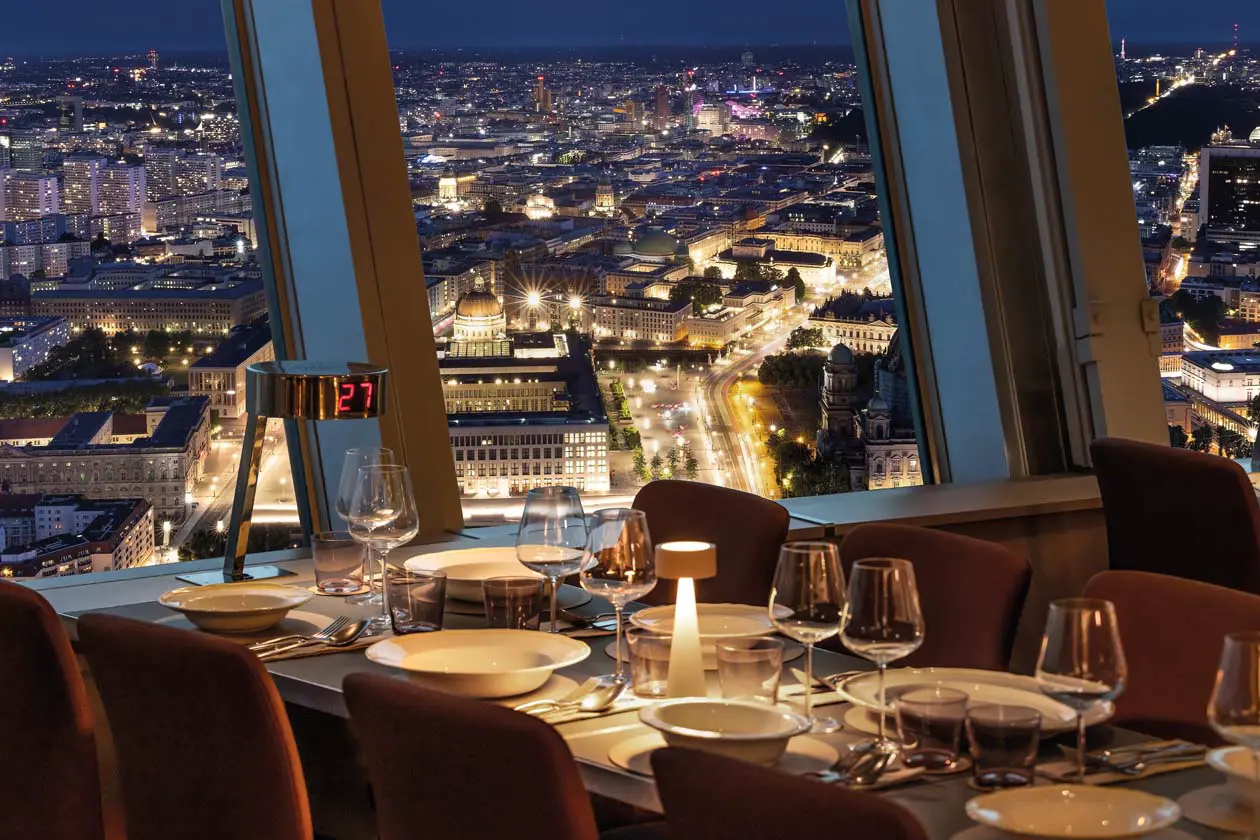
At Bikini Berlin, NENI combines Mediterranean, Persian, and Austrian influences with a view of the city. Another panoramic experience is found in the Television Tower, where the Sphere restaurant, with Tim Raue as culinary director, offers interpretations of typical dishes such as Eisbein (pork shank) and Berliner Schnitzel. Also in the Television Tower bar, there are Tim Raue's offerings such as meatballs with beer and currywurst with sparkling wine.
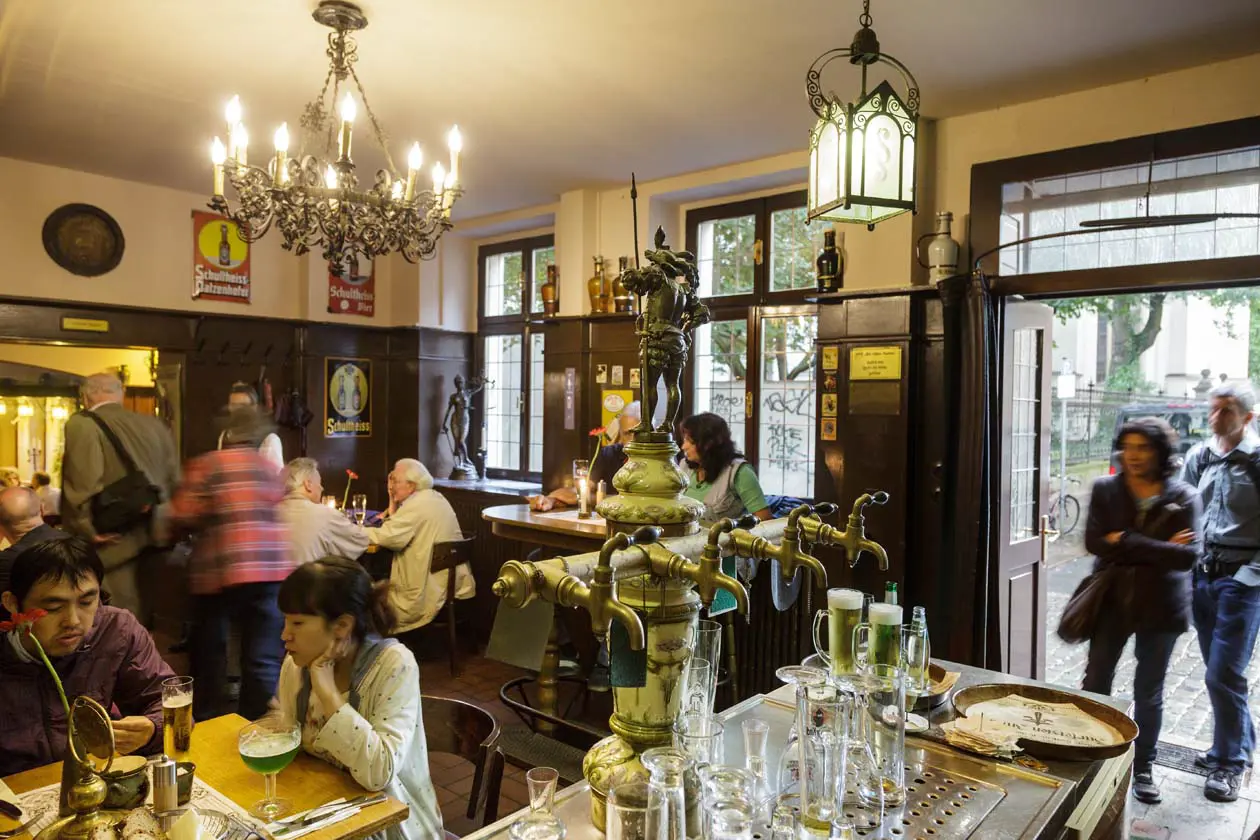
Local tradition is also reinterpreted by the Trio restaurant, while Zur letzten Instanz, considered the oldest restaurant in Berlin, combines traditional regional cuisine with a focus on sustainability and modernity.
Berlin has the widest vegetarian and vegan offerings in Germany, with 225 restaurants: 114 vegan and 111 vegetarian. The trend is not only about entirely plant-based venues. In many kitchens, vegetables have taken on a central role.
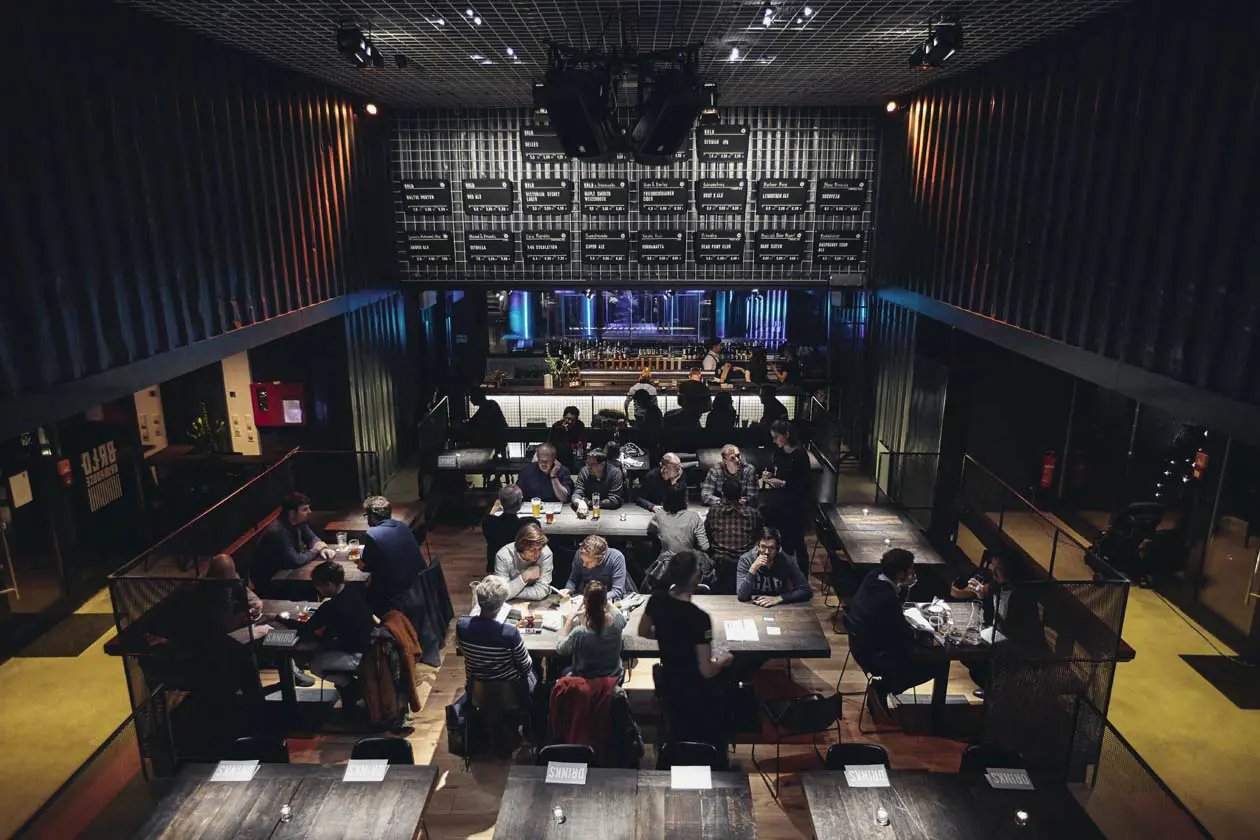
At BRLO Brwhouse, for example, the menu pairs craft beer with rotisserie vegetables and vegetarian side dishes, as well as some meat options like chicken Kikok.
Several restaurateurs also work directly with crops and producers. Michelberger, together with the restaurant Ora, uses fruit and vegetables from their own farm in the Spreewald. Tisk has a small growing area, while the Aerde restaurant works with products produced in Wendisch Rietz.
Meat, steakhouse, and grilled cooking
Alongside the growth of plant-based cuisine, attention to meat quality, raw material origin, and cooking techniques is also growing. At Kumpel & Keule butcher shop, the focus is on transparency, artisanal processing, and the origin of the meat.
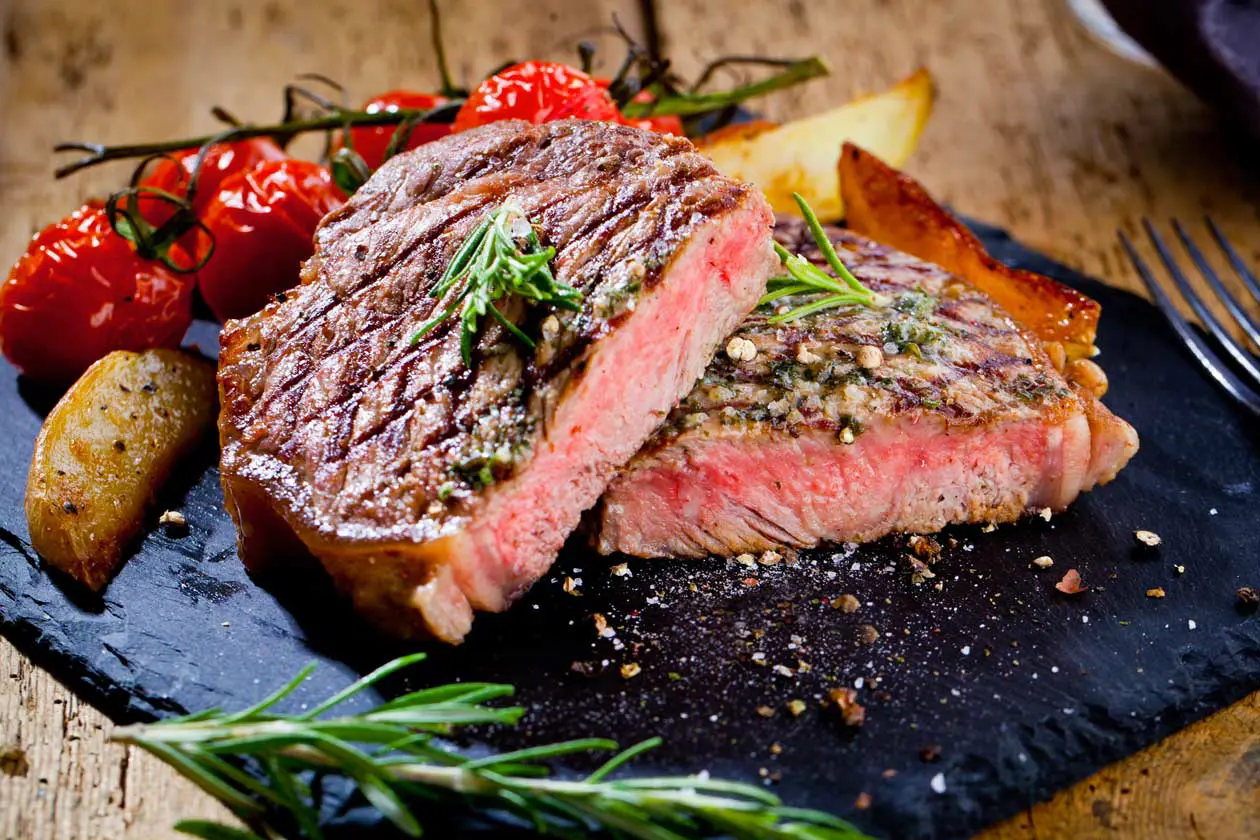
The Brooklyn offers a New York-inspired steakhouse, while at Midtown Grill at Potsdamer Platz and Grill Royal some cuts of beef, lamb, or roast beef are perfectly grilled.
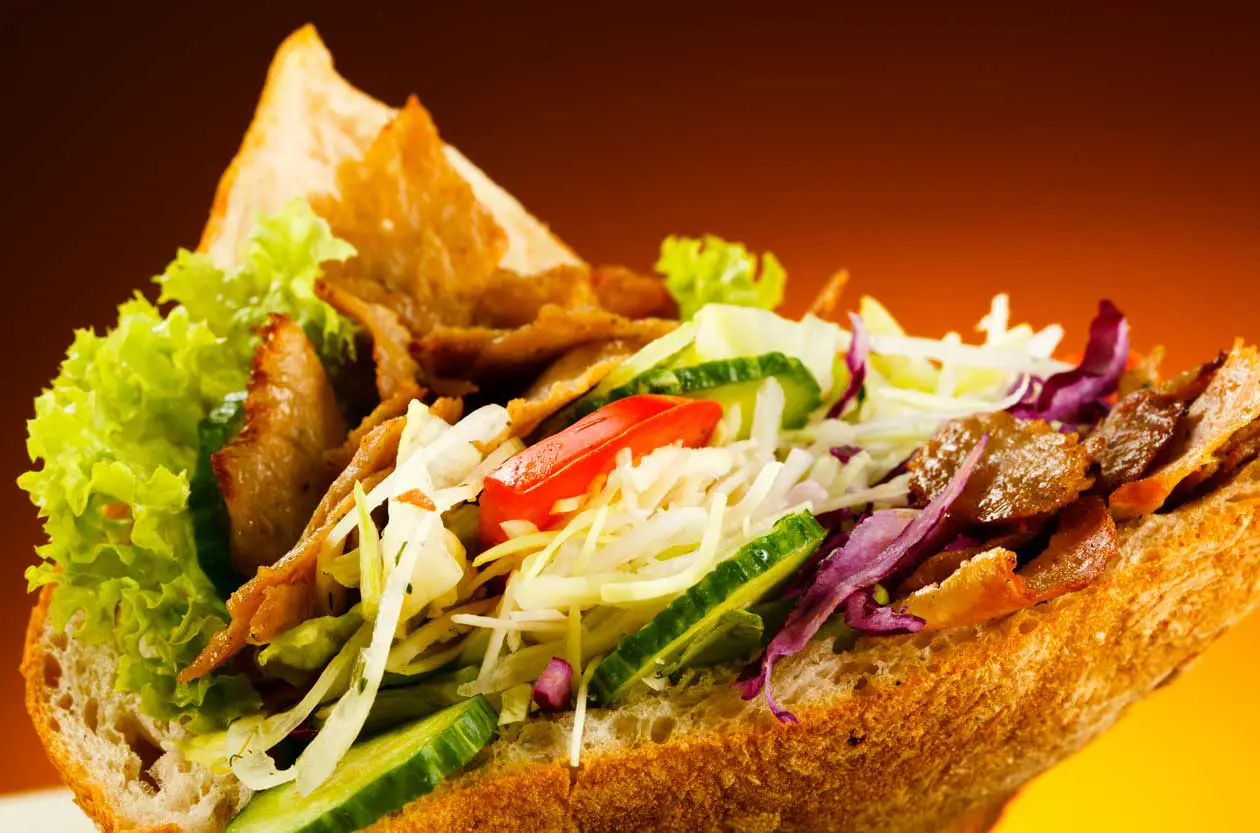
To The Bone, on the other hand, looks to Italian tradition with steak and rib from Chianina Fiorentina. Beef Grill Club by Hasir also specializes in high-quality cuts of meat and steak, including doner kebab.
During the summer in Neukölln, the Kramer grill restaurant uses a lively fire as the central element of the cuisine, combining Latin American and Japanese influences with grilled pineapple, ravioli with smoked leeks, duck, or octopus.
International cuisines and new influences
The multiculturalism of the capital also clearly emerges at the table. At Kochu Karu, Bin Lee and José Miranda Morillo combine Korean and Spanish techniques, while Amigo Cohen brings together Mexican and Israeli influences. At Machiko, Italian and Japanese wine and culinary cultures meet. The city thus continues to function as a culinary laboratory, where techniques, ingredients, and traditions from different countries are reinterpreted in a contemporary key.
Street food and gastronomic events
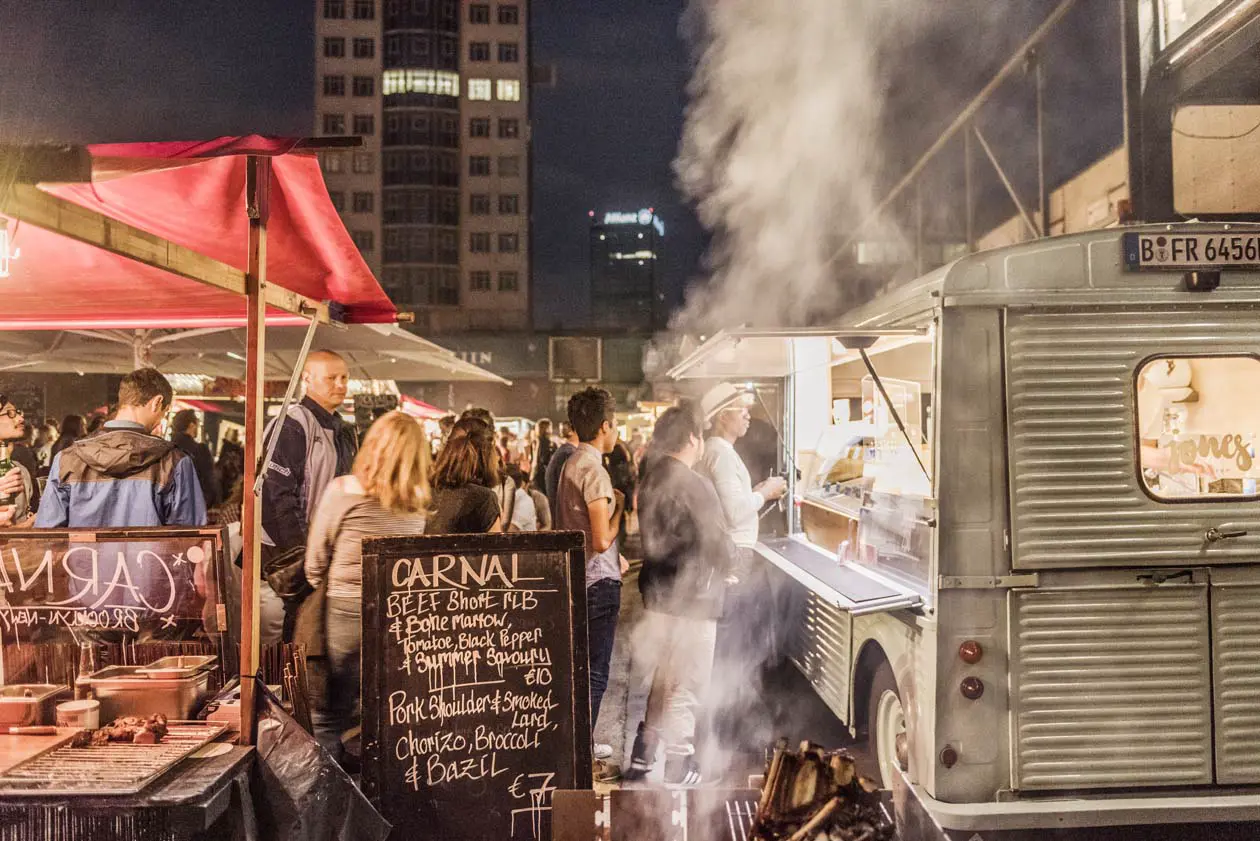
Markets and events are also an important part of Berlin's culinary experience. During the summer, the Bite Club takes place, while in May the African Food Festival is organized.
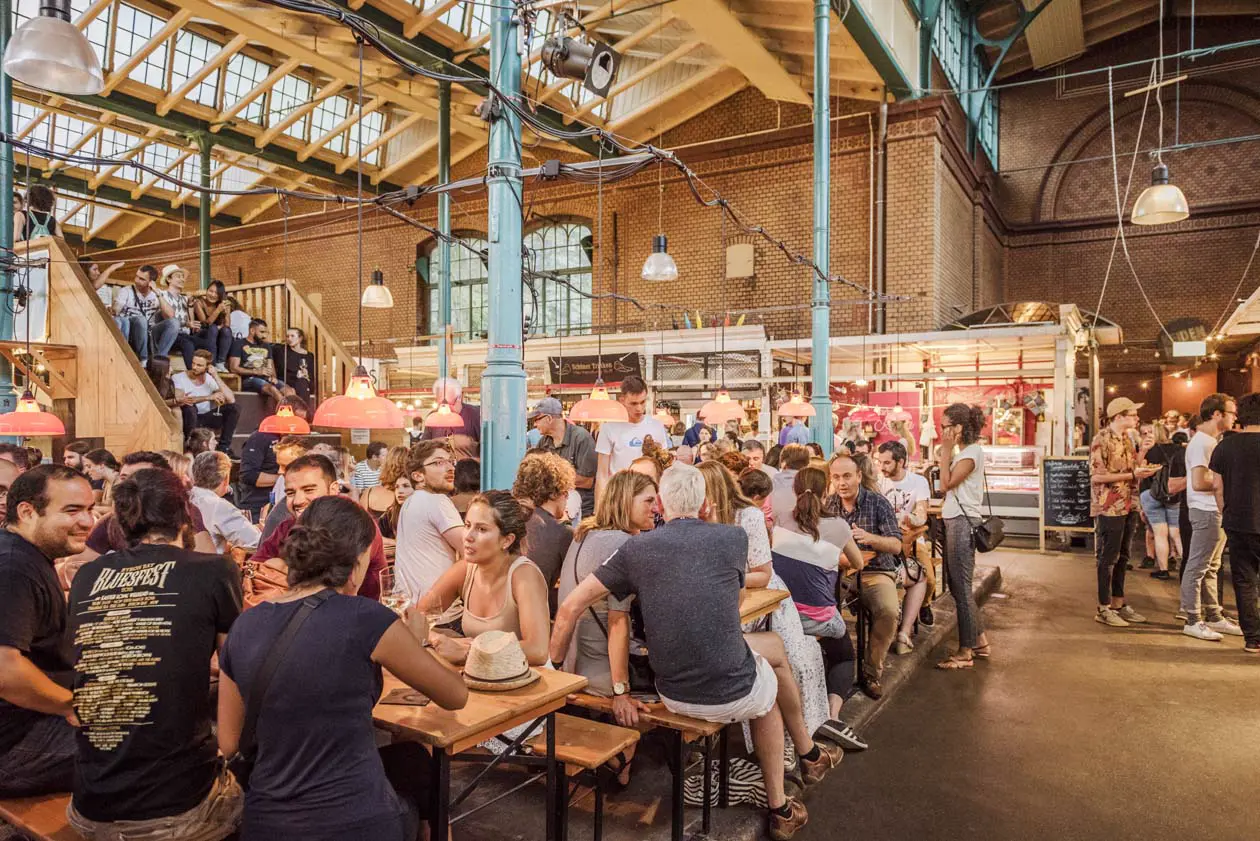
At Markthalle Neun, one of the best-known events is Street Food Thursday. The Thai Park tradition continues today with the Thai Bridge at Jules B-Part, while every Sunday the street food marketAuf Achse enlivens the Kulturbrauerei.
In October, BerlinFood Week returns, dedicated to new projects, gastronomic start-ups, and events, with particular attention also to the plant-based sector.
Some streets in the capital allow you to explore the culinary scene simply by walking from one venue to another. The streets rich in restaurants and bars in Berlin are: Oranienburger Straße at Oranienstraße and Kantstraße, up to Motzstraße and Torstraße.
After a phase of less vitality, Oranienburger Straße has once again become one of the most interesting areas of the center. Fotografiska's arrival in the former Tacheles has brought new attention to the area, where the restaurants Verōnika, Anna & Paul, Dieselhaus, Root inside Hotel Telegraphenamt, The Dry Gin & Beef Club, and Dae Mon near Monbijouplatz are also located.
Oranienstraße crosses Kreuzberg and is characterized by a lively neighborhood life throughout the day. Among the many venues are the historic Max & Moritz, Goldies, from which the city's smash burger spread began, and Angry Chicken, dedicated to Korean fast food.
Kantstraße
In Charlottenburg, Kantstraße is one of the reference points for Asian cuisine. Here you will find Aroma's Chinese cuisine, Kuchi sushi, the Vietnamese brasserieMadame Ngo, and 893 Ryotei, where Japanese dishes meet Asian, South American, and European influences.
In Schöneberg, Motzstraße offers venues like Sissi, dedicated to Austrian cuisine, and Zsa Zsa Burger, as well as several cafés. The street is also located in the heart of one of Berlin's neighborhoods historically linked to the LGBTQ+ community and is particularly lively during Pride events.
Torstraße
Torstraße continues to be one of the streets associated with new gastronomic formats and innovative venues. Among the names present in the area are St. Oberholz, Toca Rouge, die Gärtnerei, Torbar, MontRaw, Friedel Richter, and 3 minutes sur Mer, as well as Kin Za on the nearby Linienstraße.
Neighborhood restaurants
Alongside the most well-known venues, a network of neighborhood restaurants offering contemporary and international cuisine is also growing. Jäger & Lustig offers more rustic cuisine, while Café Frieda focuses on regional products and an informal atmosphere.
Estelle Dining combines contemporary cuisine with a deliberately informal approach. At Tante Fichte, chef Dominik Matokanovic uses classic techniques to create modern compositions with references to Croatian cuisine. Among the many offerings are the restaurant Osterberger, the French brasserie Regis Lamazère, Mastan, where bouillabaisse is served once a month, and de Maufel, a Luxembourgish restaurant active in Charlottenburg for about twenty years.
Handmade noodles in Berlin
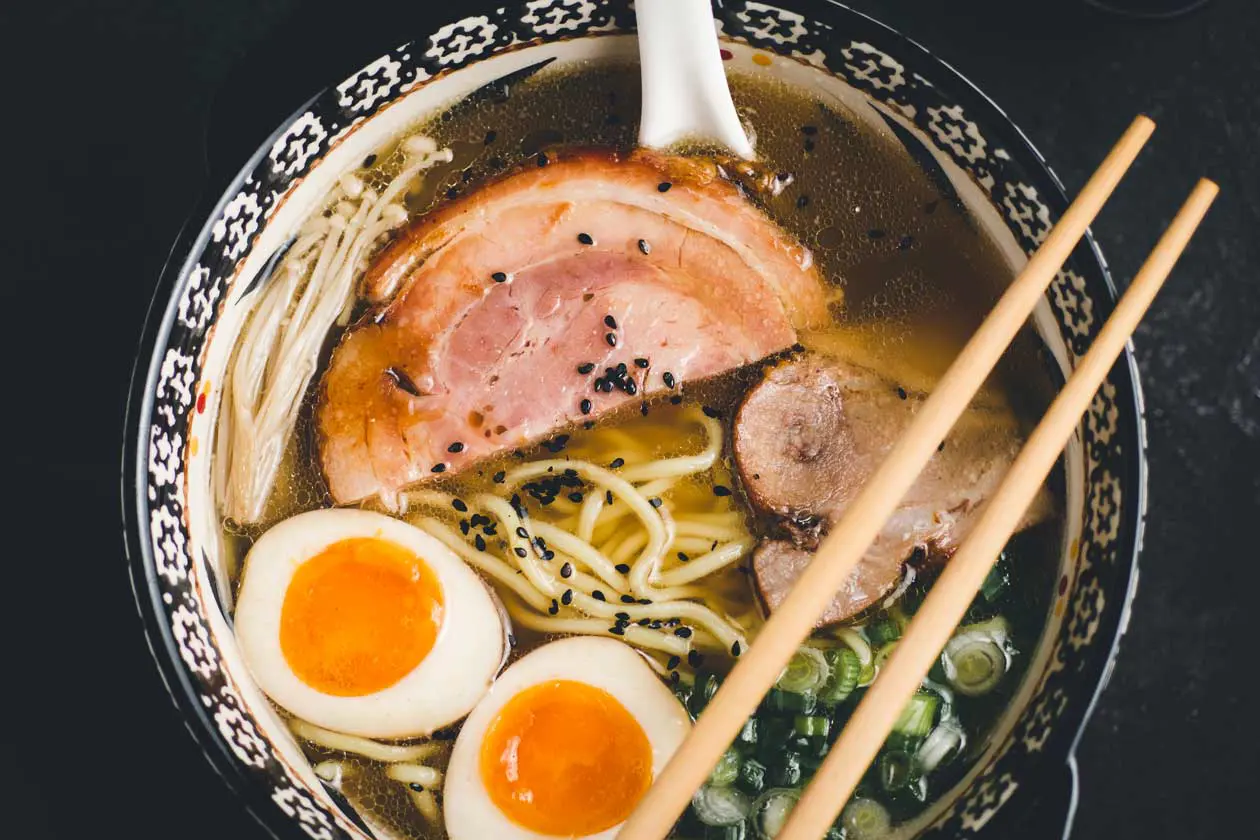
One of the most visible gastronomic phenomena of recent years concerns handmade noodles right in Berlin. Chungking Noodles, born as a pop-up, now has a permanent location in Kreuzberg.
At Wen Cheng, present in Mitte and Prenzlauer Berg, the noodles are freshly cooked, while at Sword Master Noodles, also at Prenzlauer Berg, they are cut with large knives.
In Charlottenburg, you'll find Shaniu's House of Noodles and Lon Men's Noodle House, both also known for their dumplings. For those seeking particularly spicy flavors, Chengduweidao in Mitte offers sauces characterized by intense spiciness.
The new Indian cuisine
Indian cuisine in Berlin is also finding new players. For North Indian fine dining, there's India Club, where bread, meat, and vegetables are prepared in traditional tandoor ovens. In Wilmersdorf is Bahadur, while chef Gaurav Sharma opened GapShap. House of Tandoor is also dedicated to North Indian cuisine and uses tandoor ovens. At Mr. Chai Wala, on the other hand, South Indian street food dishes are offered, including biryani and dosa.
Eating, dancing, and living the night
In the capital, gastronomy and nightlife often meet in the same venue. Cookies Cream, a vegetarian restaurant with a Michelin star, is linked to the history of the city's club culture. In the same environment, Crackers was also born, combining bars, music, and dining.
At Cantina Bar Tausend, the cuisine combines influences from Lima and Berlin with Asian elements. Papillon, on the other hand, moves from the restaurant dimension to that of a party when the kitchen closes.
The Amano Group also combines dining and nightlife through venues like Mani, Joseph, Habeit, Mario x Gambino, and Amigo Cohen.
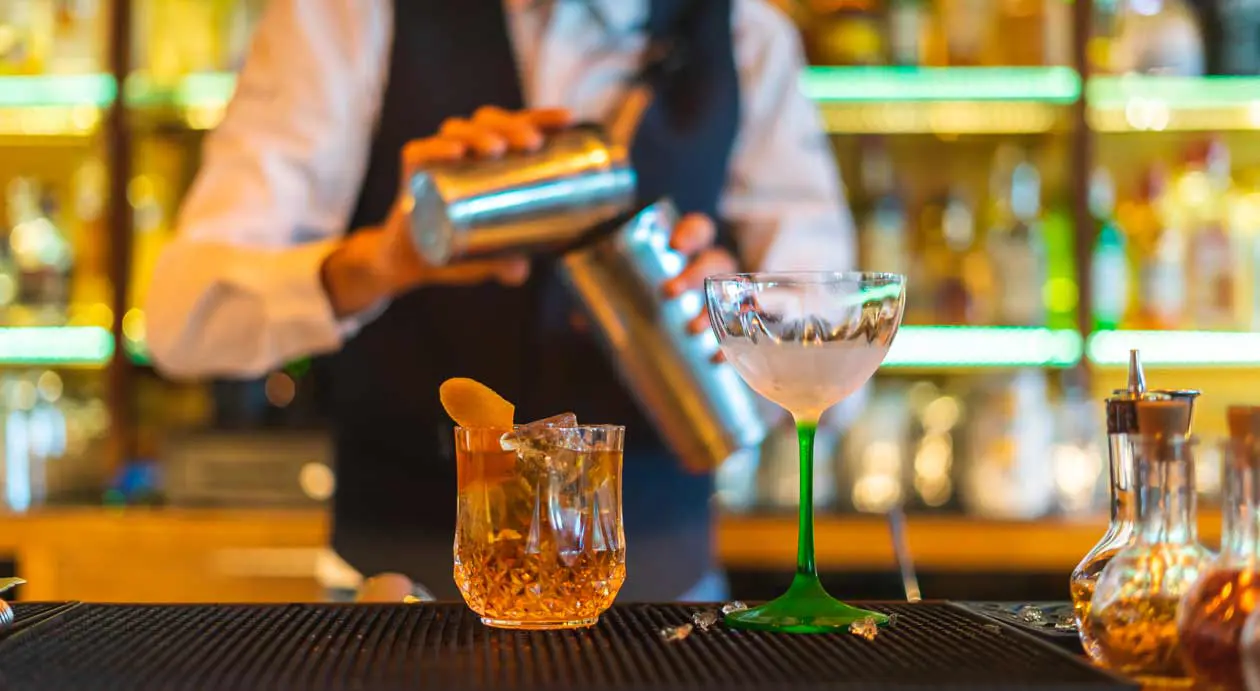
The culture of mixed drinks also plays an important role. According to the Mixology Bar Awards, Green Door in Schöneberg was named Bar of the Year in both 2025 and 2026. Maria Gorbatschova, awarded Bartender of the Year, works at the venue.
Two cocktail bars also appear in the Top 100 of the World's 50 Best Bars: Wax On, on Weserstraße in Neukölln, in 29th place, and Velvet Bar in 77th. Among the historic venues remains Victoria Bar, which continues to offer classic cocktails alongside contemporary creations.
The Knast and Lovis: eating and drinking in a former prison
A special experience is offered by the spaces of the former women's prison in Charlottenburg. The Knast uses the spaces of the old prison for a proposal also dedicated to cocktails and mixology. In the same complex is the Hotel Wilmina, created from the former prison structure, with the restaurant and bar Lovis. The project combines architectural restoration, hospitality, and dining in one of the city's most unusual settings.
The new hotel cuisine
Berlin hotel restaurants are also contributing to the evolution of the culinary offering. At Orania Berlin, culinary director Philipp Vogel has built one of the most recognizable proposals around his own interpretation of Pekingese duck.
At Heritage, in Hotel Luc, Florian Glauert incorporates references to Prussian gastronomic culture into contemporary cuisine. Le Faubourg, on the other hand, offers modern French cuisine, while at Château Royal Philipp Walther serves Mediterranean cuisine both at lunch and dinner.
At Vox, the Grand Hyatt Berlin restaurant, the kitchen was entrusted to Hugo Thiébaut, a chef with professional experience gained in Alain Ducasse's restaurants and various venues in the capital.
The variety of these options confirms how gastronomy has become an integral part of a holiday inBerlin, even for a few days of City Break: not only Michelin-starred restaurants, but also neighborhoods, markets, street food, hotels, bars, and venues allow you to discover the city through flavors, cultures, and new trends.