
Japan in winter: a trip to Tohoku among snow, onsen and traditions
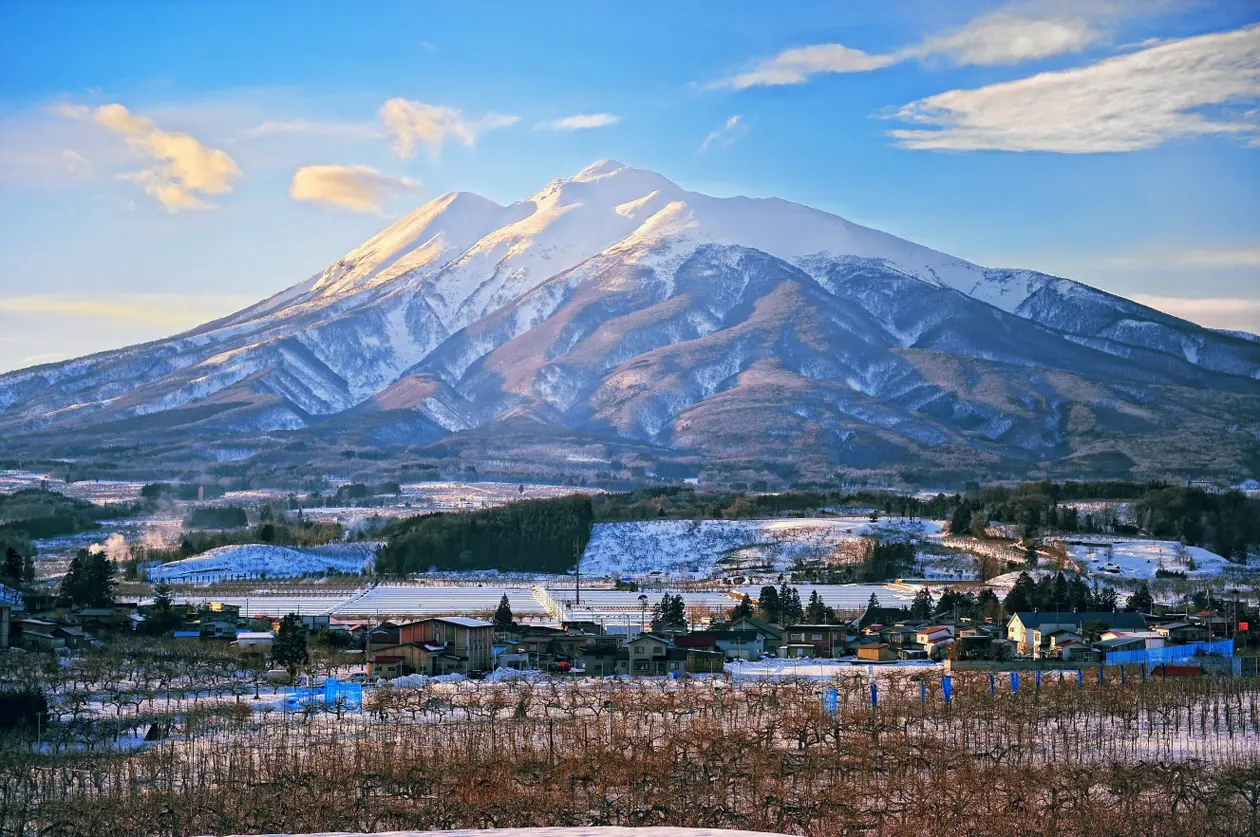
Appi Kogen, snow and activities for the whole family
In Iwate Prefecture, Appi Kogen is one of Tohoku's top ski destinations and a good base for those who want to dedicate part of their trip to winter sports. The slopes allow skiing and snowboarding, but the snow experience is not reserved for skiers. During the season, there are also activities suitable for those looking for something simpler, from snow hiking and snow tubing to areas dedicated to sledding and snow games.
For the 2026/27 season, for example, snow tubing is scheduled from 19 December 2026 to 28 March 2027, subject to snow conditions.
Appi Kogen is therefore also suitable for a family stay or for those who want to alternate the slopes with less demanding experiences, experiencing the mountain landscape without necessarily having to ski.
Yokote and the kamakura, a tradition spanning over four centuries
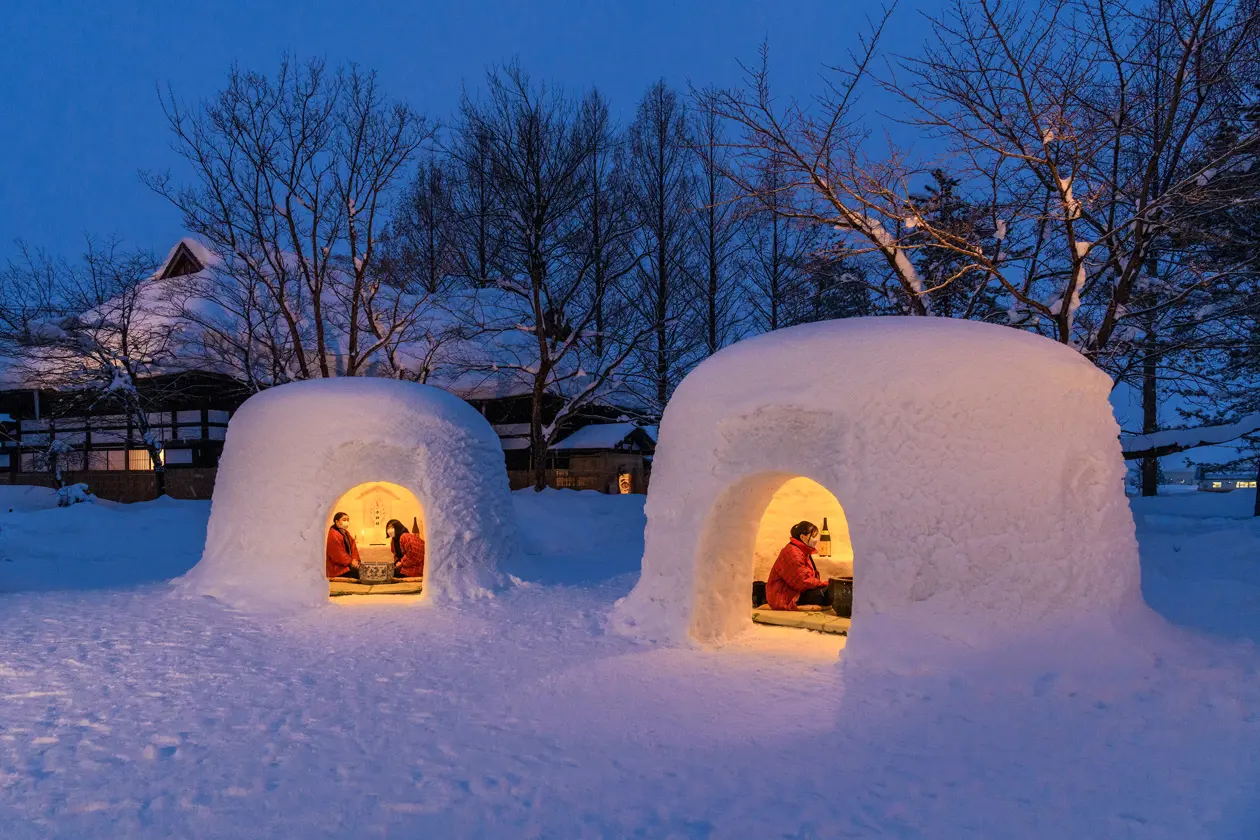
In Akita Prefecture, on the other hand, winter takes on a character deeply linked to tradition. Yokote is famous for its kamakura, large snow constructions similar to small igloos that have characterized one of the most fascinating winter events in Tohoku for over four centuries.
Inside, a small altar dedicated to the deity of water is placed and, during the celebrations, the illuminated structures transform the city into a landscape made of snow and light. Alongside the large kamakura, numerous miniature versions are also made.
For 2027, the event dedicated to the kamakura will take place on February 12 and 13. More than just a scenographic installation, it is a religious and popular tradition linked to the celebrations of the little Japanese New Year. Entering one of the kamakura therefore allows you to get closer to a custom that continues to be part of the city's identity.
Zao Onsen and the spectacular "snow monsters"
Among the most amazing natural experiences of the Japanese winter are the juhyo of Zao, in Yamagata Prefecture. In the mountains around Zao Onsen, particular climatic conditions cause snow and ice to accumulate progressively on the fir trees of the mountain, transforming them into huge figures with irregular shapes. Because of their appearance, they are commonly called "snow monsters".
The phenomenon begins to develop between November and December, grows during January and reaches its most spectacular moment in the heart of winter.
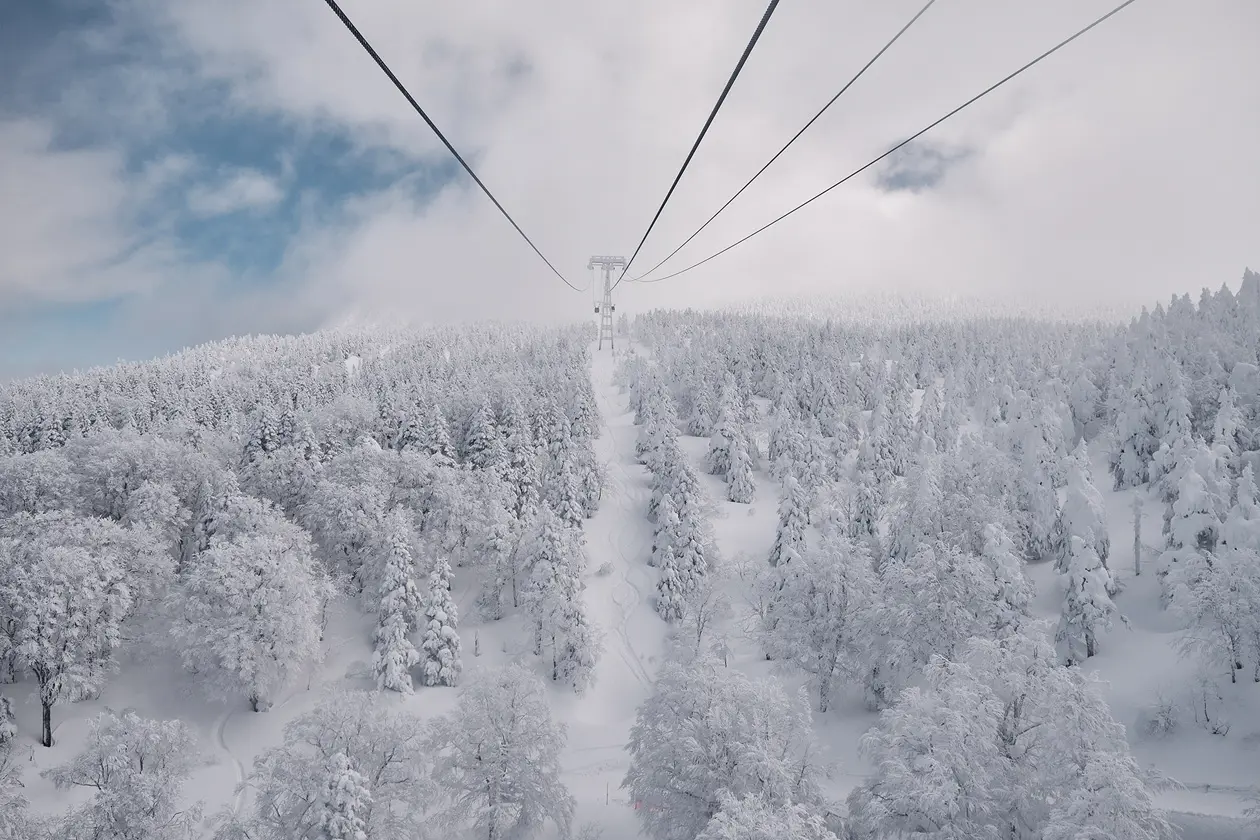
One of the most interesting aspects for the traveler is that you don't have to ski to see them. The two lines of the Zao Ropeway allow you to climb to the top of the mountain and reach the viewpoints from which to observe the landscape covered with snow and ice.
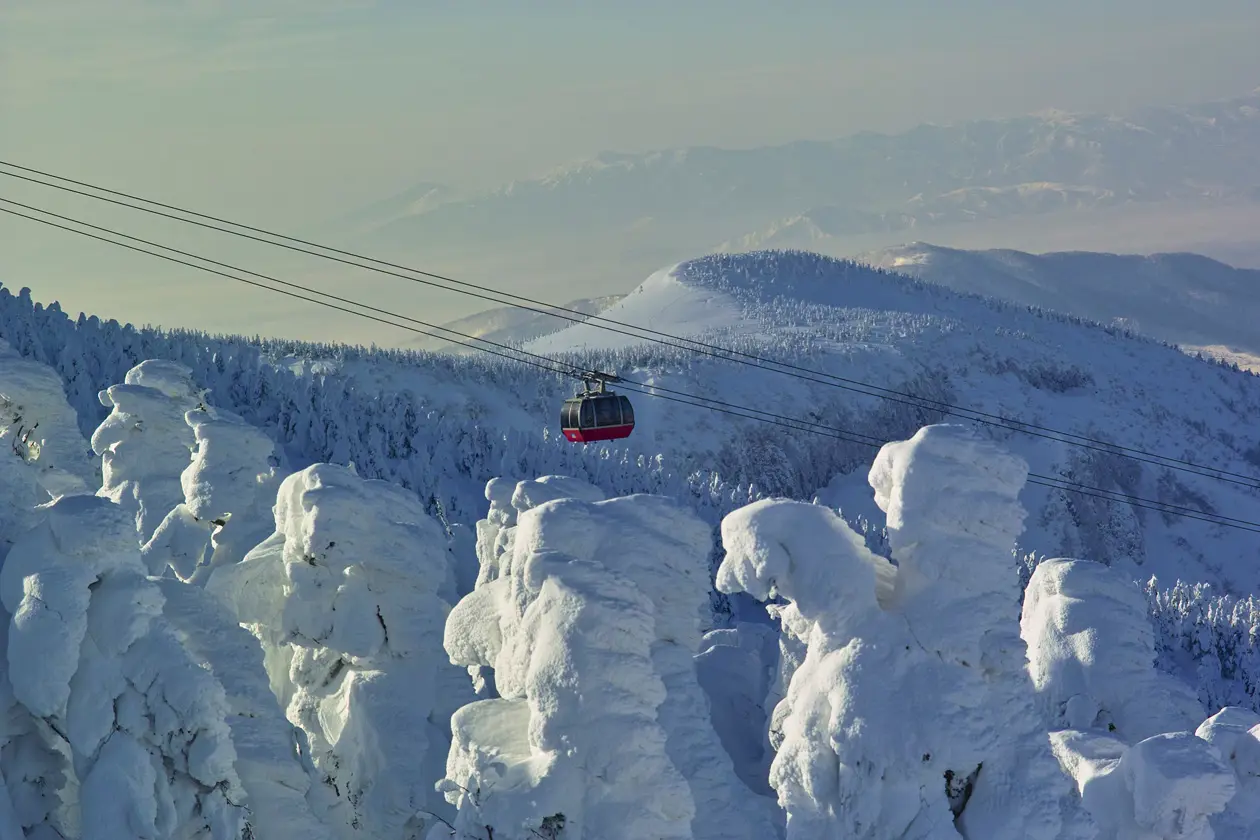
During some winter evenings, the juhyos are also illuminated, creating a completely different scenario than during the day. You can observe them from the cable car and from the panoramic area of the high-altitude station or participate, on the scheduled dates, in the Night Cruiser, a special heated tracked vehicle that travels through the snowy area allowing you to get close to the illuminated formations. The conditions of the mountain change rapidly and the appearance of the juhyo depends directly on temperatures, wind and snowfall: this unpredictability makes each winter slightly different from the previous one.
After the snow, the ritual of the onsen
However, Zao is not just a ski resort. It is also one of the places in Tohoku where you can enjoy one of the most characteristic experiences of the Japanese winter: the onsen. After a day spent in the snow, you can immerse yourself in the hot waters of the hot springs, also choosing facilities with outdoor baths.
The contrast between the steaming water and the snowy landscape is one of the most representative images of a winter trip to Japan and allows you to combine sporting activities with an experience deeply linked to the culture of the country.
When to go to Tohoku in winter
The period you choose depends mainly on the type of experience you want to have. December marks the start of the ski season and many of the snow activities, while January and February are generally the months when winter landscapes reach their most intense aspect. February is particularly interesting for combining the juhyo of Zao with the kamakura festival in Yokote, while between December and March Appi Kogen offers numerous possibilities for those who want to indulge in winter sports and snow activities. However, weather conditions can change the opening of the lifts, excursions and programs, so it is always advisable to check the updates of the individual resorts before departure.