
South Korea to taste: a journey through flavors, traditions and new trends
Discovering South Korea through gastronomy means crossing very different territories, traditions and lifestyles. From the daily table to street food markets, from regional specialties to the most contemporary cafés, food offers a privileged key to getting to know the country and understanding how ingredients, seasons and sharing practices are linked to Korean culture.
In fact, Korean cuisine is not limited to a succession of dishes. At the center there is often a collective way of eating, in which different preparations are brought to the table at the same time and shared among diners.
The Korean table and the culture of sharing
A traditional meal is generally built around rice, soup and banchan, small accompanying dishes that can include kimchi, seasoned vegetables, meat and fish. Rather than following a rigid order between appetizer, first and second course, the experience invites you to taste and combine different textures and flavors at the same time.
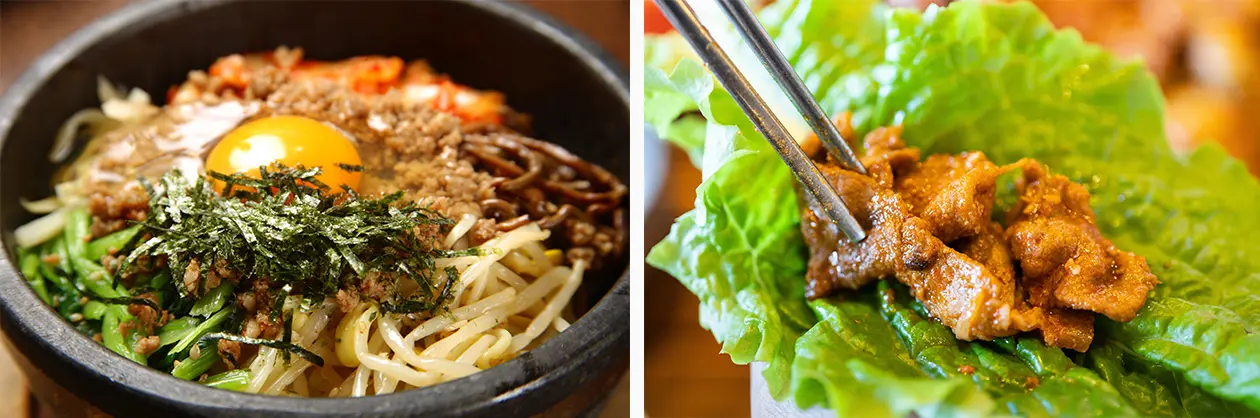
Korean bibmbap and ssam Photo: Copyright © Sisterscom.com / Depositphotos
This philosophy can be found in bibimbap, where rice, vegetables and other ingredients are mixed in the same bowl, and in ssam, which involves wrapping meat and condiments in lettuce or perilla leaves. Among the best-known experiences is Korean barbecue, with meat grilled directly at the table and accompanied by vegetables, sauces and numerous banchans: more than just dinner, a highly convivial moment.
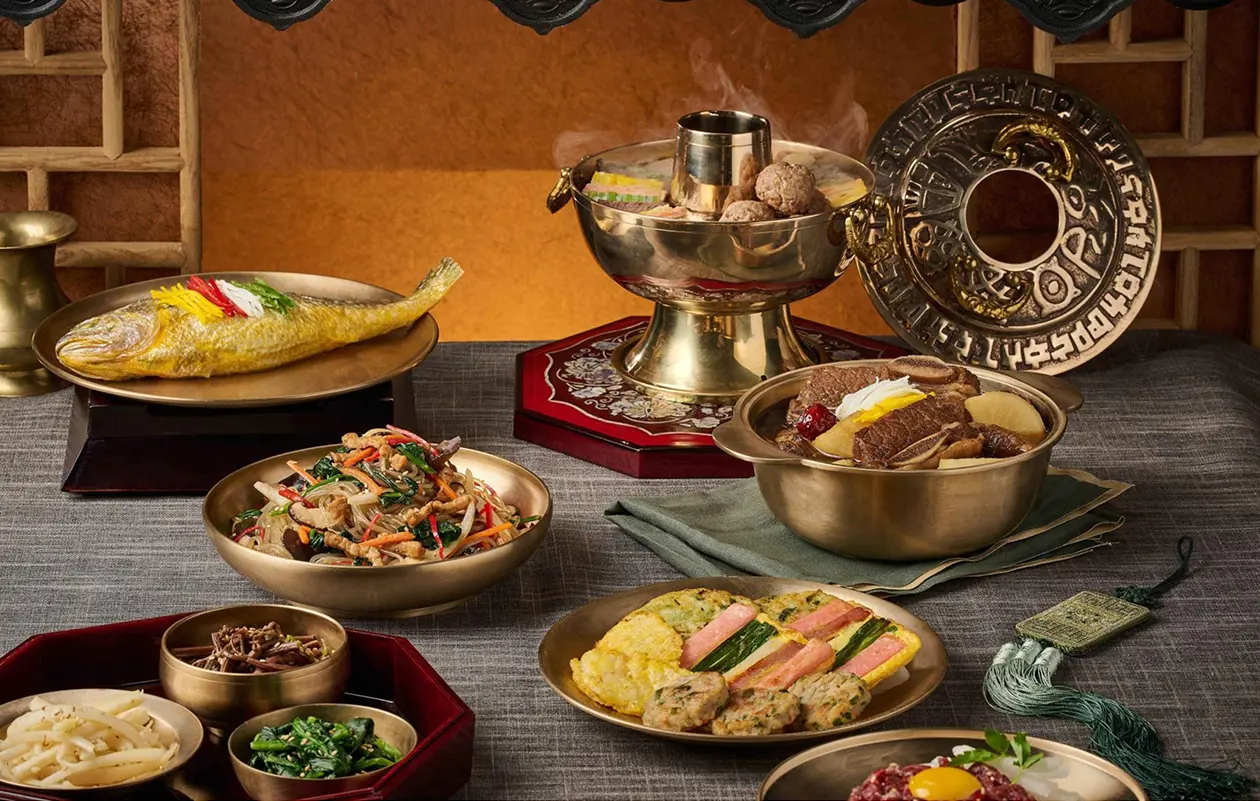
Kimchi also plays a central role. The practice of Kimjang, i.e. the collective preparation and sharing of kimchi in view of winter, was inscribed in 2013 on the UNESCO Representative List of the Intangible Cultural Heritage of Humanity. UNESCO emphasizes the value of cooperation between families and communities that characterizes this tradition.
Jeonju, Busan, Chuncheon and Jeju: Korea through regional specialties
Korean gastronomy changes significantly as you travel from one region to another. The country, surrounded by the sea on three sides and characterized by mountains, plains and well-defined seasons, has a wide variety of local products.
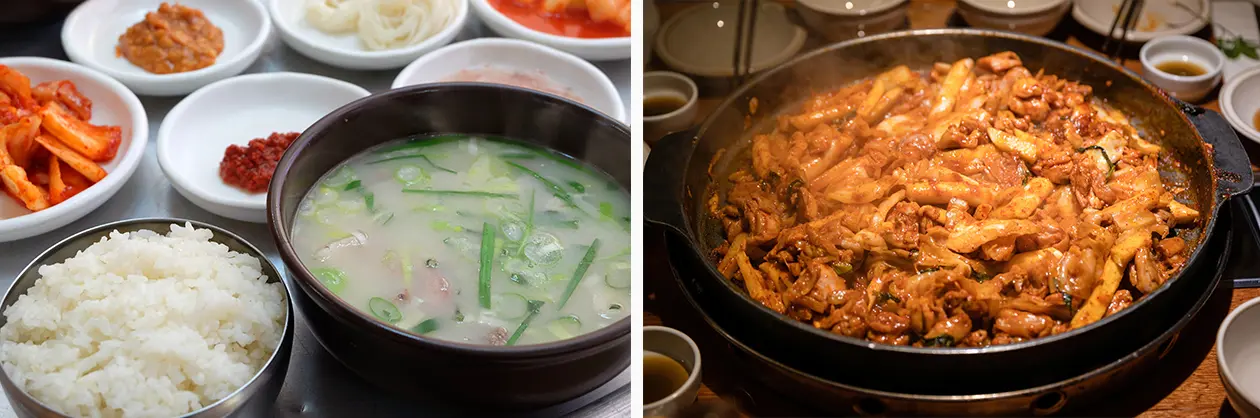
In Jeonju, the symbolic dish is bibimbap, one of the most well-known Korean specialties even abroad. Busan, on the other hand, is associated with dwaeji gukbap, a pork soup served with rice, while Chuncheon is known for dakgalbi, spicy chicken sautéed with vegetables. On the island of Jeju, one of the most characteristic products is the local black pork, often prepared on the grill.
Following this gastronomic geography you will also encounter Yangyang pine mushrooms, Tongyeong oysters and Geumsan ginseng, as well as traditional drinks such as makgeolli, made from rice, and Andong soju.
For the traveler, food can therefore become a real common thread of the itinerary, suggesting stops that go far beyond Seoul and allow you to get to know very different regional identities.
Markets and street food: the more informal side of Korean cuisine
Another way to approach the country's gastronomy is through markets and stalls, an integral part of daily life in Korean cities. Among the protagonists of bunsik, simple and informal street food, there are tteokbokki, rice dumplings generally served with a spicy sauce, mandu, dumplings available with different fillings and cooking, and Korean hot dogs, characterized by a crispy breading and numerous variations.
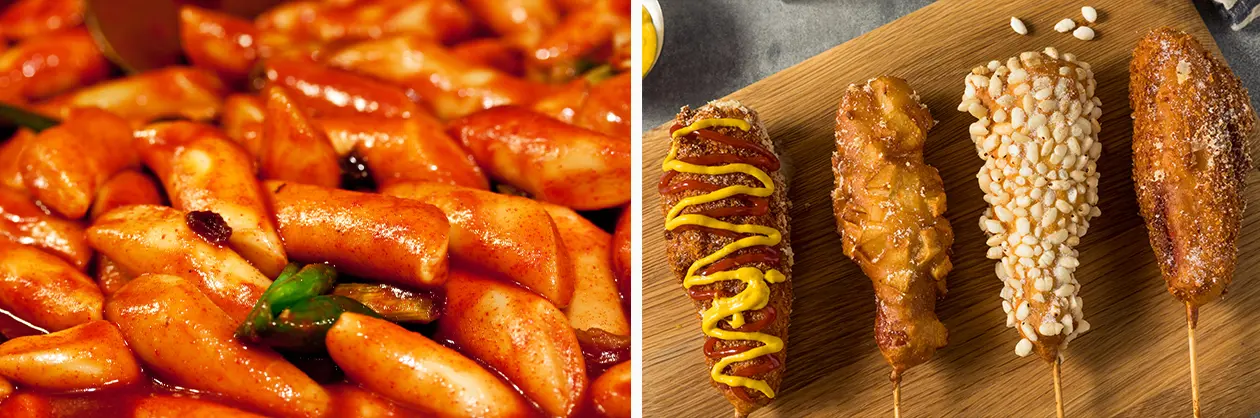
Visiting a market thus allows you to build a more spontaneous gastronomic journey, tasting small preparations and closely observing daily habits and rhythms.
Café and bakery, the contemporary face of Korea
Alongside traditional preparations, a very dynamic culture of cafés, pastry shops and bakeries has developed especially in large cities. Korean ingredients and international recipes are constantly being reinterpreted, while new trends can spread quickly through social media.
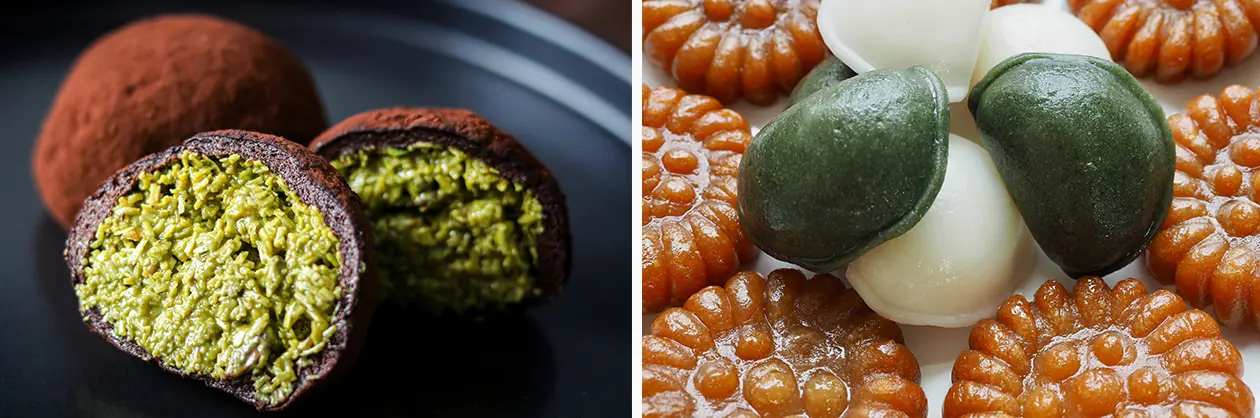
Among the new phenomena is the Dubai Chewy Cookie, prepared with marshmallows, pistachio cream and crunchy kadaif and now reinterpreted by numerous Korean cafes. At the same time, preparations with a long history resist and are rediscovered, such as tteok, based on rice, and yakgwa, traditional honey sweets that today also appear in more contemporary versions.
A journey between memory and innovation
It is precisely the coexistence of tradition and new trends that makes a gastronomic trip to South Korea interesting. A shared barbecue, a market, a regional specialty or a viral dessert tell different aspects of the same country. Cooking therefore becomes something more than a complement to the journey: it can determine the stages of an itinerary, lead to lesser-known cities and offer direct contact with local traditions.