Poland UNESCO: 18 World Heritage Sites to Discover Cities, Nature and History
With the entry of the modernist center of Gdynia into the World Heritage List in July 2026, Poland now has 18 UNESCO sites, of which 16 are cultural and 2 natural. The most recent recognition thus becomes an opportunity to rediscover an extremely diversified heritage, capable of accompanying the traveler from medieval cities to twentieth-century architecture, from primeval forests to ancient mines, up to the places that preserve some of the fundamental pages of European history.

More than just a collection of monuments, UNESCO sites can become the leitmotif of a journey through Poland, connecting well-known cities such as Krakow and Warsaw with less usual destinations and natural landscapes that are still deeply intact. It is precisely this variety that characterizes the country's world heritage today.
Gdynia, the new UNESCO site on the Baltic Sea
The latest addition is Gdynia, a port city overlooking the Baltic. Its Modernist City Centre tells a very different story than the oldest historic centers in Poland: between 1926 and 1939 Gdynia quickly transformed from a small coastal settlement into a new modern city, closely linked to the construction of the port.
The UNESCO-recognized site includes the heart of this urban transformation, with blocks, residential buildings, villas and architecture designed according to the principles of early modernism. The relationship with the sea and the port is an integral part of the urban identity, with forms and architectural references that frequently recall the maritime world.
For those visiting the northern coast of Poland, Gdynia thus adds a new cultural stage to an already highly attractive territory, inserting itself into the urban landscape of the Baltic Tricity together with Gdansk and Sopot.
Krakow and Warsaw, two different ways of telling the story
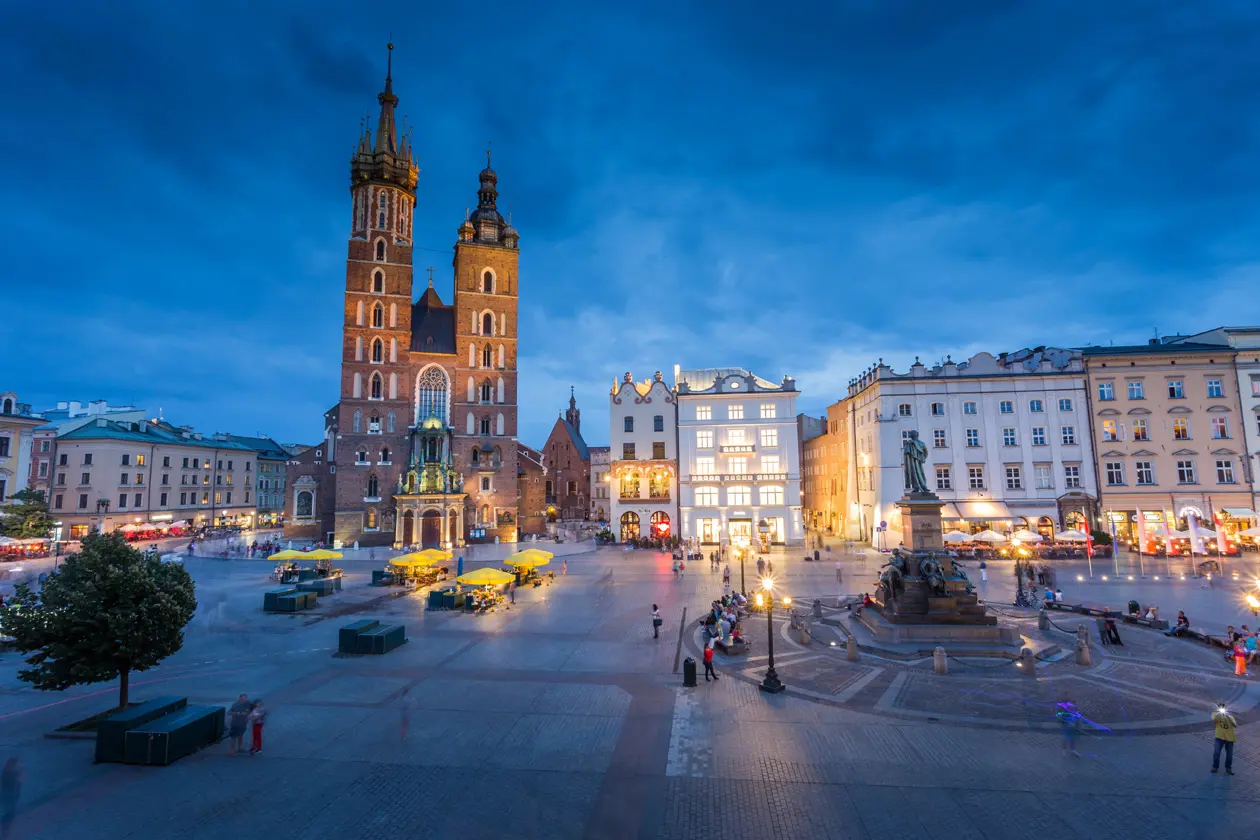
Among the best-known UNESCO sites in Poland is the historic center of Krakow, the country's ancient capital. The heart of the city is the Rynek Główny, the large Market Square dominated by St. Mary's Basilica, from whose tower the Hejnał Mariacki, the traditional trumpet melody linked to the medieval history of the city, resounds every hour.
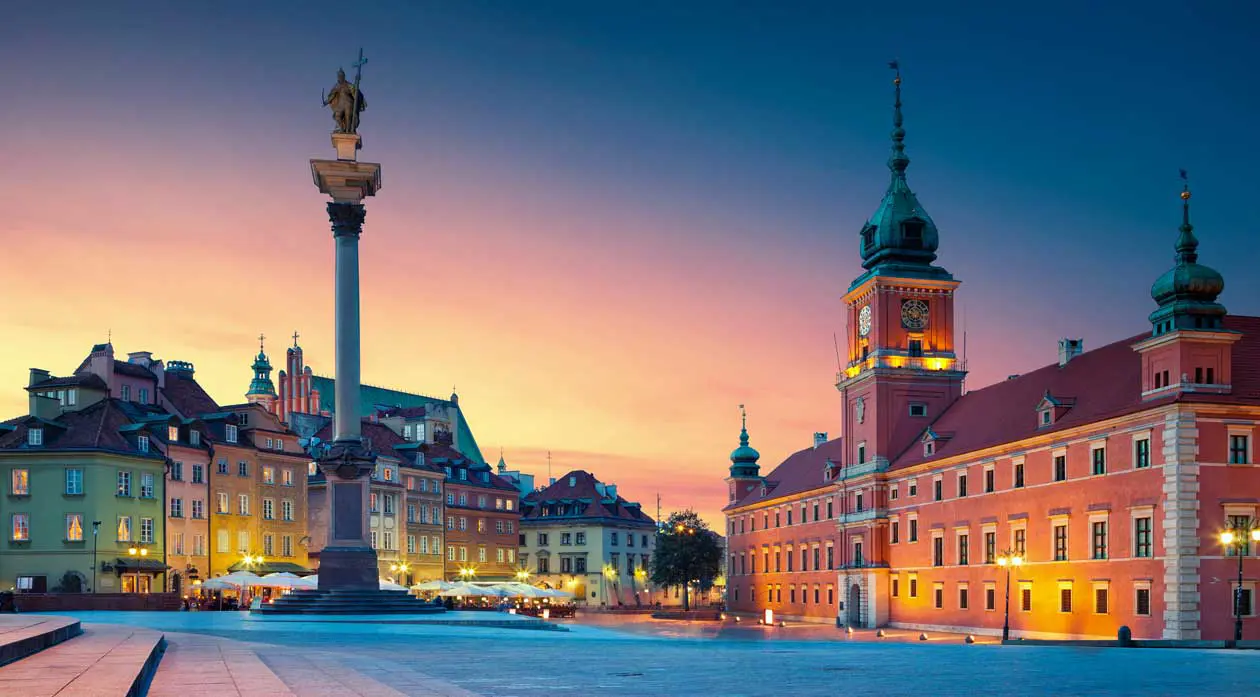
The story of Warsaw is completely different. Its historic center was almost entirely destroyed during the Second World War and subsequently rebuilt through documents, views and testimonies prior to the conflict. It is precisely this extraordinary reconstruction process that is part of the value for which the city has been included in the World Heritage List.
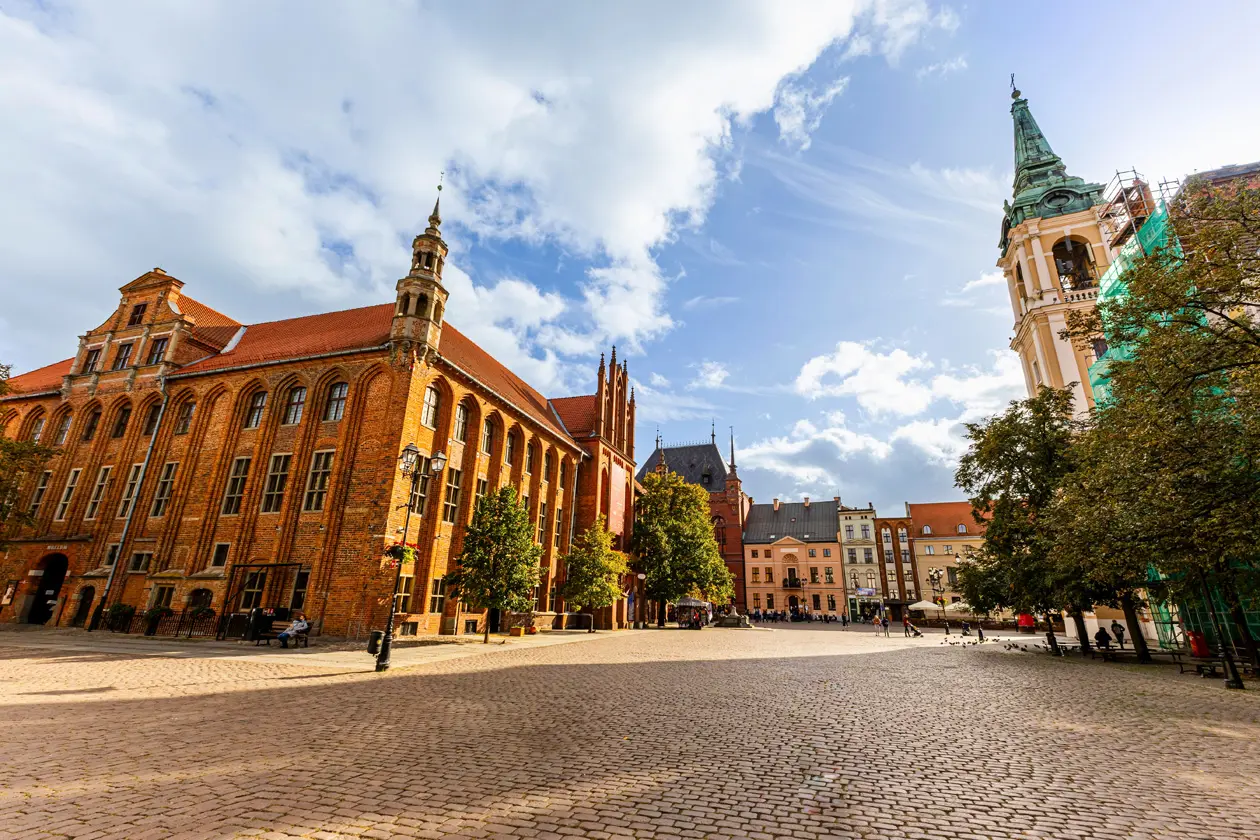
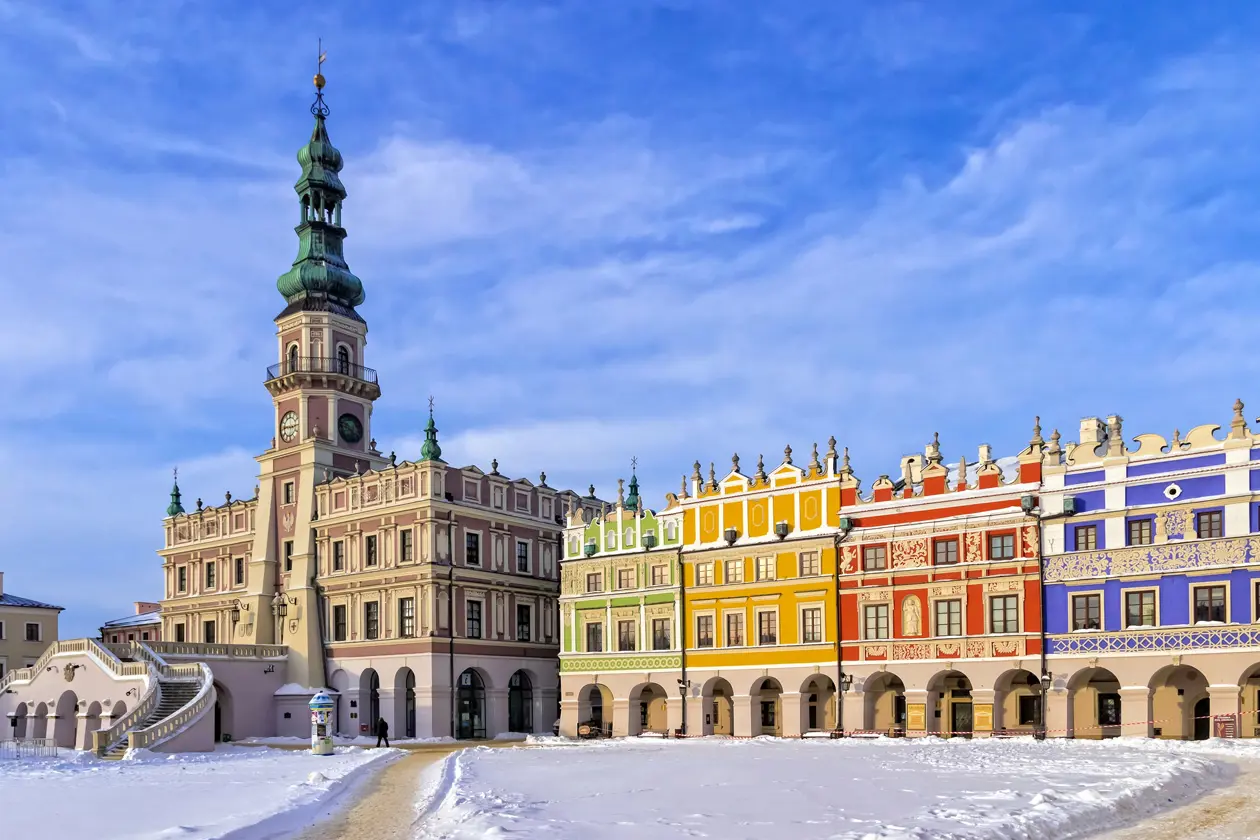
The journey through the historic cities can continue to Toruń, a medieval city linked to Nicolaus Copernicus, and Zamość, built in the Renaissance according to the model of the ideal city. In Malbork there is the monumental Castle of the Teutonic Order, while in Wrocław the Centenary Hall introduces the visitor to the architecture of the early twentieth century.
Białowieża and Europe's Great Forests
Poland's UNESCO heritage is not just urban. In the Podlaskie region, the Białowieża Forest preserves one of the most important forest ecosystems in Europe, with centuries-old trees, wetlands and extraordinary biodiversity.
Its most representative inhabitant is the European bison, the largest land mammal on the continent, which finds one of its most important habitats here. For the traveler, Białowieża offers a completely different face of Poland, made up of paths, nature and large green spaces.
In the south-east of the country, some areas of the Bieszczady Mountains are part of the transnational site of the Ancient Primordial Beech Forests of the Carpathians and other regions of Europe. Added to these naturalistic experiences is the Mużakowski Park, on the border between Poland and Germany, a large nineteenth-century landscape designed by man in which nature, architecture and the composition of the territory merge.
Wieliczka and Bochnia, a journey underground
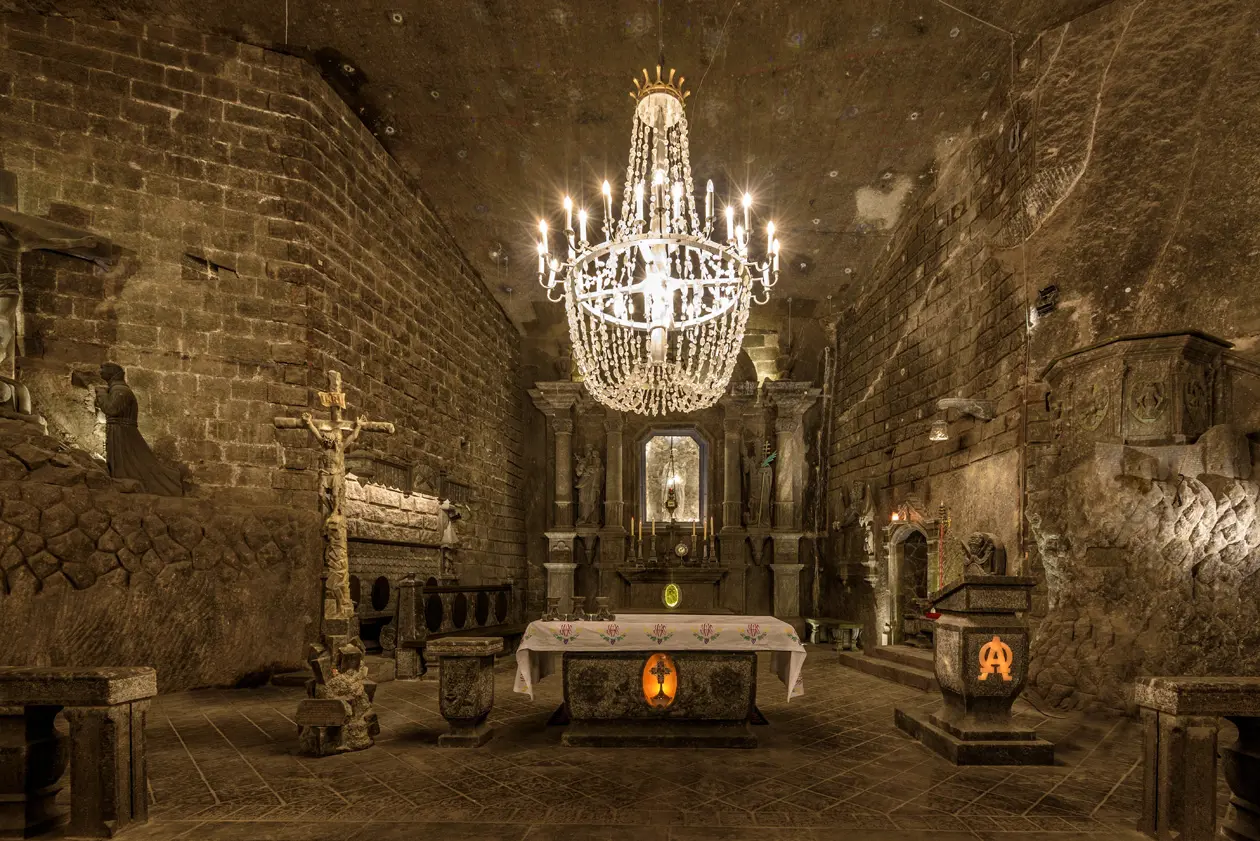
Some of Poland's most spectacular UNESCO sites are located underground. The Wieliczka Salt Mine near Krakow leads through a diverse universe of tunnels, chambers, underground lakes and rooms carved directly into salt.
The most famous place is the Chapel of St. Kinga, where altars, bas-reliefs, statues and decorations tell the story of the work of generations of miners.
Wieliczka now shares UNESCO recognition with Bochnia, the oldest salt mine in Poland, documented from the thirteenth century. Less known than nearby Wieliczka, it also preserves a network of ancient excavations, galleries and chapels that testify to the economic and cultural importance of salt mining.
In Silesia, the Tarnowskie Góry site tells the story of lead, silver and zinc mining and the ingenious systems built to manage groundwater. Krzemionki leads even further back in time, where thousands of shafts and tunnels bear witness to the extraction of flint between the Neolithic and early Bronze Ages.
Wooden churches and spiritual landscapes
Another route crosses the Poland of religious architecture. The Churches of Peace in Jawor and Świdnica, built in the seventeenth century, impress with the contrast between the relatively sober exteriors and the interiors richly decorated with galleries, paintings, sculptures and ornamental elements. In the south of the country there are also the wooden churches of southern Małopolska, embedded in the rural landscapes and built through construction techniques handed down over the centuries, as well as the wooden churches of the Carpathian region belonging to different Christian traditions. In Kalwaria Zebrzydowska, on the other hand, architecture and landscape form a large religious complex in which chapels and paths distributed between hills and valleys symbolically reproduce the places of the Passion of Christ. Even today it is an important place of pilgrimage.
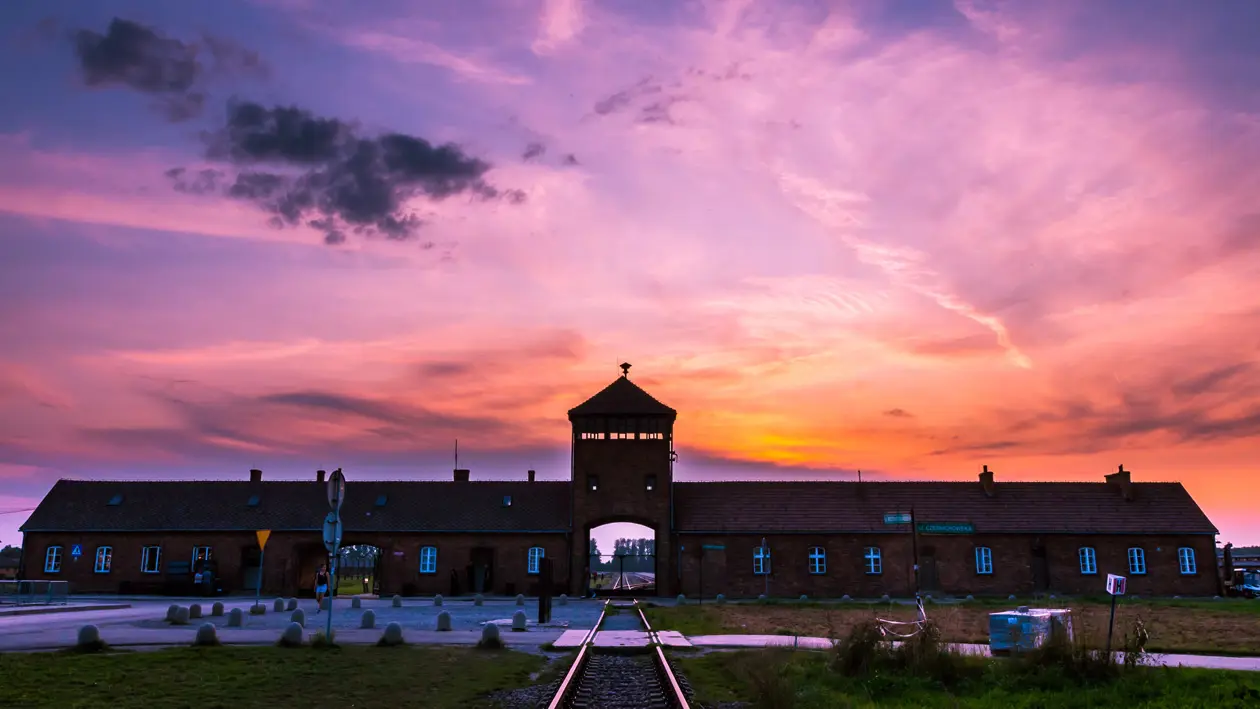
Among the Polish sites inscribed by UNESCO there is also Auschwitz-Birkenau, the largest concentration camp and extermination complex built by Nazi Germany in occupied Poland. Today the site is preserved as a place of memory and testimony of the persecution and extermination perpetrated during the Second World War. The visit therefore has a profoundly different nature compared to the other UNESCO sites in the country and requires a conscious and respectful approach to the historical and commemorative value of the place.