Luigi Conconi and the Scapigliatura on display in Monza
The Royal Palace of Monza dedicates a major exhibition to Luigi Conconi, painter, engraver, illustrator and protagonist of Milanese culture between the late nineteenth and early twentieth centuries. Until March 14, 2027, the Orangerie hosts "Luigi Conconi and the Scapigliatura", an exhibition curated by Simona Bartolena with over 150 works including paintings, drawings and engravings, from important Italian and international public and private collections.
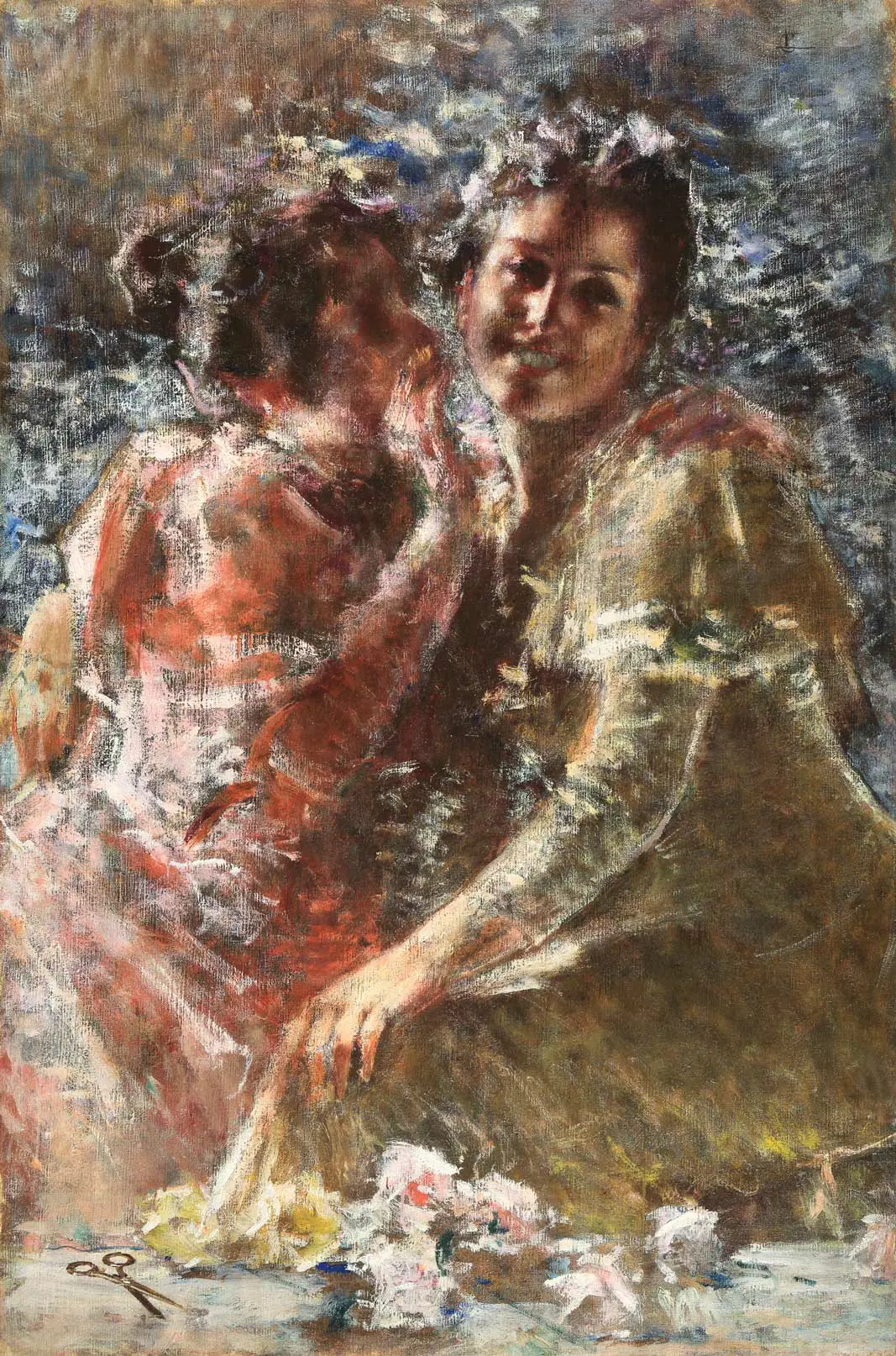
The project draws attention to an artist who is less known to the general public today, despite the presence of his works in the main Italian museums dedicated to the nineteenth century. The last monographic exhibition focused on his pictorial production dates back to 1920, when the Galleria Pesaro in Milan dedicated an exhibition to him a few years after his death.
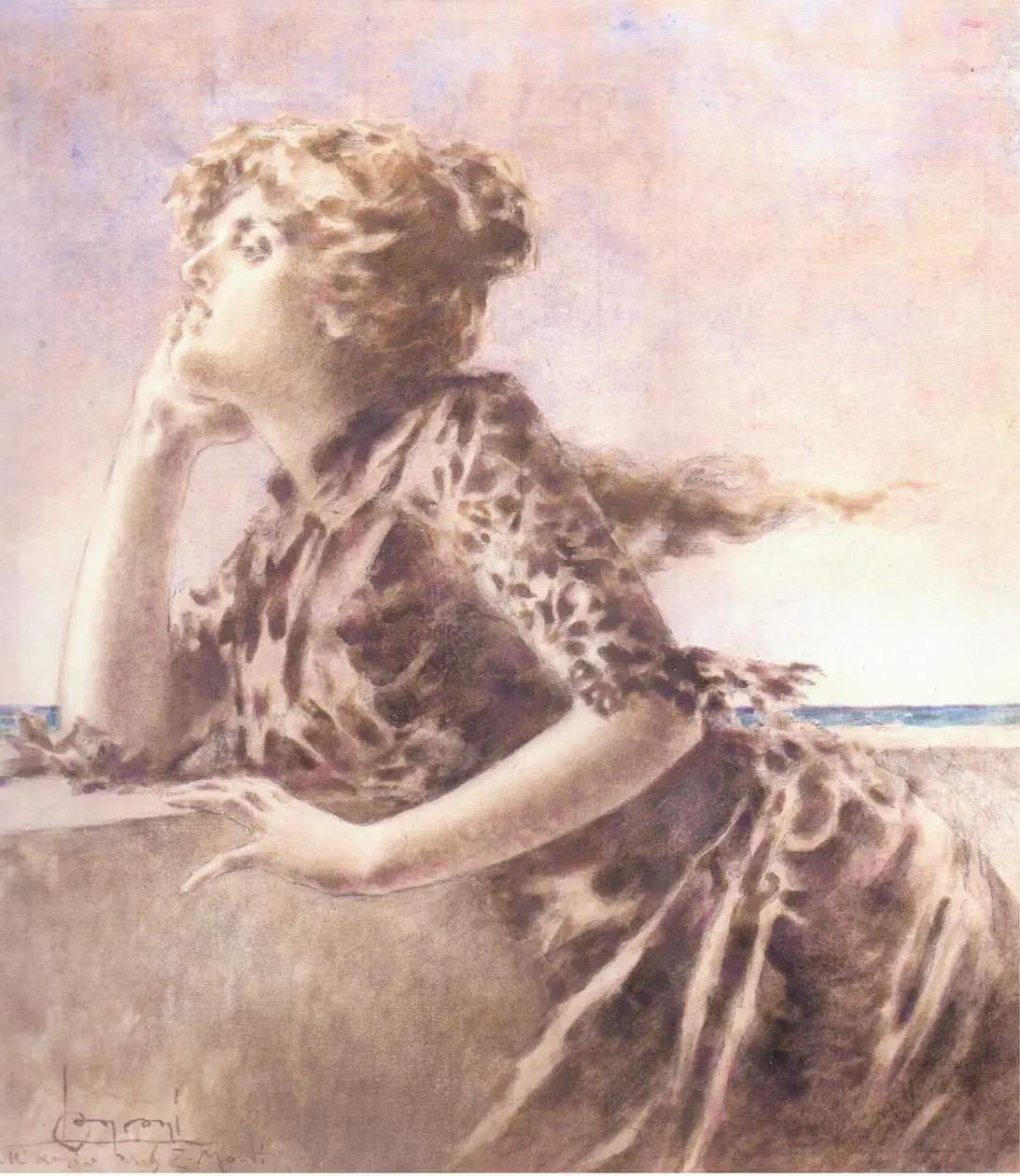
Luigi Conconi in the Milan of the Scapigliatura
Born in Milan in 1852, Luigi Conconi trained at the Brera Academy and frequented one of the most lively cultural environments in the city, coming into contact with artists, writers and intellectuals such as Tranquillo Cremona, Daniele Ranzoni, Giuseppe Grandi, Carlo Alberto Pisani Dossi and Luca Beltrami.
The context was that of the Scapigliatura, a movement initially born in the literary field and soon extended to painting, sculpture and other arts. The Scapigliati were looking for a language capable of overcoming academic conventions and interpreting a society undergoing profound changes.
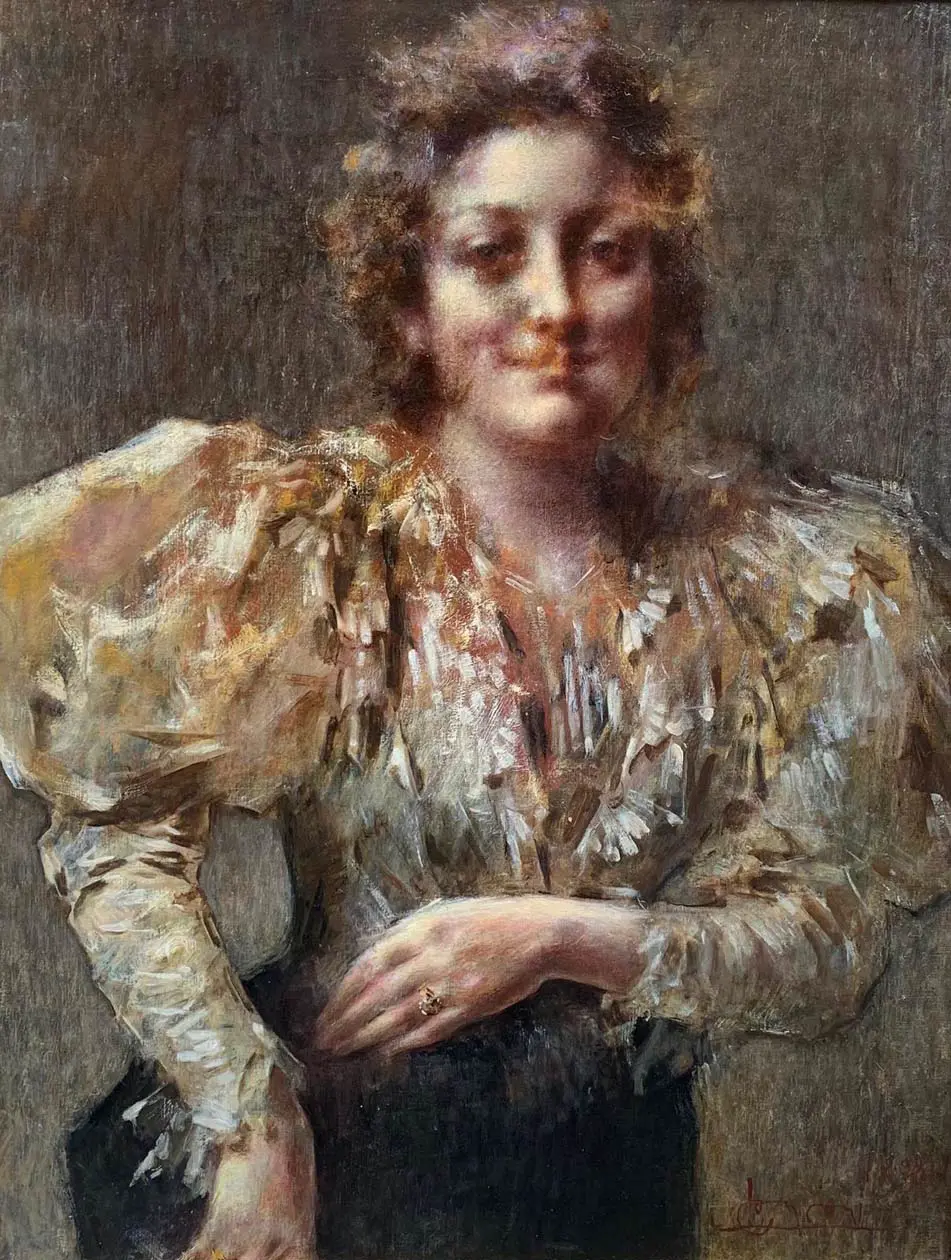
To reconstruct this environment, Conconi's works are flanked in the exhibition by works by the three main protagonists of the artistic Scapigliatura - Tranquillo Cremona, Daniele Ranzoni and Giuseppe Grandi - together with those of Vespasiano Bignami, Paolo Troubetzkoy and Gaetano Previati, with whom Conconi also shared the studio.
A painting between light, atmosphere and psychology
Conconi's pictorial research is distinguished by a free brushstroke, capable of progressively attenuating the contours of the figures and favoring the perception of light and atmosphere.
In portraits and more intimate scenes, the interest often shifts to the psychological dimension of the characters. The female figure is one of the recurring subjects, but her production also includes more enigmatic compositions, macabre atmospheres, medieval suggestions and themes related to symbolist imagery.
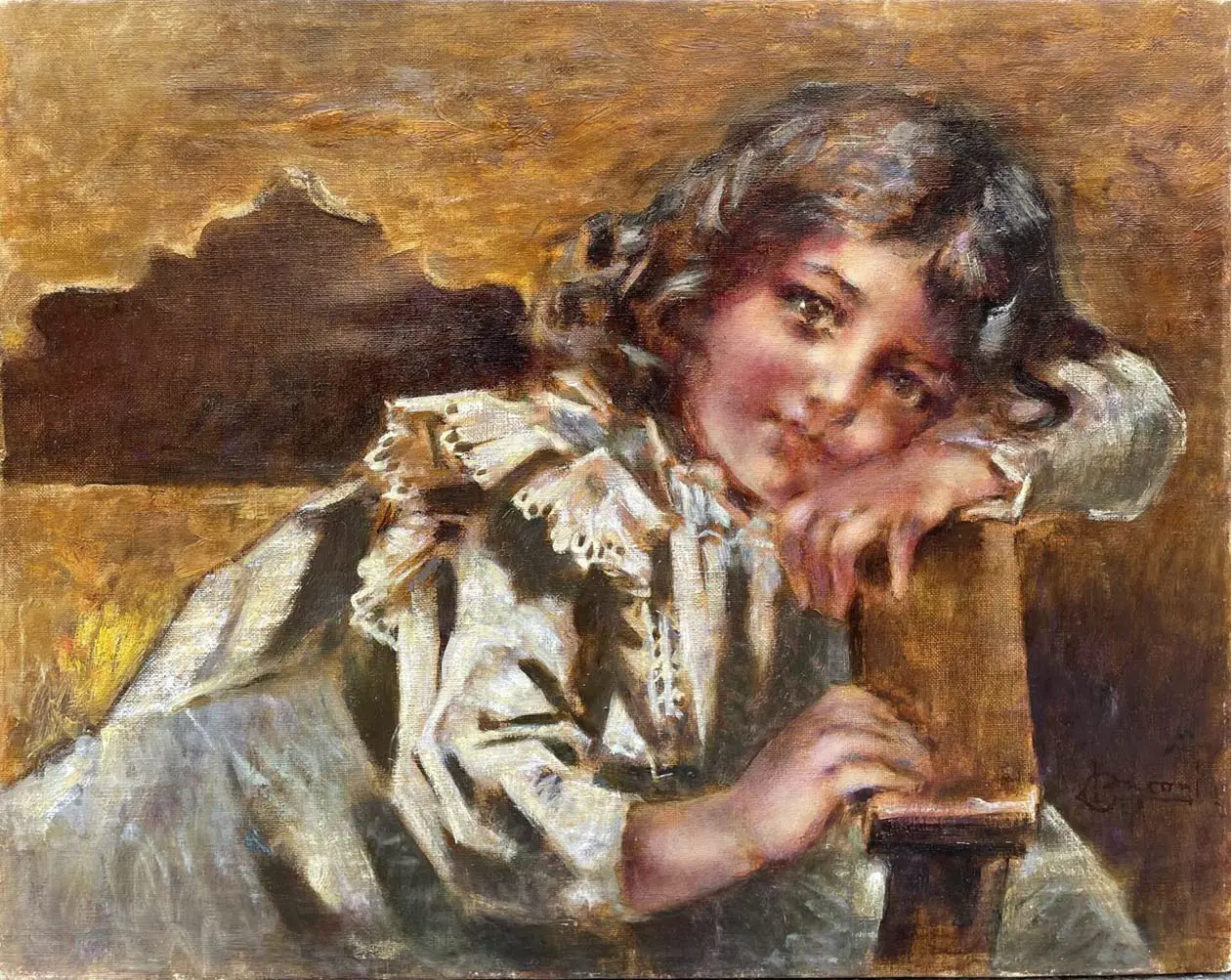
Conconi remained tied to the sensitivity of the Scapigliatura, but also looked carefully at the new European experiences. In his most mature phase, his painting progressively approached Art Nouveau and Art Nouveau, especially in the symbolist component, relating the Scapigliata season with the artistic languages that would establish themselves at the beginning of the twentieth century.
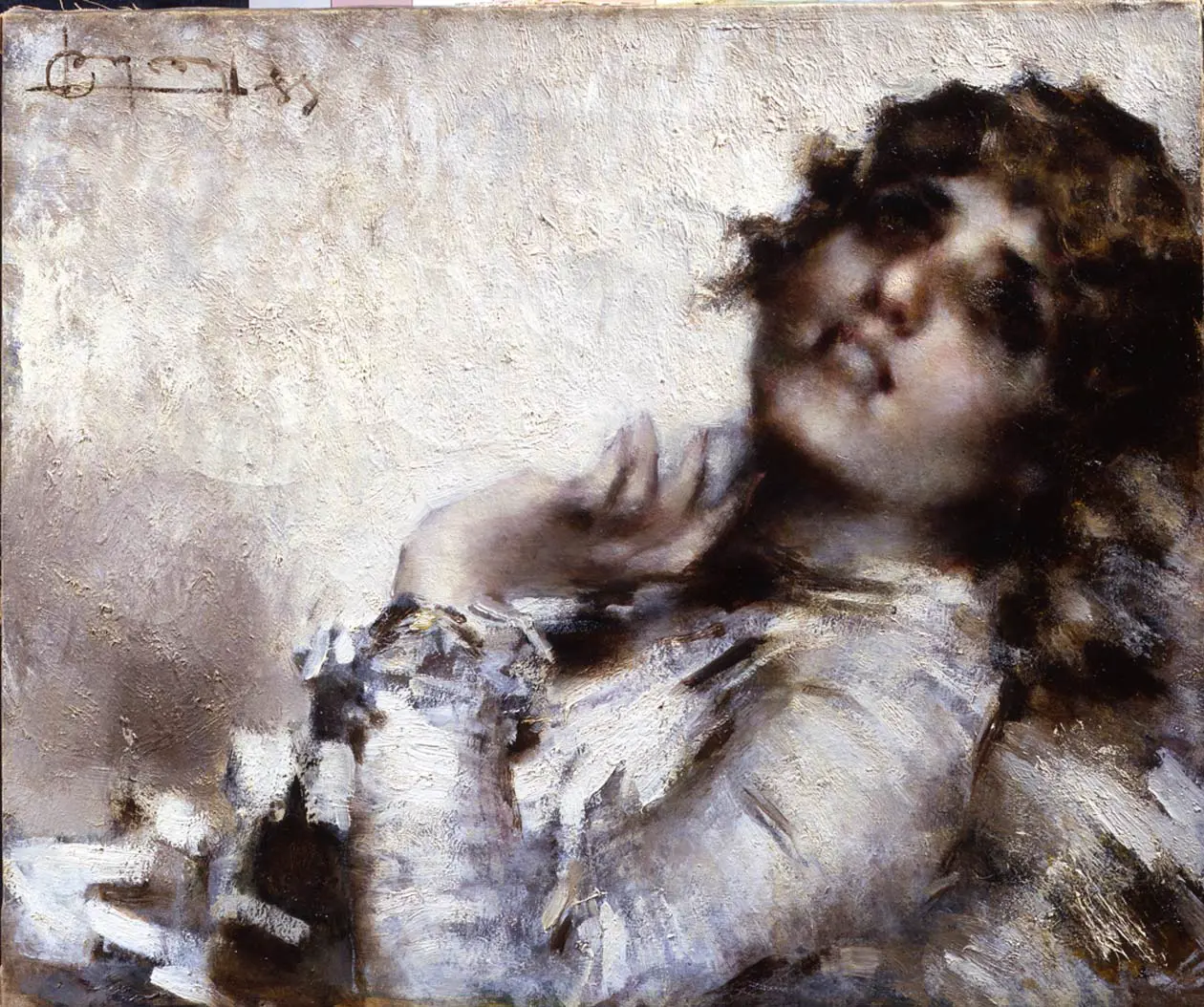
His personal universe was equally eclectic: in the Milanese studio he had collected a sort of Wunderkammer with stuffed animals, mummies, Buddhist temples and objects from different cultures, testimony to a curiosity that far exceeded the boundaries of painting.
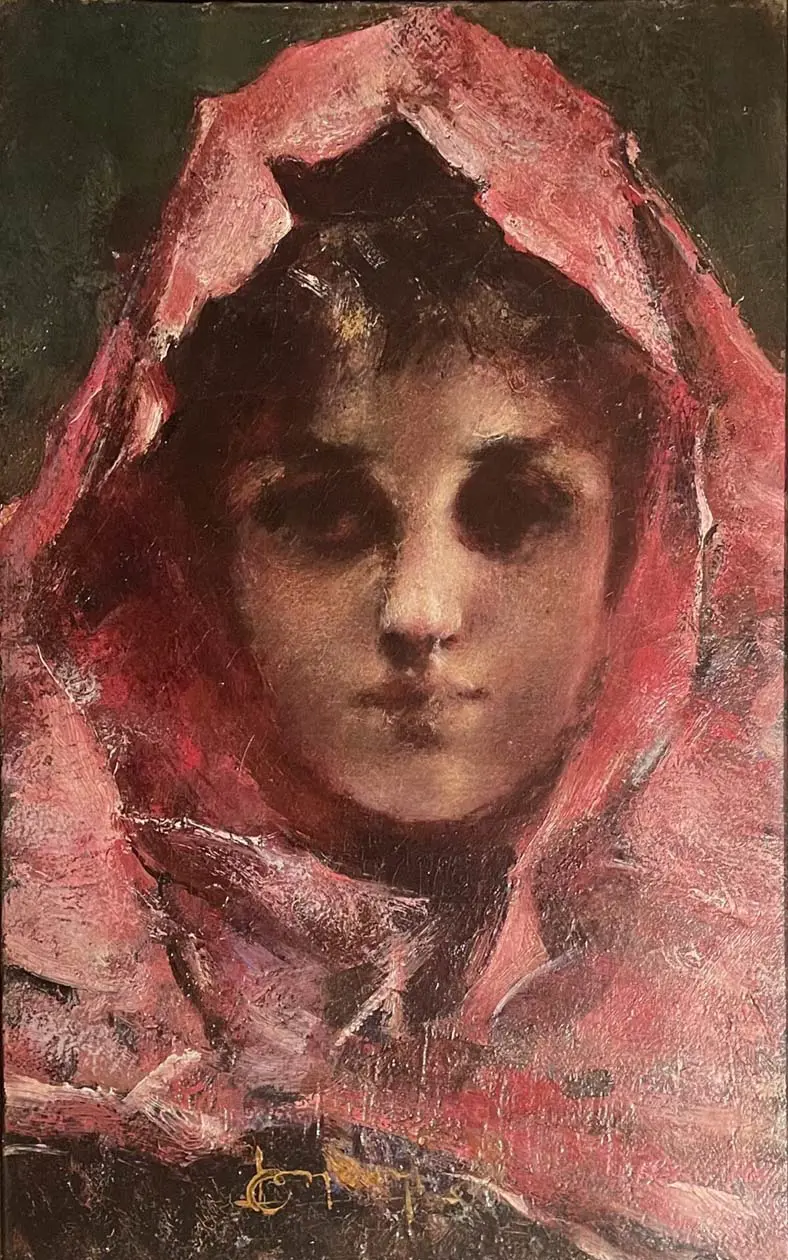
Paintings, engravings and graphics
The exhibition also allows us to learn about lesser-known aspects of his activity. In fact, Conconi attributed great importance to chalcography, considering it an integral part of his research and not a secondary production compared to painting.
At the same time he worked as an illustrator and satirical cartoonist for magazines and publishing houses, contributing to the renewal of Italian graphics between the nineteenth and twentieth centuries. He was also interested in architecture, a discipline he studied and reflected on for a long time, although he had few opportunities to transform his ideas into completed buildings.
This plurality of interests allows us to read Conconi not only as a disheveled painter, but as a figure capable of crossing different languages in a period of profound transformation of the arts.
Over 150 works from Italian and international collections
The works brought together at the Orangerie of the Royal Palace of Monza come from institutions such as the Leonardo da Vinci National Museum of Science and Technology in Milan, the Civic Museums of Pavia, the Cariplo Foundation Collection, the Gallerie d'Italia, the Poldi Pezzoli Museum, the GAM in Genoa and the Banco BPM Art Collections.
In addition to these, there are important private loans, including some works from the Gilgore Collection, an American collection specializing in Italian art created between 1850 and 1925. The comparison between paintings, drawings and engravings thus reconstructs the many directions of Conconi's research and, at the same time, the cultural climate of disheveled Milan.
INFO
Exhibition: "Luigi Conconi and the Scapigliatura".
When: from November 6, 2026 until March 14, 2027.
Where: Orangerie of the Royal Palace of Monza, in Viale Brianza 1 in Monza.
Tickets: full 14 euros; reduced 12 euros.
Hours: Thursday and Friday from 10.00 to 13.00 and from 14.00 to 18.00; Saturday, Sunday and holidays from 10.00 to 19.00. The last admission is allowed one hour before closing.
Finally, the venue allows the exhibition to be combined with the discovery of the Royal Villa, the Royal Gardens and the Park of Monza, transforming the exhibition into a cultural stage that can be easily inserted into a day or a weekend in Monza.