
14 December 2023
Textron Aviation's sustainable program
In collaboration with 4AIR, the program is set to launch in January 2024 and is available to eligible customers who own and operate Cessna, Beechcraft and Hawker turbine aircraft worldwide
“Owners have increasingly become interested in solutions that mitigate the carbon footprint of operating their aircraft,” said Brad White, senior vice president, Global Parts and Programs, Textron Aviation. “SustainableAdvantage provides them the opportunity to have a seamless option to offset their carbon emissions through a Textron Aviation approved program and supplier.”
Textron Aviation announced a new ProAdvantage program, SustainableAdvantage℠, to provide owners with an additional option for reducing their carbon dioxide emissions from operating aircraft. In collaboration with 4AIR, the program is set to launch in January 2024 and is available to eligible customers who own and operate Cessna, Beechcraft and Hawker turbine aircraft worldwide.
Beechcraft, Cessna and Hawker customers receive factory-direct support, maintenance and modifications by Textron Aviation Inc., a Textron Inc. (NYSE: TXT) company, through its global network of service and part centers, mobile service units and 24/7 1CALL AOG support.
Textron Aviation will administer SustainableAdvantage as part of its easy-to-use array of ProAdvantage programs and connect owners to 4AIR. 4AIR is the first company to offer comprehensive sustainability solutions for business aviation. SustainableAdvantage will offer owners the option to offset their footprint 100% with 4AIR’s Bronze Level. Carbon offsets reduce emissions elsewhere which can be claimed against the carbon footprint from operating aircraft.
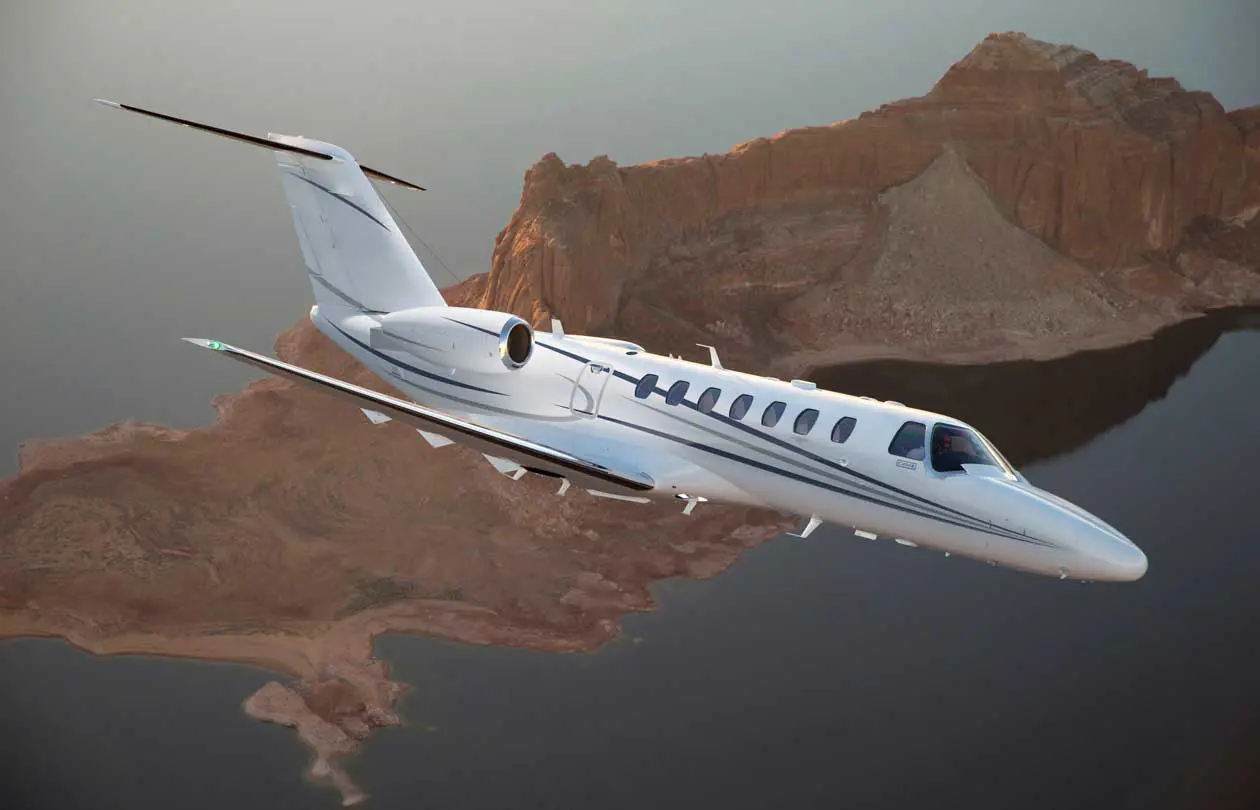
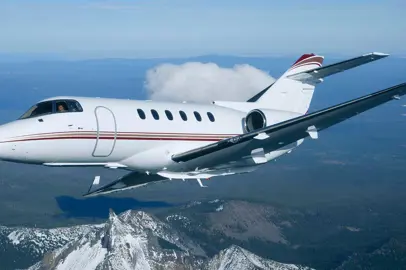
Cessna Citation CJ3 Gen2 flyExclusive (Photo: Business Wire) / Textron Aviation
4AIR will provide owners who choose to join SustainableAdvantage a personalized, annual report that will document offset purchases. Additionally, 4AIR offers monitoring and compliance reporting requirements for the Carbon Offsetting and Reduction Scheme for International Aviation (CORSIA) and the European Union, French and United Kingdom Emissions Trading System (ETS) as well as other ESG reporting requirements.
Textron Aviation is committed to environmental sustainability and natural resource conservation and supports the Business Aviation Commitment on Climate Change. As part of Textron Inc., Textron Aviation established enterprise-wide five-year goals to reduce greenhouse gas emissions by 20%, and reduce energy consumption, water use and waste generation by 10% by the end of 2025. Additionally, nearly all the company's electricity needs in Kansas are powered by renewable wind energy.
The Beechcraft Denali and Cessna Citation Ascend highlight the company's dedication to reducing emissions and improving efficiency through its new aircraft projects. Customers can take delivery of their aircraft using sustainable aviation fuel (SAF) and they can also refuel with it at Textron Aviation's service center in Wichita, Kansas. The company is actively supporting the development of sustainable propulsion solutions, such as hydrogen electric and hybrid electric. Its global service network received recertification from the National Air Transportation Association (NATA) as a Green Aviation Business and by NBAA for the increased sustainability efforts of its ground support.
Edited by editorial staff, Avion Luxury Magazine
Text source and photos: Copyright © Textron Aviation Press
Photo visual: Beechcraft King Air Sustainability (Photo Business Wire) / Textron Aviation
Private jets
Luxury Hotels
You might be interested in
Business & General aviation
Jets
HondaJet Echelon, Honda's new light jet towards its first flight in 2028
The program advances with the completion of the first wing of the test aircraft: the jet will be larger than the HA-420, designed for single-pilot operations and with certification and first deliveries expected in 2031
Business & General aviation
Jets
Bombardier Global 8000 cleared to land at London City Airport
The green light from the British Civil Aviation Authority allows the ultra-long-range business jet to directly access London's most central airport, reducing ground transfer times
Business & General aviation
Jets
Starlink arrives on Hawker 700, 800 and 900 business jets
Following FAA approval of AeroMech's Supplemental Type Certificate, Textron Aviation makes retrofit with high-speed satellite connectivity available at its service centers
Advertising









AVION LUXURY MAGAZINE
in digital version
DESTINATIONS Caribbean Sanctuary: Sugar Beach a St. Lucia • Return to Paradise: Constance Hotels & Resorts alle Seychelles. JETS Beyond Aero: il jet privato del futuro è a idrogeno • Cessna Citation Gen3: eleganza e tecnologia ad alta quota • G700 Qatar Executive: il nuovo volo privato. CARS Jean Bugatti, l’eredità dell’eccellenza • E-type Commemorative: l’icona si reinventa. YACHTS Voyager 45: l’essenza del viaggio esclusivo • Attitude: stile sull’acqua. LIFESTYLE Alta Orologeria: visioni d’Antartide • Heart to Earth, Alta Gioielleria spirituale • In viaggio con Bentley.