AI enters the center of the debate at airports
Artificial Intelligence and its operational applications have now also entered the scope of analysis provided for by Legislative Decree 231, an essential reference for the organization, management and control model in the civil aviation sector and, in particular, for airport management companies, airlines and handling operators.
It is precisely to these new challenges, between technological innovation, law and responsibility, that SACBO - the management company of Milan Bergamo Airport - has dedicated a conference hosted at the Giovanni XXIII Congress Center in Bergamo, creating a moment of discussion on the possible developments of AI in air transport and the risks associated with its use. At the center of the reflection, the correct use of Artificial Intelligence systems, security, regulation and the impact of digitization processes on the organization and operational activities.
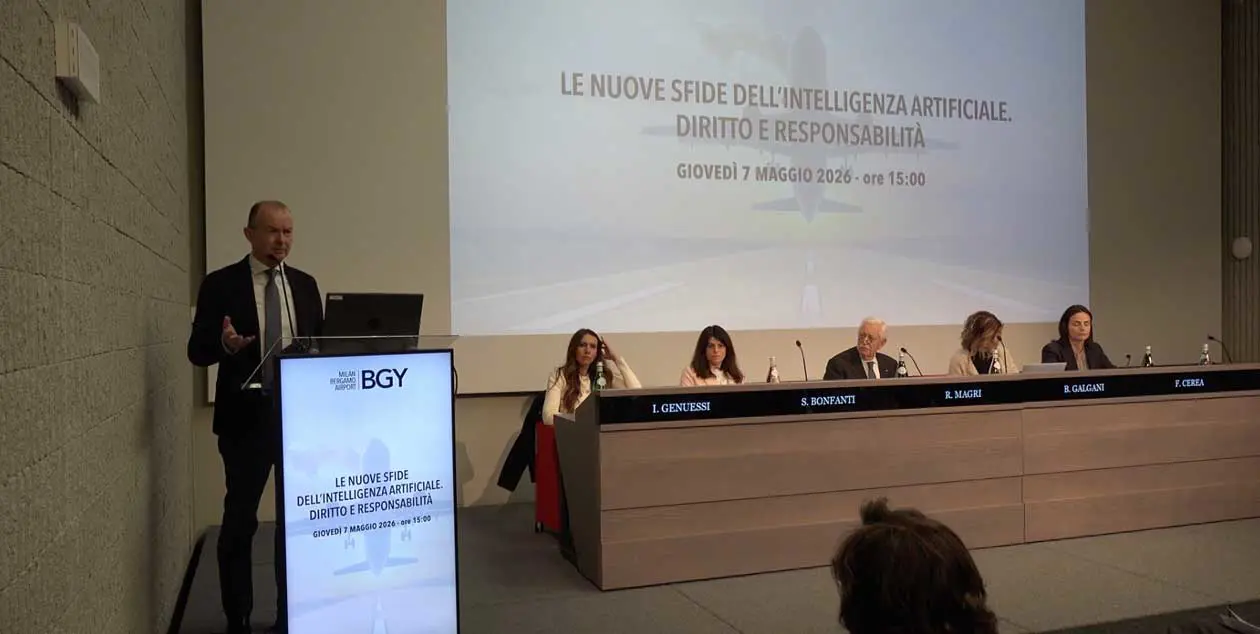
Sanga highlighted the need to govern this transformation so that AI does not interfere with the lawfulness of operational procedures, while recalling how it offers important advantages, accelerating processes, improving the safety of operations and providing rapid responses. Precisely for this reason, according to SACBO, it is essential to prevent dangers before even having to face them.
During the conference, the importance of carrying out a census and a detailed analysis of the Artificial Intelligence systems introduced in the various airport functions was recalled. It also emerged how crucial it is to develop adequate skills within the company population, in order to be able to consciously manage systems that are increasingly present in daily processes. In this context, the Supervisory Body has been indicated as a safeguard of the ethical principles that must guide the use of AI.
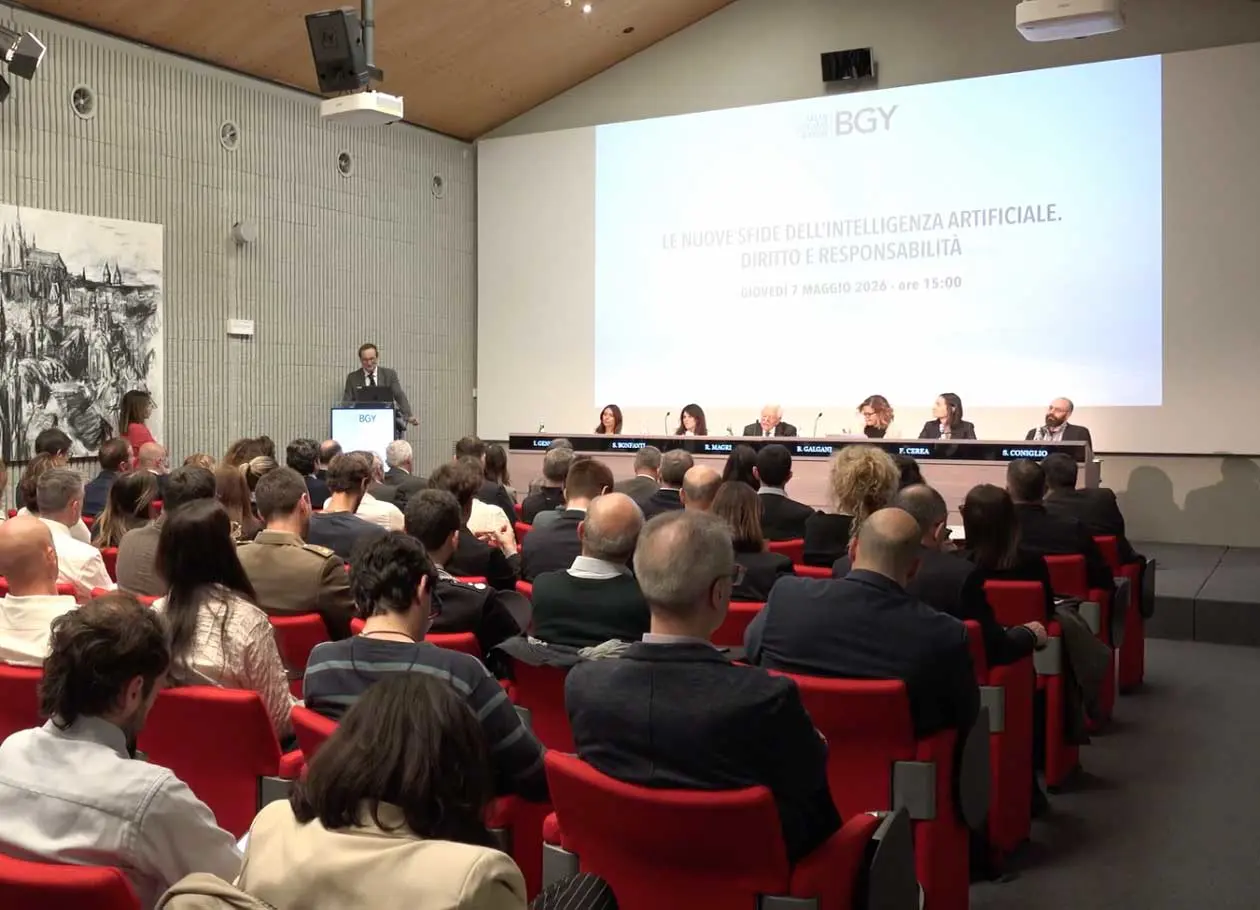
The work, moderated by Roberto Magri, president of the SACBO Supervisory Body, saw the participation of scholars and experts from the academic and business world. Stefano Coniglio, associate professor of Computer Science at the University of Bergamo, spoke on the topic of the evolution, potential and risks of modern AI. Benedetta Galgani, full professor of Criminal Procedure Law at the University of Pisa, addressed the relationship between the 231 system and Artificial Intelligence, between new critical issues and perspectives. Silvia Bonfanti, researcher in Computer Engineering at the University of Bergamo, delved into the applications of AI in air transport.
On the legal front, Francesca Cerea, a researcher in Civil Law at the University of Bergamo, analyzed the civil liability profiles related to automation, Artificial Intelligence and air traffic safety. Ilaria Genuessi, researcher in Administrative Law at the same university, addressed the issue of public contracts between digitization, AI and organizational models for the prevention of corruption. To close the discussion, Davide Gabrielli and Dario Ricco, respectively Operational Innovation Manager and HR Industrial Relations Manager of SACBO, with a speech dedicated to the new scenarios opened up by AI between law, technology and organization.
For travellers, the issue remains closely linked to the quality and safety of the airport experience: the evolution of digital systems can help make processes more efficient, but requires clear rules, adequate skills and constant control to ensure reliability, transparency and protection at every stage of the journey.