100 years of Rolex Oyster
In 2026, Rolex celebrates the centenary of the Oyster, the brand's first waterproof wristwatch, presented in 1926. To commemorate a century of innovation, the Geneva-based manufacture chooses the Oyster Perpetual as the symbol of the anniversary and expands the collection with four new interpretations of 28, 34, 36 and 41 millimetres.
The new range pays homage to the origins of the Oyster through commemorative materials, colours and details, while maintaining the essential characteristics of the collection: chronometric precision, water-resistance of the Oyster case and automatic winding via a Perpetual rotor. The novelties include an Oyster Perpetual 41 in yellow Rosor, an Oyster Perpetual 36 with a multicolored Jubilee motif and two versions in 18K gold of the Oyster Perpetual 28 and 34.
From the 1926 Oyster to the Perpetual rotor
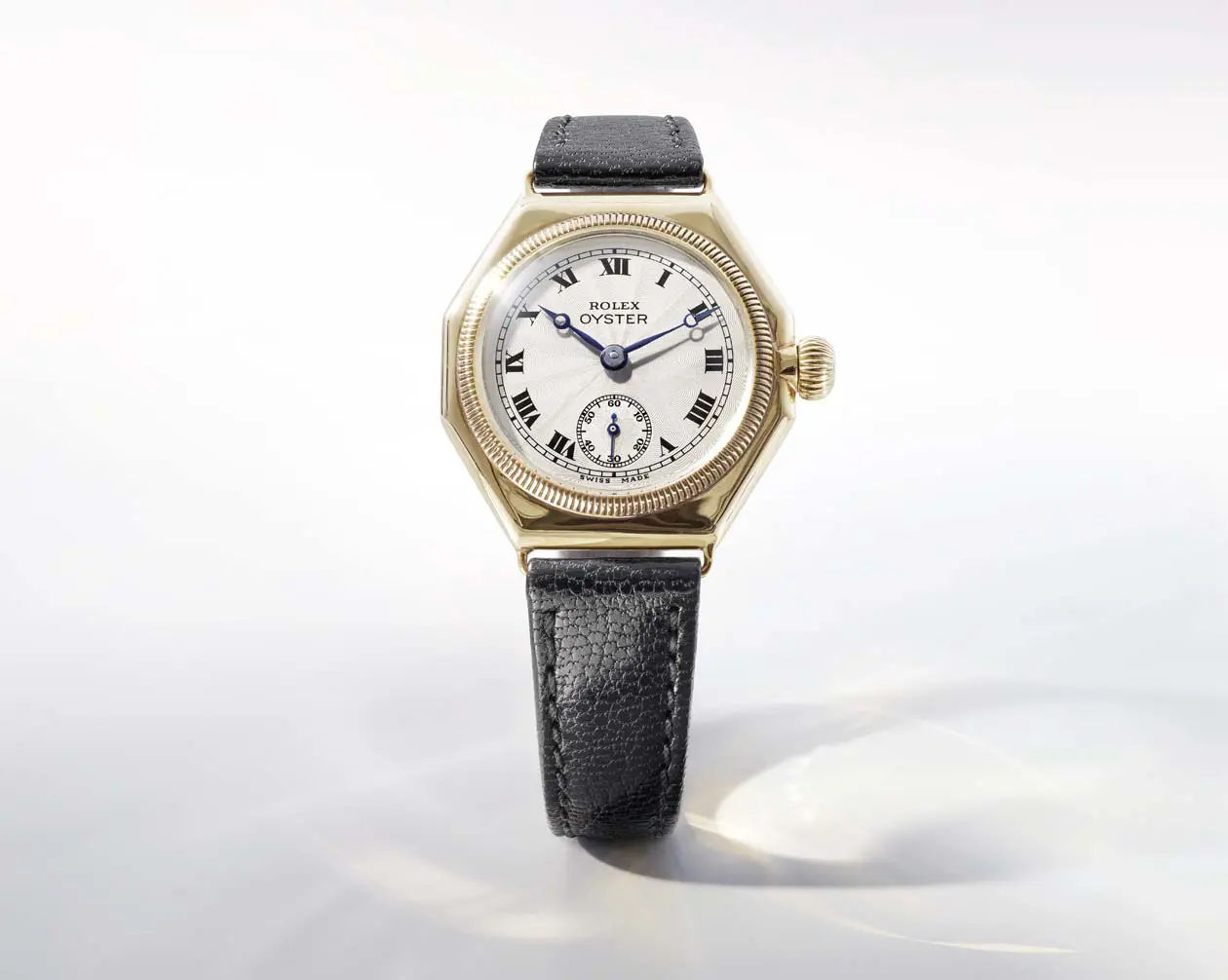
The Oyster was born from the vision of founder Hans Wilsdorf, who wanted to make the wristwatch precise, robust and suitable for modern life. The case introduced in 1926 protected the movement from water and dust thanks to a system of bezel, caseback and winding crown screwed onto the middle case.
In 1927, British swimmer Mercedes Gleitze crossed the English Channel with an Oyster, helping to prove its water-resistance in real-world conditions. In 1931, Rolex developed the Perpetual rotor, a self-winding system that made the watch more autonomous and free from the limitations of manual winding.
Over time, models such as the Explorer, Milgauss, GMT-Master, Submariner, Cosmograph Daytona and Yacht-Master were born from this original architecture, designed to meet specific needs, from resistance to pressure and magnetic fields to the measurement of times and the reading of a second time zone.
Oyster Perpetual 41, the centenary edition
The model most directly linked to the celebrations is the Oyster Perpetual 41 in yellow Rosor, a combination of Oystersteel and yellow gold.
In this interpretation, the domed bezel and winding crown are made of yellow gold, while the middle case and the entire Oyster bracelet are made of Oystersteel. Unlike the more traditional Rolesor configuration, the central elements of the bracelet are also made of steel and not gold.
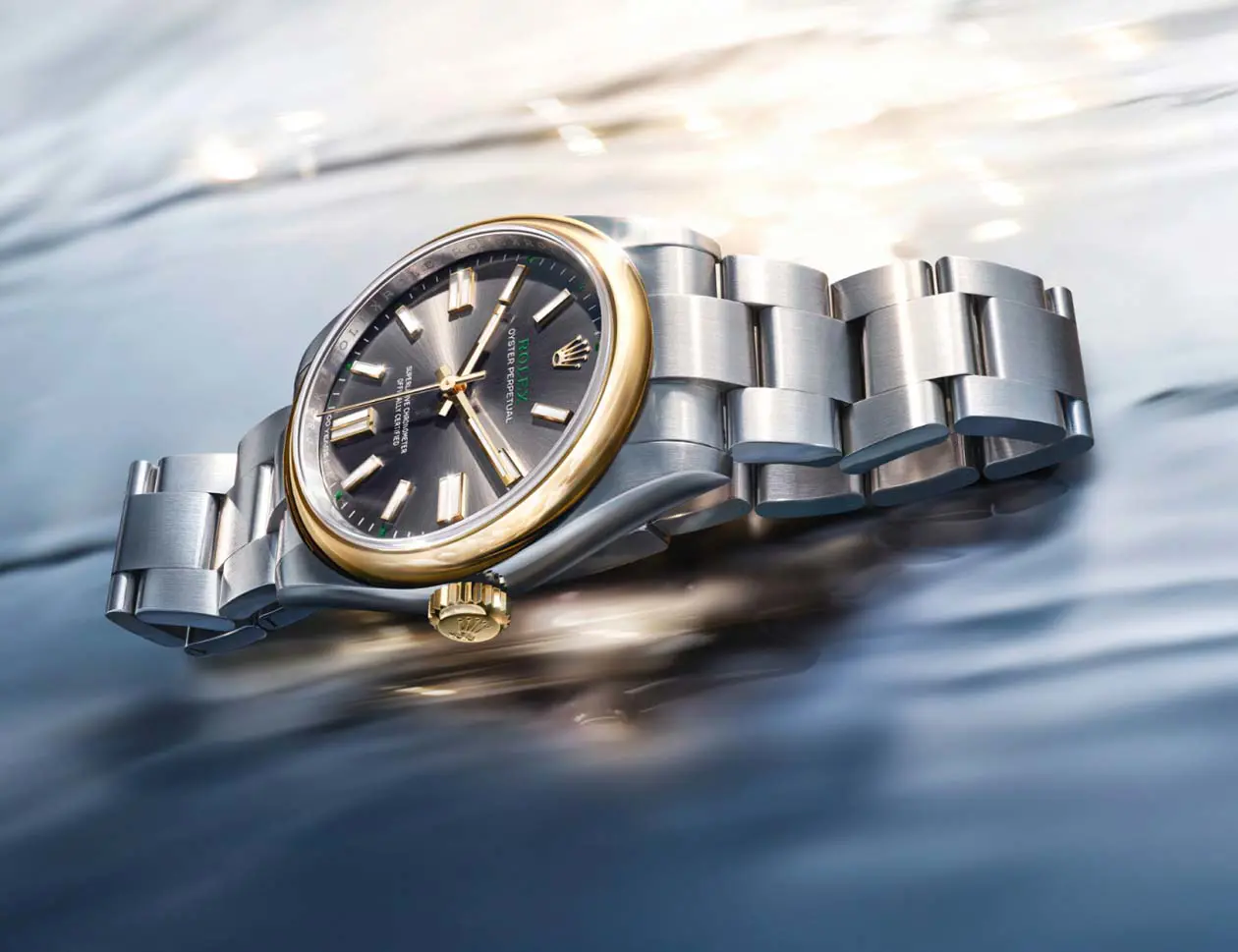
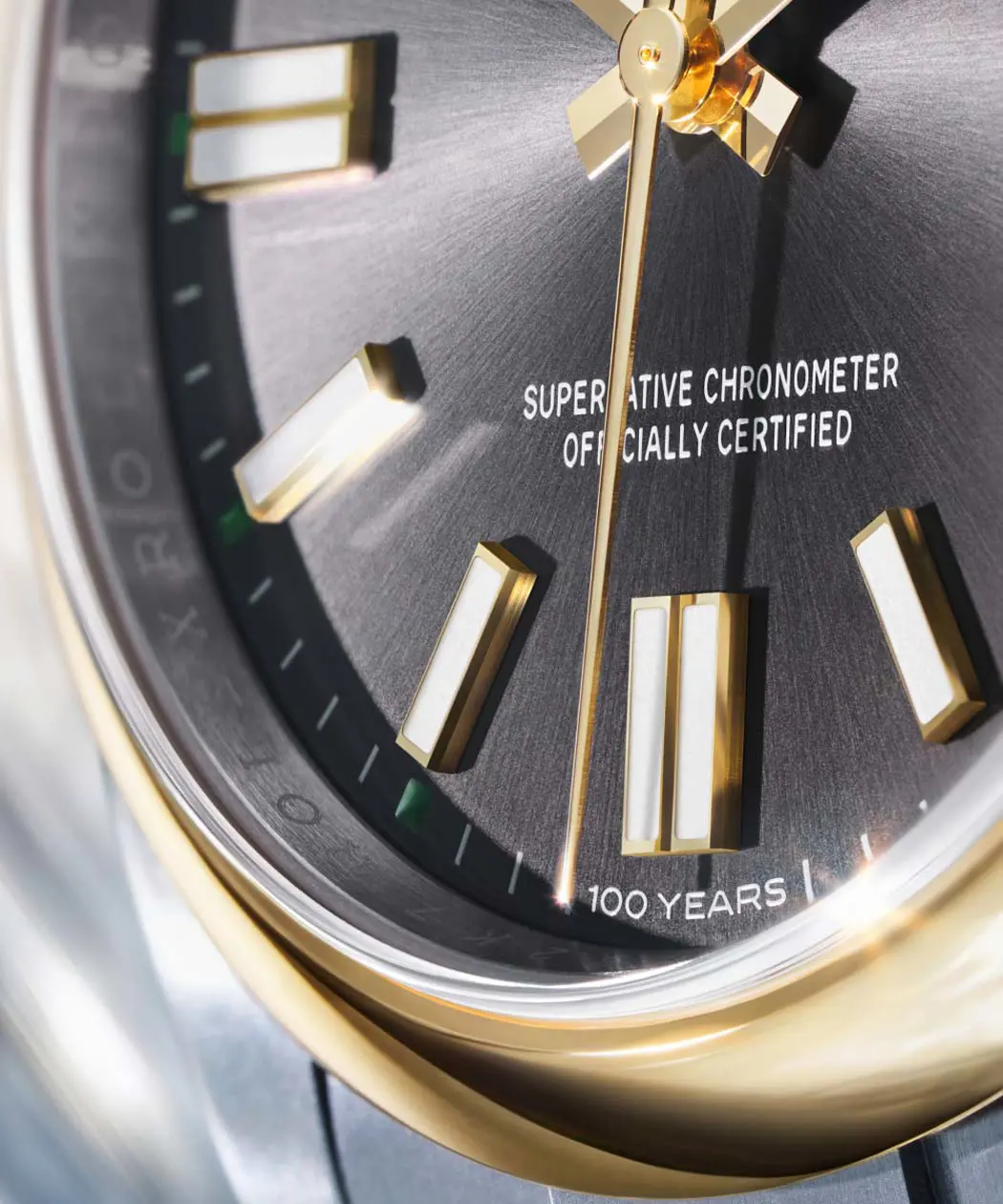
The references to the centenary are entrusted to the number "100" in relief on the winding crown and the words "100 years" placed at 6 o'clock on the slate dial, in the position generally reserved for the inscription "Swiss Made". The Rolex name and the squares marking the five-minute intervals are made in green, the brand's emblematic colour.
The 41-millimeter case is water-resistant to 100 meters and houses the caliber 3230, an automatic mechanical movement produced by Rolex with a power reserve of about 70 hours. The declared accuracy, with the recessed movement, is between −2 and +2 seconds per day.
The Jubilee motif returns on the Oyster Perpetual 36
The Oyster Perpetual 36 in Oystersteel introduces a reinterpretation of the Jubilee motif, which has been used on Rolex dials in the past.

The new design creates a multicolored graphic composition formed by the letters of the Rolex name and articulated in ten shades. Colors are applied one after the other, requiring precise placement of each shape and each letter.
The model features a 36-millimeter case that is water-resistant to 100 meters, a lacquered dial, 18-carat white gold indexes and hands, and a Chromalight display with blue luminescence. This version also uses calibre 3230, with a power reserve of around 70 hours.
Oyster Perpetual 28 and 34 in 18K gold
For the centenary, Rolex is also introducing two Oyster Perpetuals made entirely of precious metal.
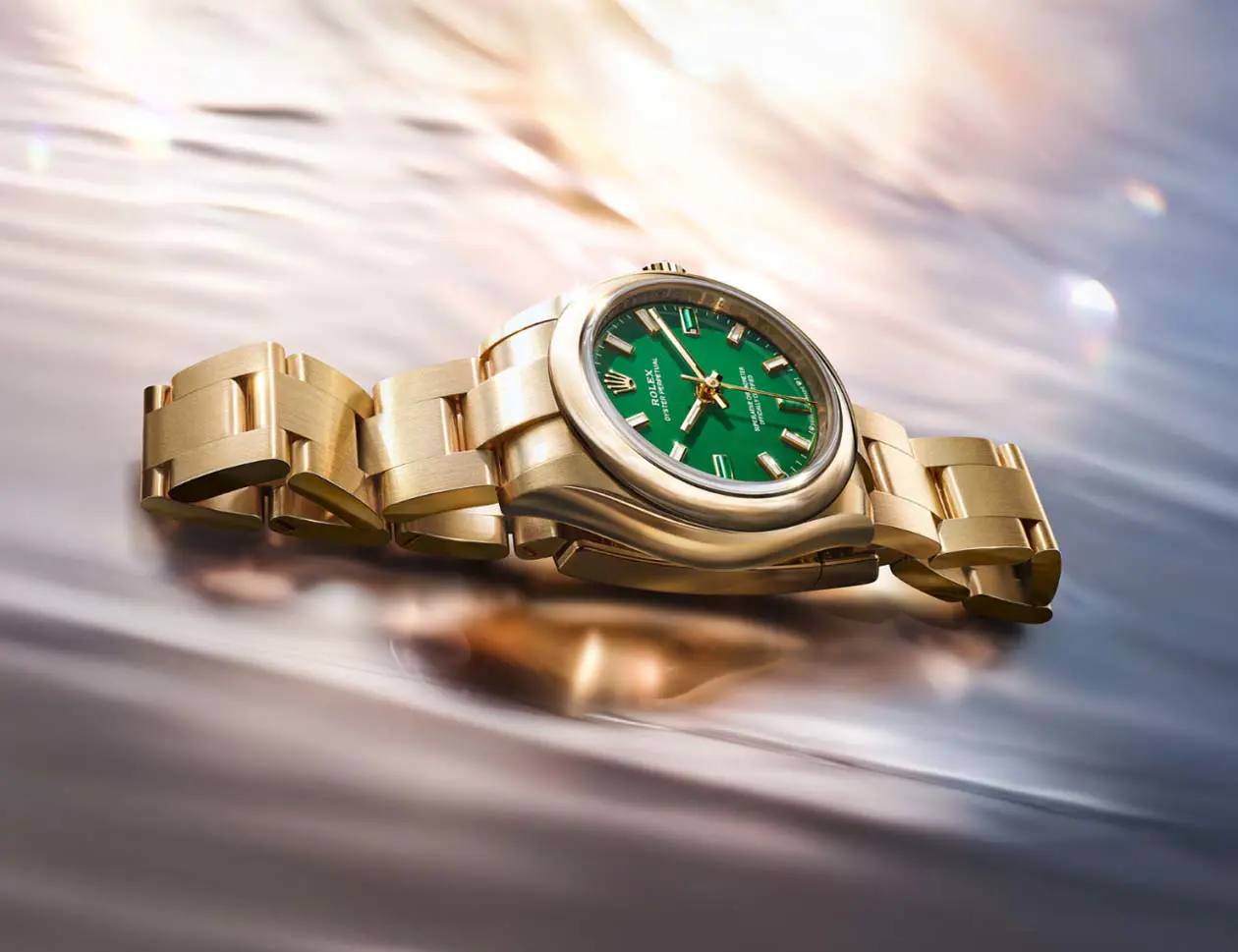
The Oyster Perpetual 28 is offered in 18K yellow gold with a green stone lacquered dial. The indexes at 3, 6 and 9 o'clock are embellished with heliotrope, a natural stone characterized by different shades of green.
The Oyster Perpetual 34 is made of 18-carat Everose gold and features a blue stone dial with three dumortierite indexes, a blue mineral with lighter and darker color variations.
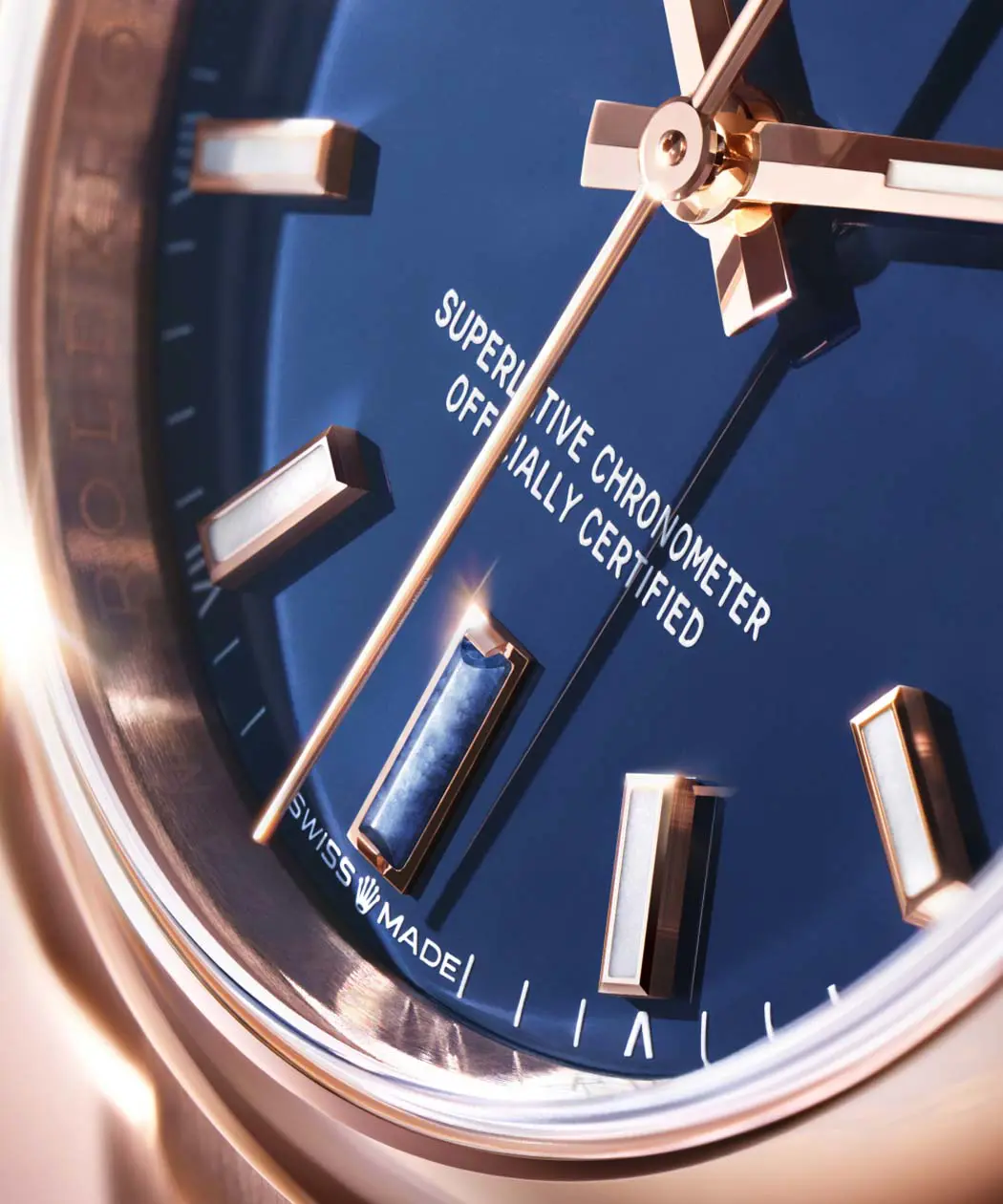
The surfaces of the cases and bracelets are predominantly satin-finished, with an appearance defined by the brand as "plush", while the domed bezels stand out for their polished finish. The bracelets integrate ceramic inserts inside the links, designed to reduce wear and improve fluidity on the wrist.
Both models are equipped with calibre 2232, which is equipped with a silicon Syloxi balance spring, Paraflex shock absorber and a power reserve of around 55 hours.
Oyster case and three-link bracelet
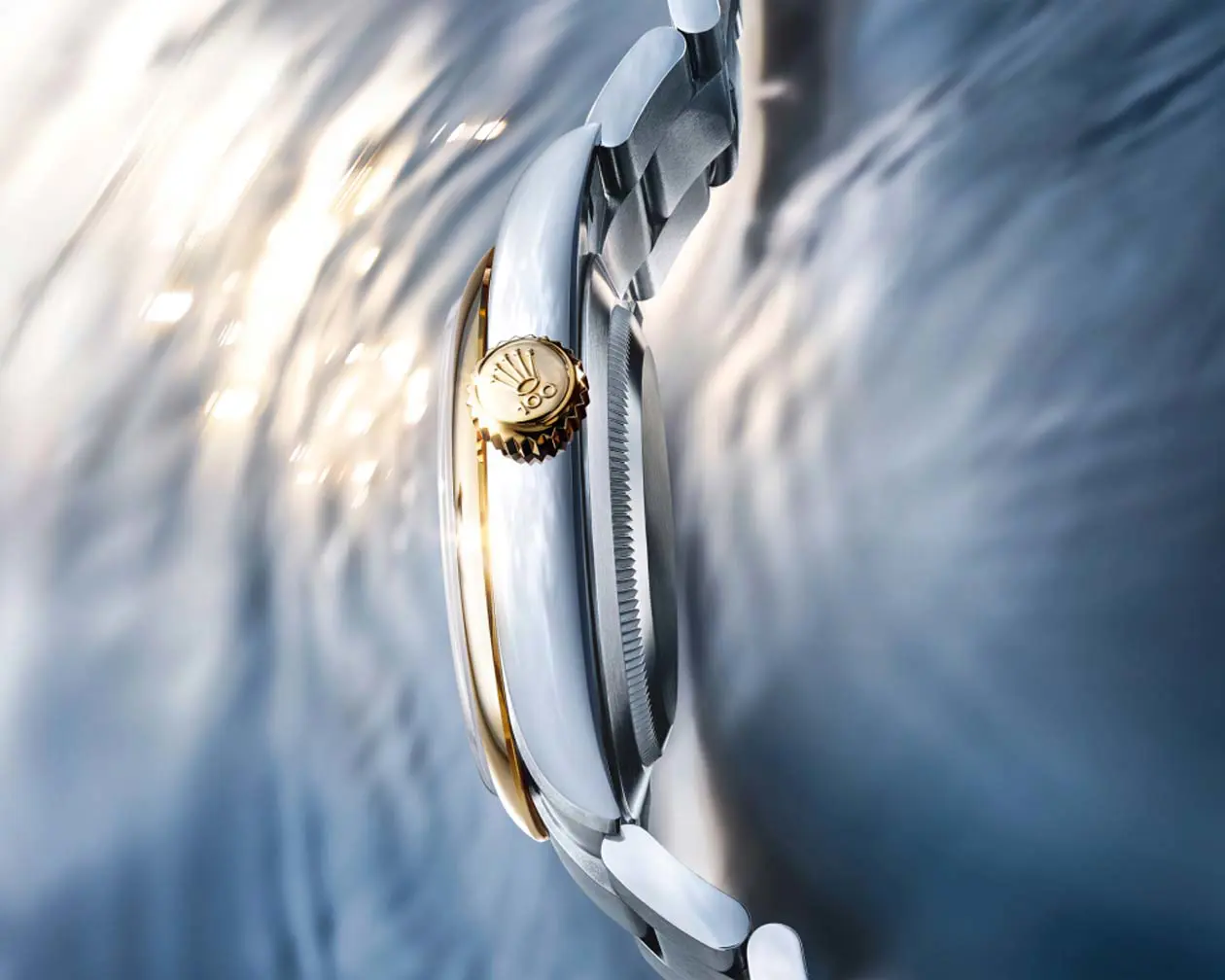
All new Oyster Perpetuals are water-resistant to 100 meters. The cases, available in diameters of 28, 34, 36 and 41 millimetres, use a middle case made from a solid block of Oystersteel, 18-carat yellow gold or 18-carat Everose gold.
The caseback is hermetically screwed down and the Twinlock crown adopts a double waterproofing system. The glass is made of scratch-resistant sapphire and has an anti-reflective treatment.
The models are paired with the three-link Oyster bracelet, which was developed in the late 1930s. The Oysterclasp integrates the Easylink quick extension link, which allows the length of the bracelet to be increased by about five millimeters.
Two automatic movements
The Oyster Perpetual 41 and 36 use the caliber 3230. The movement incorporates the Chronergy escapement, made of nickel-phosphorus and resistant to magnetic fields, and the blue Parachrom hairspring, designed to offer stability to temperature changes and resistance to shocks.
The Oyster Perpetual 28 and 34 are equipped with the 2232 caliber, equipped with a silicon Syloxi balance spring and a nickel-phosphorus paramagnetic escapement wheel.
Both calibers are equipped with a self-winding system with a Perpetual rotor and Paraflex shockproof device. The 3230 offers around 70 hours of battery life, while the 2232 reaches around 55 hours.
From 2026, Rolex will add three new criteria to the Superlative Chronometer certification : resistance to magnetic fields, reliability and durability. They are combined with precision, water resistance, automatic winding and power reserve. The tests also cover the finished watch, with a rate tolerance of between −2 and +2 seconds per day. The certification, verified by independent Swiss bodies, is recognizable by the green seal and is accompanied by a five-year international warranty.
By Nicole Villa, Avion Luxury Magazine
Text source and photo: Copyright © Rolex Press Office